
Key Points
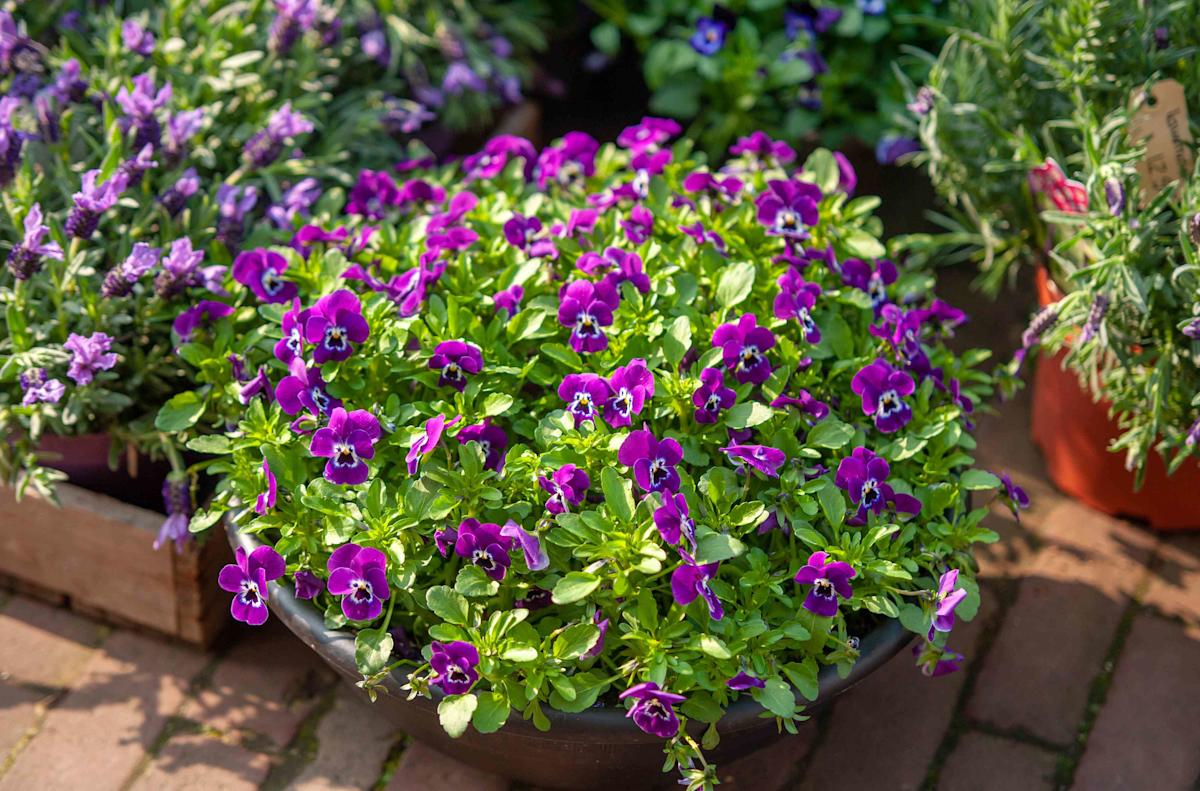
Cool-weather flowers like pansies and cineraria add bright color to early spring pots.
Foliage plants like oxalis and coral bells handle chilly temps and fill containers easily.
Herbs and leafy greens grow well in pots, giving you fresh picks while garden soil is still cool.
At a time when garden soil is still far too cold to grow much of anything, the potting soil in containers can absorb plenty of sun for growing plants.
Many spring container gardens are planted with spring bulbs, which add a much-needed pop of color to the drab colors of winter in colder climates.
Our selection, however, focuses on five less common plants you can plant in pots on doorsteps, patios, and decks in early spring to really stun your neighbors.
Pansies and Violas (Viola × wittrockiana, Viola spp.)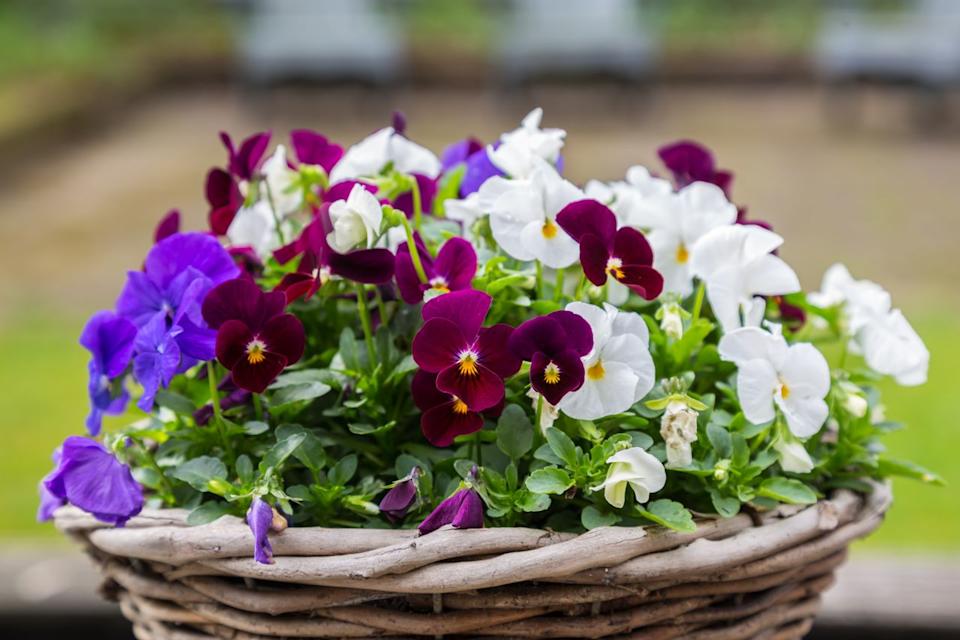
Credit: HildaWeges / Getty Images
Different species of pansies and annual violas are ideal choices for pots both in early spring and in fall. These plants love cool temperatures, so they’ll free up their container to be swapped out with warm-season plants in early summer.
You can plant pansies and violas together or with other cool-weather spring annuals. They are low-growing plants, so look best planted in a wide, low bowl or used as a filler or spiller plant with larger specimens.
Fertilize lightly during the growing season—too much fertilizer will cause them to get leggy, but if they don’t get a bit of feeding, they won’t flower.
USDA Hardiness Zones: 6 to 10; usually planted as annuals
Colors: Blue, purple, red, rose, yellow, apricot, maroon, white, black, orange; solid, bi-colors, often with dark center blotches
Sun: Full sun to part shade
Soil: Moist, general-purpose potting mix
Cineraria (Pericallis × hybrida)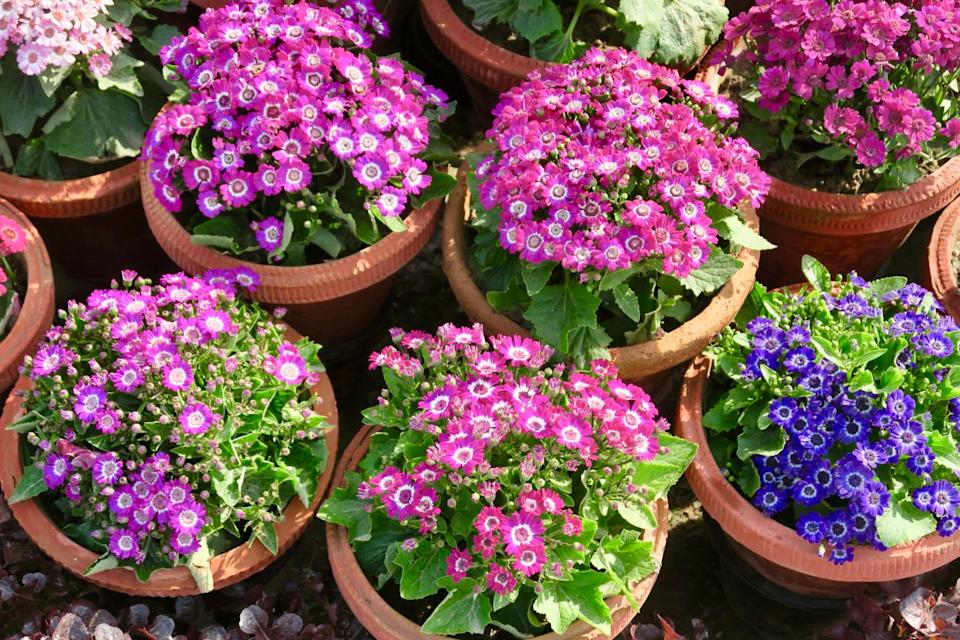
Credit: mtreasure / Getty Images
A member of the sunflower family, cineraria is an herbaceous perennial often grown as an annual in many climates. It can flower for up to five months if conditions are cool enough and you keep up with deadheading.
Keep cineraria moist—not wet—and never let the plant dry out completely. Large pots with plenty of good, moisture-retaining potting soil will increase your odds of success.
Like most heavy-flowering plants, cineraria should be fertilized regularly.
USDA Hardiness Zones: 9 to 11; normally grown as annuals
Colors: Cobalt blue, light blue, lavender, magenta, pink, white; contrasting white eyes, solid, and bicolors
Soil: Moist, general-purpose potting mix
Spiral Sorrel (Oxalis spiralis subsp. vulcanicola)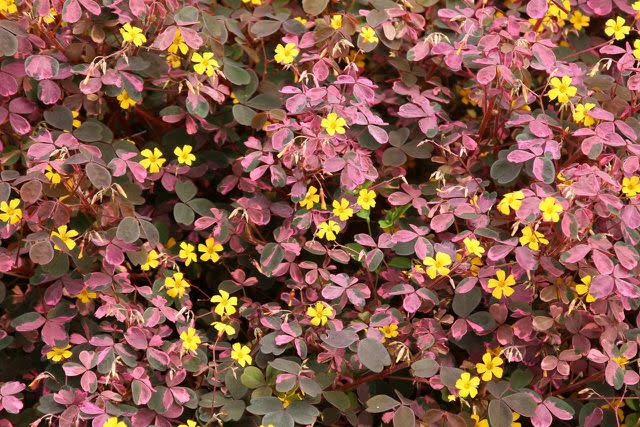
Credit: Mauricio Mercadante / Flickr / CC BY-NC-SA 2.0
The oxalis genus includes a wide variety of plants collectively known as wood sorrels.
The cultivated, named varieties are mounding plants that make ideal filler plants in containers. Flowers are normally yellow, but the named cultivars can have foliage ranging from bright green to dark purple.
To keep oxalis happy, fertilize regularly and keep them moist, not wet. If your plant starts getting leggy, cut it all the way back to rejuvenate it. No deadheading is necessary.
USDA Hardiness Zones: 9 to 11; grown as annuals elsewhere
Sun: Full sun to part shade
Soil: Medium moisture, general-purpose potting mix
Coral Bells (Heuchera spp., x Heucherella)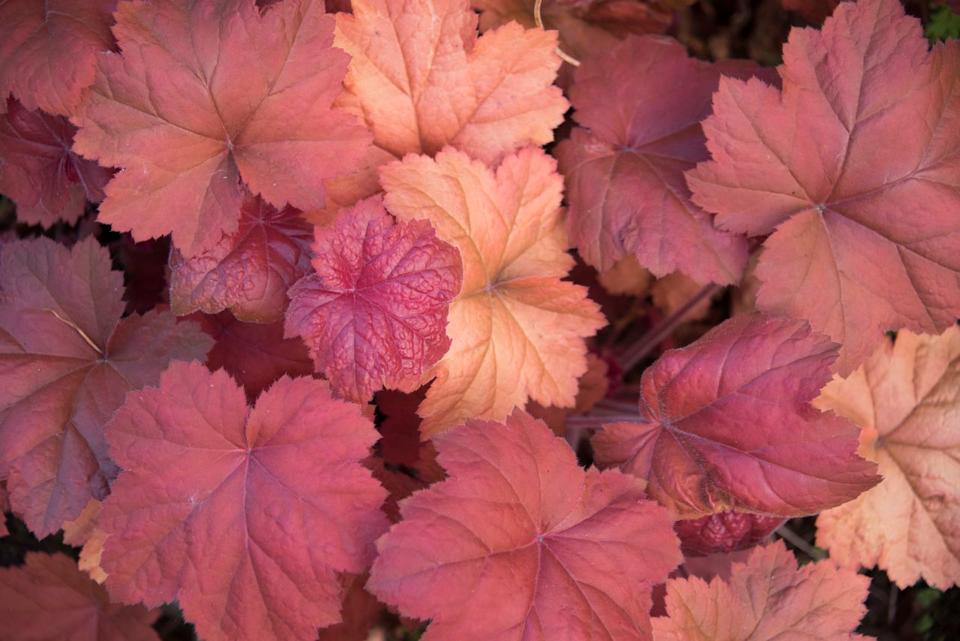
Credit: Photos by Sally Jane Photographic Art / Getty Images
Both the species form of coral bells and a hybrid cross are perennial plants that grow well in shade throughout the year. Both are so cold-tolerant and unfussy that they are particularly well suited to spring temperature fluctuations.
These plants hate wet feet, so make sure to use a well-draining potting soil that is somewhat on the dry side. Mixing in a slow-release fertilizer will improve leaf color and blooming.
They can be planted by themselves as specimens in large containers, or with other annuals as spillers around the edges of a pot. When grown in pots, they can be moved to a dry, protected location for overwintering and set out again the following spring.
USDA Growing Zones: 4 to 9
Colors: Red, white, coral, pink blooms; various foliage colors and patterns
Sun: Full sun to part shade (depends on variety)
Soil: Dry to medium-moisture potting soil
Cool-Season Herbs and Vegetables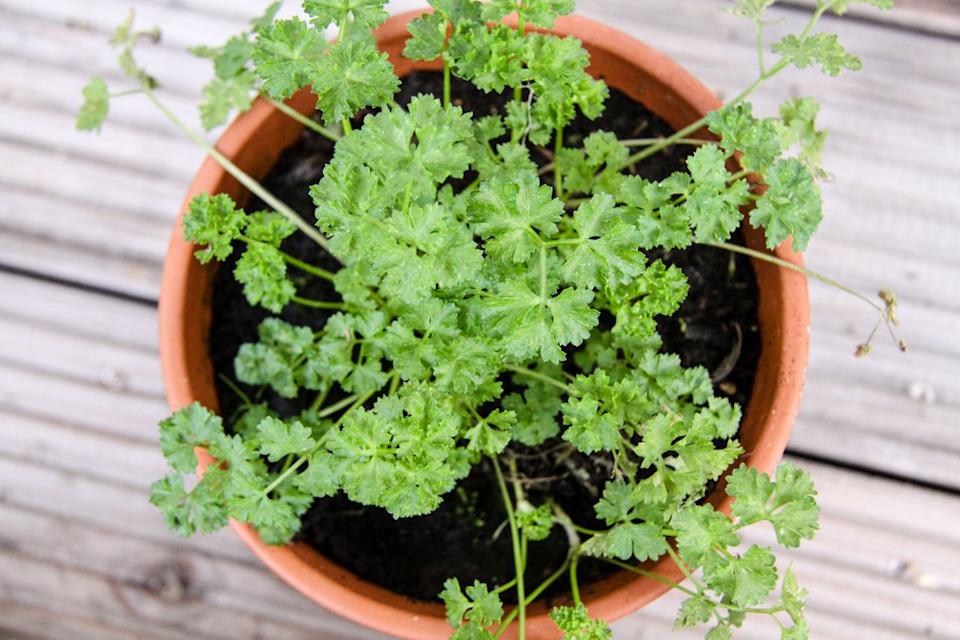
Credit: Kristin Oldenburg / EyeEm / Getty Images
Cool-season herbs and leafy vegetables are perfect for spring containers. Kale and parsley scoff at the cold and are especially beautiful in pots. They both play well with others and can be a surprising addition to mixed containers.
Oregano, cilantro, thyme, sage, mint, lemon balm, and chives are also herbs that are suitable to include in your mixed containers. Along with kale, consider other spring greens such as spinach and chard.
USDA Hardiness Zones: 2 to 11; normally grown as annuals
Colors: Green, not grown for flowers
Sun: Full sun to partial sun for leafy greens
Soil: Medium moisture, general-purpose potting mix
Read the original article on The Spruce
Comments are closed.