
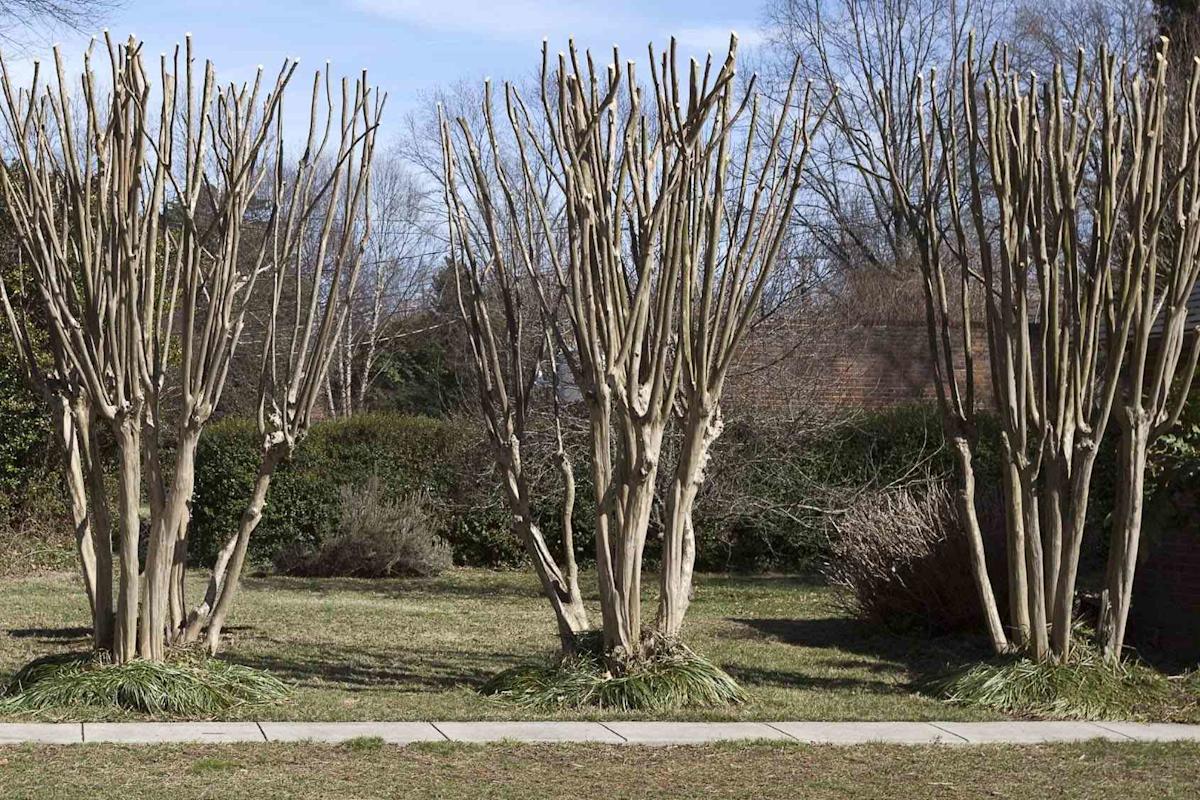
If you’re reading this article in early March in the cooler hardiness zones of the Upper South and haven’t pruned your crepe myrtles, you have about two more weeks to get the job done. Mid-South gardeners, stop reading and grab your pruners and head outside to do it now. Lower South folks, we need to talk. The ideal window for pruning crepe myrtles may be behind you. Can you prune crepe myrtles after the start of spring? Yes, but late pruning brings consequences.
The Best Time To Prune Crepe Myrtles
The ideal time to prune a crepe myrtle is February or early March, before the tree shows significant new growth. Timing varies depending on your USDA hardiness zone and when air and soil temperatures begin to climb. Crepe myrtles bloom on new growth, and the best time to prune is while the tree is dormant, so new growth isn’t killed by a late cold snap.
A crepe myrtle can be pruned later after new growth begins, but you need to know that it will have a later bloom time and fewer blooms. If I lose track and don’t prune at the right time, I usually skip pruning until next February. You can always survey the tree after it starts leafing out and remove any dead wood or wayward limbs.
How To Prune Crepe Myrtles
A crepe myrtle doesn’t need severe pruning every year, and you won’t get more blooms by chopping off the top of the tree. This graceful tree looks its best if allowed to grow into a natural shape that shows off its delicate form and beautiful bark. The only reason to severely prune crepe myrtle is if the tree has overgrown its space and is taking over your home. Here’s a guideline to shape your crepe myrtle:
While a crepe myrtle is a multi-trunked tree, it should not have more than three to five trunks. Start at the bottom of the tree and remove excess limbs that can become main trunks. Use clean, sharp hand clippers, loppers, or pruning saws to make smooth cuts.
To keep a tree’s open, airy form, remove lower, lateral branches close to the trunk. Clip away suckers or small sprouts that are growing from the base of the tree.
To help protect the strength of the tree, remove limbs that are crossing or rubbing against each other. Dead wood should be removed as well.
Cut back the tallest and most wide-spreading branches at the point where they join another branch to control the height of the crepe myrtle. Using reduction pruning is infinitely preferable to a crewcut topping because it preserves the shape of the tree.
Don’t Be A Crepe Murderer
For my two-cents, the worst mistake you can make when it comes to pruning a crepe myrtle is to commit “crepe murder.” This is the pruning technique that some misinformed gardeners started by cutting straight across the top of the tree during the winter. After the crewcut, the tree sends out thin, new growth branches that are then cut off the next winter. The tree ends up with short “arms” with knobby “fists” at the ends. Such a bad look for a graceful tree.
You can correct the damage if you inherited an ugly duckling. Next February, cut off the knobby fists. When the new shoots appear, prune away all of them except the two most graceful. For the next three years, repeat this step by pruning away all the new shoots except the two you selected as the most graceful. They will thicken and become sturdy limbs. You will need to remove any side branches from these sturdy limbs that grow toward the center of the tree to keep the crepe myrtle sturdy and shapely.
Read the original article on Southern Living
Comments are closed.