
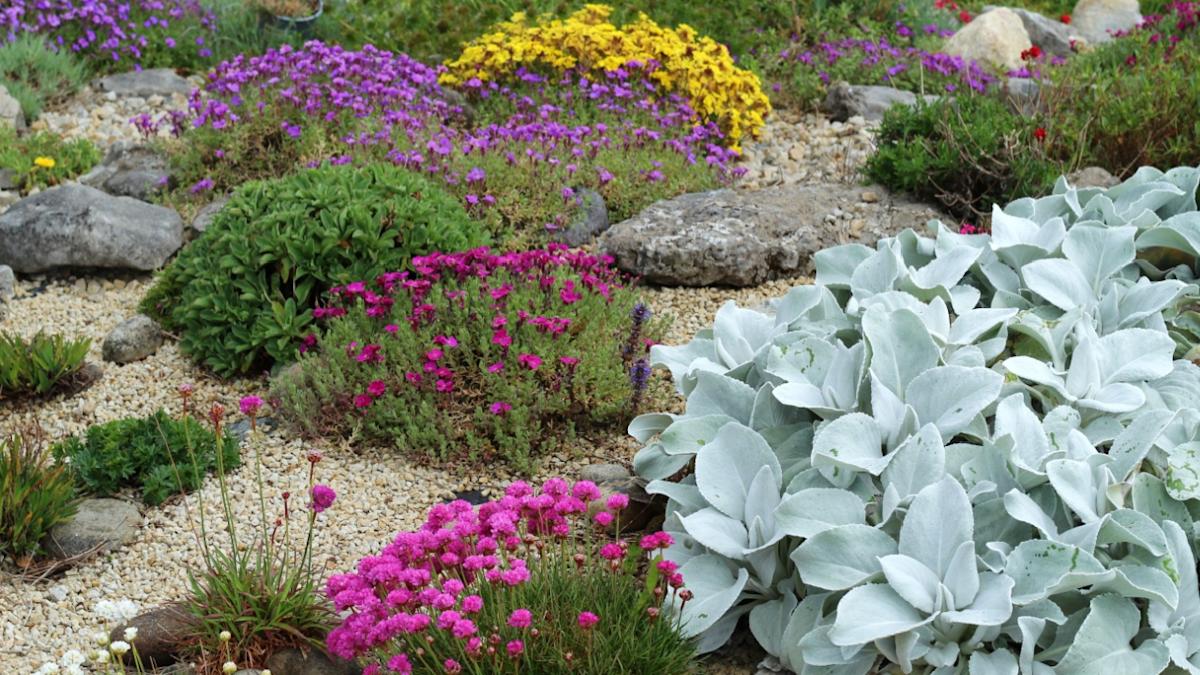
Every year, gardens shift; not dramatically, but meaningfully. The plants we reach for change. The way we think about outdoor space evolves. What felt fresh five years ago starts to feel dated, and something new, often rooted in an older tradition, takes its place. In 2026, the most exciting garden trends are not really about aesthetics at all. They are about values.
This year’s gardening movement is shaped by climate awareness, a renewed love of abundance, and a growing desire to make outdoor spaces genuinely useful for pollinators, for families, and for wellbeing. Whether you have a sprawling backyard or a small urban plot, these trends offer something worth trying.
Maximalism Is Back, and It’s Lush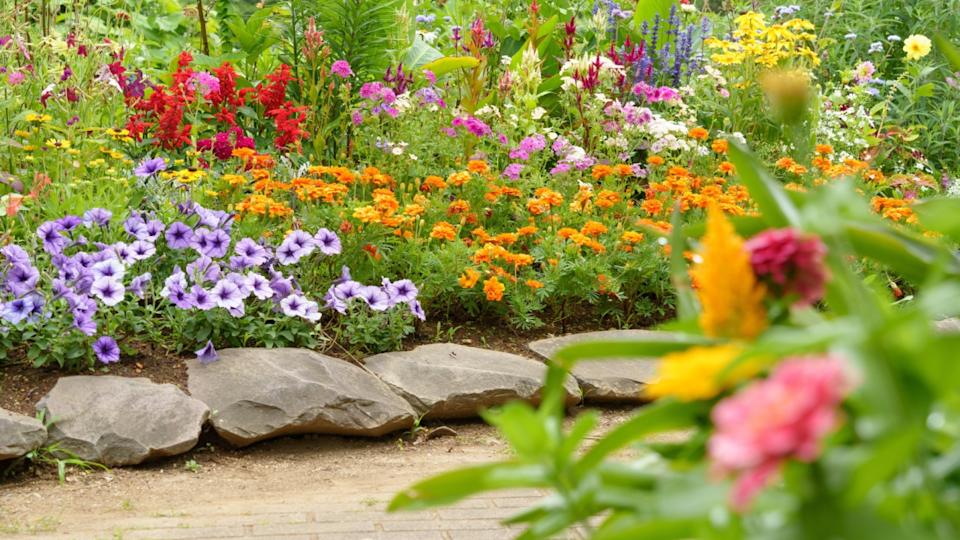
Image Credit: Shutterstock.
After years of spare, minimalist gardens consisting of gravel, ornamental grasses, and architectural plants with plenty of breathing room, the pendulum has swung back hard. In 2026, the gardens that are turning heads are dense, multi-layered, and overflowing. Borders are planted tightly with mixed textures and heights. Color combinations are bold rather than safe. The aesthetic is abundance, generosity, and even a little drama.
This is good news for anyone who has always found minimalist gardens a little cold. The trend is toward warmth: deep golds and rusts alongside soft lavenders and cream, perennials woven together so that something is always in bloom from April through November. This is gardening as an act of welcome.
“Dense, multi-layered borders full of mixed textures and heights define gardens in 2026, with maximalism countering the controlled aesthetic of the 2010s,” writes Rebecca Sweet in Garden Design magazine in its 2026 trends roundup.
Gardening for Wildlife Is Moving Into the Mainstream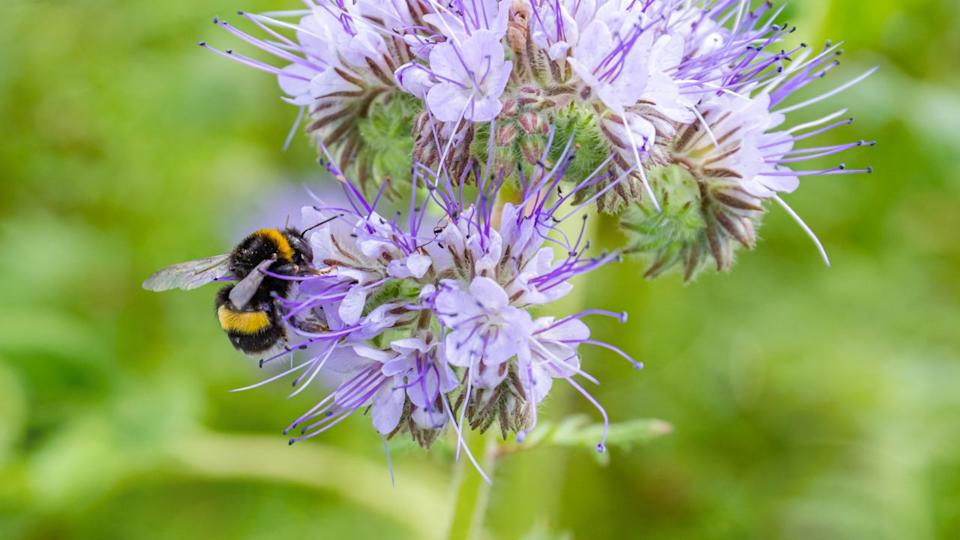
Image Credit: Shutterstock.
Planting for pollinators is a movement that has been growing for years, but in 2026, it has moved from a niche interest to a central organizing principle for many home gardens. Designers are building entire schemes around supporting bees, butterflies, beneficial insects, and birds, choosing plants not just for their visual appeal but for the food and habitat they provide.
“Gardening with nature, rather than against it, moves into the mainstream in 2026, with designers building entire schemes around supporting pollinators, birds, and beneficial insects,” notes Sarah Wilson in Gardening Know How’s review of the year’s top five garden trends.
Native plants are central to this movement. Plants that evolved in your local ecosystem are inherently better at supporting local wildlife, and they typically require less water, less fertilizer, and less intervention than their exotic counterparts. Swapping even a portion of your lawn or border for native wildflowers has measurable positive effects on the insect life in your immediate area.
Rewilding, or allowing portions of the garden to grow with minimal intervention, creates corridors of wild growth that insects and small animals can move through, and is also gaining momentum. This does not mean abandoning your garden. It means letting the edges go, leaving seedheads standing through winter, and finding beauty in the kind of garden that feeds something beyond your own eyes.
Water-Wise Gardening Is No Longer Optional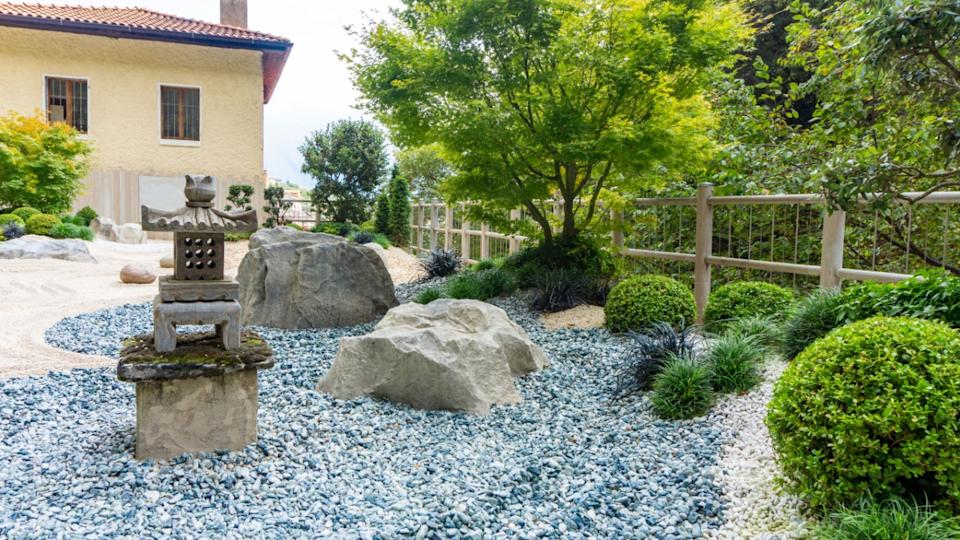
Image Credit: Shutterstock.
As drought conditions become more frequent across more regions, gardeners are rethinking the thirsty lawn and the water-hungry border. Gravel gardening, a xeriscaping technique that uses decorative gravel as mulch to retain moisture and suppress weeds, continues to grow in popularity, particularly in drier climates. The aesthetic is Mediterranean and relaxed, pairing beautifully with lavender, salvia, agapanthus, and ornamental grasses. “Gravel gardening continues to grow in popularity as a xeriscaping technique that promotes water-wise gardening,” advises the Pennsylvania Horticultural Society.
Water butts connected to roof runoff, drip irrigation rather than overhead sprinklers, and the strategic planting of drought-tolerant groundcovers to replace sections of lawn are all practical steps that are trending for 2026. The goal is not sacrifice but intelligence: using the water you have more effectively so your garden remains lush even in a dry summer.
The Kitchen Garden Renaissance: Beautiful and Productive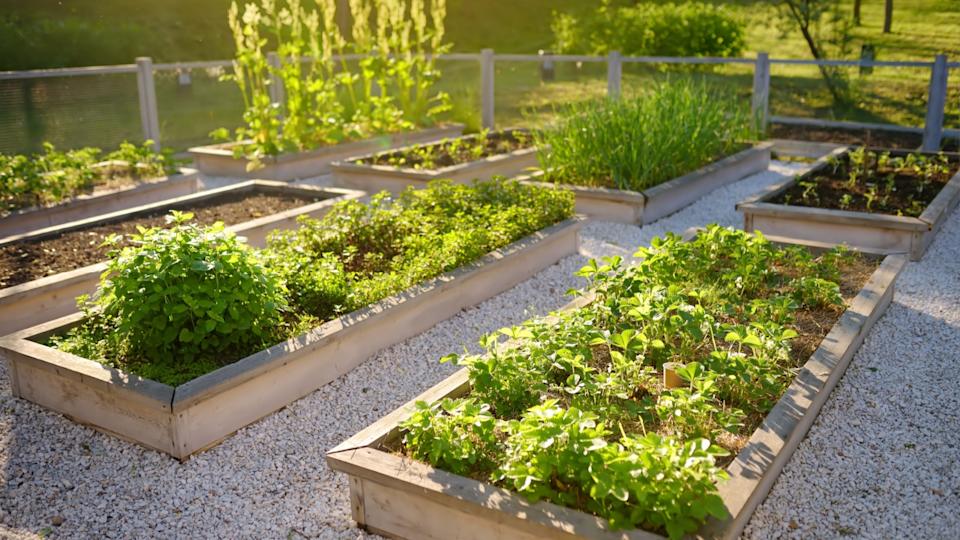
Image Credit: Shutterstock.
Growing your own food has never felt more relevant, or more aesthetic. In 2026, the kitchen garden is shedding its purely utilitarian reputation and becoming one of the most design-conscious parts of the yard. Raised beds are being built in cedar and Corten steel, not just pressure-treated pine. Vegetables are being planted alongside flowers for companion planting benefits and sheer beauty.
The driving forces are partly economic; growing your own herbs, tomatoes, and salad greens saves money and tastes dramatically better than store-bought, and partly about well-being. Gardening researchers consistently find that time spent tending food plants reduces anxiety and improves mood in ways that are measurable and lasting.
“The kitchen garden trend becomes more aesthetic, architectural, and integrated into overall garden design, with consumers wanting homegrown flavor, cost savings, and the well-being benefits of growing their own food,” reports Maya Glantz in Living Etc.’s expert roundup of 2026 garden trends.
Soft, Muted Palettes Are Replacing Bright Bold Color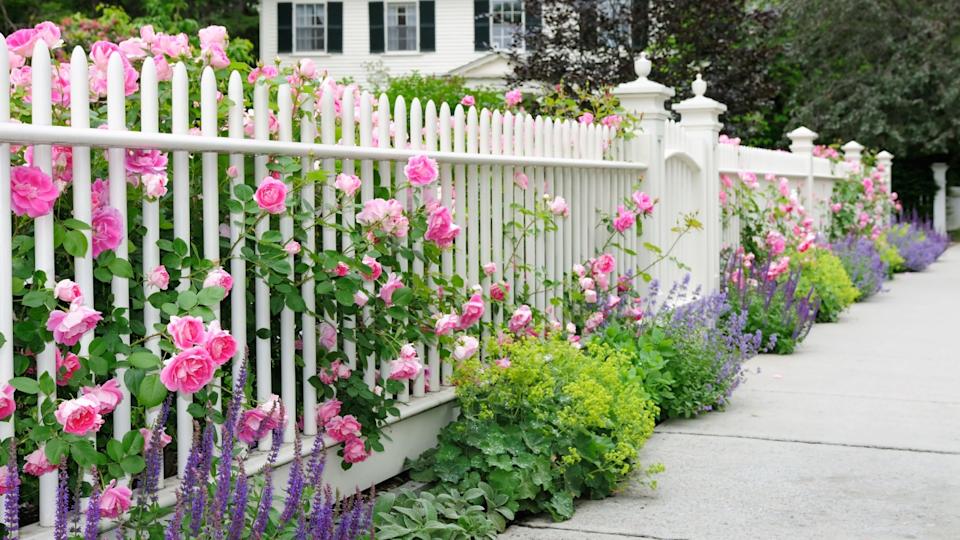
Image Credit: Shutterstock.
If maximalism is about density and structure, the 2026 color story is about subtlety. The hot pinks and electric oranges that dominated summer gardens in recent years are giving way to softer, more atmospheric tones: ash-covered pinks, muted lavenders, powdery blues, misty silvers, and warm greiges. The effect is one of timelessness; a garden that looks as though it has always been there, weathered and romantic.
“Soft, weathered tones are shaping garden palettes for 2026, with ash-covered pinks, muted lavenders, powdery blues, and misty neutrals creating landscapes that feel timeless and romantic,” writes Kristen Guy in Sunset Magazine for its annual garden trends forecast.
Think salvia in faded purple rather than blazing scarlet. Roses in soft apricot and blush rather than screaming coral. Agapanthus in pale ice-blue rather than vibrant violet. These are colors that look beautiful at dusk, in overcast light, and in the low golden hours of autumn; colors that work with the sky rather than competing against it.
What Trends Will You Incorporate Into Your Garden This Year?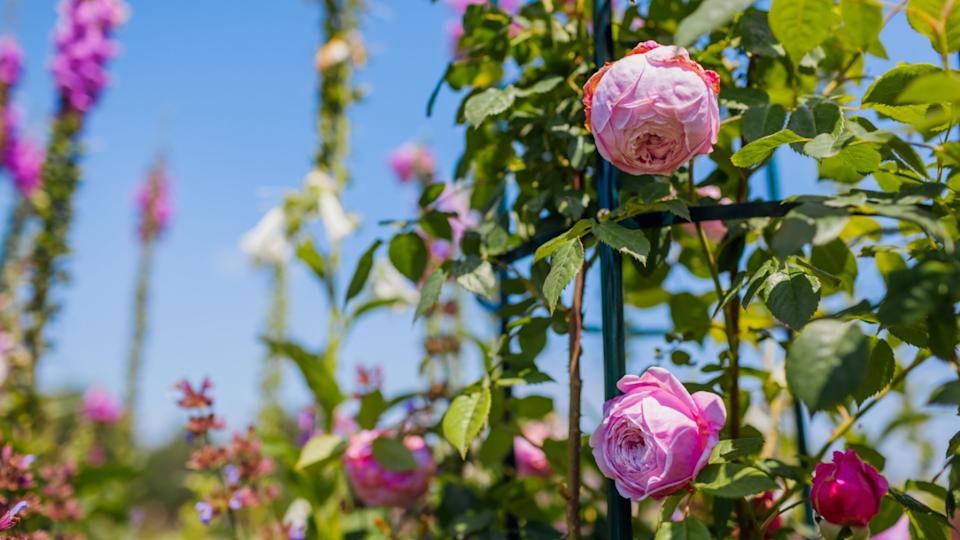
Image Credit: Shutterstock.
The best garden trends are the ones that permit you to do what you already wanted to do. Plant more densely. Grow more food. Let a corner go a little wild. Choose the soft lavender over the screaming magenta. In 2026, all of that is not only acceptable, but it is also exactly right.
Comments are closed.