
Marigolds, garlic and basil are your garden’s secret bodyguards

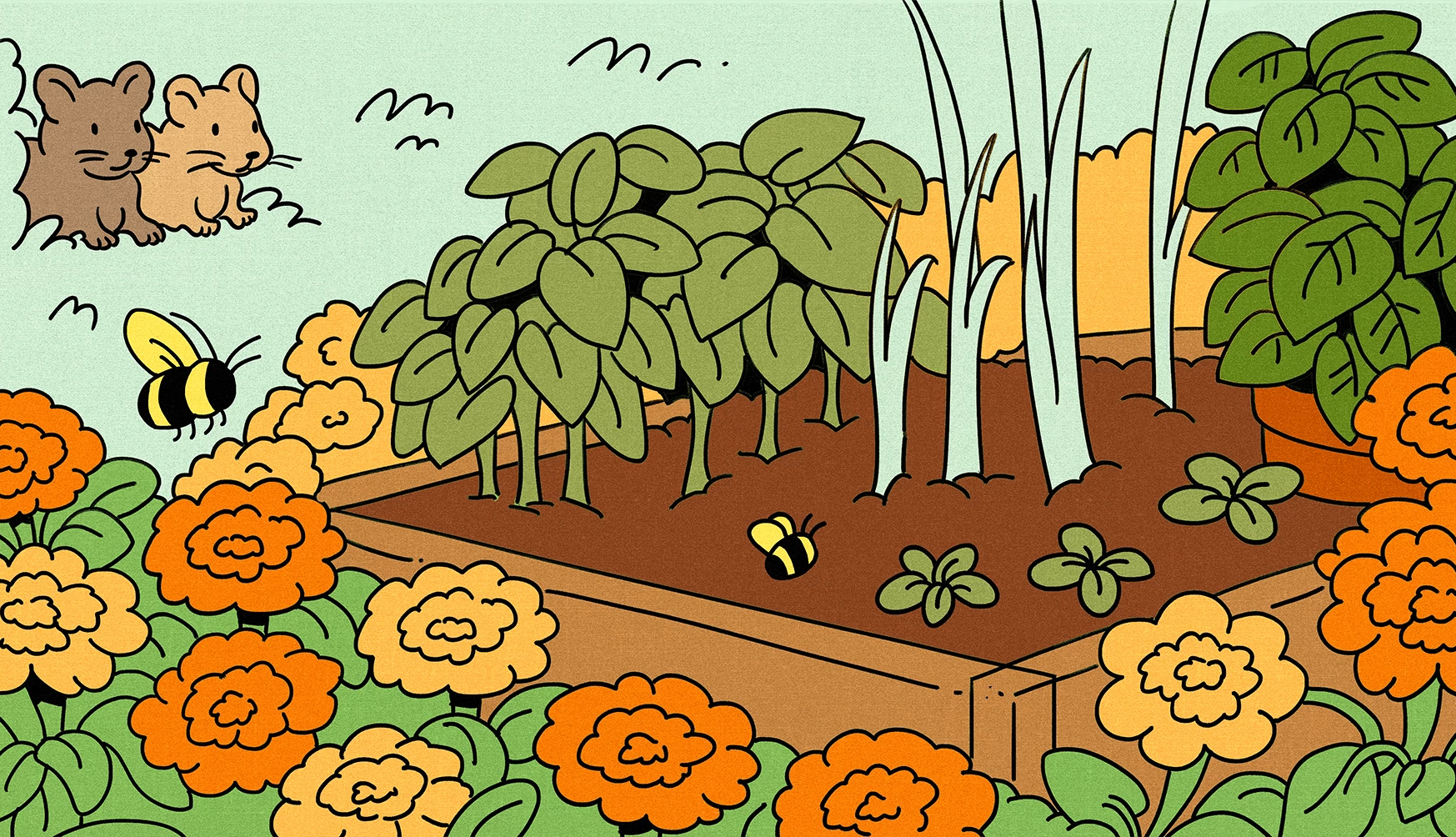
Marigolds, garlic and basil are your garden’s secret bodyguards — plant them nearby.
Amber Day
To ward off garden pests, I recommend companion planting. (The Old Farmer’s Almanac has a great companion planting chart that can help you determine which vegetables should be paired together.) There are many reasons to companion different plants together in your garden, one being pest control. Common plants that help ward off pests are marigolds, garlic and onions, and various herbs like rosemary and basil. Other companions can attract pollinators. Marigolds are a two-for-one because they attract pollinators while keeping rodents away from your veggies.
Match your veggies to the season for better results
Know the difference between cool-season vegetables and warm-season vegetables, because planting them at the wrong time is a common beginner mistake. I usually think of leafy green vegetables as cool-season crops, and “fruiting” vegetables as warm-season crops. In the cool-season category, you’ve got lettuce, kale, broccoli, cabbage, spinach, asparagus and even green beans. These do best in the spring and fall, when the weather is milder and the soil isn’t too warm.
On the flip side, warm-season vegetables are the ones that technically count as fruits because they contain seeds, even if we treat them like vegetables. Most people know tomatoes fall into that category, and so do cucumbers, peppers, eggplant, squash and okra. These plants need warm soil and steady sun, so wait until after the last frost to plant them. If you start too early, they’ll struggle. Give them the warmth they need, and they’ll reward you generously.
Make gardening a game for the whole family
Younger kids usually just love to be outside, so gardening gives you an excuse to get them out there, digging in the dirt. As my own three kids got older, we used games and competitions to keep them engaged. We would have a competition to see who could remove the most caterpillars from our kale, which of course is a win-win: You have little fingers, smaller bodies and better eyes to help you find and pick off those hole-eating buggers. Because they all want to win, they do a really good job. In the end, we give all of them a prize for participating, like a trip to their favorite ice cream shop.
Soak the soil, not the leaves
You want to water the soil at the base of your plants until the water makes a small puddle around the stem. It’s best to water in the morning, before it gets too hot outside. When the summer starts to really heat up and you notice the soil is dry in the afternoon after you’ve watered in the morning, you can water them again in the evening.
Start with a watering can, graduate to automation
When you’re starting out with a smaller garden, I think it’s nice to water by hand, either with a hose or watering can. It gives you the opportunity to check in with your plants every day, notice subtle changes that may need tending to, or spot the first tomato and watch it ripen. If you expand your garden and watering becomes time-consuming, or if you’re just too busy, an automatic watering system will allow you to maintain your garden no matter what. But it doesn’t come cheap: Most systems run between 28 to 47 cents per square foot, according to Lawn Love, a lawn care website and app.
Tuck your garden in for winter
To prepare a garden for winter, we like to spread dried leaves, mulch, straw or any kind of woody material on our garden beds. You should always cover your soil to avoid erosion and losing all the good soil that you built up over the season.
Before you cover the beds, it’s helpful to plant things like garlic and onions in late fall, as they’ll go dormant over the winter, sprout the following spring, and mature to harvest by the summer. Bringing potted plants indoors is necessary, but you want to be sure they’re receiving enough light and water during the cold months. You may have to change their location as the sun shifts throughout the year, so keep an eye on how much sun your plants get while indoors.
We also plant cover crops like clover, rye and buckwheat during the winter. Those crops all add nitrogen to the soil while providing soil structure, which reduces erosion. Topping your garden beds with straw or hay helps to protect the soil; as they decompose, they also add necessary organic material.
Make your garden a daily ritual, not a chore
One of the most important things you can do for your garden is to just be in it — spending time there ensures you’ll give it time and attention. When we stay away from an area, it becomes neglected, and that can lead to pest infestations and trash and clutter piling up. So try to do a little bit every day, even during the offseason, and keep it fun and light. Don’t let your garden turn into another job or chore. Make it a reprieve from your other responsibilities. That way you’ll want to spend more time doing it and making it thrive. Keep your expectations in check, and don’t let disappointments deter you. Gardening is great for getting exercise, helps the environment, and results in delicious food. Doesn’t get any better than that!
Comments are closed.