
Is it caused by seeds landing in a single wound? What can cause this in the tree's lifetime, and how old might it be? Western PA
by ChromeonYourMom

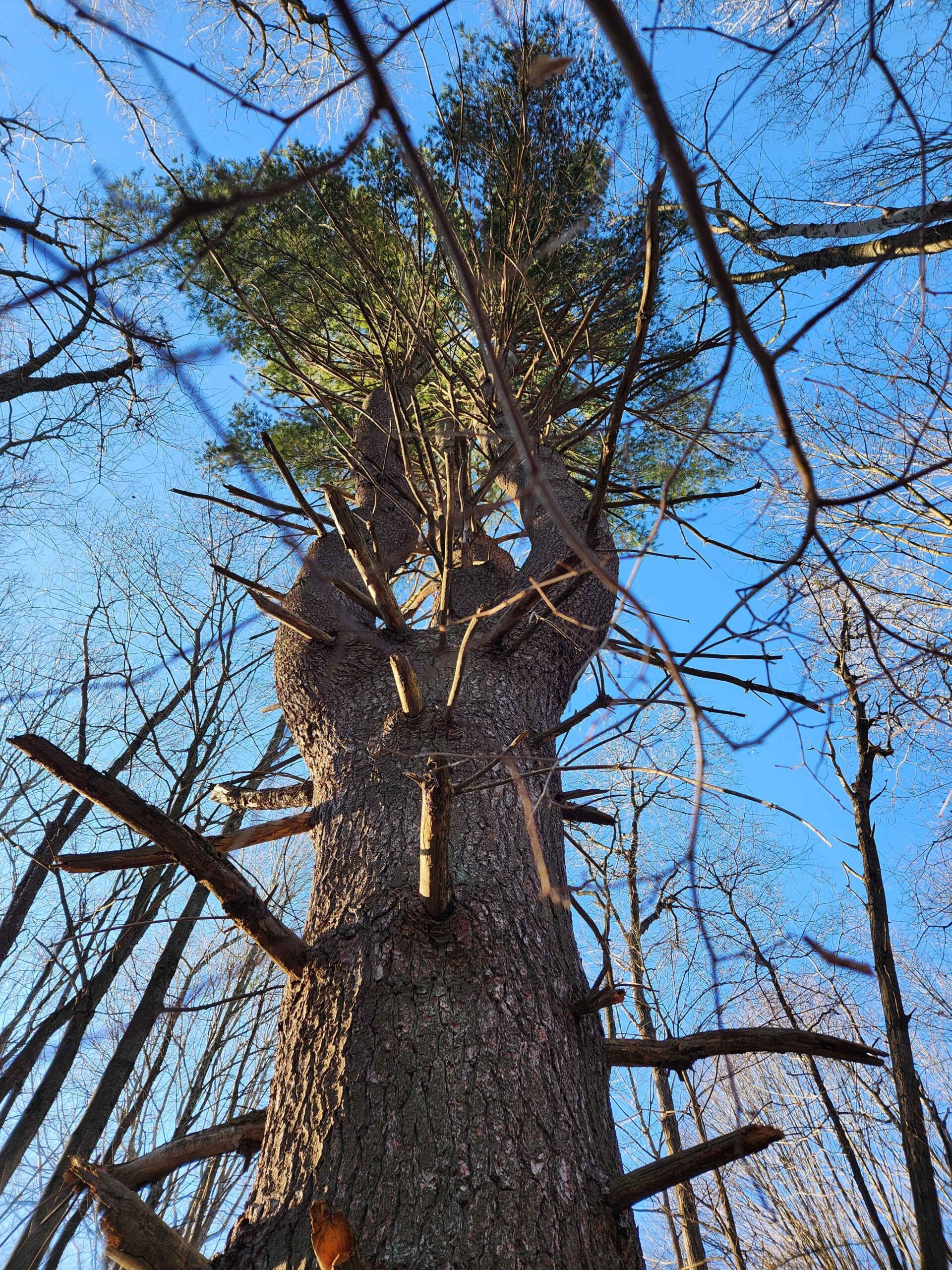
Is it caused by seeds landing in a single wound? What can cause this in the tree's lifetime, and how old might it be? Western PA
by ChromeonYourMom
5 Comments
Maybe they cut it once a long time ago? I’m interested to know as well!
In White Pine if the terminal growth point is damaged by a storm or a white pine weevil etc, the backup of hormones will cause a new leader to develop. Occasionally several buds will simultaneously take apical dominance and continue to remain so indefinitely. Occasionally this can happen spontaneously, but it usually presents as a lateral branch becoming a lead rather than a direct forking of the central growth lead.
Usually it’s because the tree was damaged when young.
There are a few very old white pines around where I live and they all have multiple trunks like this likely due to the 1938 hurricane that topped most tall trees in southern New England.
Basically a Daisugi or large bonsai. In Japan it’s a harvesting technique for wood. At some point the tree was cut then continued growing.
White pine weevil or storm damage killed the leader. Side branches took over and are competing to be the leader. The leader emits plant hormones that suppress upward growth in the side branches. A single leader is more structurally stable because it’s balanced and branch unions at narrow angles tend to be weaker. In this case the defect probably saved the tree by making it undesirable for timber. Where i work in minnesota big white pine very often have some sort of form defect like this, otherwise the would have gotten logged off 40 years ago. It makes the tree more valuable for wildlife looking for places to build dens or nests.