
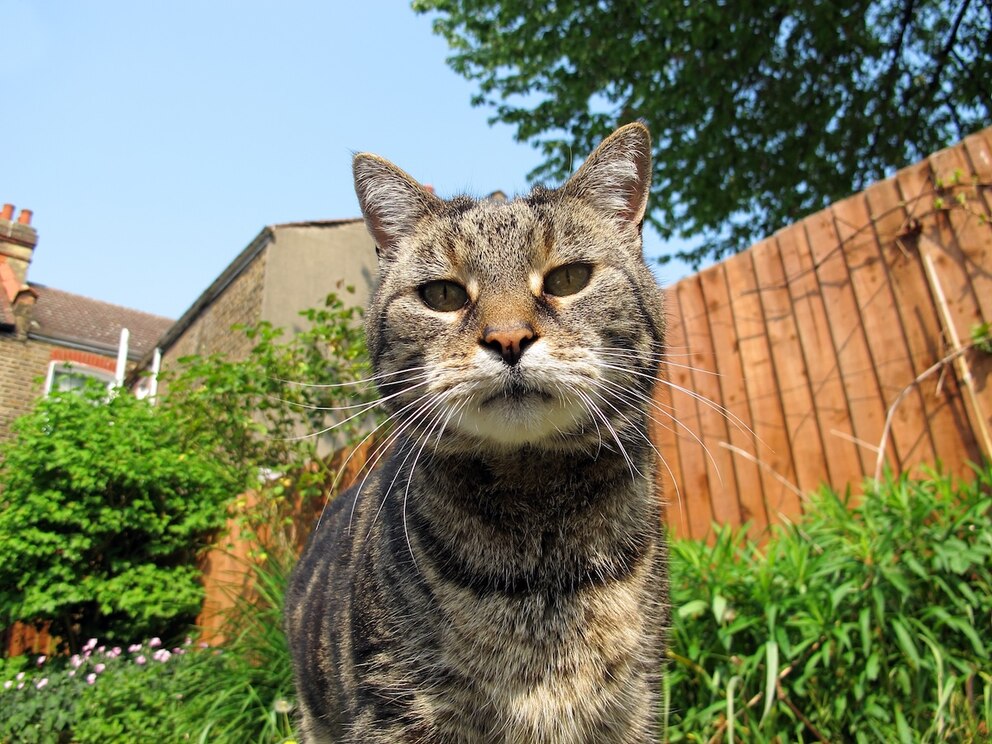
Your own garden seems like a paradise for cats–sun, grass, and trees promise pure adventure. But behind hedges and flower beds lie risks that owners often underestimate. How can outdoor access be designed so that the animals are safe outside? With these five targeted precautions, the greenery behind the house becomes a cat-safe garden and a protected retreat.
Why a Secured Garden Makes Sense
Cats love to roam through the grass, climb trees, or doze in the sun. However, busy roads, poisonous plants, open water sources, or scattered garden tools can quickly become threats. A secured garden offers a compromise between keeping cats indoors and allowing uncontrolled outdoor access. By considering important safety aspects, you can provide your cat with exercise and variety–without exposing them to unnecessary dangers.
1. High Fences and Nets as Protective Barriers
A well-fenced garden forms the basis for safe outdoor access. This keeps risks like traffic, parasites, or animal cruelty outside the property–provided the boundary is sufficiently high. A minimum height of two meters is necessary, explains Judith Förster, a biologist and pet expert at Vier Pfoten, on MyHOMEBOOK.
Particularly agile animals might overcome even this hurdle, which is why an overhang at the top of the fence provides additional protection. Alternatively or additionally, a stretched net–similar to a cat-safe balcony–can prevent cats from escaping.
2. Diverse Design Without Escape Routes
Besides securing the garden, its structure plays a central role. Bushes, trees, and shrubs invite climbing, hiding, and observing. However, it’s important that they are not directly next to the fence, as they could serve as a jumping-off point. There should also be enough open spaces for running and playing. “The imagination knows no bounds here,” says Förster. With climbing elements, hiding spots, and elevated resting places, a versatile experience space is created.
3. Caution in Plant Selection
Many popular ornamental plants are toxic to cats. These include ivy, yew, monkshood, angel’s trumpet, broom, and in spring, crocuses, snowdrops, and tulips. Instead, cat-friendly alternatives like lavender, valerian, lemon balm, catnip, or cat grass are recommended.
Typical symptoms of poisoning range from drooling, vomiting, and diarrhea to loss of appetite, difficulty breathing, kidney failure, or seizures. A conscious choice of plants significantly reduces the risk for the cat.
4. Secure Water Sources
Ponds, pools, or rain barrels can also become hazards. While many cats avoid water, there is still a residual risk. “Cats avoid water but can swim in an emergency if they fall in,” says Förster. Shallow shore areas or stable exit aids allow the animals to save themselves in an emergency. Rain barrels should be covered with solid lids, as nets can give way under the weight of a cat.
5. Keep an Eye on Everyday Objects and Chemicals
Often, it’s the inconspicuous things that become dangerous. Scattered garden tools, strings, nets, or sharp objects pose injury risks. “Cats could get tangled and, in the worst case, not free themselves and strangle,” warns Wattad. Barbed wire is also unsuitable for a cat-safe garden.
Additionally, chemical agents should be used with caution. Fertilizers, weed killers, or insecticides can harm pets. Pet owners should opt for organic or bio-fertilizers. Rat poison is particularly dangerous: If a cat eats a poisoned mouse, it can have fatal consequences.
Important Prerequisites Before the First Outdoor Access
Before a cat explores the garden, basic protective measures should be in place. These include up-to-date vaccinations, neutering, and microchip identification. Registration in the pet registry increases the chance of quickly finding a lost animal.

Porträt Saskia Schneider
Dr. rer. nat. Saskia Schneider Managing Editor
Outdoor Access in the Garden? Here’s What the Behavior Expert Says
“As a behavioral biologist, I would absolutely recommend secured outdoor access to anyone with cats, as it greatly enriches a cat’s life. In nature, cats have a core territory where all important resources are located, as well as a roaming territory that they regularly explore and check. The garden offers exactly that. Something changes every day, there are new smells, birds to watch, and many things to explore.
The greatest danger I see is that the cat escapes and gets lost. A well-installed cat fence can help here. A GPS tracker is also absolutely sensible, but it must be tolerated by the cat.”
The post 5 Tips for a Cat-Proof Garden appeared first on PETBOOK.
Comments are closed.