
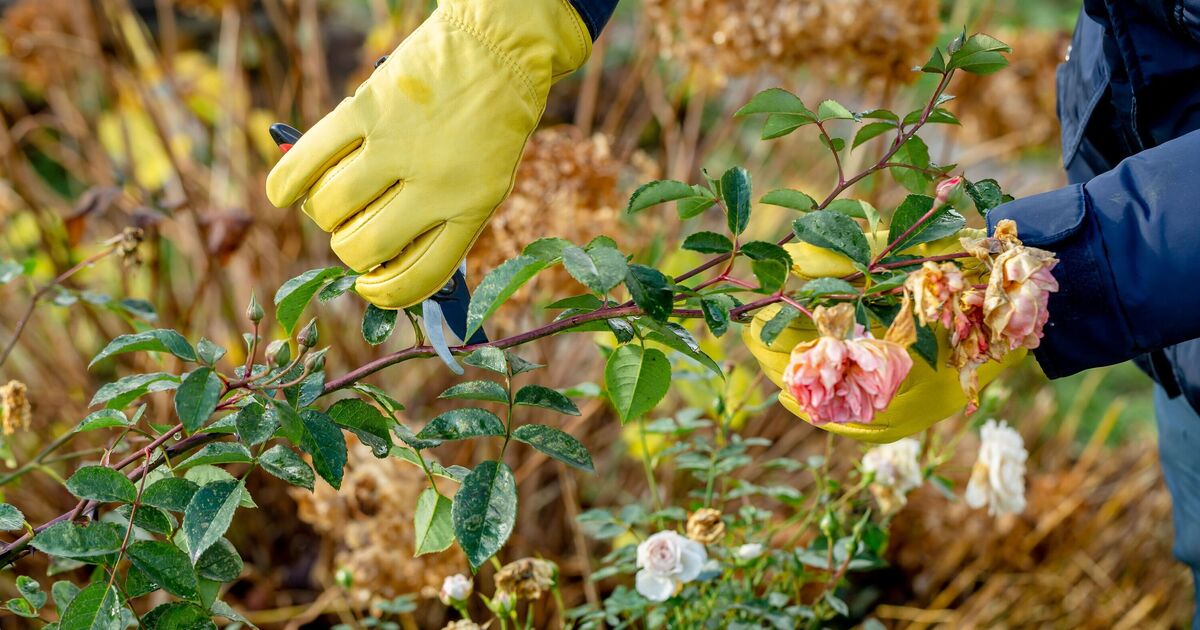
Pruning is an essential gardening activity for managing growth, sculpting plants, developing flowering or fruiting stems for the coming season, and, crucially, eliminating dead, damaged or diseased sections of plants. According to gardening expert Monty Don, successful pruning needs to be carried out at the correct time, which differs based on the plant species, and must adhere to “one rule”.
Monty offered guidance on when and how to prune plants this month in his March gardening tasks blog entry. He recommended using extremely sharp and sterile secateurs, also referred to as shears. The most frequently used tool for this job is bypass secateurs, which are essentially scissors with one slender and one thicker cutting blade. They inflict minimal harm to the stem, making them perfect for trimming living plants and lighter duties such as cutting flowers.
Gardeners could also use kitchen scissors for plants with delicate stems, but they must be thoroughly cleaned to prevent introducing infection, which could destroy the plant.
Monty stated that the first fortnight of March is the “best time to prune any shrubs and climbers” that will bloom on fresh growth, especially late-flowering clematis, roses and buddleia.
The horticultural expert observed that he prefers to do this when he “starts to see new shoots appearing”.
Gardeners are urged to “resist the temptation to do so” if February is mild, as a delayed frost could harm any emerging growth.
Shrubs such as cornus, willow and sambucus can be cut back severely to encourage fresh shoots, which will “glow with extra bright colour next winter”.
As stated earlier, Monty maintains there’s “only one rule to follow” when pruning, and that’s to “always cut back to something”, whether it’s a side shoot or leaf bud.
Apart from that, the 70-year-old urged gardeners not to worry about outward-facing buds or other specifics.
Monty clarified that the aim of pruning, according to his rule, is to “encourage vigorous new growth that will, in turn, produce lots of flowers”.
For climbing varieties like the Viticella group of clematis, pruning seeks to stop flowers from developing higher and higher up the plant, leaving the lower section bare.
Comments are closed.