
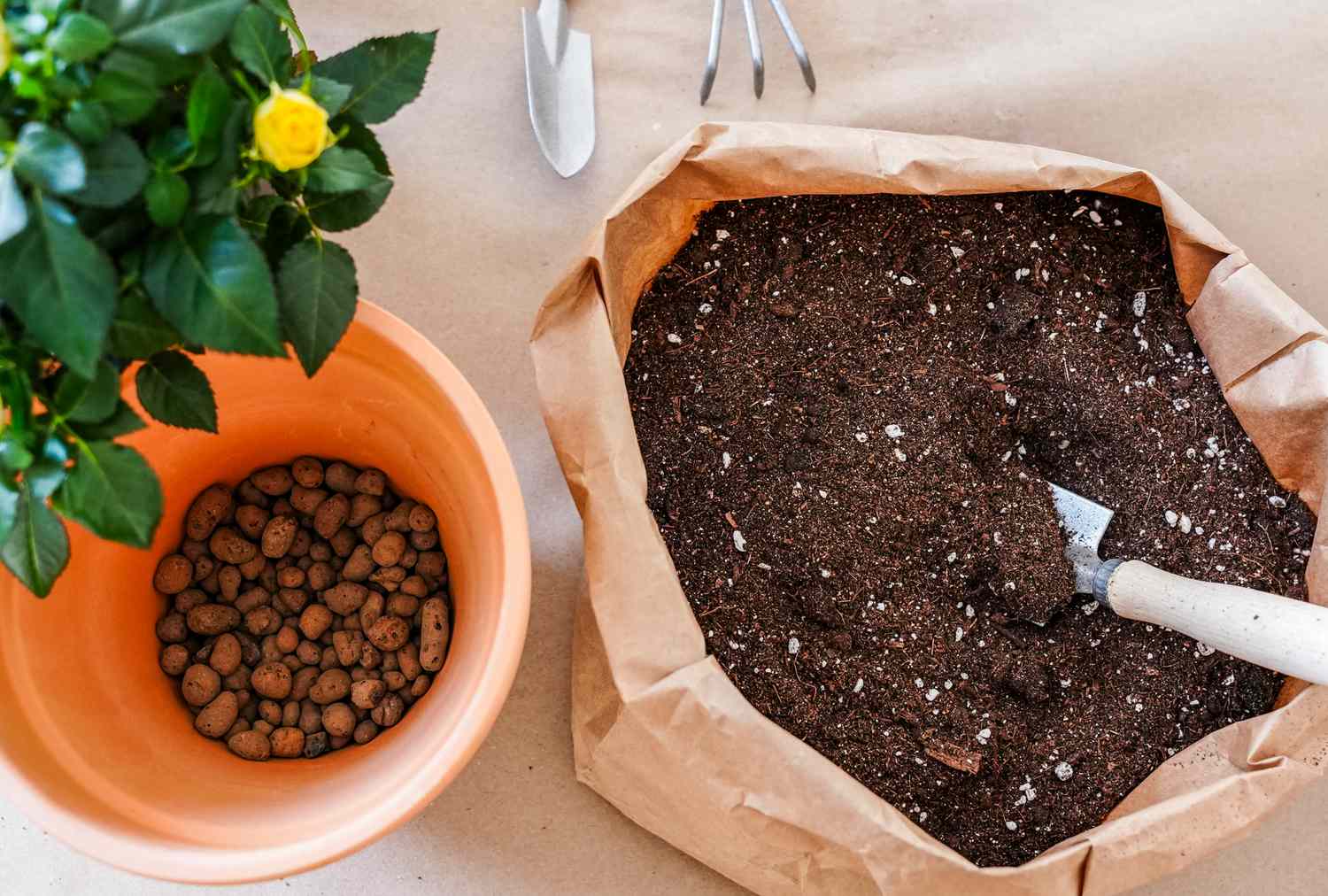
When your plants outgrow their pots, you’ll need to remove them, clean and trim the roots, and pot them into a bigger container. But what do you do with all of the leftover soil? Instead of throwing it away, you may be considering adding it to your garden, but there are some important factors to consider before doing so. Ahead, gardening experts explain whether you can add old potting soil to your garden and offer their tips for doing so the right way to prevent introducing pests and diseases to your landscape.
Can You Reuse Potting Soil in the Garden?
It’s typically fine to reuse potting soil in the garden as long as the plants growing in it were healthy. “If there was a known disease or pest pressure with the plants grown in the container, it would be best to sanitize the media before incorporating it in the garden,” says horticulture educator Laura Irish-Hanson. Otherwise, reusing old potting soil is often a fine idea as it is usually light, airy, and contains beneficial nutrients.
How to Reuse Potting Soil in the Garden
There are ways to sanitize potting soil to prevent the spread of pests and diseases to your garden. First, remove roots, grubs, leaves, and other debris from the old potting soil. Then, decide on the best method for banishing potentially harmful microbes and insects.
Solarization
One easy way to sanitize potting soil to remove pests and diseases is to solarize it, says Irish-Hanson. Place the soil in a clear bag or container, ensuring it is tightly sealed, and keep it in a sunny location for a few weeks or longer, depending on temperature and length of sunlight each day, she says. The heat will help break down bugs and diseases.
Occultation
A similar process is occultation, but in this case, you are using opaque bags or containers. This process is slower than solarization, taking up to a month or more, says Irish-Hanson. Occultation can kill weed seeds and certain pests, but it is typically less effective than solarization at killing disease-causing pathogens.
Revitalization
After using solarization or occultation to sanitize your soil, rejuvenate it by amending it with organic matter. “Soil can be reused over and over again when you follow a few simple tips,” says gardening instructor Meg Austin. She suggests adding amendments to older soil, such as worm castings, banana peel tea, or liquid fish emulsions. And never let it fully dry out. “Soil that gets too dry can become hydrophobic, meaning it repels water instead of absorbing it,” she adds.
How to Add Old Potting Soil to the Garden
Use your old potting soil in the garden to help plants establish and to replenish your beds.
Add It Around Holes When Planting
The roots of new transplants can benefit from loose soil to work into, and your recycled potting soil can function well here. “When I’m prepping my garden beds or flower pots for spring, I add 1 to 2 inches of fresh soil as mulch to help perk the soil back up,” says Austin. “I also add a handful of new potting soil to the freshly dug holes as I’m planting my flowers and vegetables. Just remember, you want to use actual potting soil, not a seed starting mix.”
Mix It Into the Surrounding Soil
You can also mix your old potting soil thoroughly into the existing garden soil using basic gardening tools. “Incorporate potting mix into your garden beds by digging it in,” says Irish-Hanson. “Simply spread the potting mix across the soil surface and turn over the soil with a shovel until mixed.” She points out that one issue with this method is that it can bring weed seeds from lower down in the soil up to the surface.
Mistakes to Avoid
Recycling your potting soil is a fairly straightforward task, but you can help improve your results by avoiding some simple mistakes.
Don’t neglect the soil: Sometimes the soil inside containers can become hard. “The biggest mistake people make when using old potting soil is letting it ‘die,'” says Austin. “Soil, even the kind from a bag at the store, is a living thing. It needs to be watered and amended in order to stay healthy.” She suggests adding compost as a refresher if your potting soil no longer absorbs water or seems to float to the surface. Never use diseased soil without sanitizing: Using old potting soil that has a known disease or pest issue without sanitizing it can introduce harmful pathogens and insects to your garden. “The best thing to do if you cannot sanitize the potting mix is to connect with your local commercial composting facility to check if they can take diseased plants and soil, and send the material to them if they do,” says Irish-Hanson.
Comments are closed.