
Dennis McNamara
| Special to MyCentralJersey.com
Our Cooperative Extension office regularly receives agricultural fact sheets from Rutgers that inform staff and the public about the latest research from the university’s plant scientists. A recent one that crossed my desk, from Agricultural and Natural Resources Agent Jean Epiphan, is titled “Mycorrhizal Fungi, Their Benefits to Plant Health, and Roles in Resiliency.”
Reading it triggered a mildly entertaining but entirely unrelated memory of Tom Wolfe’s novel “The Bonfire of the Vanities.” For those unfamiliar, the book focused on Wall Street bond traders who viewed themselves as “Masters of the Universe.” After digesting the fact sheet, it became clear that the highly sophisticated trading system operated by mycorrhizal fungi dwarfs anything humans on Wall Street could ever conceive. It would not be much of a stretch to label these fungi the true “Masters of the Universe” — or at least masters of our planet — given that these massive, ancient life forms beneath our feet are fundamental drivers of soil health.
Most people walk over the hidden world of mycorrhizal fungi without realizing their foundational role, developed over the past 450 million years. These organisms function as the “fiber-optic cables” of the natural world, forming a vast communication network often referred to as the “Wood Wide Web.” Their deal-making is simple: The fungi deliver water and essential nutrients, such as phosphorus and nitrogen, to plants, and in return, the plants pay them back with sugar, or liquid carbon, produced through photosynthesis. In fact, fungi are the reason forests exist at all.
About 450 million years ago, Earth’s land surface was largely barren rock. Plants were just beginning to transition from water to land and lacked true roots. Without a way to extract nutrients from harsh, rocky soils, these early plants struggled. Fungi were already present and partnered with these primitive plants, effectively serving as their digestive systems and root networks. Fossils of the earliest land plants show mycorrhizal fungi living inside their tissues. Without this partnership, plants might never have colonized land, and Earth would be a vastly different — and much browner — place today.
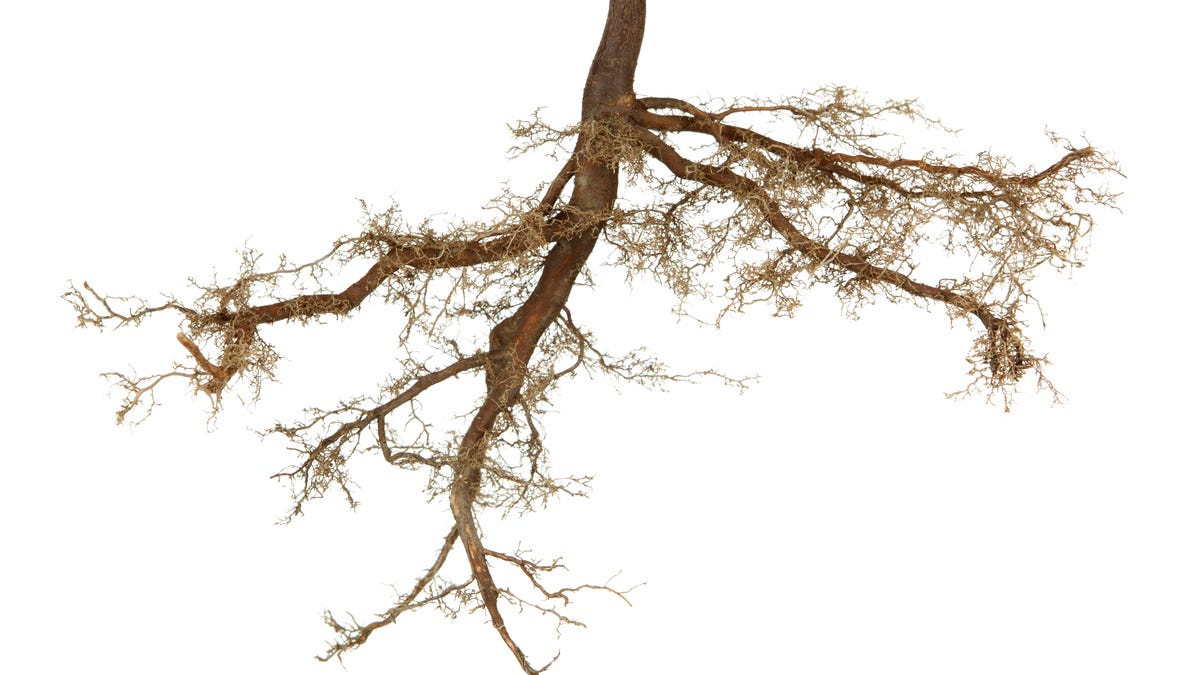
Mycorrhizal fungi provide multiple benefits to healthy ecosystems and are remarkably strategic in their interactions. Plants partnered with fungi grow faster and stronger because the fungi can increase the effective surface area of root systems by 100 to 1,000 times, greatly improving nutrient uptake. These fungi are also adept at locating tiny pockets of moisture in soil, providing plants with a form of drought insurance when water is scarce.
In addition, mycorrhizal fungi produce a sticky protein called glomalin, which acts as nature’s glue. Glomalin binds soil particles together, improving soil structure, increasing oxygen availability and reducing erosion. The fungi also form a protective barrier around plant roots, physically blocking harmful fungi and bacteria and making plants more resilient to disease. Plants associated with mycorrhizal fungi often produce larger, sweeter flowers that attract more pollinators.
Beyond plant health, fungi play a significant role in the global carbon cycle by stabilizing organic matter in soil and storing carbon within their networks. Carbon storage by mycorrhizal fungi is estimated at 13 gigatons annually.
The fungal kingdom, distinct from plants and animals, includes an estimated two million to five million species, ranging from yeasts and mildew to lichens and mushrooms. Thousands of these species are mycorrhizal fungi, generally grouped into two main categories: ectomycorrhizal and endomycorrhizal fungi.
Endomycorrhizae are the most common, penetrating the cell walls of plant roots. They are found in about 80% of plant species, including many staple food crops such as corn, beans and fruit. Ectomycorrhizae, by contrast, wrap around the outside of roots like a glove and are typically associated with large forest trees such as oaks, pines and beeches. Mushrooms visible on the forest floor are often the fruiting bodies of ectomycorrhizal networks hidden underground.
Understanding this ancient plant-fungi partnership highlights its central role in the evolution and sustainability of life on Earth. These underground ecosystems are critical to forest resilience, agricultural productivity, landscape restoration and climate-change mitigation. When soils are excessively disturbed by plowing or overloaded with chemical fertilizers, delicate fungal networks are broken, leaving plants weaker and more dependent on external inputs. Protecting these fungi allows us to grow healthier food and cultivate more resilient forests with fewer chemicals.
The next time you walk through a park or forest, consider the massive, ancient and intelligent “Masters of the Universe” beneath your feet, quietly conversing and trading their bonds in the soil below.
Dennis McNamara is an agriculture program associate at the Rutgers Cooperative Extension of Monmouth County.
Comments are closed.