
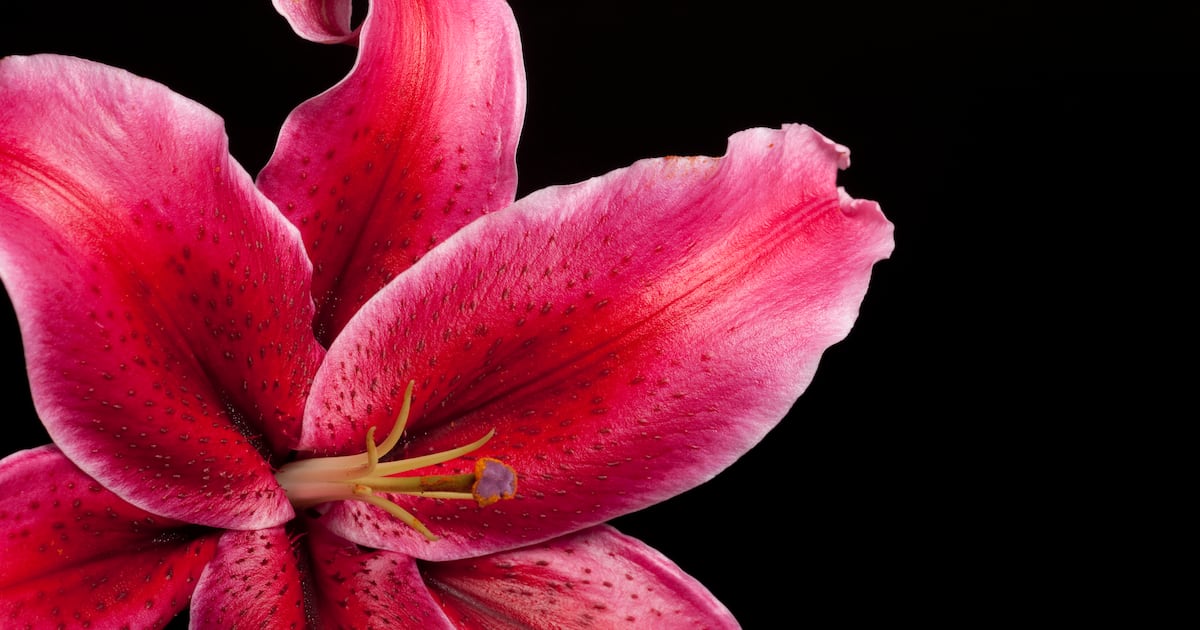
As a flower-farmer-florist, I’m always interested to see how the worlds of gardening and fashion march so closely in step. Take the lily, for example, a flower enjoying a resurgence of popularity among a younger generation unbothered by its association with the tackier excesses of the 1980s, as well as its famously sticky pollen. The result is that where Generation X may wince at the sight and smell of a Stargazer, Generations Y and Z are more likely to be enthralled by this flower’s zingy hues and sculptural, “in your face”, almost surreal perfection.
Something similar holds true for gardening. Tree lilies, for example, also known very fittingly as skyscraper lilies or goliath lilies, aren’t for the faint of heart, with their outsized, fleshy, otherworldly flowers atop tall, sturdy stems that can stretch to heights of as much as 2.5 metres. But very few plants can rival them for their zany, “out there” beauty.
In the same way, many other well-known kinds of hardy, summer-flowering lilies – examples include Asiatic and oriental hybrids, tiger lily (Lilium tigrinum), Japanese lily (Lilium speciosum), Henry’s lily (Lilium henryi) and varieties of the trumpet-shaped regal lily (Lilium regale) – aren’t known for being shrinking violets. Instead, these stately showstoppers are prized for their large, shapely, sometimes intensely perfumed, vividly colourful flowers, which appear on tall strong stems between early summer and early autumn.
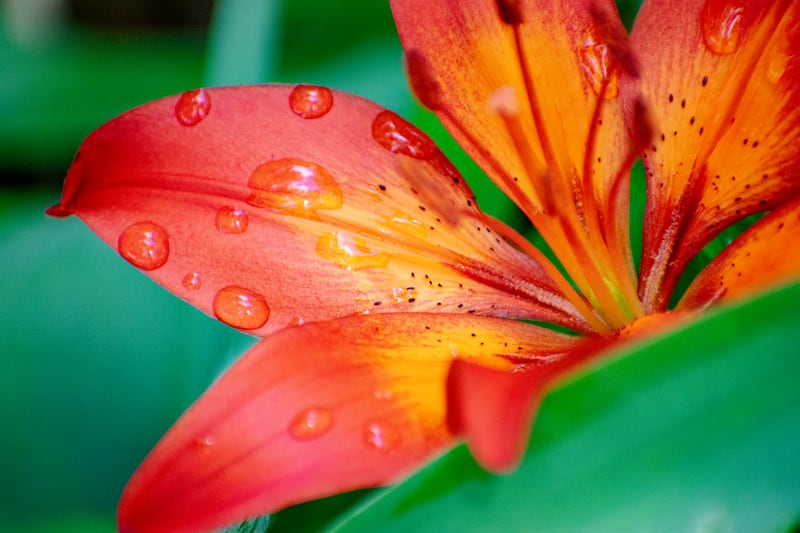 The Asiatic tiger lily, (Lilium tigrinum). Photograph: Kelsey Andriot Purcell/Getty
One of the few exceptions is the exquisite Turk’s cap or martagon lily, Lilium martagon. Tall and elegant, its sculptural flowers appear in early summer and are refined enough to look right at home in a wildflower meadow, where it will eventually naturalise if you’re lucky.
How best to grow any of the above? That all depends. But bear in mind that all true lilies are bulbous perennial species that are generally happy in either a sunny or a lightly shaded, sheltered spot, with protection from strong winds.
[ Tulips: the flowers that get on with almost everything else in the gardenOpens in new window ]
For best results, their fleshy, scaly bulbs are best planted in autumn or early spring, typically at a depth three times their height (the exception is martagon lilies, which should be planted shallowly). Place them pointy side up, into a fertile, moist but free-draining soil to help protect them from rotting over winter. If in doubt, line the planting hole first with some generous handfuls of horticultural grit.
All true lilies can also suffer from slug damage, so start taking careful precautions as they emerge in spring. For this reason, as well as their preference for a free-draining soil, most are very suitable for growing in large, deep pots or tubs, making them a great choice for a colourful summer container display. Just make sure to use a good quality John Innes-type compost lightened with generous handfuls of horticultural grit, and give the plants fortnightly liquid feeds once in active growth. If you’re growing a lime-hating kind such as oriental lilies, Lilium henryi or Lilium speciosum, then also make sure the compost is an ericaceous one. While not strictly necessary, all pot-grown lilies also benefit from winter protection.
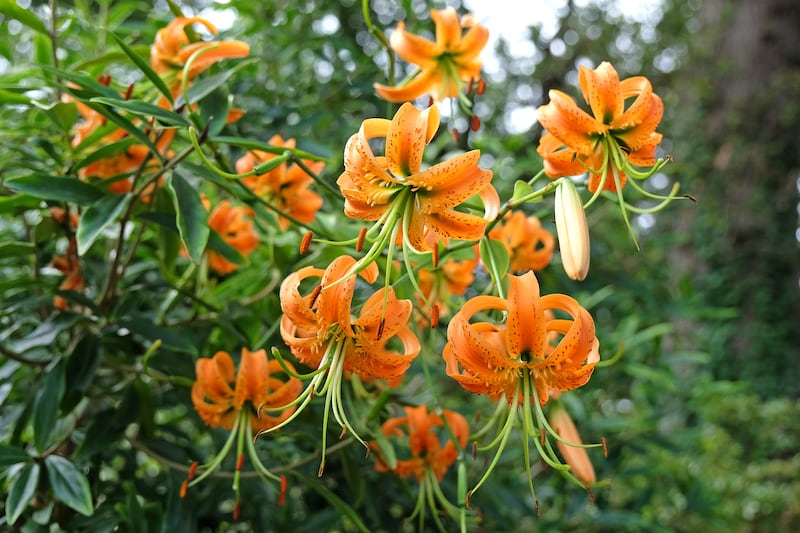 Henry’s lily (Lilium henryi) in flower. Photograph: Alex Manders/Getty
Slugs and snails aside, their greatest pest is the lily beetle, first spotted in Ireland in 2002. Easily identified by its bright scarlet colour, the adult beetle nibbles the plants’ stems, leaves and flowers while its larvae quickly shred the foliage. A combination of garlic spray (apply generously and regularly to the foliage once the plants emerge in spring) and regular handpicking is the best method of organic control. Watch out for the orange-red eggs too, which are typically laid on the underside of the leaves from April to mid-summer, making sure to squash them between your thumb and index finger.
Confusingly, it’s important to note that not all plants we call lilies are actually true lilies. Examples include the calla lily, and its hardier cousin, the arum lily, as well as the daylily (Hemerocallis), the crimson flag lily, and the toad lily, all of which require quite different growing conditions.
A long-lived, hardy tuberous perennial known for its tall, striking white flower spathes, the arum lily (Zantedeschia aethiopica) enjoys a rich, damp but free-draining soil in either full sun or light shade that never quite fully dries out in summer. For this reason, it’s often grown as a marginal along the edges of garden ponds. Best suited to milder parts of the country where harsh frosts are rare, it forms large, statuesque, sometimes semi-evergreen clumps.
Both the daylily (Hemerocallis) and the autumn-flowering crimson flag lily (Schizostylis coccinea) are hardy, decorative, clump-forming perennials that enjoy relatively similar growing conditions to the arum lily. Just avoid planting daylilies into soil inclined to waterlogging, which it resents. By comparison, the graceful, autumn-flowering perennial known as the toad lily (Tricyrtis formosana) needs a rich, cool, damp but free-draining soil in dappled shade.
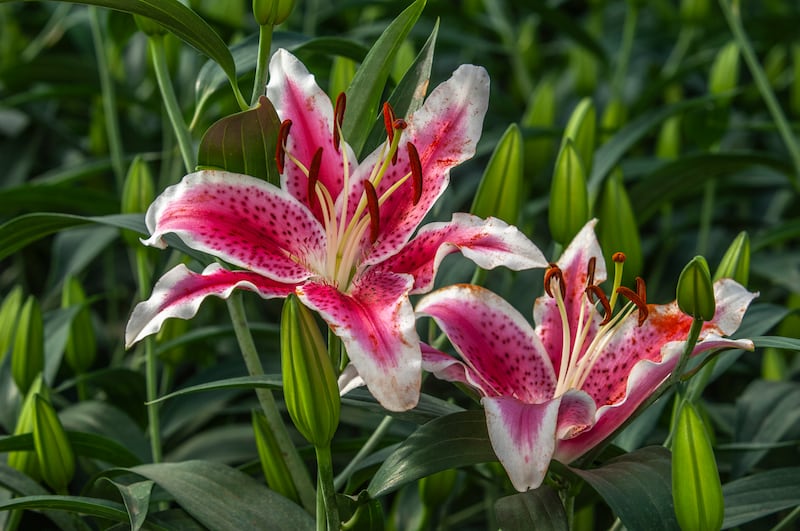 A Stargazer lily on a central California coastal nursery. Photograph: David Gomez/Getty
That’s not the case, however, for the calla lily, another 1980s classic recently rediscovered by the fashion world. Typically available as cultivars of Zantedeschia elliottiana and Zantedeschia rehmannii, this exotically colourful, tender plant needs minimum temperatures of between 5C and 10C to reliably overwinter. It also requires a soil that almost dries out over winter, during which time it should be kept undercover and in the dark, making it challenging to grow as a perennial in Ireland. Instead, treat it as a short-lived annual by potting its fleshy rhizomes up under cover in March-April, before moving the containers outdoors in early summer. A demanding diva, it needs the sunniest, most sheltered spot in the garden that you can give it, plus plenty of mollycoddling in the shape of regular watering and liquid feeds. A lot of fuss and bother, yes, but just think of the kudos…
This week in the garden
Early March is a great time to divide and transplant large, established clumps of snowdrops while the ground is still moist and their root systems will quickly re-establish. Just make sure to label these new plantings clearly before the foliage dies down and you forget where they are.
Carefully check container-grown plants and seed trays for slugs and snails. These often conceal themselves in the compost or on the base of containers before emerging at this time of year to start feeding on any tender new growth. Check also for clusters of slug eggs laid in the compost and rub these away.
Dates for your diary
‘Celebrating Women in Irish Gardens’ RHSI Bellefield Gardens, Shinrone, Co Offaly; March 7th (10am-3.30pm). A one-day event in collaboration with the National Built Heritage Service, with guest speakers including Daphne Shackleton, Frances MacDonald, Caroline Elliott-Kingston and Paul Smyth. Tickets are €85 and include lunch and a tour of the gardens, pre-booking essential, see rhsi.ie
Comments are closed.