
 5 min read
If your ideal weekend doesn’t involve hedge trimmers and a growing pile of clippings, it may be time to rethink what’s in your landscape. Many traditional shrubs are bred to be tightly sheared and constantly shaped, but native shrubs tend to grow into beautiful, balanced forms all on their own.
Even better, they support local birds, bees, and butterflies while standing up to regional weather with far less fuss. Plant one of these low- to no-pruning native shrubs and you’ll spend less time maintaining your yard and more time actually enjoying it — and so will the critters.
Inkberry Holly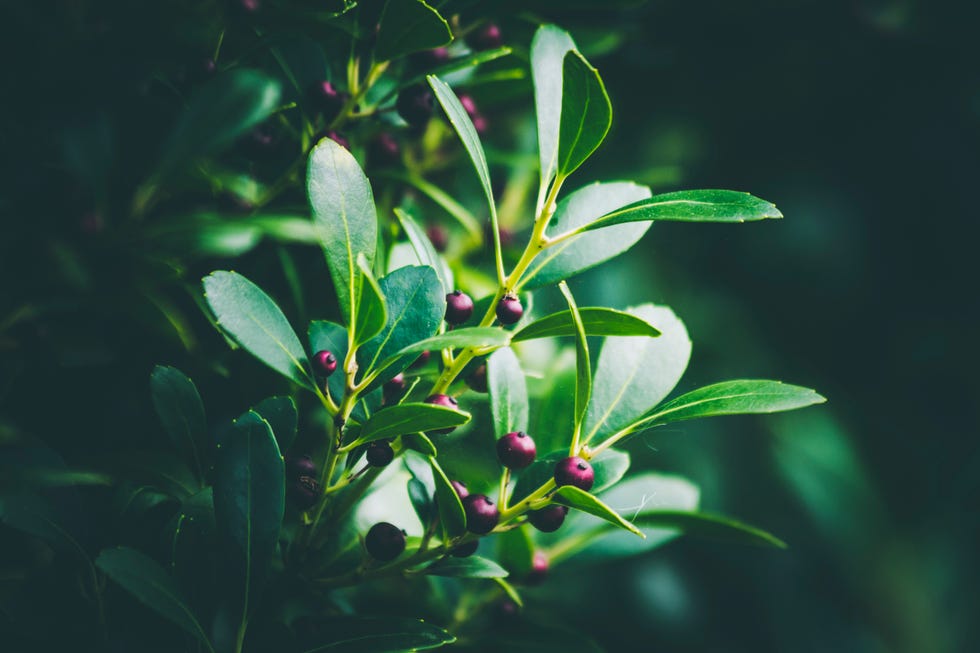
Diane Labombarbe//Getty Images
Modern cultivars of inkberry holly (Ilex glabra), such as ‘Nordic’ and ‘Gem Box,’ have dense evergreen growth that forms naturally tidy spheres with little to no pruning. This super-hardy, slow-growing shrub is ideal for small spaces, especially the modern varieties that top out at 2 to 4 feet tall at maturity. The straight species can grow larger, reaching 5 to 8 feet.
In fall, female plants produce small black berries that are favorites of birds, including towhees and thrushes. To get berries, you’ll need both male and female plants nearby.
Native Azaleas
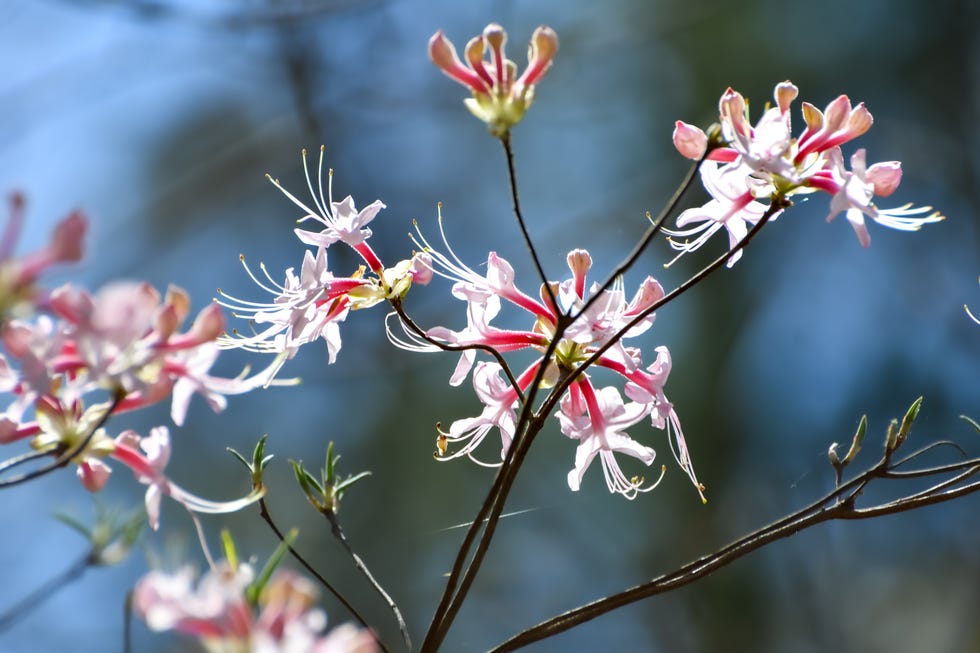
There are about 17 azalea species (Rhododendron spp.) native to the United States. Most grow in the eastern U.S., but two — Rhododendron occidentale and Rhododendron albiflorum — are native to western regions. These shrubs naturally develop an airy, graceful shape that doesn’t require regular trimming. In fact, too much pruning can ruin their natural form and reduce flowering.
Leigh Ann Speake//Getty Images
In spring, native azalea produce fragrant blooms in shades of orange, pink, yellow, and white that attract hummingbirds and butterflies. Many also offer excellent fall color in reds and oranges. Give them acidic, well-drained soil and a bit of shade, and they’ll stay beautifully shaped with minimal intervention. In ideal conditions, these plants can grow quite large, up to 10 feet high and 15 feet wide, so plan accordingly.
New Jersey Tea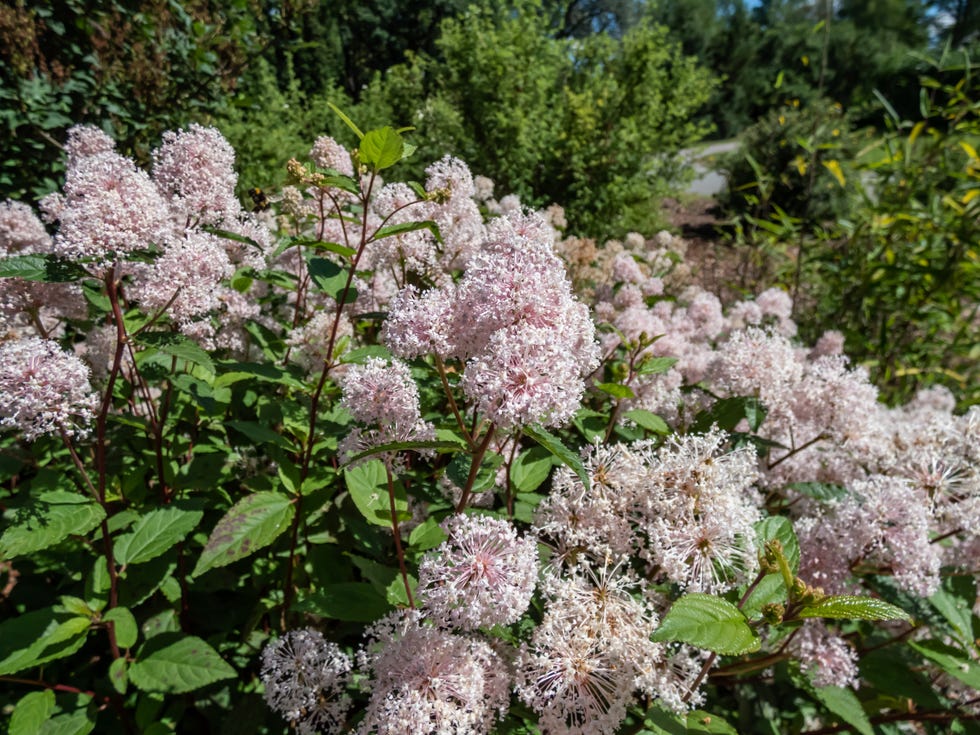
Kristine Radkovska//Getty Images
Topping out at 4 feet tall and 5 feet wide, this compact native shrub is found across much of eastern and central North America. New Jersey tea (Ceanothus americanus) naturally forms a tidy, rounded mound and holds its shape without routine pruning. In early summer, it produces clusters of frothy white flowers that draw native bees and other pollinators. Once established, it’s drought-tolerant thanks to its deep roots, and it typically needs nothing more than the occasional snip of winter dieback.
Carolina Rose 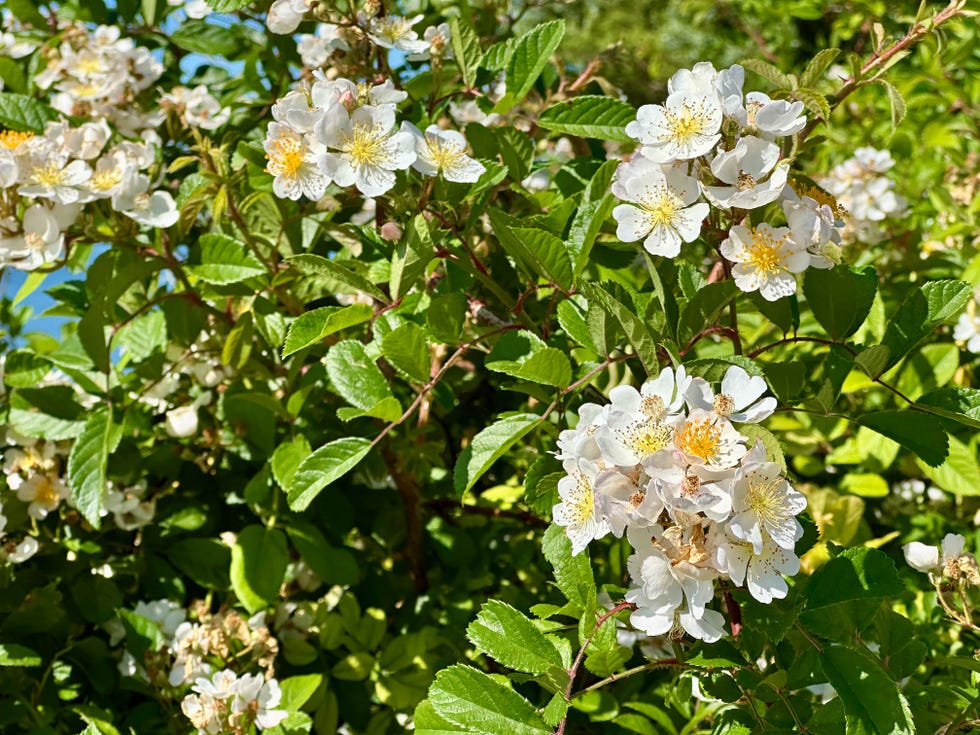
Ryan McGurl//Getty Images
Another compact plant, this hardy native rose (Rosa carolina) grows up to 3 feet tall and wide and is found in the eastern U.S. Unlike many hybrid roses that demand constant cutting, Carolina rose keeps a pleasing, natural shape with little to no pruning—at most, you’ll remove an old cane now and then. In late spring to early summer, it blooms with simple pink flowers that support pollinators. By fall, it produces bright red hips that add seasonal color and provide food for birds.
Snowberry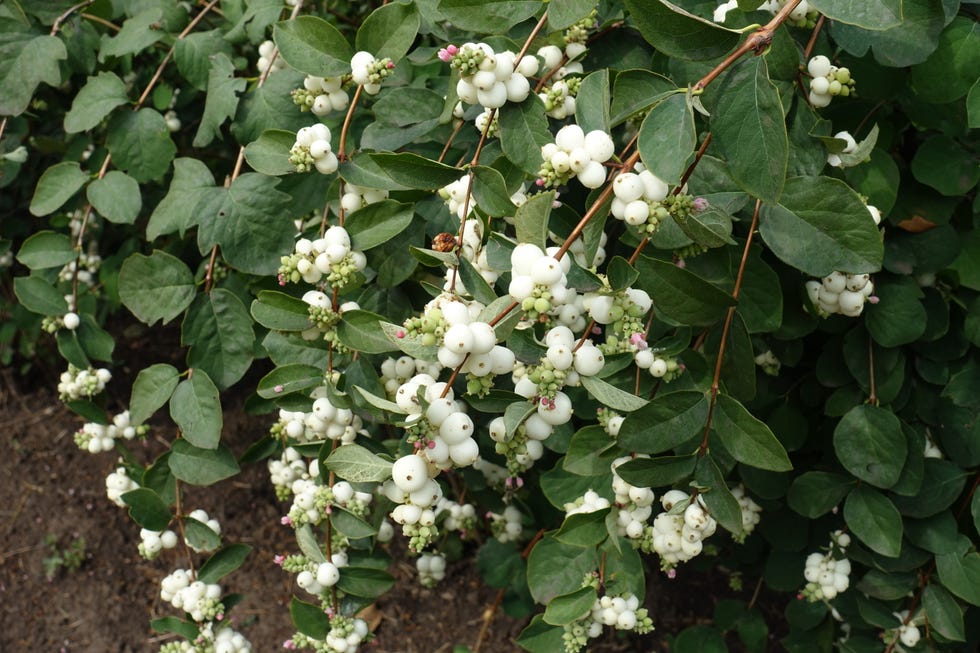
apugach//Getty Images
This hardy native shrub has a broad range that includes much of the western U.S. Snowberry (Symphoricarpos albus) is an easy, low-pruning plant that naturally forms a soft, mounded thicket—great for slopes, naturalized areas, and wildlife plantings where you want something that can take care of itself. It can grow quite large, with some varieties reaching up to 8 feet tall and wide.
Small pinkish flowers appear in summer, followed by distinctive white berries that persist into winter. Snowberry tolerates shade, drought once established, and tough soils. It may occasionally require thinning if you want to keep it contained, but otherwise it’s pretty hands-off.
Mapleleaf Viburnum 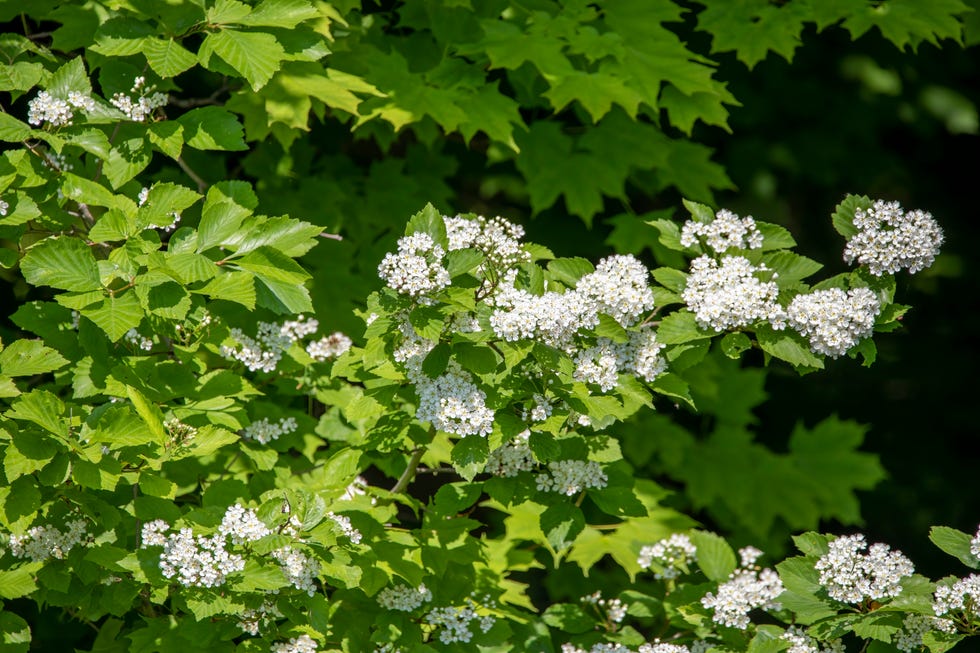
Ali Majdfar//Getty Images
Mapleleaf viburnum (Viburnum acerifolium) is an understory shrub native to eastern woodlands. It grows into a naturally rounded form that rarely needs shaping. Because it flowers on old wood, heavy pruning can reduce blooms, so it’s happiest when left mostly alone. In late spring, clusters of creamy white flowers appear, followed by dark berries that birds enjoy. Its maple-shaped leaves turn beautiful shades of pink, purple, and red in fall, delivering big seasonal payoff with minimal maintenance. In ideal conditions, it can reach 7 feet high by 5 feet wide.
American Beautyberry 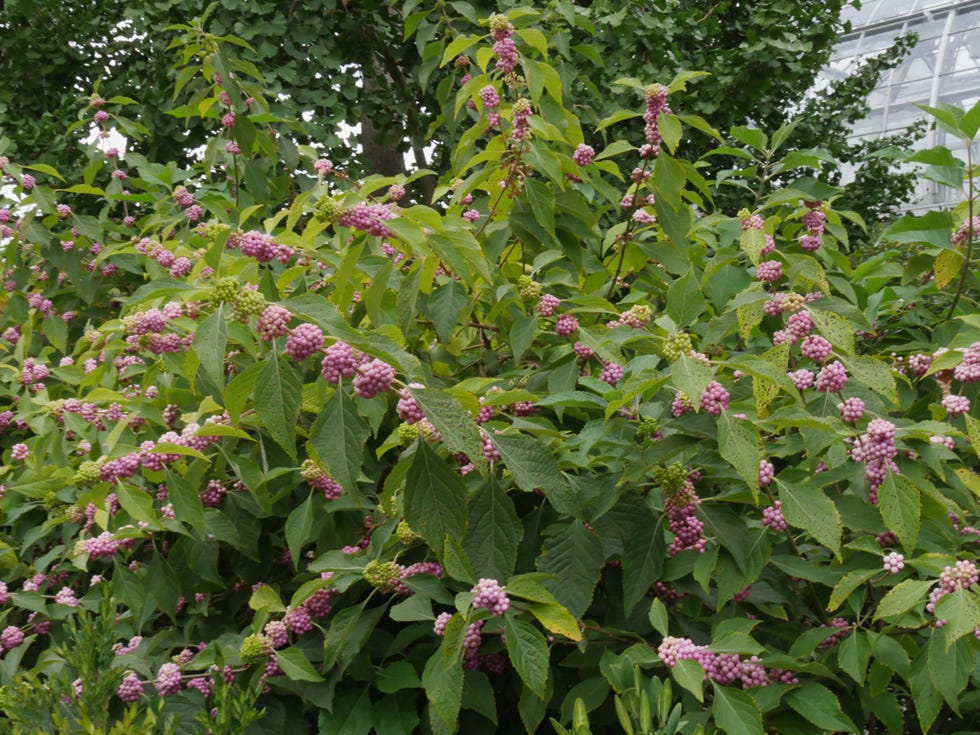
GemStocks//Getty Images
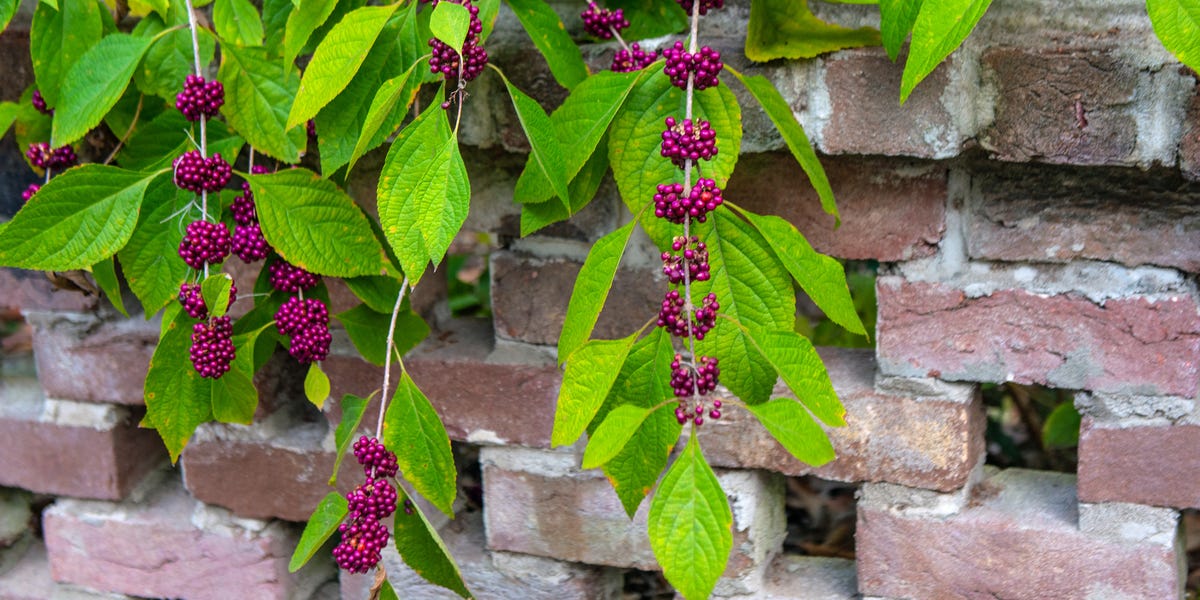
This fast-growing native shrub reaches 3 to 8 feet tall and 3 to 6 feet wide and is best known for its showstopping fall fruit, a favorite food source for birds. American beautyberry (Callicarpa americana) doesn’t require routine pruning to look good—its naturally loose, arching habit is part of its charm. However, gardeners can cut it back in early spring if they want a tighter shape. Small pink flowers appear in summer, followed by vivid purple berries that wrap the stems in fall and persist into winter. It thrives in full sun to part shade and adapts well to a range of soils.
Black Chokeberry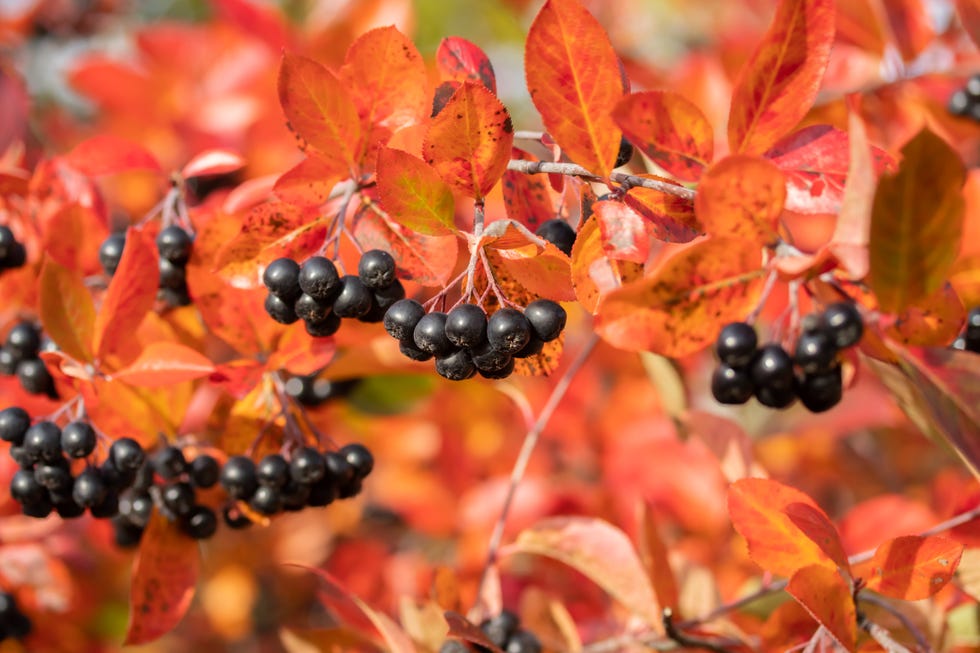
MinttuFin//Getty Images
Black chokeberry (Aronia melanocarpa) is a tough, adaptable native shrub that stays attractive with little to no pruning. It naturally grows in a neat, upright-to-rounded form, and maintenance is usually limited to removing an older stem every few years if you want to refresh the plant. At maturity, it can reach around 6 feet tall and wide. In spring, it produces white flower clusters that attract pollinators. It produces glossy black berries in summer that are valued by birds and wildlife. In fall, the foliage turns a brilliant red.
Buttonbush 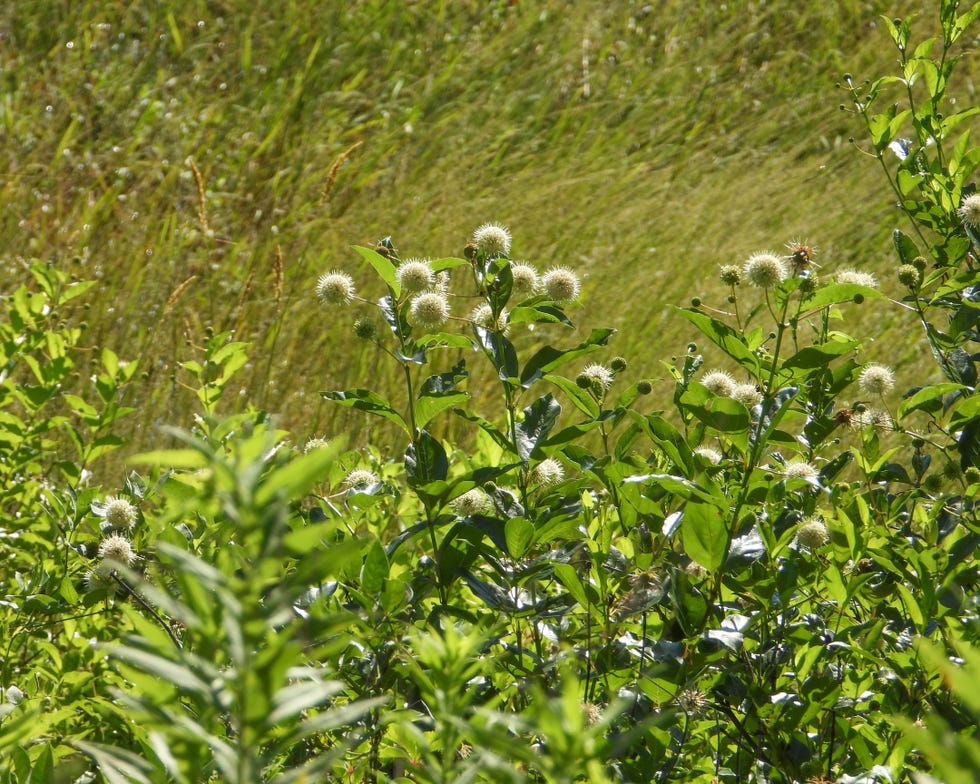
Brian Woolman//Getty Images
This moisture-loving native shrub is found in much of the eastern and central U.S. Buttonbush (Cephalanthus occidentalis) forms a naturally rounded, open shape, and generally needs little pruning unless you’re controlling size in a tight space. It can get quite large (12 feet tall and 8 feet wide), so plant it in an area with lots of space.
In summer, it produces spherical white flowers that resemble pincushions and are irresistible to butterflies and other pollinators. Seed heads follow, offering food for birds. It’s a perfect low-maintenance pick for rain gardens, pond edges, and other consistently moist spots.
Ninebark 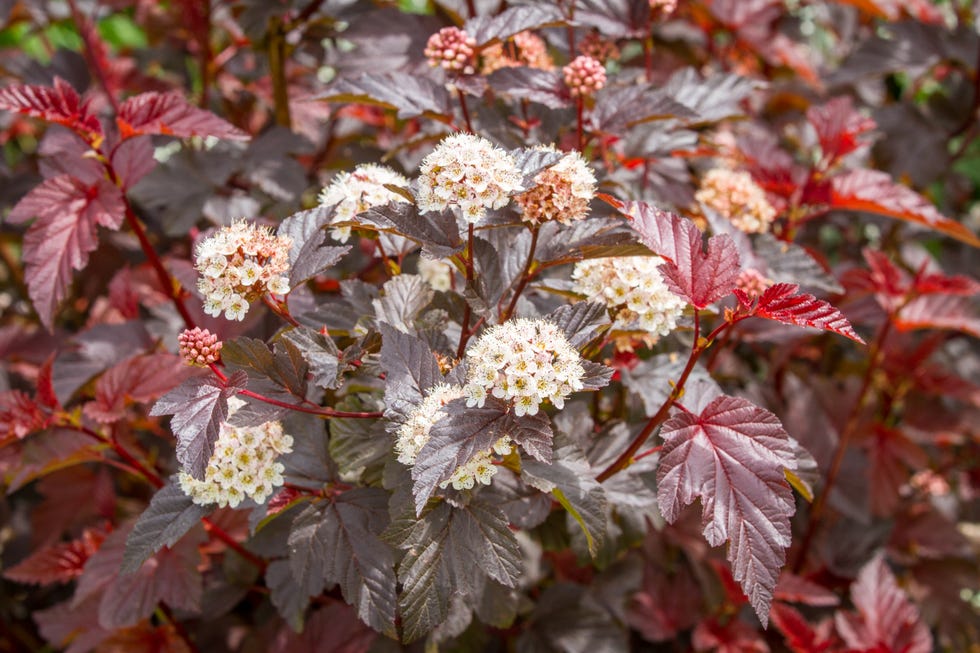
n1kcy//Getty Images
Ninebark (Physocarpus spp.) is a rugged native shrub with species found across multiple regions, including the Pacific Northwest (Pacific ninebark, Physocarpus capitatus) and the eastern U.S. (Eastern ninebark, Physocarpus opulifolius). It has a naturally arching, fountain-like habit that looks great without regular pruning — in fact, it’s often best left to grow into its natural shape.
In late spring to early summer, clusters of small white to pinkish flowers appear, followed by decorative seed capsules. Many varieties also feature exfoliating bark for winter interest, and some offer rich fall color. It delivers loads of seasonal appeal with very little effort.
Comments are closed.