
Key Points
Pennies in soil lack sufficient plant-available copper to offer meaningful nutrient or pest control benefits.Coins can’t prevent mold and disease like commercial copper fungicides.Stick with proven plant care methods, like proper fertilization, monitoring, and targeted treatments.
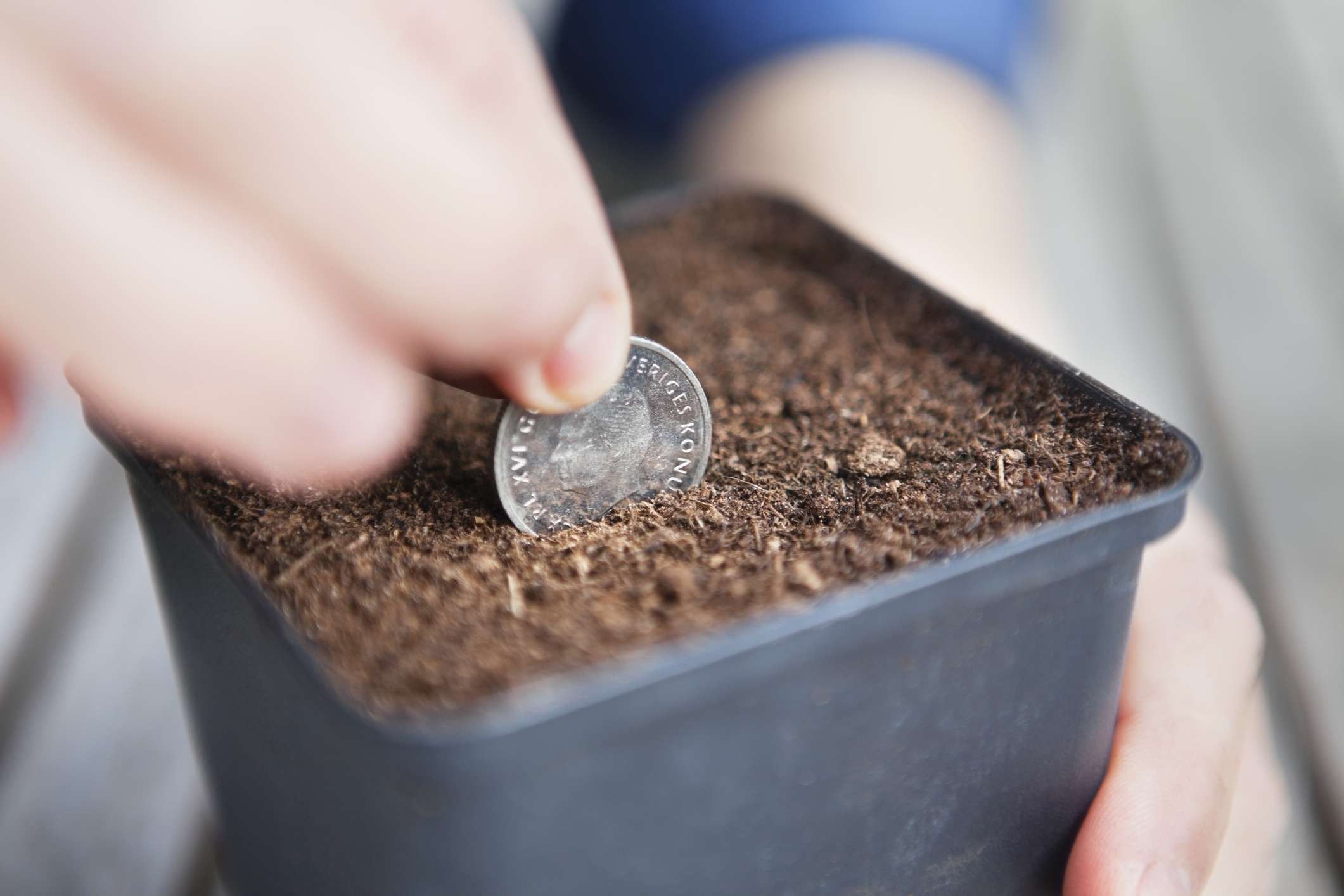
A popular houseplant hack that’s been doing the rounds recently is adding coins to the soil. The claim is that it can help to improve plant health, prevent fungus, and deter pests.
But is this simple strategy too good to be true? We asked an expert: Why are people putting pennies in with their plants? Read on to understand why science-backed plant care methods surpass your spare change.
Meet the Expert
Heather Zidack is a Horticultural Outreach Educator in the Department of Plant Science & Landscape Architecture, UConn Home & Garden Education Center, University of Connecticut.
Why Are People Putting Pennies in Their Plant Soil?
The theory behind adding pennies to your pots is solid enough. Copper is an essential micronutrient for plants. It plays an important role in the process of photosynthesis, helping to promote healthy growth and glossy green foliage. Copper deficiencies in soil can lead to plants suffering from stunted growth and yellowing leaves, and being more vulnerable to fungal diseases and pests.
The thinking is that adding pennies to pots means copper will slowly leach into the soil, saving you from having to invest in copper-based commercial horticultural products.
Can the Penny Hack Help Plants?
Adding coins to your soil probably won’t help your plants, and we breakdown why below.
“Overall, given the number of interacting variables and the lack of reliable, peer-reviewed studies supporting the penny hack, I don’t recommend it,” Heather Zidack, Horticultural Outreach Educator in the UConn Home & Garden Education Center at the University of Connecticut, says.
For Nutrition
As a nutrient, copper is far more complex than the penny hack suggests. Zidack points out that how zinc, copper, and other metals affect your plants depends on multiple variable factors, including how fast they’re oxidizing, soil type, pH levels, and nutrient availability.
Regardless of the other factors, coins are unlikely to provide sufficient copper for nutritional purposes. Most modern pennies are made primarily of zinc with a thin copper coating. But even old copper coins aren’t going to be miracle makers.
Any leaching that occurs happens so slowly and minimally that it’s unlikely to have a measurable effect on your plant’s health.
“Copper in the soil is more often found as a micronutrient, but not all forms of copper (or any nutrient) are considered ‘available’ for our plants to take up,” Zidack says. “If a penny releases compounds that are not available to your plants, it will just sit there in the soil.”
As a Fungicide
Coins in soil aren’t going to kill, prevent, or inhibit plant fungal diseases the way commercial contact-based copper fungicides will either.
“Fungicides that use copper as the main ingredient are largely administered in home use through spray applications,” Zidack explains. “They work because the product makes direct contact with plant tissue and creates a barrier between the plant tissue and fungi, and full coverage is essential for success.”
Can the Penny Hack Harm Plants?
A few pennies in a pot probably isn’t likely to harm your plants. Excessive copper levels in soil can damage plants at the cellular level, stunt growth, and be harmful to the environment.
However, your plants aren’t likely to absorb much of this element from coins in the soil, and certainly not enough to be a problem. Plus, the amount of copper that leaches from coin-filled soil into the ecosystem isn’t enough to act as a problematic toxin.
However, given they aren’t part of an effective plant care strategy, leaving your moolah in your moneybag is best.
More Effective Plant Care Strategies
When you want healthier plants free from pests, nutritional deficiencies, and diseases, there are better, science-backed strategies to focus on rather than viral-worthy shortcuts. Zidack recommends simply starting with close observation of your prized specimens.
“The first thing to do is get to know what your plant looks like under healthy conditions and frequently check in for signs of distress,” Zidack says. “The sooner you can identify a problem, the sooner you can identify a management strategy.”
She recommends reaching out to your local Cooperative Extension if you need help with getting an accurate diagnosis and suggestions for a path forward.
When intervention is necessary, Zidack recommends sticking with targeted, proven products.
“If you get to the point of needing chemical interventions, always follow the product label for full
instructions and only apply for diseases or pests that are explicitly listed on that label,” she says. “While we may be intimidated by pesticide products, remember that they’re measured, regulated, and come with clear labeling to ensure successful management of pests and disease.”
If your plant needs extra nutrients, use a fertilizer formulated for your plant type. Zidack explains that this provides consistent, measured, plant-available nutrients, removing any guesswork.
Comments are closed.