
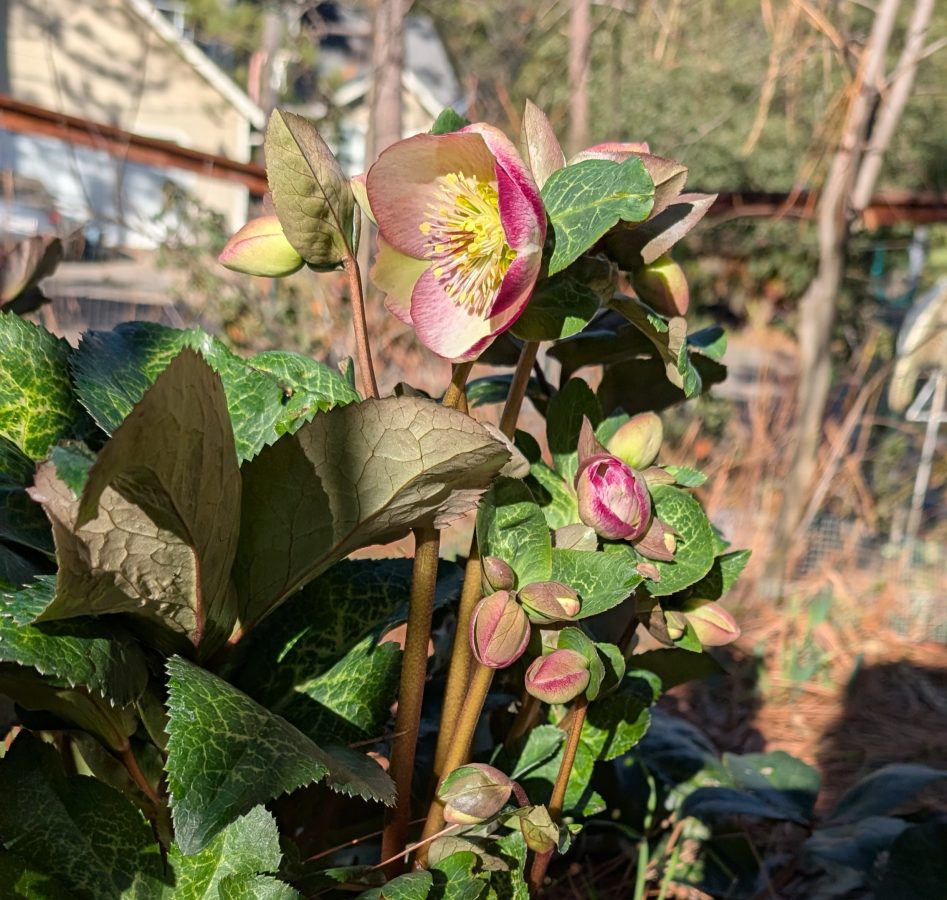
Looking for a little winter/early spring color in the Sierra can be disappointing unless you know about Hellebores.
Also called Lenten Rose, this perennial evergreen plant blooms in late winter into early spring. From an almost true black, lime green or various shades of red, it is a showy flower with glossy green leaves. The blossoms can be floated in a bowl or, with longer stems, used as a cut flower when nothing else is blooming.
It is a plant that seems to be destined to live in pine and oak forest land. First of all, it is truly deer resistant. No Joke! This is because it is poisonous and the deer know it. While that seems to be a difficulty for children and pets, it is not usually a problem. It is so bitter whoever bites into it spits it right out, so it is not commonly ingested. Be careful where you plant it, though. It is wise to wear gloves when handling the plant because the sap can cause skin irritation.
Plant hellebores in dappled shade. They can handle quite a bit of sun, but planting under deciduous trees is perfect; then they get more sun in the winter when light is scarce. Hellebores are fairly drought tolerant when established. Once you see signs of growth, cut back on watering. Mulch once a year but don’t add any amendments or fertilizers when planting. Cut back the large leathery leaves and dying portions when buds and new growth appear in the winter. The plant can also go summer dormant in our hot and dry climate, so don’t panic. Just give them a little more water to help them through the summer.
Hellebores can be moved in the late fall or in the spring after they have flowered. When transplanting, start about six inches from the plant and push your shovel all the way into the ground. Complete the circle, then lift out the root ball. Plant even with or slightly higher than the surrounding soil so they won’t get waterlogged. You can also divide them into obvious clumps and get more identical plants.
Almost all hellebores that you can buy are hybrids and will not breed true from seed. However, trying to grow them from your plant’s seed can give you some beautiful plants. It can also produce some disappointments, but it is worth a try.
Growing hellebores from seed requires a cycle of cold and warm periods to germinate. The easy way is to let seeds scatter themselves with a little help from a few birds. Check regularly in the spring for new seedlings growing around the mother plant. Carefully dig up these new plants and pot them in a good potting soil in a 4-inch pot and leave them outside where you will remember to water them.
Hellebores are hardy from zone 4 through 9, from North Dakota to southern California. A plant that blooms and grows in mountain snow and that the deer avoid like the plague? Seems to be a natural addition to a Tuolumne County garden. Hellebores provide the first blooms of the year, even before spring, and are a great source of food for early pollinators. Bumblebees will love you!
Jim Bliss is a University of California Cooperative Extension Master Gardener of Tuolumne County.
*::before {
content: “—”;
margin: 0 0.25em;
}
.post-meta.single-post-meta > *:first-child::before {
content: “”;
margin: 0;
}
.featured-image {
float: left;
margin: 0 12px 12px 0;
text-align: center;
}
.featured-img-alt {
font-size: .8em;
margin-bottom: 0 !important;
max-width: 280px;
text-align: center;
}
.enlarge-link {
text-align: center;
border-bottom: 1px solid #e8e8e8;
padding: 0 0 1em;
font-size: .85em;
}
]]>
Comments are closed.