
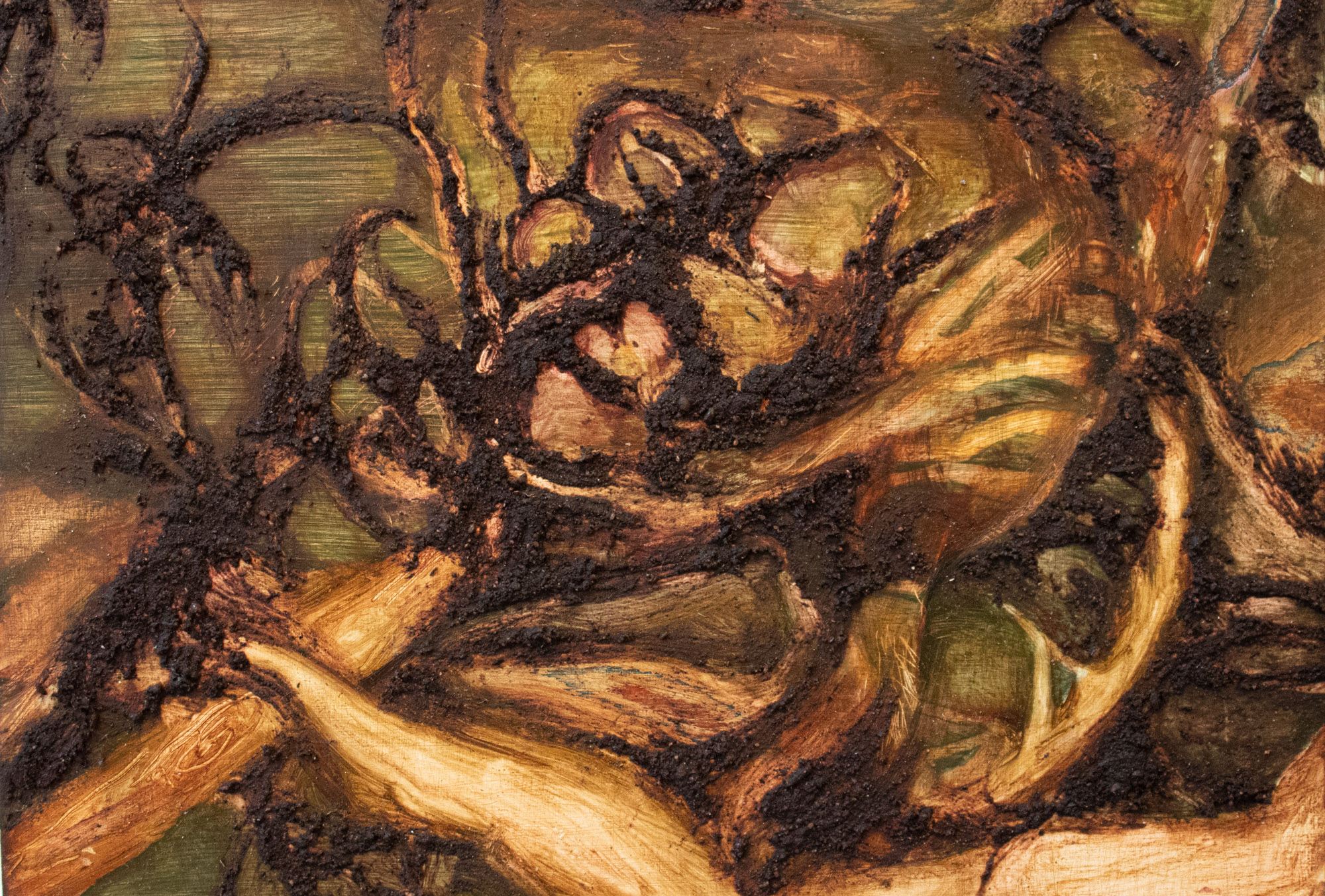
In the face of a looming climate crisis, College of Fine Arts senior Eleanor Bernard uses dried flowers and dirt in her oil paintings — not only to explore the natural planet, but to do her part in sustainability.
Bernard recently introduced natural pigments from plants and soil from the Center of Fine Arts Color Garden, a small plot of land located next to the CFA building on Commonwealth Avenue, in her paintings.
“I’ve always had an interest in gardening, working outside and sustainability, so it was a cool opportunity to mix my art practice into that interest in sustainability,” she said.
In her paintings, Bernard uses the perishable and changing materials to reflect themes of “growth and decay” that are relevant to the current state of the world and “our individual lives,” she said.
“Materials that either are in a more dormant or dead stage of their life [are] interesting to me,” Bernard said. “Bringing them into a painting that makes these dead subjects into something that’s still alive or still being created.”
Bernard said she has been exploring ideas of transformation for a while, and that she is inspired by the garden.
“Being a part of the different stages of the garden throughout the seasons has been really influential to my practice, just thinking about those cyclical patterns in the natural world and finding mirrors of those cycles in other narratives that I’m thinking about,” she said.
The student-led garden presents an opportunity for students to become more involved in sourcing their artistic materials, which can be rewarding, CFA senior Jake Markarian said.
“When you take a step back and look at a piece of art that is from a plant you grew and then turned into dye and then made art with, it has a much more rewarding feeling,” Markarian, co-organizer of the garden along with Bernard, said. “I think there’s something special about looking at art that you were much more involved in from start to finish.”
He said Bernard intentionally chooses materials that match her subjects to create “very strong and interesting pieces of art.”
Bernard said she draws inspiration by observing the growth cycle of the plants in the garden.
“Being a part of the different stages of the garden throughout the seasons has been influential to my practice, just thinking about those cyclical patterns in the natural world and finding mirrors of those cycles in other narratives that I’m thinking about,” Bernard said.
Since the materials used in oil painting are often “toxic” products from the petroleum industry, moving towards natural materials is better for both the artists and the environment, Markarian said.
Bernard said the Color Garden is a continuous research project, and a space for anyone interested in sustainability and environmental science to gather.
“Being a part of our generation, you’ve always grown up with the climate crisis in the background,” Bernard said. “Finding these smaller ways of engaging with our local environment or engaging with these smaller methods of sustainability can not only help us feel more connected to the planet, but also inspire a change in our mindset [to] have more of an optimism for what we have the ability to do to help our planet.”
Dana Clancy, an associate professor of art at CFA, said climate change is a “pressing challenge” that students and faculty face.
More than directly solving the problem, Clancy said the Color Garden provides a community base for students to share information and reimagine possibilities.
“If people become hopeless and apathetic, that’s also a huge problem,” she said. “Part of the importance is to not feel alone in your concern for the environment, but to find ways to connect with others.”
Clancy said students participating in the Color Garden become more mindful about working sustainably in their daily practices, such as using saved onion skins and other food scraps.
Comments are closed.