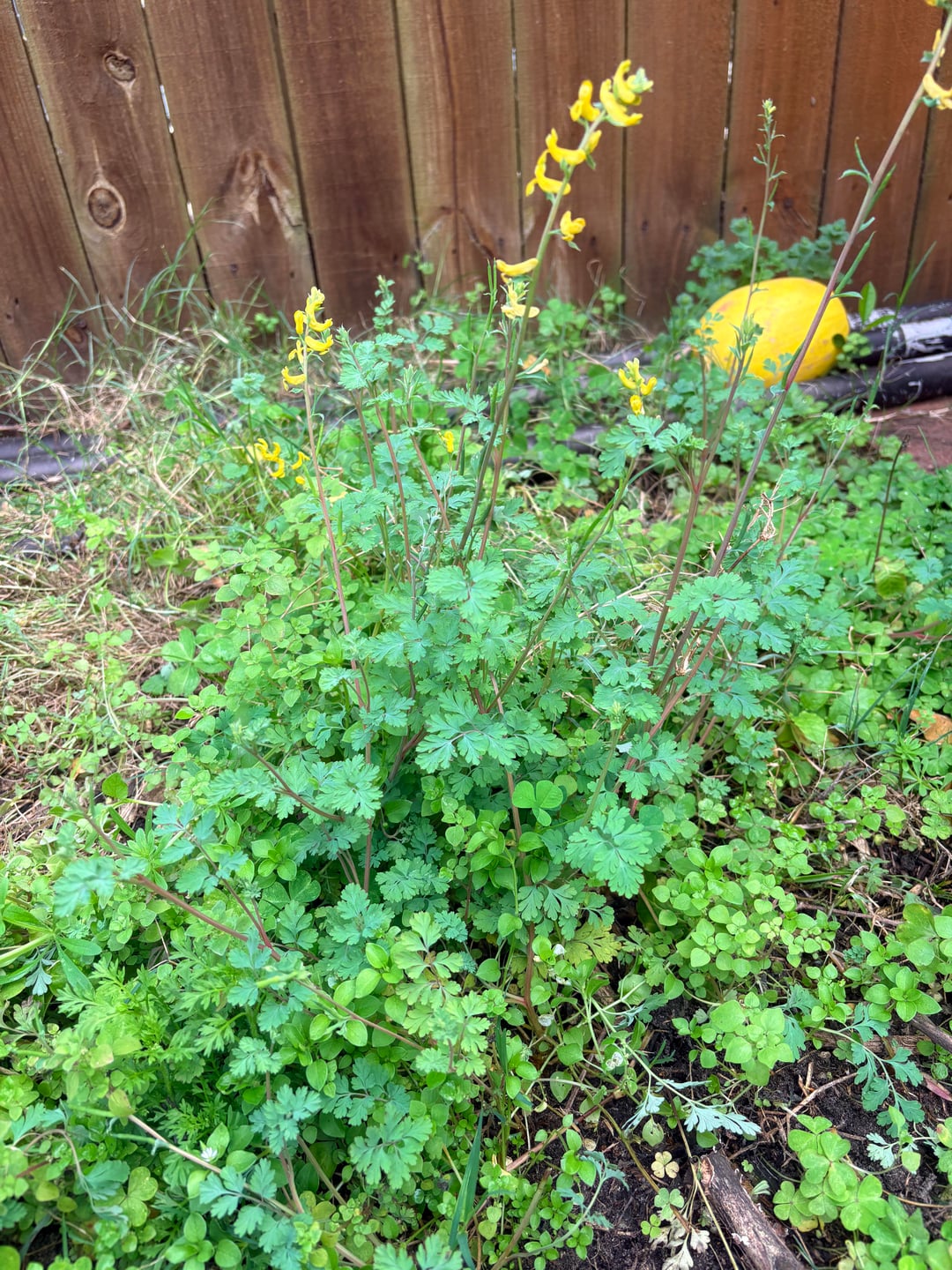
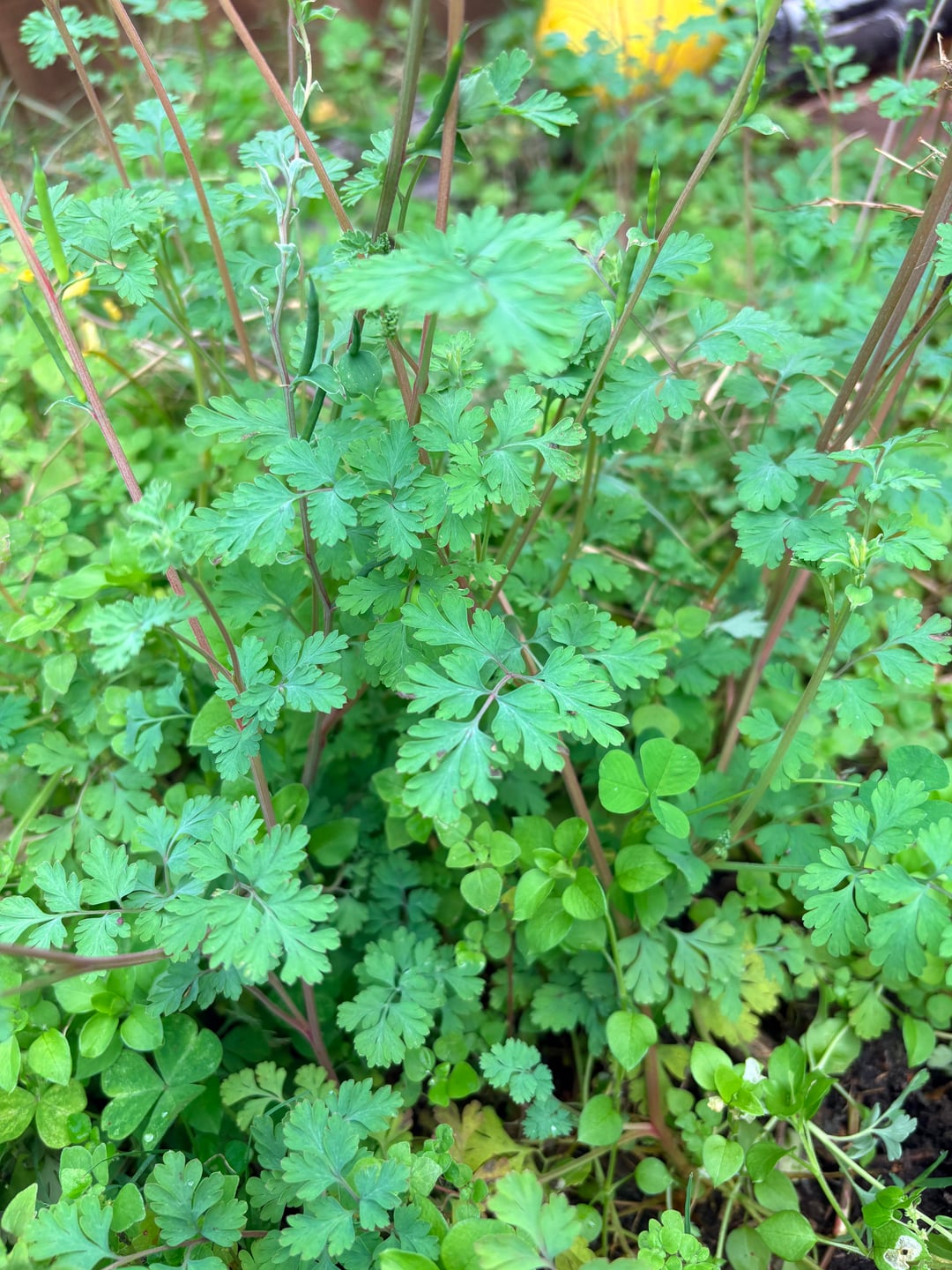
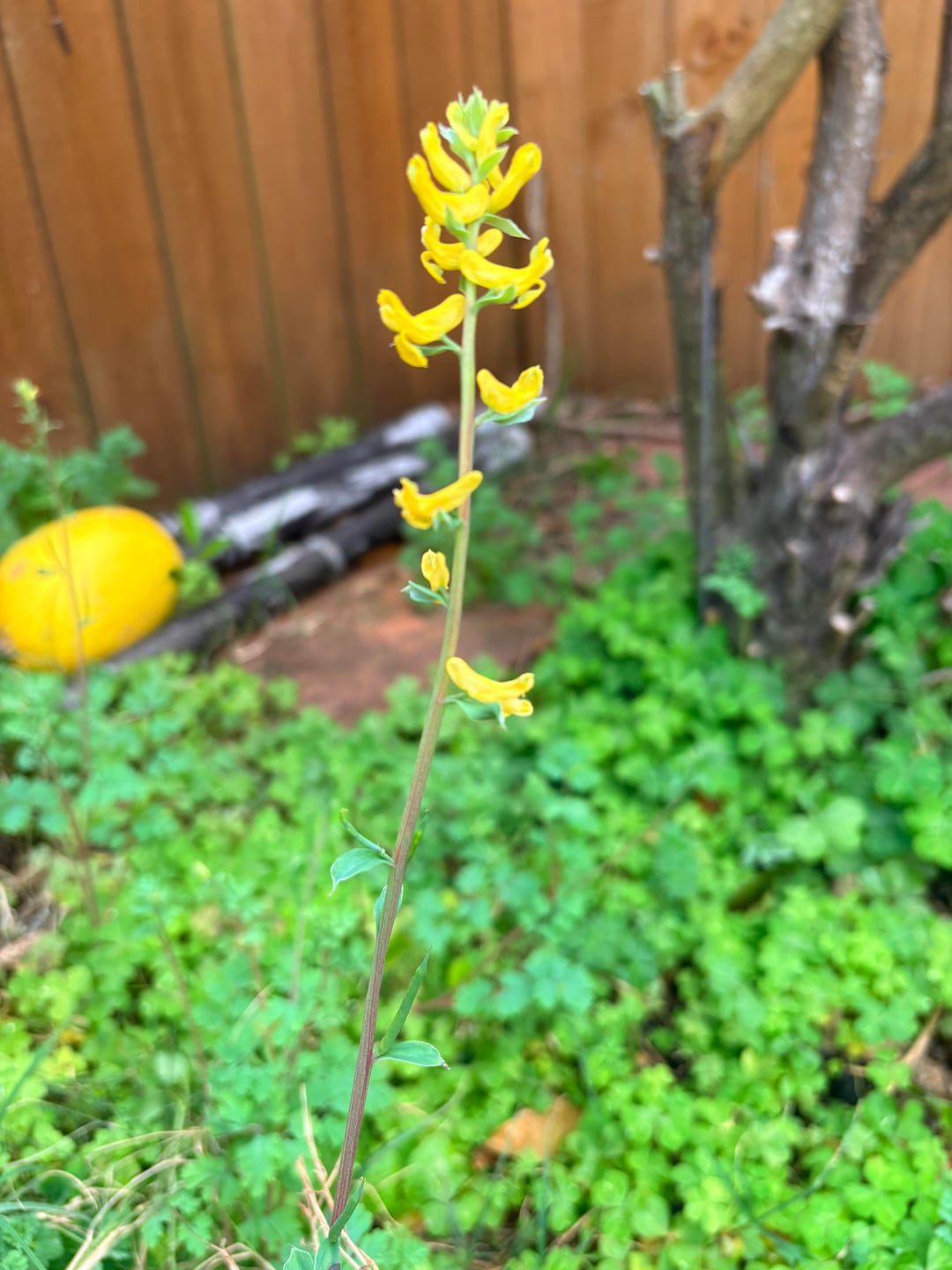
Delicate looking and tall with small yellow flowers, South Louisiana. Sort of like them but don’t want to keep them around if they’re toxic to animals
by bananafish20202020

Delicate looking and tall with small yellow flowers, South Louisiana. Sort of like them but don’t want to keep them around if they’re toxic to animals
by bananafish20202020
3 Comments
Corydalis lutea aka yellow bleeding heart. Toxic to several animals.
Yellow fumewort (Corydalis flavula). Louisiana native. Mildly toxic in very large doses. I couldn’t find any evidence of dogs or cats ever eating it, though, so it’ll be fine to stay in the garden. Plus, the native pollinators will thank you.
It’s a good fit for *Corydalis,* best fit seems to be *Corydalis micrantha,* an interesting species native to Louisiana.
Several related species with equal levels of toxicity are very common around us and I know of no cases of animals being injured. Very many common garden plants are potentially poisonous to pets including daffodils,, pelargoniums, tulips, oaks and ivy. However pets rarely eat them – they generally only eat plants with medicinal effects, a common one is couch grass to induce vomitting if they have stomach issues. Look up zoopharmacognosy.