
Key Takeaways
Most low-maintenance houseplants tolerate regular tap water just fine.Sensitive plants like calatheas, orchids, and African violets prefer filtered water.Rainwater is great for many plants, and carnivorous varieties require extra-pure water.
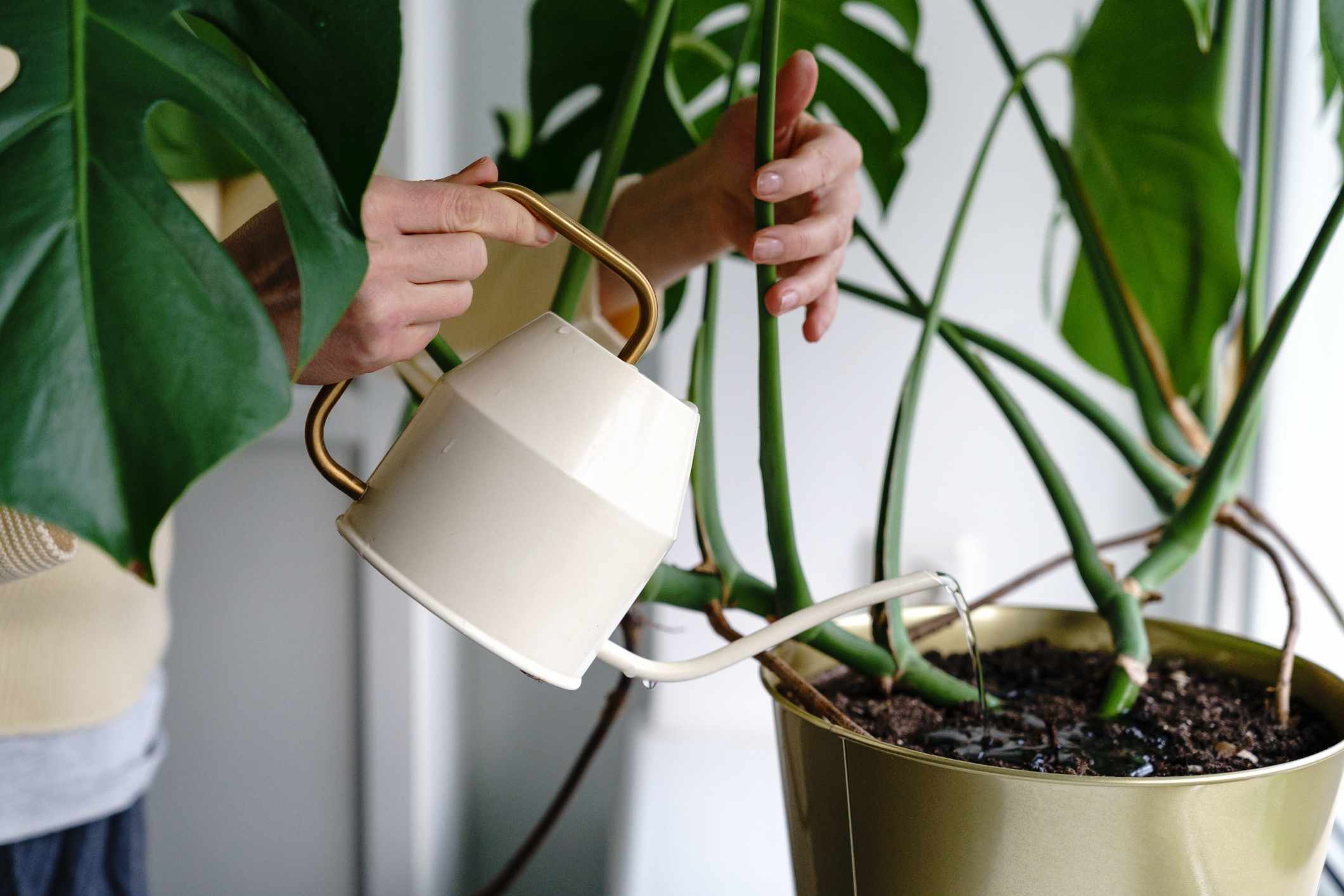
Watering houseplants is simple: you just fill up your watering can at the sink and give your plants a drink—right? In fact, certain plants can benefit from different kinds of water than what flows out of your tap.
We asked a gardening expert about the best kind of water to use for houseplants so that they’re lush, beautiful, and thriving.
Meet the Expert
Wendy Wilber is the statewide coordinator for the University of Florida’s Master Gardener Volunteer Program.
Tap Water
“Most of the time, tap water is going to be okay for your standard, run-of-the-mill plants,” says Wendy Wilber, statewide coordinator for the University of Florida’s Master Gardener Volunteer Program.
That means your pothos, everyday philodendrons, ZZ plants, rubber trees, and many other popular, unfussy houseplants are just fine getting a drink from your bathroom or kitchen faucet. And if your plants seem to be doing well with tap water, there’s no need to change things up.
Filtered Water
However, Wilber notes, there are some exceptions—plants that may show cosmetic or other issues if they’re given regular tap water, depending on the source.
“For your more sensitive plants like African violets, maidenhair ferns, calatheas, orchids, anthuriums, or something that you spent $200 on, like a fancy philodendron, it’s best to use filtered water,” she says.
That’s because tap water from municipal water supplies can contain small amounts of chemicals like chlorine and fluorine that are beneficial to water supplies, but more than some sensitive houseplants can handle. This can result in brown tips even on hardy specimens like spider plants.
For plants like the ones listed above that are particularly sensitive, Wilber recommends using filtered tap water instead, either from a faucet filter or even a countertop pitcher filter.
Depending on the type of chlorine used in your local water supply, you may also be able to fill an open container with water and leave it out overnight for the chlorine to evaporate before using it on your plants.
Distilled Water
Distilled water is relatively free of chemical additives, which is why some people prefer to use it on their houseplants, especially if their homes have hard water.
However, because it contains almost no trace minerals or nutrients, you’ll want to make sure you’re fertilizing regularly. Wilber notes that it’s not necessary, but if you notice a marked difference in how your indoor plants fare with distilled water versus tap water, it may be worth the additional expense.
Rainwater
If possible, Wilber recommends collecting rainwater from a clean source for use on your indoor plants.
Rainwater is the best, because it could even have some nutrients in it from lightning,” she says. “It’s more sustainable, it doesn’t have any salts in it, it doesn’t have any chemicals in it.”
If you have a metal roof or an asphalt roof that isn’t freshly shingled, Wilber says, you can set up a collection system like a rain barrel to catch water that you can then use on your houseplants. Rainwater is also necessary to keep carnivorous plants like Venus flytraps, pitcher plants, sundews, and butterworts in good health.
Softened Water
If your household has hard water—which contains higher levels of minerals like calcium and magnesium—you may use a water softener to remove some of those minerals before they reach your faucet.
However, both mineral-rich hard water and softened water, which contains higher levels of salts, can be bad for houseplants if those minerals or salts are allowed to build up in the soil.
“Signs of salt buildup, whether that be from your water or from fertilizer, could be a white haze on the soil surface or coming through a terra cotta pot,” Wilber says.
If you notice this on your plants—especially if you haven’t been fertilizing lately—you may want to repot the plant in fresh soil and consider using rainwater or distilled water on your houseplants.
Comments are closed.