
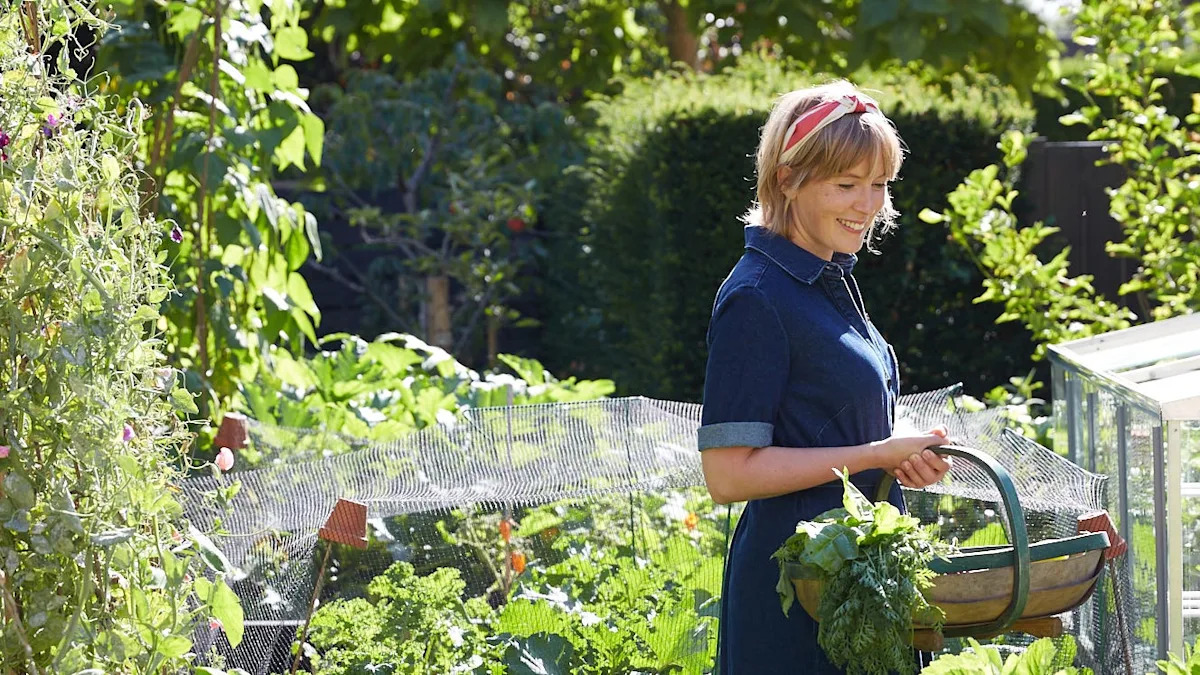
Once a high flying advertising executive with a jetset lifestyle, Kathy Slack found herself burnt out, anxious and consumed by depression in her mid-30s.
She and her husband had moved to the Cotswolds from London for a better work/life balance, only to find that she had simply given herself a significantly longer commute.
She gave up work, didn’t get out of bed for quite a long time – and was eventually coaxed outside by her mother.
“My wonderful mum coaxed me outside one day and sat me with a cup of tea among these overgrown veg beds. If Miss Havisham had a veg patch, that’s what it would have looked like.
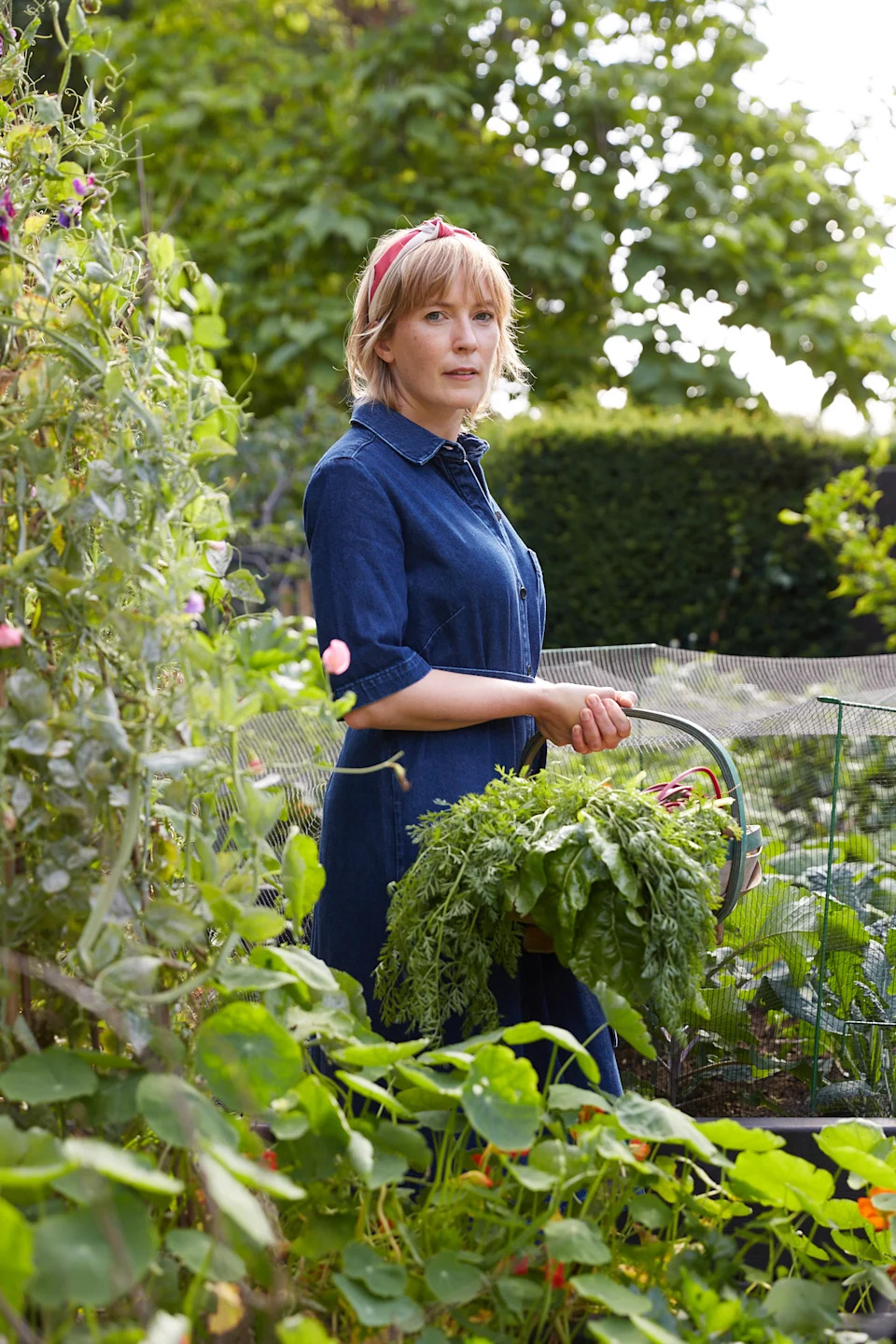
Gardener and author Kathy Slack in her garden (Stephanie McLeod/PA)
“And I looked at the weeds and the worms and watched the bugs tootling around and it kind of calmed me down. It wasn’t a huge moment where I went, ‘My God! Nature! I’m cured!’ but it made me feel slightly less awful.”
Her mother gave her some seeds to scatter and a few weeks later there were radishes, then lettuces appeared.
“Something about that transformation of a seed from nothing into something I could eat – and I’ve always been interested in food and cooking – just got me hooked.”
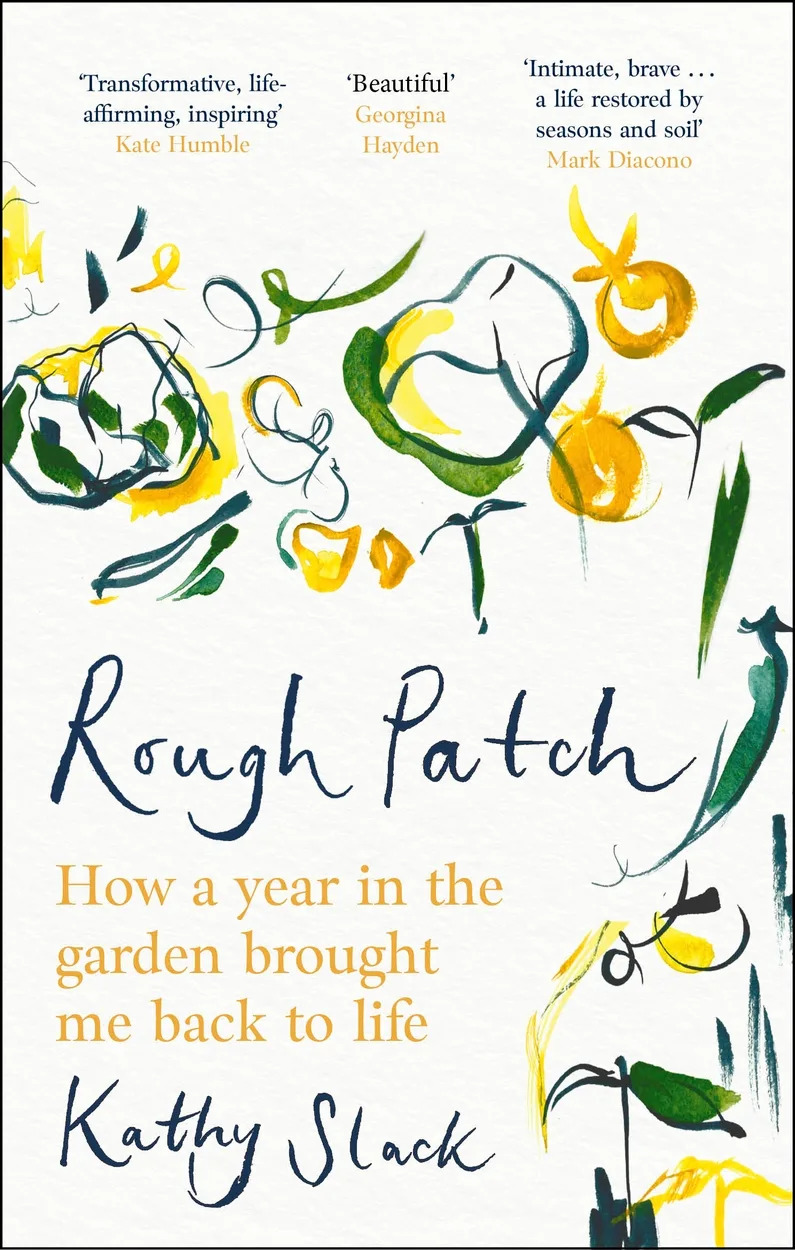
Slack, whose book Rough Patch charts her journey from depression to finding solace in gardening, left advertising to work as a fruit picker at an organic farm business, and later went into cooking, teaching and writing.
That was more than a decade ago, before so much emphasis was placed on the connection between the garden and wellbeing, but Slack, 47, now spends every free minute in the garden when she can. She believes gardening saved her.
(Robinson/PA)
“I know it would be glib and a massive oversimplification say, ‘Oh, vegetables saved my life’, but they really were significant.
“When I got into nature, and particularly into growing vegetables, I realised what my values were, which I think is an exercise in knowing yourself a bit better anyway, I found it very creative and I found it very calming.
“It was real life, not the kind of fiction that I’ve been living in ‘Ad land’ before. This was what was real, right, what I needed and where my life should be.”
Today, she has about 20 metres of growing space in three raised beds, plus an allotment, and occasional plots from neighbouring ‘hobby farmers’ who let her grow produce on patches of land they are not using.
“For me, spring is my New Year, not January. This is when I want my plan for what I’m doing for the year.”
She recommends five spring tasks which she believes can help boost wellbeing.
1. Sow seeds
“Sow something. My top ones for March, particularly in window boxes and pots and sheltered spots, are radishes and peas.
“Radishes are my gateway vegetable to getting people into growing because they grow so quickly that you get almost instant gratification. They’re so easy and they look amazing in that gloom of February.
“I would definitely get peas in the soil as well, because they’re quite hardy and even if you don’t grow them to pea size, they’re great for pea shoots, and you can cut and come again two or three times, and then let them grow on to be full-size peas.
“This is all just a way of feeling that sense of wonder and awe at watching something as tiny as a radish seed turn into a golf ball-sized ruby that you can eat.”
2. Get your hands dirty
(Alamy/PA)
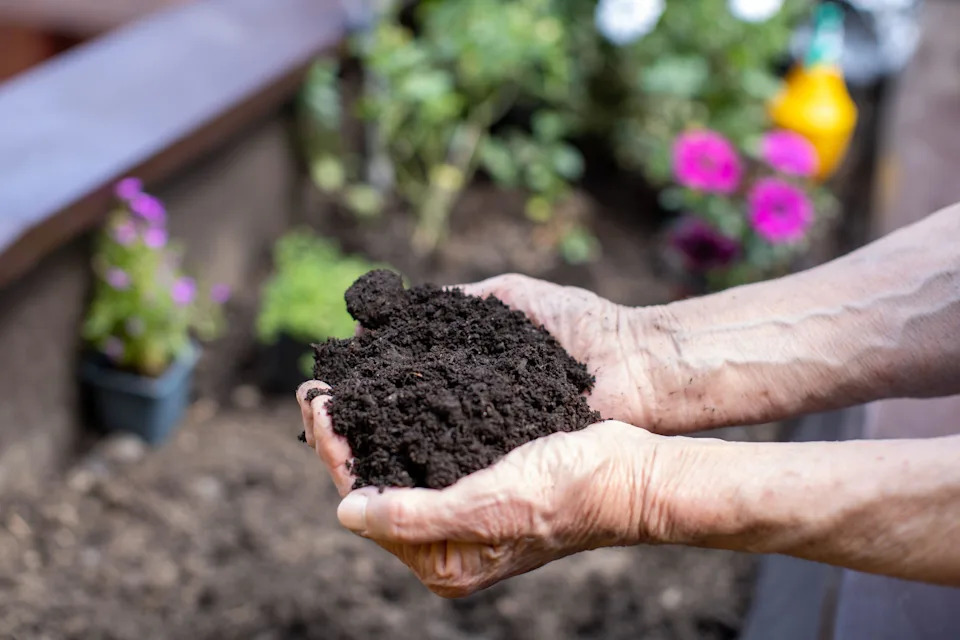
“God, I love compost!” Slack enthuses. “If you have a compost bin turn it and spring is a great time to spread it over your vegetable beds. Even if you don’t have your own compost bin, get some in, like council waste compost.
“It used to be kitchen scraps and is now this incredible chocolate, loamy, nutrient-rich magic. Spread it over your veg beds or dress the the top of your pots or spread it over your flower beds, but get your hands into that compost.”
She says research has found that just by touching soil with your bare hands can change the chemicals being released in your brain and give your mood a boost.
When we come into contact with healthy soil, a bacterium called Mycobacterium vaccae is absorbed and activates the release of serotonin, known as the ‘happy hormone’.
3. Plan your growing year
(Alamy/PA)
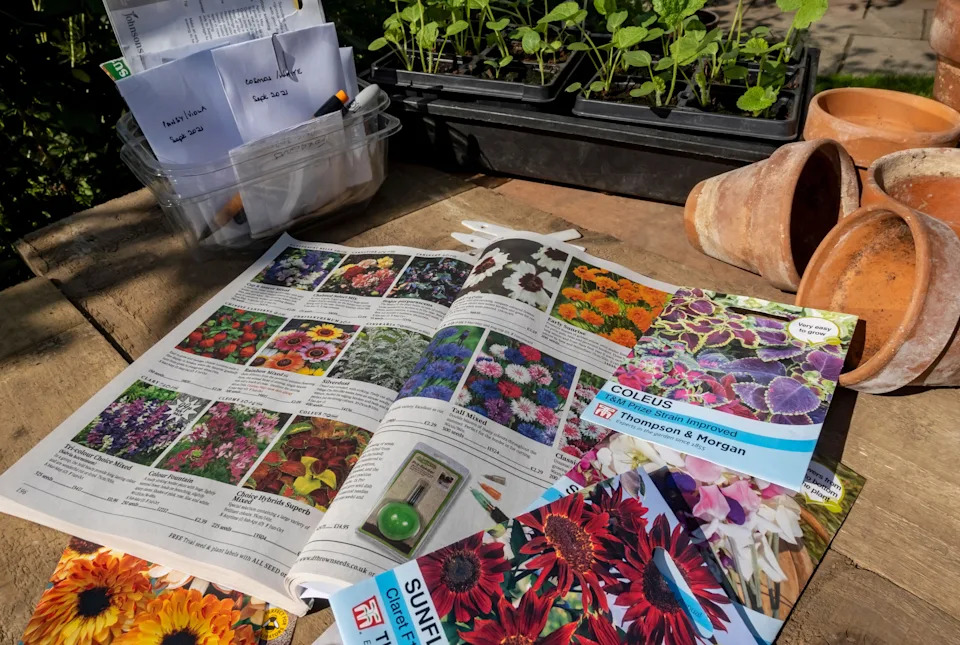
“That might mean gathering some seed catalogues and having a browse. It has to be physical, not online. That doesn’t work for me,” she says. “I like to browse and turn pages and dream about how many different types of pumpkin I can grow this year and feel inspired and look forward to it. I feel that’s a real act of hope and will get you excited.”
4. Get physical
Try to venture outside to do some of the physical tasks which will boost endorphins – and wellbeing – she suggests.
“I do a lot of wheelbarrowing of compost,” Slack says. “I’m not a digger – I’m a ‘no-dig’ person – but I also think that just to potter around, going out with a bucket and pulling a few weeds up, can be very therapeutic.”
5. Grow windowsill herbs from seed
(Alamy/PA)
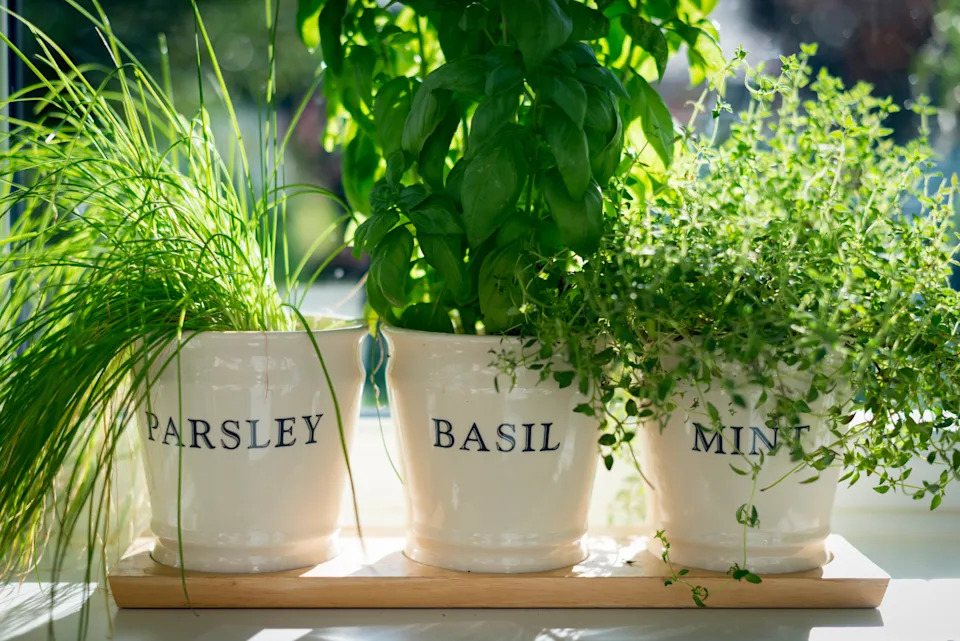
“Herbs are great to grow if you don’t have a garden because you can put them on everything you cook and suddenly there’s a little bit of your achievement – even if you put your homegrown basil on a microwave pizza,” says Slack.
“Now it’s not a ready meal, it’s a little bit of nature that you’ve tended and created and fed yourself with – and that is uplifting.”
Rough Patch: How A Year In The Garden Brought Me Back To Life by Kathy Slack is published in paperback by Robinson, price £12.99. Available now
Comments are closed.