
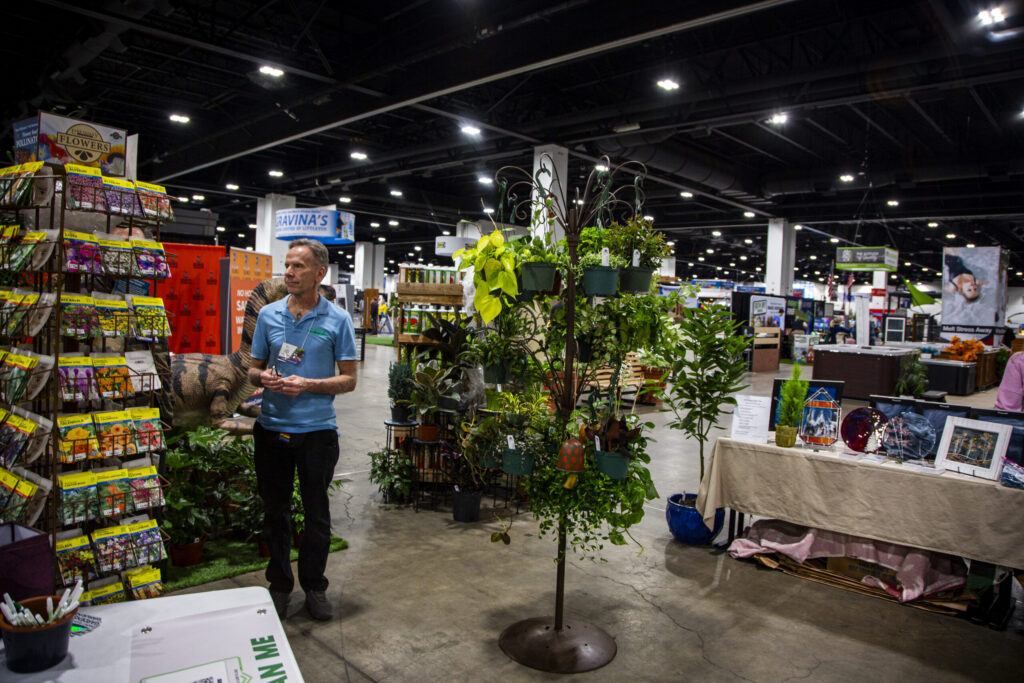
Last year, Front Range Gardens began selling cacti and succulents sourced from the Phoenix area and they were a hit.
The desert-climate plants sold out, said Scott Jeffries, the owner of the garden center located in Broomfield. And this year, Front Range Gardens doubled their stock to meet demand.
But because of a widespread drought across Colorado, he said it may be harder to sell their inventory of hibiscus flowers, oleanders, trees and anything else that requires a lot of water to plant or maintain.
“We might find out the tropical plants that we did bring in, we’ll still have them at the end of the year,” Jeffries said.
Colorado’s snowpack has been at a record low for straight 35 days. The lack of snow is having direct impacts on the state’s famous ski resorts and mountain towns — but the ramifications are widespread and concerns are rising over higher wildfire risk and a shortage of water later in the year.
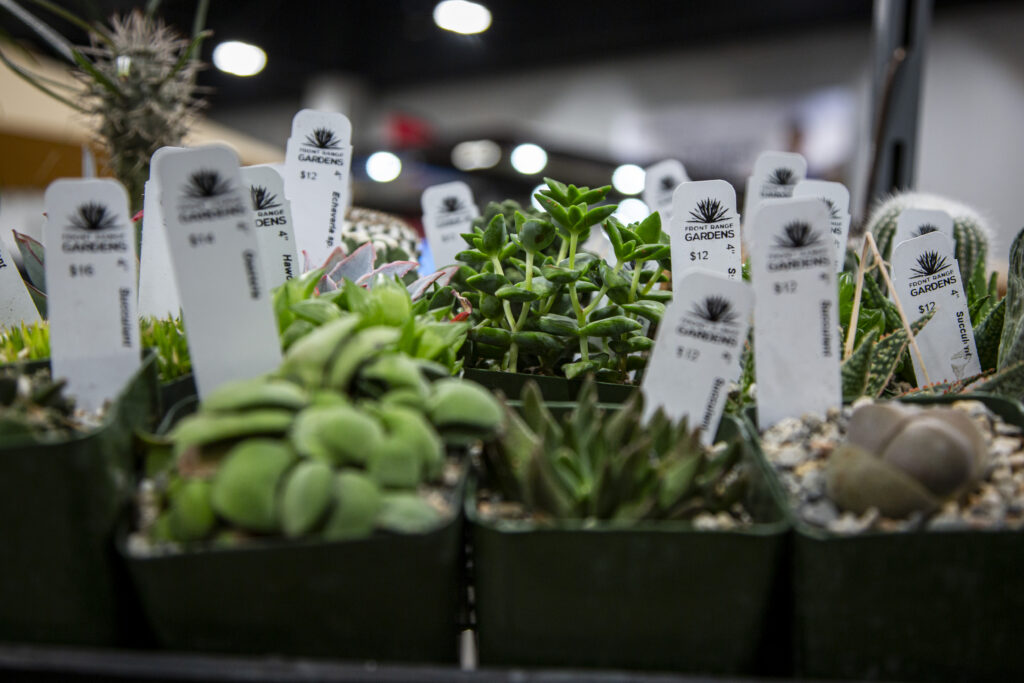 Succulents from Front Range Gardens displayed at the Colorado Home and Garden Show at the Colorado Convention Center in downtown Denver on Feb. 15, 2026 (Bernadette Berdychowski / The Denver Gazette)
It’s top of mind for many gardeners and plant nurseries at the Colorado Home and Garden Show, the Rocky Mountain’s oldest and largest garden show, hosted at the Colorado Convention Center in downtown Denver from Feb. 14 and Feb 22. It featured 500 booths of gardeners, landscapers and home improvement specialists.
More people are wanting to convert their grass, shrubs and flowers to plants that don’t need as much water, Jeffries said.
“And with the winter we’ve had this year, it’s only going to get worse,” he said. ”Our water supply, I fully expect us to have restrictions this year, I would think.”
Snowmelt from the Rocky Mountains is critical to filling the Colorado River and reservoirs across the Western U.S. Seven states failed to come to an agreement on how to manage the Colorado River basin before another federal deadline expired Saturday.
A large portion of the state is under drought conditions ranging from moderate to extreme conditions, according to the U.S. Drought Monitor. “Exceptional” drought conditions — the highest category — are affecting parts of Eagle, Pitkin, Lake, Park and Summit counties.
It’s time for gardeners to start anticipating cutting back on sprinkler systems, Jeffries said. It might be time to move to drip systems, an irrigation network, which he said is more effective at saving water.
Still, he hopes Colorado will get some rain or snow sometime soon.
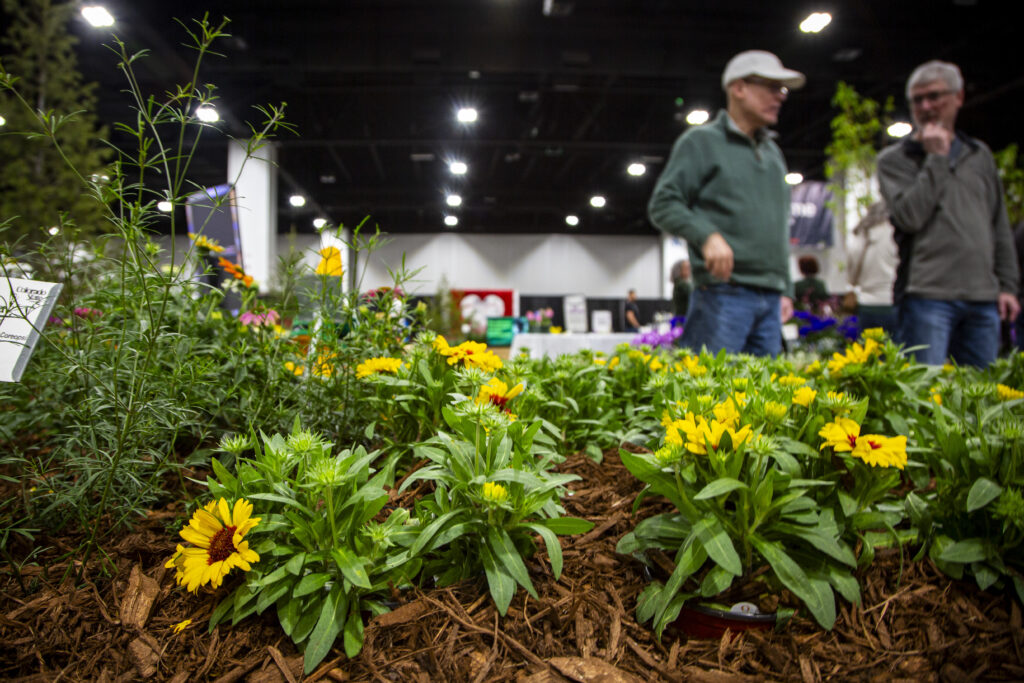 Flowers displayed at the Colorado Home and Garden Show at the Colorado Convention Center in downtown Denver on Feb. 15, 2026 (Bernadette Berdychowski / The Denver Gazette)
“We have to be smart about what we plant here, know where we live and understand that when we’re choosing plants,” said Darby Wilcox, senior sales executive at Rocky Mountain Outdoor Living, a landscaping company based in Englewood.
Lawns don’t have to be green perfection like golf courses, he said, but can still look nice with more drought-resistant and native plants. Most of all, it could help limit the spread of wildfires.
It’s OK to grow grass to three inches to have grass blades shield roots from drying out, Wilcox said. It’s also important to have organic mulch at least three inches deep to hold moisture. Picking plants with deep roots systems can also help.
“Even a plant that’s not necessarily drought tolerant on its own is going to be a lot more drought tolerant if you get that deep root system, he said.
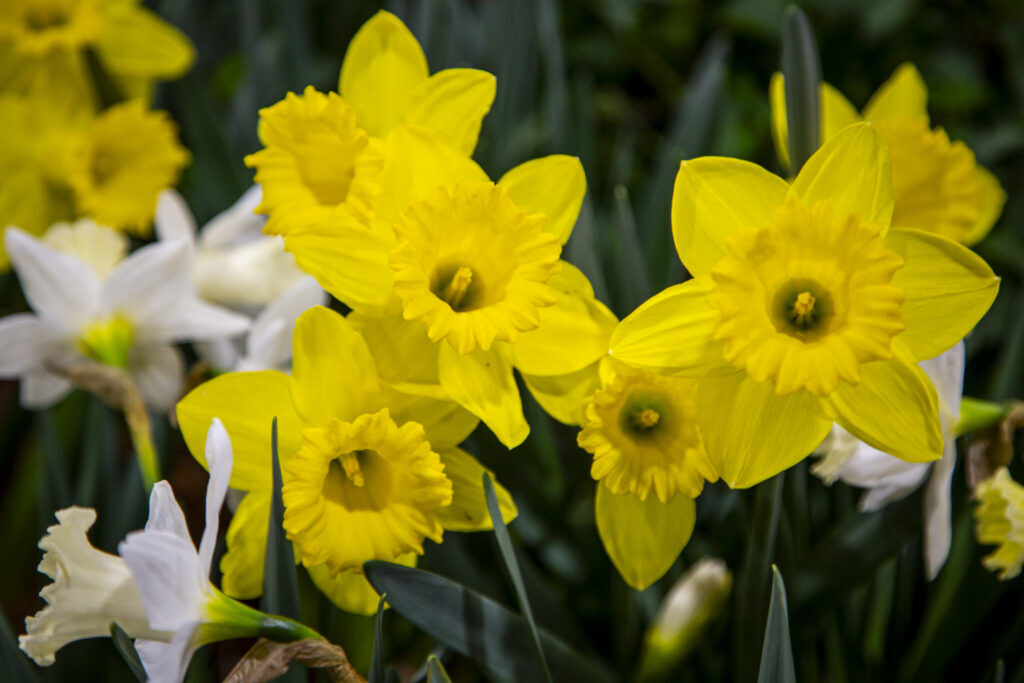 Daffodils displayed at the Colorado Home and Garden Show at the Colorado Convention Center in downtown Denver on Feb. 15, 2026 (Bernadette Berdychowski / The Denver Gazette)
Some plants are already starting to sprout, like daffodils, said Lisa Aiello, manager of Malara Gardens in Arvada. They may pop some new leaves to get a sense of the climate around them.
“If it gets cold, they’ll be fine,” she said. “They’re just checking the temperature.”
But it’s more concerning if fruit trees will start to sprout early. Even if the highly-needed snow falls or a cold snap hits the region after they start blooming, it may mean the tree will produce less fruits this year.
“It’s going to be so warm, the trees are going to bloom. Then the frost will kill all those buds,” Aiello explained. “I don’t think there’s a high chance of getting much fruit off your trees this year.”
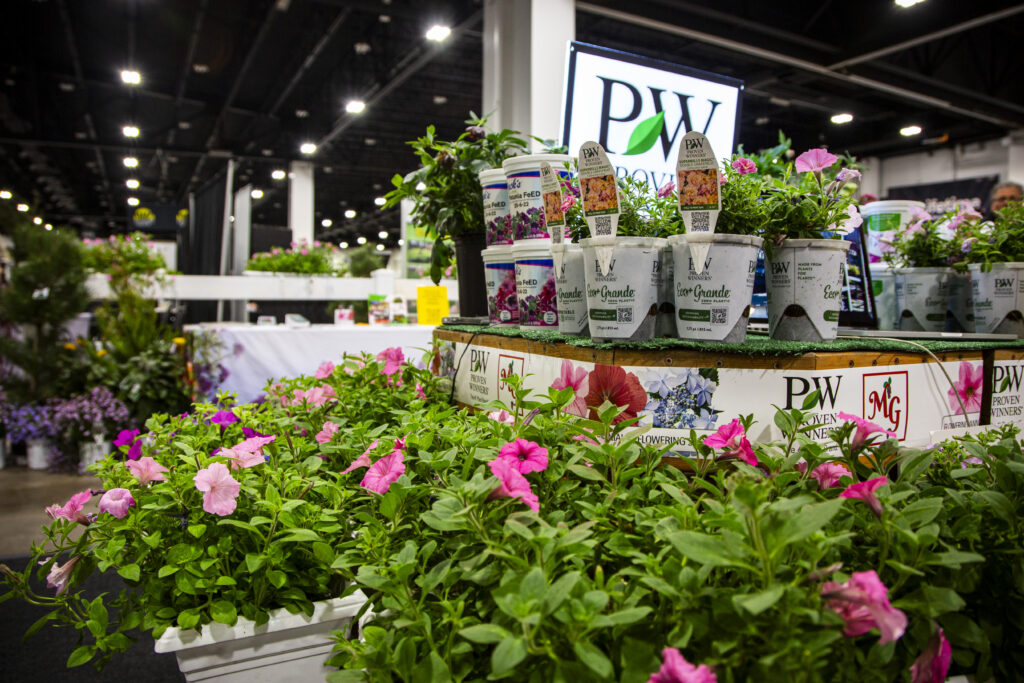 Flowers are displayed at Malara Gardens’ stand at the Colorado Home and Garden Show at the Colorado Convention Center in downtown Denver on Feb. 15, 2026 (Bernadette Berdychowski / The Denver Gazette)
She’s still holding out hope for a winter storm to come by March and not in the height of spring when people typically want to work in their yards. Without the snow, she also said water restrictions will likely affect gardeners this year.
“It would be lovely if the snow didn’t arrive in May when we’re trying to sell all of this,” she said. “You shouldn’t work in the soil when it is that muddy. You’re ruining a lot of stuff there and it’s not good for the soil.”
Malara Gardens, founded in 1957, will reopen to the public later in the spring. Aiello said she’s not sure yet how the drought will impact their inventory. If the state doesn’t get more snow, she said people will be worried for more reasons than just their annuals.
“I can’t go there yet. Not in my head… It’s just too far,” she said. “And honestly, it’s almost too scary to think about if we don’t get some snow.”
Comments are closed.