
Falling on my head like a memory
Falling on my head like a new emotion
I want to walk in the open wind
I want to talk like lovers do
Want to dive into your ocean
Is it raining with you?
This song was released by the Eurythmics back in 1984 would you believe. The inspiration for Here Comes The Rain Again was, as its title would suggest, the unpredictable weather.
But the rain we’re experiencing this winter has been entirely predictable. In my column in December I could see a pattern developing. When I said: “Looking at the evidence 2024 was a very wet and at times cold summer, whereas 2025 was totally the opposite with summer getting going in May and not stopping until late October. Looking further along, my estimation, for what its worth is we could get a wet and relatively mild winter, as it always evens its self out, as it was so dry”.
If we take this to the next conclusion, we have had so much rain (and they wanted more and now they have got it) that the pattern of last year may be repeated, with a sunny dry spring and summer. How dose that grab you!
If we are now seeing this process before us, there is little we gardeners can do about it. Or is there?
For starters there are some plants that are are drought resistant. Flowering plants that come to mind first and foremost are Peleogniums, all types are virtually bulletproof but Ivy leaf Peleogniums seem to thrive in dry seasons and are the hardest of the hard.
But the type people generally refer to as ‘Geraniums’ are very drought resistant as well. Other plants with good drought resistance are Begonias, all types love the dry and the sun. Another which thrives in a hot dry summer is Agapanthus, the South African lily. Usually sky blue in colour but available in white and a host of other colours and also performs best when pot bound.
For plants in the ground we have Cistus pulverulentus (or rock rose) which is high on the list of drought-tolerant plants for the border, and can be planted to form a colourful hedge. Then there is Eryngium planum (sea holly), a robust perennial that produces eye-catching blue thistle-like foliage. The list is endless.
Peter’s book reflects on his career as a professional gardener
Moving on to vegetable, potatoes are resistant to drought, but in such conditions in 2025 produce a smaller potato size.
I was talking to a farmer recently who said his were of a reduced size in 2025 but still cropped well. Crops like carrots, parsnips, and beetroot are resistant, but my parsnips in 2025 suffered from constant damage from the dreaded wood pigeons!
But I have a plan to stop them this year, I am going to erect a wooden structure which I will staple a net all round. After which I will take great pleasure at watching them looking puzzled at my turnips.
French beans are generally water-efficient.
Other measures we can do in a drought:
* Mulching: Apply a thick layer of mulch around plants to lock in soil moisture. If a supply of well rotted horse manure is available, incorporating this in to the soil before planting will enable the soil to resist dry conditions.
* Variety Selection: Choose cultivars known for heat tolerance.
* Seed potatoes are on sale in the nurseries now and can be started into growth by placing them rose side up (where the growth eyes are) in a seed tray or in egg boxes.
* In the greenhouse sowings can now be made of Antirrhinum seeds (commonly known as Snapdragons).
* Sweet peas can be sown in a frost-free greenhouse, seed can be soaked in water overnight or seeds can be chipped, where tiny bit of the seed coat is cut away carefully with a garden knife to give them a start.
* Any early flowering bulbs that were placed in pots in autumn can be brought into gentle heat in you greenhouse from now onwards to provide an early display.
* Seeds of many kinds can be sown such as onions, aubergines and tomatoes. A favourite onion of mine is Red Barron which is an excellent keeper.
* Schizanthus, commonly known as the poor mans orchid, can be sown for a summer display. Salpiglossis are another much neglected, but spectacular, pot plant which produces bell like flowers of rainbow colouring.
* February is a time when moving shrubs and other plants can be done. Try not to damage their roots and retain as much root as you can.
Cultivate the new site and fork over the bottom of the planting hole, incorporating some manure. This will give the plant a good start.
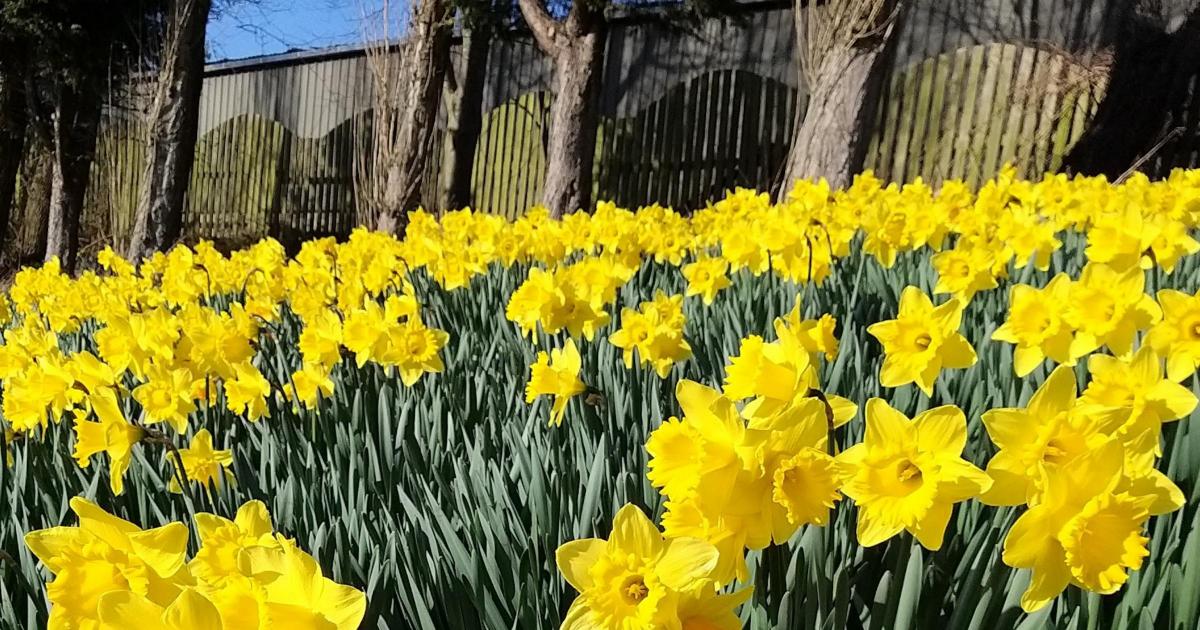
* Inspecting my spring flowering bulbs and plants in the cold and the rain, they are telling me that spring is not far away as the bulbs are sticking their heads up to look for the sun to come.
As the Beatles sang in 1967: ‘Sitting in an English garden waiting for the sun, If the sun don’t come, you get a tan from standing in the English rain’.
* For Peter’s book, Gardener’s Delight, email peterfawcett0@gmail.com or call Spenborough Stationers on (01274) 873026
Comments are closed.