
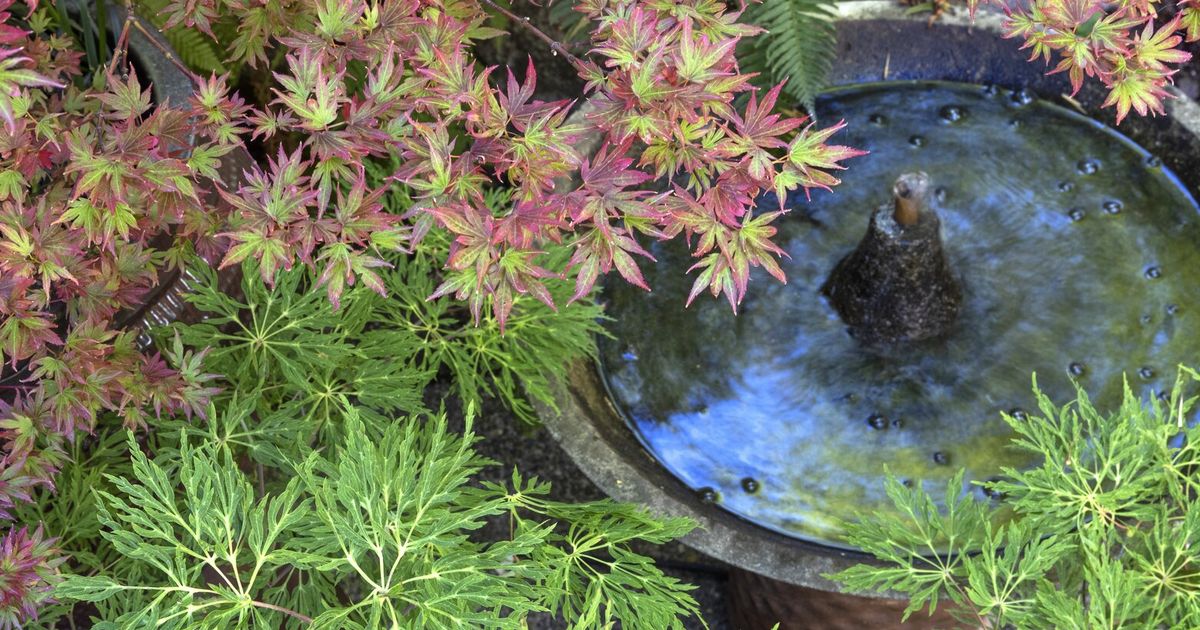
IN THE TICKET BOOKLET for last summer’s West Seattle Garden Tour, Marcia Bruno characterized her garden as “a lot of plants in a small space” — vastly underselling her landscape.
Anyone can collect plants, but it takes a thoughtful eye for composition and an understanding of horticulture to create an inviting space that is also a showcase for unusual plants, from a fragrant winter blooming paperbush (Edgeworthia chrysantha) to the tropical looking foliage of a rice paper plant (Tetrapanax papyrifer).
After seeing the garden myself, I sat down with Bruno last fall after a busy growing season to talk about how her garden came to be. Once upon a time, she was a graduate student in fine art with a focus on making jewelry, a pursuit she had to pause while raising a family, to becoming a working nursery professional and owner of the West Seattle Nursery.
The garden is a common reprieve for a young mother. So it makes sense that when Bruno, already an avid gardener, found out West Seattle Nursery was hiring in early 2001, she applied for a part-time merchandising position. Her first day of work in miserable and wet weather and a mostly deserted nursery yard she recalls thinking, “Oh my god, they’re paying me to do this!”
At the time Bruno’s home landscape consisted of turf surrounded by beds of perennials. “I could tell that (the previous owners) had come to the nursery in the summer when everything was blooming and just stuck it into ground,” she says. Vowing not to make the same limiting mistake, Bruno set out to create an engaging four-season garden.
Still working part time to accommodate flexibility and family, Bruno’s responsibilities at the nursery grew. Within a few years she progressed to becoming the buyer for statuary and pots before advancing to assistant manager then becoming the full-time nursery manager.
Back on the home front, Bruno hired Mitch Monetti (monettilandscape.com), to improve the public face of her family’s city-sized lot. A smart new pathway formalized the entry while a short retaining wall created a level planting area just begging for new plants. Focused and intentional lighting set a dramatic stage in the night garden.
Bruno made it clear to Monetti that she would “handle all the plants.” Working in the shade of mature street trees, the gardener put her artist’s eye and garden experience to work. She began with an evergreen framework to carry the garden through all four seasons, including a dark-leaved rhododendron to anchor the landscape with textural grasses, ferns and hosta offering seasonal contrast throughout the year.
People may assume that nursery professionals get to cherry pick inventory. But with an eye on the bottom line, the pros more often bring home the oddly shaped or stressed plants. Years ago, an especially sad marked-down Japanese snowbell (Styrax japonicus) caught Bruno’s attention. Today the mature tree shelters a low section of the back garden that offers a view up into the tree’s canopy filled with white bell-shaped blossoms in early summer.
Bruno is especially fond of Japanese maples (Acer palmatum), but when a large tree in the backyard succumbed to anthracnose, her carefully curated shade garden quickly became sunny, necessitating another round of planting. She placed a Persian ironwood (Parrotia persica) behind a small pond stocked with goldfish at the back of the lot. The circular pond echoes the form of an adjacent round patio and what was once a larger circle of turf for the kids and dogs which in time gave way to more durable gravel when wear and tear on the lawn became impossible to maintain.
As the fish grew, so did the size of the pond. “We can’t go any bigger, but I still like the idea of three circles,” Bruno says.
An adjacent Rose of Sharon (Hibiscus syriacus), planted in memory of a friend named Sharon, blooms spectacularly in summer while a regal Lion’s Head maple (Acer palmatum ‘Shishigashira’) lights up the garden with its flaming fall foliage. The maple, a passalong plant from a friend, was placed to avoid contaminated soil left behind by the diseased tree Bruno removed.
As anyone who has worked in a nursery can attest, every day is a crash course in plants and people; throw in sales, cash flow and the weather and things can quickly get complicated. While her plant knowledge was growing, Bruno was learning the rest of her job on the fly, too.
“I’ve never worked in any other business,” she says.
Tasked with managing a staff of 50, payroll, financial goals and strategic planning — there wasn’t much she could do about the weather — Bruno relied on building a team of people whose priorities and skills meshed. “That’s really different than (knowing) plants,” she observes.
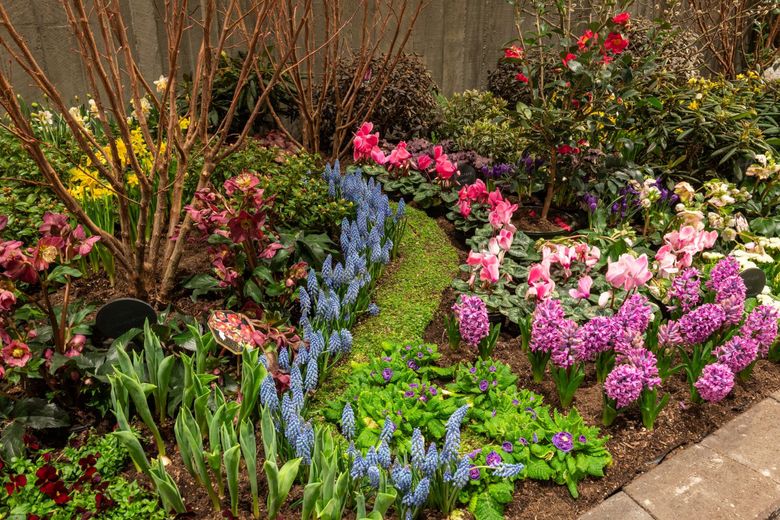
Since 2014, Bruno and the staff of the West Seattle Nursery have designed and installed multiple display gardens at the Northwest Flower & Garden Festival, a massive creative undertaking and financial investment that introduced the neighborhood nursery to a larger gardening community. Along the way, the nursery garnered numerous gold medals, capturing the best-in-show Founder’s Cup twice and earning the People’s Choice award three times. Look for their “Where Stories Take Root” on the main display garden floor at this year’s event.
After 16 years working alongside Mark Smith, the founder and original owner of the West Seattle Nursery, in 2019 Bruno purchased the business — and had to navigate the pandemic almost immediately. Like so many resourceful businesses flying by the seat of their pants, Bruno managed a small team of “essential” workers to provide respite (and plants) for an exploding population of gardeners during that strange time.
Like all successful gardeners, Bruno has learned to be nimble and adapt to change. She still loves creating nursery displays and remains dedicated to providing employees with the work/life flexibility that she once counted on while raising a young family. Perhaps just as important, after a busy workweek filled with deliveries, phone calls and customers, Bruno treasures quiet time at home among her plants. She knows nothing stands still in a garden or in life, but the businesswoman, gardener and creative confidently says, “I know this part. I know what to do.”
Northwest Flower & Garden Festival
The 2026 festival, which opens this week, will celebrate local culture, sustainable gardening practices and beauty in the natural world. Admission includes 21 spectacular display gardens, a tempting marketplace filled with plants and garden goods, and more than 115 lectures and hands-on learning activities for beginning gardeners and seasoned green thumbs.
The Puyallup Tribe of Indians, this year’s presenting sponsor, will offer guests several immersive experiences that explore traditional knowledge and the Four Seasons of Care.
The festival runs Feb. 18-22 at the Seattle Convention Center, 705 Pike St. Ticket info and event details: gardenshow.com.
More
Lorene Edwards Forkner is the author of the newly published “Grow Great Vegetables Washington.” Find her at ahandmadegarden.com and at Cultivating Color on Substack.
Comments are closed.