
Key Points
Prepare your garden tools and containers before spring to give your garden a healthy head start.All types of tools should be cleaned and sterilized to prevent the transfer of plant diseases and insects.Cleaning is simple with products you have on hand, and prepares you for when warm temperatures arrive.
All of the tools, pots, and containers you have on hand contributes to the health and survival of your plants. Cleaning them helps protect your investment and prevents cross-contamination of fungus, aphids, and other problems that can prevent plants from thriving.
While winter temperatures always make it feel like you’ll never get back into the garden, we put together a list of everything you should clean and prepare so you can hit the ground running when the warmth finally returns.
Digging Tools
Credit: cjp / Getty Images
Shovels, spades, trowels, and any tool used for digging in the garden soil should be thoroughly cleaned before the spring season. Proper care helps prevent rust and keeps edges sharp so they are easier to use in the garden.
If you didn’t clean them well before storing them for the winter, use a garden hose or bucket of water to remove soil. Scrape away any stuck-on mud with a putty knife or plastic scraper.
To clean the tool, fill a bucket with hot water and add one-half teaspoon of dishwashing liquid per gallon of water. Soak one to two tools at a time for 15-20 minutes. Then rise the tool in cool water and dry with a microfiber cloth.
Check each tool for any sign of rust. If rust is present, lightly coat the tool with vegetable oil to aid in loosening the rust while you scrub with a stiff wire brush or steel wool to scrub away rust spots. Rinse in hot water and dry the tool when it is rust free.
Pruning and Clipping Tools
Credit:
Francesca Yorke / Photolibrary / Getty Images Plus
Pruning shears, clippers, and garden snips are often the culprit in spreading disease or insect infestations in the garden since they are used to remove parts of the plant. The sap from plants can also leave these tools sticky and inefficient when put to use.
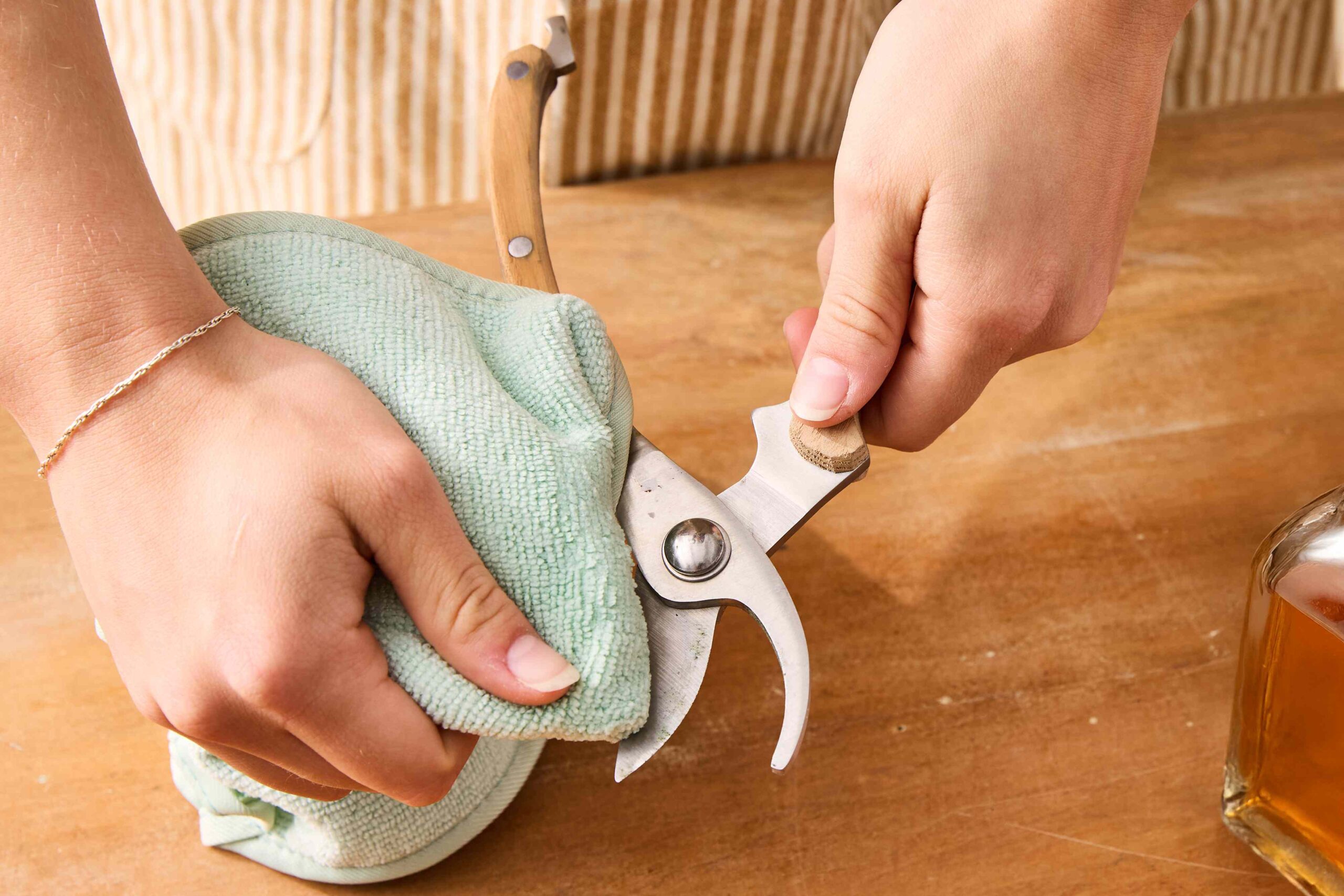
Soak these tools in hot, soapy water for 15 minutes, rinse, and dry well. Inspect them for rust and any sticky residue which can be wiped away with WD-40 (which also help keep the hinges lubricated).
Finally, disinfect the tools by wiping the blades with a cloth dampened with isopropyl (rubbing) alcohol.
If the edges of the clippers have dulled, wiping down the blades with WD-40. Use a whetstone to file the edges at a 20 to 45-degree angle following the original bevel. Finish by wiping down with a soft cloth to remove any metal shavings.
Wooden Handled Tools
Credit:
Mariya Surmacheva / Getty Images
While beautiful, wooden handles on tools will eventually begin to dry out, split, and loosen from the metal component. Check the integrity of the handles and replace them if they are loose to prevent accidents.
To smooth rough wood, sand the handles with medium-grit sandpaper and rub them with linseed oil. The oil adds a protective barrier to help repel water.
Garden Trellises
Credit:
grbender / Getty Images
Whether your garden trellis is made from wood, metal, or hard plastic, now is the time to inspect it and give it a good cleaning.
Use hot, soapy water and a soft-bristle brush to scrub away residual soil and sap. Wipe it down with a cloth dipped in rubbing alcohol to kill any insects and to remove sap.
Make repairs and clean and touch up any rusted areas with a fresh coat of rust-resistant paint.
Planters and Containers
Whether you are planting a single pot of geraniums for the front steps or an entire container garden, each pot, planter, or container should be thoroughly cleaned to give your plants the healthiest start.
Empty out the old soil and use a stiff brush to get rid of any soil that clings to the inside or outside of the container. Submerge the pot in hot, soapy water and use an old cloth to clean the inside and outside. Rinse well in warm water.
Finish cleaning by sterilizing the pots by soaking them for 15-20 minutes in a bucket of 1 part chlorine bleach to 9 parts water. Remove the pots and allow them air dry.
Get Rid of Mineral Deposits
Minerals from the soil and water can leave crusty white rings on terra cotta and plastic pots.
To remove the buildup, soak the pots in a solution of 1 part white vinegar to 4 parts water for at least 30 minutes (though overnight is best). After soaking, use a stiff brush to scrub away the residue while the pot is still wet. Rinse in fresh water and allow the pots to air dry.
Comments are closed.