
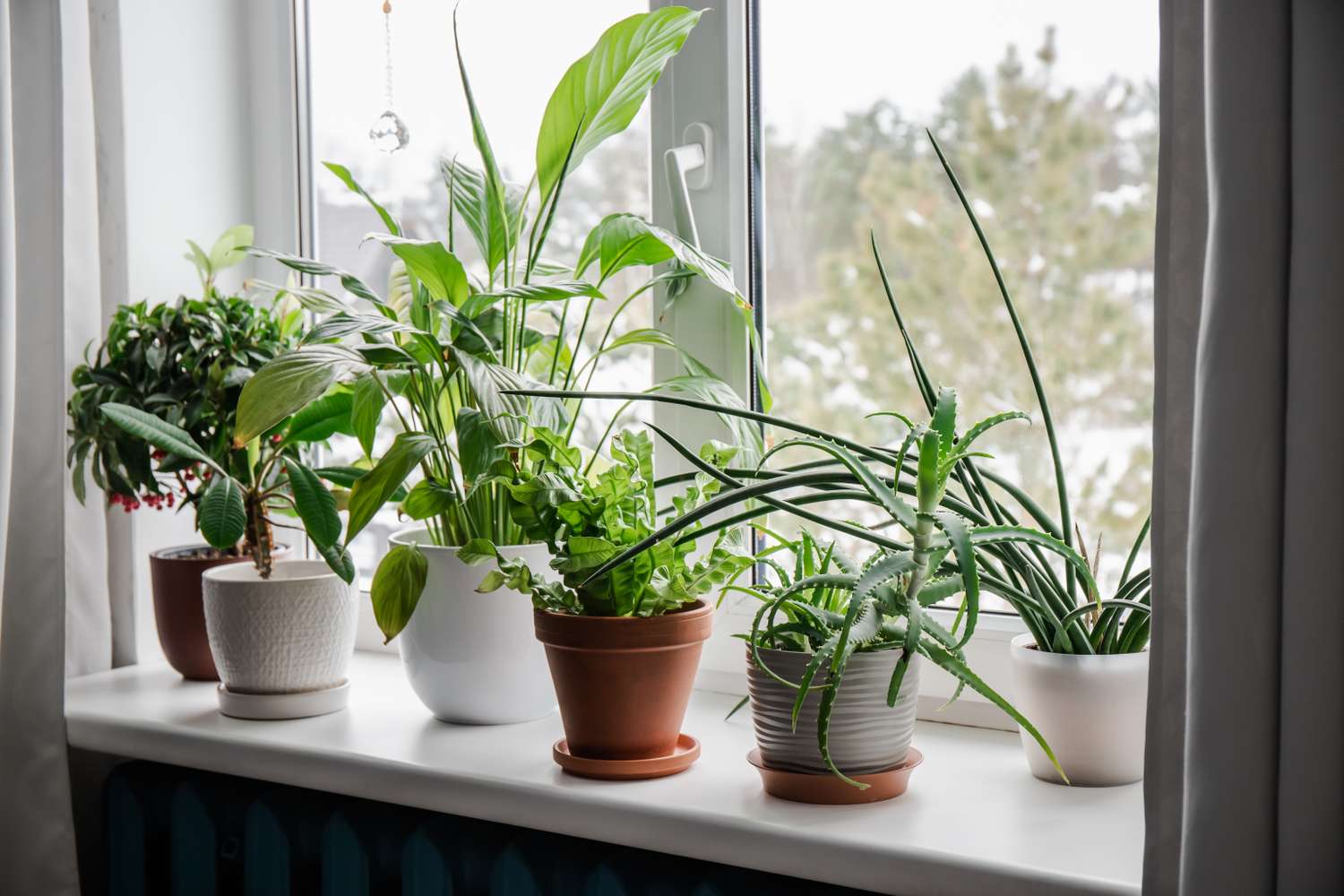
When caring for houseplants, you’re likely prioritizing their day-to-day needs, such as providing sufficient water and light. These factors are certainly important, but don’t forget about fertilizer. This all-important ingredient contains nutrients like nitrogen, phosphorous, and potassium (NPK), and promotes healthy, strong growth.
Of course, with so many fertilizers on the market, it can be tricky to know which one to use. Here, we spoke to experts regarding what they recommend for houseplants.
Balanced, Water-Soluble Fertilizer
This type of fertilizer is a good option for many different kinds of houseplants. “It supports steady, even growth—healthy leaves, strong roots, and overall vigor—without overcomplicating things,” says Chris Link, co-founder of Plant Addicts.
He says it works especially well for pothos, philodendrons, spider plants, and rubber plants. “I feed every two to four weeks at half strength during spring through early fall, then cut back or pause in winter when growth slows,” he says.
In particular, Raffaele Di Lallo, founder of Ohio Tropics, recommends SUPERThrive Grow. He says this product works well for all houseplants: “If you’re looking for one fertilizer to use on everything for convenience, this would be a great choice.”
Slow-Release Fertilizers
“If someone wants the easiest, most consistent option, I recommend a slow-release fertilizer,” says Link. “It delivers nutrients gradually, which helps prevent the feast and crash cycle you can get with occasional heavy feeding.”
He recommends using this type of fertilizer on large, potted plants, and plants with tropical foliage. “Apply it at the start of the season and refresh every three to six months—then hold off when plants aren’t actively growing,” he says.
One great slow-release option is Osmocote Plus. “[It’s] great for convenience because you can feed your plants once in late winter or early spring, and your plants will be taken care of throughout all of spring and summer,” says Di Lallo. So if you’re busy, or traveling often, this can be a great option.
Organic Liquid Fertilizer
Organic liquid fertilizers are gentler and more forgiving than some other options. “They’re a solid choice for sensitive houseplants like calatheas, ferns, and many aroids,” Link says.
He uses them while diluted every two to four weeks in spring and summer then reduces frequency in fall and winter.
Specialty Fertilizers
Some plants benefit from specific formulas targeted at specific results. For example: “Flowering houseplants benefit from a bloom-leaning formula during bud set, while succulents and cacti do better with a lower-nitrogen approach to avoid soft, stretched growth,” says Link.
Below, a few specialty formulas that Di Lallo recommends.
African violets: Optimara is a “tried-and-true” African violet fertilizer that will make these plants “grow and bloom like crazy,” says Di Lallo. Simply dissolve one packet into a gallon of water and use each time you water.Orchids: Di Lallo recommends Orchid Plus, which is endorsed by the American Orchid Society. “The instructions say to use 1 teaspoon per gallon of water every week, but I typically use 1/2 teaspoon all year each time I water, except in winter.”Cacti: As Link mentioned, cacti perform better with a lower nitrogen content, so the 2-7-7 NPK of Schultz Cactus Plus is perfect. It works well for succulents and snake plants, too. “Simply mix 7 drops per quart of water and use it each time you water,” says Di Lallo.
Comments are closed.