
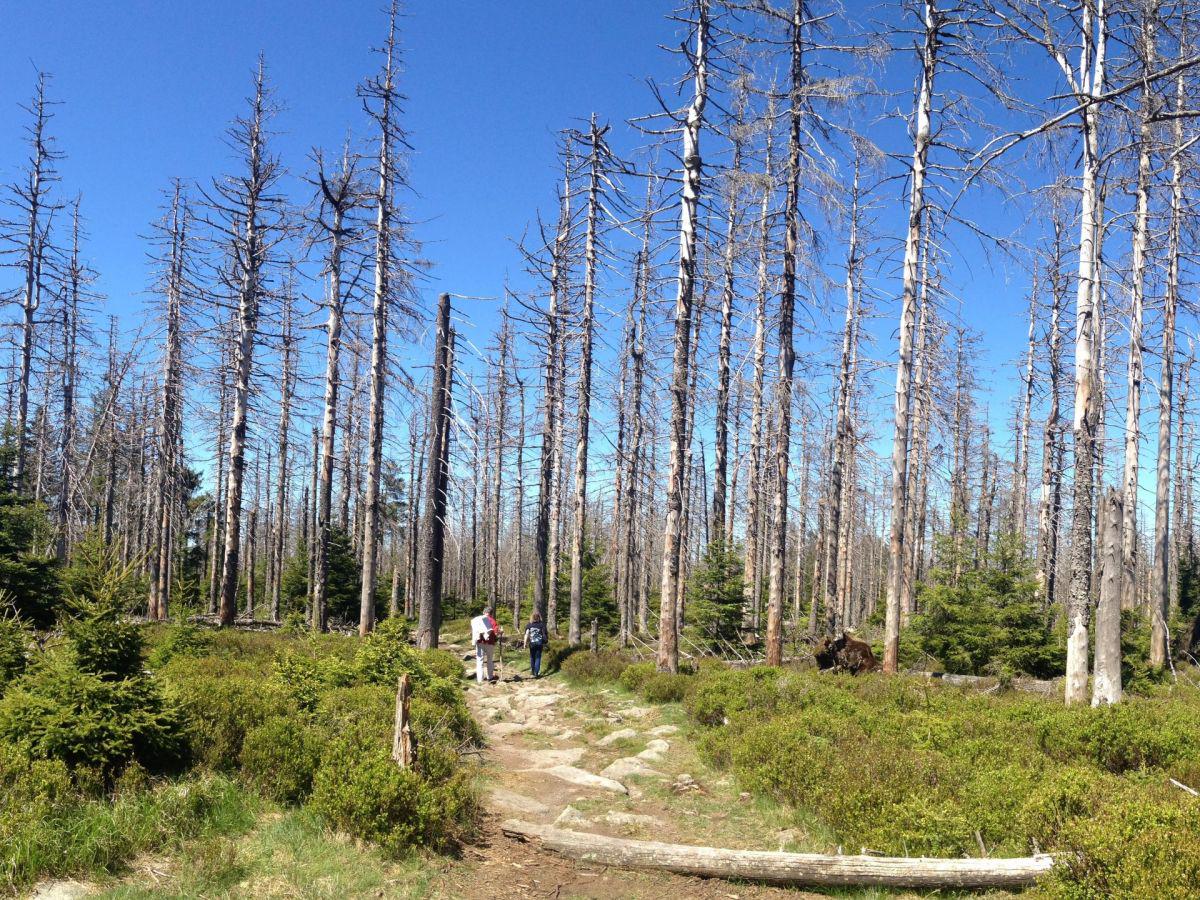
We have these pine trees here in Germany and a lot of them have died recently due to drought caused by global warming, and bork beetle damage.
Now, that's not surprising, but in other parts of the forest with dead (old) beeches etc. – they saw down those trees.
However all these dead pine tress are left standing. I'm not really concerned that they'll fall down on anybody, but I find myself asking why they're not being sawed down as well.
What's the difference here?
Is it just too expensive, because there are too many of them? Do they break down differently? Are they left to dry to be more easily sellable as fire wood? This confuses the heck out of me. Can anybody (perhaps with a forester background) explain this, please?
by cosmoscrazy
5 Comments
I have a friend who’s an arborist. Here’s what she said:
https://preview.redd.it/nklgcyqzm6ig1.jpeg?width=1080&format=pjpg&auto=webp&s=2695415d78ea4e287dbb67b88274f3e55141066a
they fill with grubs and birds eat them
pine forest dying is probably a good thing. i doubt those are native pine forests.
They’re still “useful” for the ecosystem. You see dead trees, but inside they’re full of other kind of life (birds, mice, bugs and insects). When they rot they give nutrients to the terrain too.
in germany the point of view on forest is slowly shifting as researches in the past decades have proven the negative effects of human forest planning and management, mostly it’s due to actually non-native (at least at most altitudes in germany) conifer trees, that have been planted for faster financial gains (they grow more wood mass faster, and straighter trunks, but they are actually nordic trees, that grow only native in germany in altitudes above 1000m, or something in this range).
german forest ownership is largely private, compared to other countries the percentage of forest belonging to federal or state governments / commumities is rather small, and – i have to assume this – i guess german law makes it to some degree complicated to regulate, what exact trees all the private owners are allowed to grow / maintain. so, the research focus is on the smaller publicly owned part of the forest area in germany, national parks, state parks, nature reserves.
the main issue of the non-resilience in german forests has been determined the coniferous monocultures. mixed forests with lots of native leave trees are less prone to suffer under draught and bark beetles. so in some of the national parks it has been decided to let nature recover completely on its own, let the dead trees stay and decay in its own speed, let those trees grow that seed themselves.
that’s why you can see in many forest national parks like “bayrischer wald” “harz” or “schwarzwald” big areas of old dead trees, mostly coniferous killed by the beetles, and mixed new growth below / inbetween, exactly as on the picture.
by the way, i used to live on the countryside in bavaria and it’s funny as always with the conservative land population: the researchers say “we have to find new ways how to deal with nature, make it more resilient, make it more native, give it more space for it’s own development, as it is proven that the choices of the past 50 years have lead to negative effects for everyone.” and meanwhile the private adjacent farmers and forest owner go on full blockade saying “i want my pine trees because they are simply a “Brotbaum” (a “Breadtree”, meaning a tree you can live off from) and because of those weird woke new concepts of those state researchers, all the bark beetles that used to kill the national forest, are now hopping inty my land and destroying my trees!” ….