
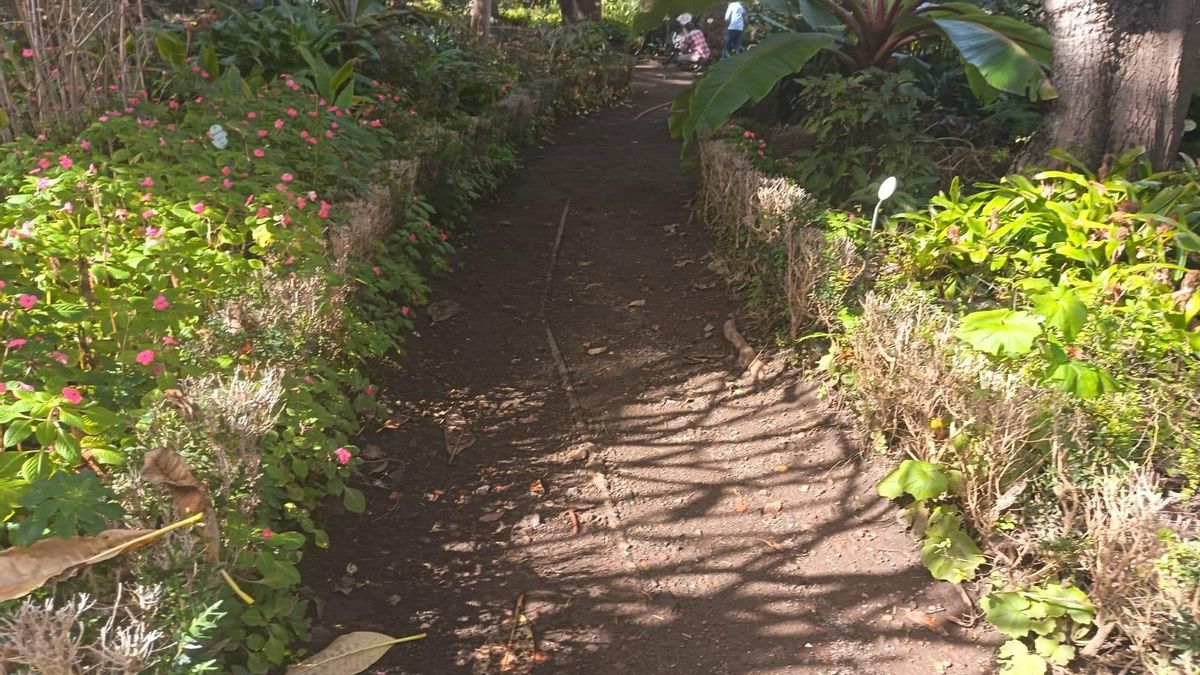
The Hijuela del Botánico, located in Tenerife, is a botanical treasure known for its historical significance. It is called Hijuela del Botánico for a reason, being a part of the famous Botanical Garden of Puerto de la Cruz (formerly Orotava). Established in 1788 under the orders of Charles III, it is one of the oldest and most important botanical gardens in Europe, and the second oldest in Spain.
Nestled in the historic centre of Orotava, right behind the Town Hall, the Hijuela is situated in one of the most beautiful and complete heritage enclaves of the Canary Islands. However, there is a considerable drawback: this garden, much smaller than its larger counterpart, has long been in a less than commendable state, as acknowledged partly by the conservation authorities, the Canary Islands Institute of Agricultural Research (ICIA). This public entity is subordinate to the Department of Agriculture, Livestock, Fishing, and Food Sovereignty of the Government of the Canary Islands, led by Narvay Quintero from the AHI party.
Created at the end of the 19th century after the demolition of the San José convent on adjacent land that served as a garden for the nuns, the Hijuela was conceived as a nursery. Despite having enjoyed periods of greater splendour, it continues to enthral an ever-growing number of daily visitors, largely thanks to its central location and free entrance. This natural space lacks entry control, although there is a gardener funded by the ICIA during the mornings. In the afternoons, a security guard funded by the local council oversees the area.
Upon entering the Hijuela, visitors encounter not only the richness and variety of its botanical species from various continents but also sections that are cut off, particularly in the northern part bordering the rear promenade of the town hall. There are numerous iron pipes that protrude too much on internal paths, occasionally causing trips. The irrigation outlets are also exposed, presenting a clear danger to visitors. There are many damages to walls and flowerbeds, numerous unidentified species, and an overwhelming sense of neglect, indifference, or helplessness.
Janira Gutiérrez, the director of the ICIA, expresses her frustration to Canarias Ahora, acknowledging that the state of the Hijuela is far from optimal. She attributes the current condition to the heavy rains of recent months, which, she explains, have hindered the usual maintenance work.
She insists that, as a Property of Cultural Interest (BIC), proposed changes to improve the situation are not permitted, despite the fact that they could “resolve the problems affecting” this space due to inappropriate maintenance.
Alfredo Reyes, the director of the garden, elaborates on these limitations, admitting that the condition is not advisable and explaining the path closures in the northern part “due to the slope of the terrain and the effect of water.” He also acknowledges issues with overhead iron pipes, the lack of signage or identification plates for many flora specimens, and the state of abandonment or damage in various sections. Additionally, he mentions the use of sealing tape to restrict visitor access to certain areas of the Hijuela del Botánico.
Extension of Afternoon Opening Hours
As Reyes emphasises, the ICIA is considering a budget of around €60,000 to alleviate the current situation this year. He also supports a greater control of the space, suggesting a booth or permanent staff presence so that it is not solely reliant on the current gardener, especially as opening hours have been extended to include afternoons when a security guard is on duty, provided by the Town Council of La Orotava. Furthermore, he announces that they now have a new machine to create labels for unidentified specimens and that some “misplaced” specimens also need repositioning.
The director insists that the designation as a BIC of this historic garden imposes significant restrictions, although the gardener continues with daily maintenance tasks during work hours in the mornings.
A few years ago, the Hijuela had an entrance booth which was later removed. Despite its smaller size compared to the Port Botanical Garden, it remains one of the vital green lungs of La Orotava. It is bordered by a fence constructed by the Hermanos Pérez factory in Seville, which was funded at the time with assistance from the Ministry of Public Works. Among its most significant architectural features is the entrance gate, located directly opposite one of the access points to the famous Victoria Garden (the most important in Europe among Masonic and eclectic gardens), crafted in wrought iron with an intricate design mimicking the diverse flora within.
Indeed, it possesses too many attributes for its current state to be incongruous with such significance.
The Town Council Announces a New Agreement with the ICIA
The local government of Orotava (CC) also attributes the state of the Hijuela to “the torrential rains over the last two months, which have affected the ground, uncovering pipes and stones in a garden with significant elevation changes.” Luis Perera, Councillor for the Environment, Sustainability, and Combatting Climate Change, among other areas, states they have recently addressed this situation “with its director and the president of the ICIA, who have confirmed they will act as soon as possible.”
He further explains that they intend to renew the collaboration agreement with the department, allowing the council to manage opening hours from Monday to Sunday (closing at 20:00) and opening during Saturdays, Sundays, and holidays from 10:00. He announces that, once the new agreement is signed, they plan to create an access ramp, the local corporation will undertake exterior painting (including the roof), and the ICIA will handle the flooring. He also clarifies that his department, in collaboration with local heritage, is studying the possibility of creating an accessible entrance, “although this is not easy due to BIC status.”
Comments are closed.