
In spite of the trendy push for using mostly native plants in our gardens, our backyards remain among the few places where people pay little attention to country of origin; we happily grow plants from all over the world in close harmony.
I appreciate natives, from magnolia, oak, redbud, pecan and yaupon holly to black-eyed Susan, phlox, sunflowers and goldenrod, along with many more beautiful wildflowers. I can go on for days about our incredible flora and its benefits, adaptability and support for pollinators and wildlife. I even have a free brochure about the best natives and how to use them (email via my blog).
But most of us wouldn’t be happy with just natives. How could I give up daylilies, camellias and pears from Asia, or daffodils and althea (rose of Sharon) from the Middle East? Or South American sweet potatoes and petunias, and European lettuces?
I did an informal walk-about survey in my Jackson neighborhood and was astonished that nearly 80% of the plants in our landscapes are imports, from our lawn grasses to azaleas, hollies, liriope and roses – immigrant plants brought here for their beauty and usefulness.
True, a few have “gotten away from us” and taken over natural areas, but the truth is many of my worst weeds are natives such as oak seedlings and Virginia creeper.
Anyway, my point this week is how garden-variety to high-end Southern landscapes and kitchens are indelibly connected to floral and culinary traditions from Africa. Whether grown for food, flavoring, medicine, fiber or ornamentals, many were brought here with incredible stories. For example, soon after African violets were “discovered” in 1892 by European explorers in Tanga, in eastern Africa, stolen leaf cuttings were reportedly smuggled by an infamous English florist to America.
Your garden and plate would simply not be the same without many plants that help create our strong sense of place. What Southern cook could do without black-eyed peas, okra, watermelon, muskmelon and carrots? And how many of us are aware that one of the original ingredients in Coca-Cola was the kola nut, a mild stimulant from West Africa?
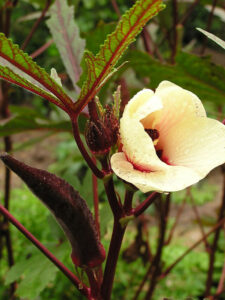
Okra, a staple of Southern cooking, traces its origins to Africa and remains a warm-season favorite in home gardens and kitchens across the region. Courtesy photo/Felder Rushing
Just a few of the flowers we owe to the second-largest continent include periwinkle from Madagascar; gomphrena (bachelor buttons or globe amaranth); celosia (prince’s feather, cockscomb); impatiens; pentas; bottle gourd; castor bean; black-eyed Susan vine; and Joseph’s coat.
Though some need occasional protection from hard freezes, my garden features several herbaceous African perennials, including gladiolus, umbrella sedge, Algerian ivy, gerbera daisy, agapanthus, amaryllis, plumbago, holly fern, crocosmia, society garlic, oxalis, some types of gardenias and the indestructible milk-and-wine crinum.
And though I wish I could grow award-winning African violets like my grandmother did, my touch is too coarse for delicate plants that require regular care. So, my all-time favorite tropical African potted plants – mostly too tender to leave outside but able to live for decades when brought indoors every winter – must be durable and able to withstand neglect. They include aloes, croton, sansevieria (snake plant or mother-in-law’s tongue), asparagus ferns, airplane or spider plant, geraniums, fiddle-leaf fig, ribbon and corn plants and other dracaenas, areca palm, pencil cactus and other euphorbias, and the uber-exotic bird of paradise.
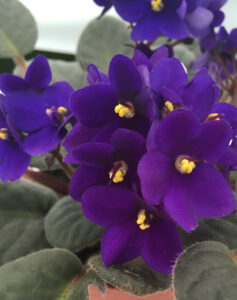
African violets, native to eastern Africa, became popular houseplants in the United States after their discovery in 1892. They remain favorites for their colorful blooms and compact size. Courtesy photo/Felder Rushing
And these are just the ones I grow myself. Though nearly universally enjoyed and passed from gardener to gardener – perhaps our often fractured communities’ easiest cross-cultural connection – there are many more.
The main thing is that today’s Mississippi flower and food garden palette wouldn’t have our storied Southern sense of place without these favorites from the continent of Africa. Can we offer them some heartfelt appreciation?
Felder Rushing is a Mississippi author, columnist and host of “The Gestalt Gardener” on MPB Think Radio. Email gardening questions to [email protected].
Posted in Columns
Quality, in-depth journalism is essential to a healthy community. The Dispatch brings you the most complete reporting and insightful commentary in the Golden Triangle, but we need your help to continue our efforts. In the past week, our reporters have posted 36 articles to cdispatch.com. Please consider subscribing to our website for only $2.30 per week to help support local journalism and our community.
Comments are closed.