
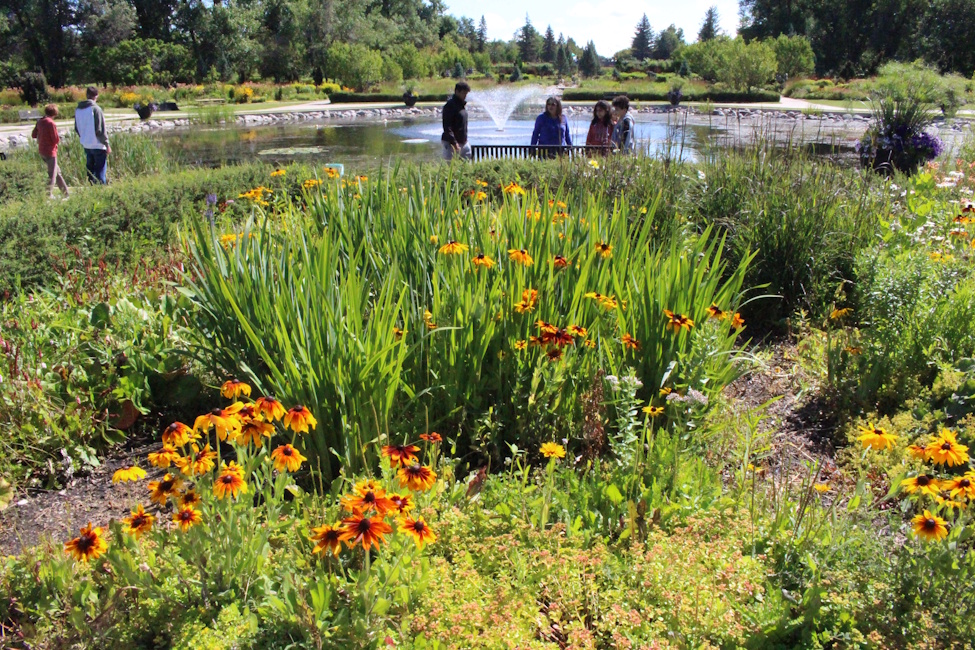
The International Peace Garden will be recognizing a special Manitoban who paved the way in developing plants, trees and bushes that were hardy enough to withstand a prairie winter, through the designing of a special flower bed in his honor.
According to the Manitoba Historical Society Archives, Frank Leith Skinner was one of Canada’s most respected and innovative horticulturalists and plant propagators, and he lived in Dropmore (near Inglis) in southwest Manitoba in the early 1900’s.
.jpg) Dr. Frank Skinner at work (October 1962)
Dr. Frank Skinner at work (October 1962)
Peace Garden CEO, Tim Chapman, says the developing of a special flower bed in honor of Frank Skinner is long overdue and they’re excited to work on that project this summer. MLA for Turtle Mountain, and President of the Peace Garden Board of Director, Doyle Piwniuk has been instrumental in getting this project off the ground, notes Chapman.
When Tim Chapman moved to the International Peace Garden in 2018 as the new CEO… there was a lot to learn about plants that could weather the harsh prairie winters – but Frank Skinner and his contributions to prairie plant life was mentioned many times.
“When I first got here at the Peace Garden eight years ago, you would often hear in learning about the region and what contributes to horticulture up here, the Skinner name was always being brought up,” explains Chapman.
“So, really it’s an honor for the staff and I – and the Garden as a whole – to be partnering with any group that really understands plants and hardy plants in Zone 2. But the Skinners, that’s icing on the cake for us to say that we’re partnering but also being able to honor the long history and legacy of the Skinner family when it comes to plants in the northern plains.”
“We’re real excited about that,” adds Chapman. “It’s still in its early stages but we’re really appreciative of Doyle and his outreach to get that discussion going to the point where in early October we did a walk-through with a few members of the Skinner family.”
How it all began
.jpg) Dr. Skinner studying his plants with special lenses
Dr. Skinner studying his plants with special lenses
When Frank was just a toddler, the Skinner family moved from Scotland to Aberdeen Saskatchewan in 1885. As he grew up on the prairies, it was here where his interest in gardening revealed itself at a very early age, and he developed a love of certain flowers and trees which later inspired him to attempt to introduce these to Western Canada.
The Skinner family emigrated to Manitoba in 1895 when Frank was thirteen, and their farm in the Dropmore-Castleavery district near the Manitoba-Saskatchewan border served as the natural laboratory for breeding new strains of plants that were capable of surviving the harsh prairie climate. Although he was isolated from other breeders, Skinner’s rugged independence, persistent efforts and patience made him a leading authority on plant hardiness.
Soon after the arrival in Dropmore, Frank Skinner planted a home garden and by 1900 his flowers were well known among his neighbours. During the year, he and his brother, William, took up neighbouring homesteads and pooled their resources. By 1910 Frank was solely responsible for the cattle, while his brother cultivated the land. As a cattleman often on horseback, he used the time to study the natural vegetation of the prairie landscape in their area.
The Frank Skinner legacy garden will be developed at the Willis Pavilion site near Lake Storman on the Peace Garden grounds.
“I’d say this is a little overdue, but at the same time as a non-profit we don’t get to capitalize on every partnership opportunity that’s out there,” adds Chapman. “But this is one that just made sense to work with folks that want to really understand the opportunities and the challenges of growing plants in such cold zones.”
Among Skinner’s most important results were the fast-growing hybrid varieties of poplars which could be rooted easily from hard wood cuttings. These were most useful for shelter belts on the prairie and, Skinner anticipated they could be used in the development of Manitoba’s pulp and paper industry.
Other plants attributed to Skinner’s research and development include early-blooming, heavily perfumed lilacs, the “Dropmore Elm”, the hardy pear and hardier strains of cherry, plum and apple trees… and of course lilies that could withstand the harsh prairie climate.
.jpg) Dr. Skinner’s prize-winning lily, Lilium Maxwill (1933)
Dr. Skinner’s prize-winning lily, Lilium Maxwill (1933)
For more on Frank Skinner, visit the MHS website HERE!
All photos are credited to the Manitoba Historical Society and the Skinner family.
Comments are closed.