Oleander aphids love milkweed. Do not spray anything on the plant. You will risk killing any caterpillar eggs on there. Ladybugs will show up and start clearing them out.
Utopias-Death-Cargo
I think those are orange aphids– *Aphis nerii–*
I read this on Purdue University Landscape Report just now: Milkweed aphids can look alarming but they do little to no damage to plants and have minimal direct impact on pollinators. **In most cases, treatment is not necessary and runs the risk of injuring beneficial insects.** However, in cases where management is required, manually removing the aphids or treating them with horticultural soap is the best option provided it is done carefully and with consideration of the other insects on the plant. –article by Elizabeth Barnes
melanerpes
Oleander aphids, they also attack milkweeds. That’s maybe also a Tropical milkweed, which needs to be deadheaded during the winter for two reasons. First to prevent it from spreading a protozoa which can harm the butterflies. Second to discourage monarchs from staying here when they need to migrate south. Many people grow it because it’s a milkweed but it’s not native so it can cause some issues. I’d cut it all back and plant a native milkweed instead. Yay butterflies!
PhxCuckGuy
Beautiful 😍
ArtistAmantiLisa
Looks like aphids. Ladybugs eat aphids by the score.
OperationGerm
Oleander aphids. The only real danger they present to the plant is dehydration, so water your milkweed extra. Otherwise the aphids might actually do some good attracting native predators like ladybugs and wheel bugs, which may have a beneficial effect on other garden pests.
Fantastic-Climate-84
What a great photo, too! Great stuff
CRodrig4567
I just put on gloves and crush them with my hands. Or shoot them off with a hose. They are aphids, if you have milkweed you will get them.
toenailjail
Buy a bunch of lady bugs, from my experience waiting for them to come won’t happen always.
Cautious-Ordinary475
Echoing other comments on not treating with anything that could harm caterpillar eggs since (I think) this is a host plant.
I also get aphids on my butterfly weed and the best method I’ve come up with is using a spray bottle with a “stream” setting and spraying them off with water.
I tried using a hose but the low pressure settings don’t knock them off and the high pressure settings damage the flowers.
A spray bottle with a single stream setting has enough pressure to knock off the aphids and the smaller stream makes it possible to just get the aphids and mostly avoid the flowers.
It’s not ideal, but if you make it a routine to spend a few minutes spraying them off each day then it keeps things under control.
alien_simulacrum
I just tend to squish them, often.
HomesnakeICT
A teaspoon of Ivory soap mixed with a gallon of water and sprayed on will suffocate many aphids and should not harm any unhatched caterpillar eggs. You could add some neem oil, but I suspect it could harm caterpillars. Repeat applications are recommended.
Cold-Rip-9291
One of the side benefits from milkweed is that they attract aphids. The aphids on the milkweed are not sucking dry everything else in the garden. The milkweed will be fine.
barfbutler
The biggest problem with this species is not that it keeps monarchs beyond their specified stay ( only in some area). It’s that it is an aphid attractor. I would get rid of this species and get another monarch friend.
Honest_Archaeopteryx
Mother’s Day idea: surprise her with some milkweed native to your area!
redundant78
Those are oleander aphids on milkweed – a blast of water from a spray bottle every few days will knock em off without hurting any monarch eggs, wayyy easier than trying to squish them all.
ArachnomancerCarice
Squishing by hand or using a strong (but not too strong) stream of water can help lower numbers. It isn’t necessary to kill all of them. Oleander Aphids are difficult to eradicate without causing significant ecological harm. Please do not buy ‘beneficial insects’ like Ladybugs or Lacewings to deal with them as they displace native predators as well as 99% of them dispersing without actually taking care of the aphid problem.
Tropical Milkweed has been shown to be detrimental to Monarchs due to their disruptive growing and blooming cycle, so it is best to keep them trimmed under 6 inches during fall and winter, or better yet get rid of them and plant species native to the region.
moonrise_garden
Once I had these aphids on my milkweed. I tried spraying them off with water but of course they just climbed back up. I read an article about a diluted dish soap and water mixture you could spray on them. So I tried that. Of course it was warm and partly sunny and the mixture sat on the leaves and then the plant defoliated and nearly died. So… the next time this happened to me, I put on a disposable glove and just firmly but gently squished them. They are soft bodied and don’t move quickly. It’s gross but definitely effective. Or you can just ignore them and let them do their thing in the life cycle. Birds or other insects will eat them and their numbers kind of gradually reduce over time.

19 Comments
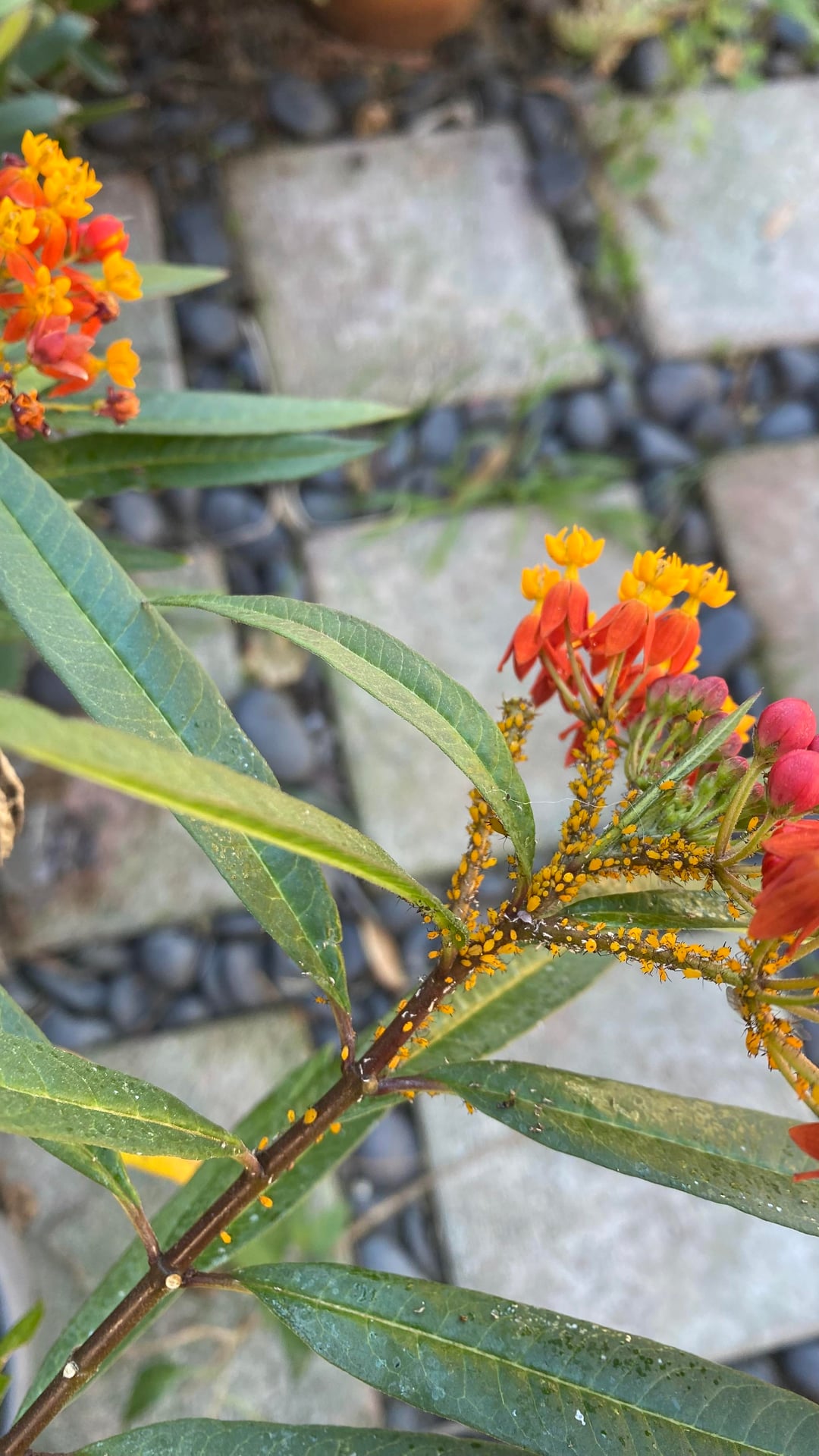
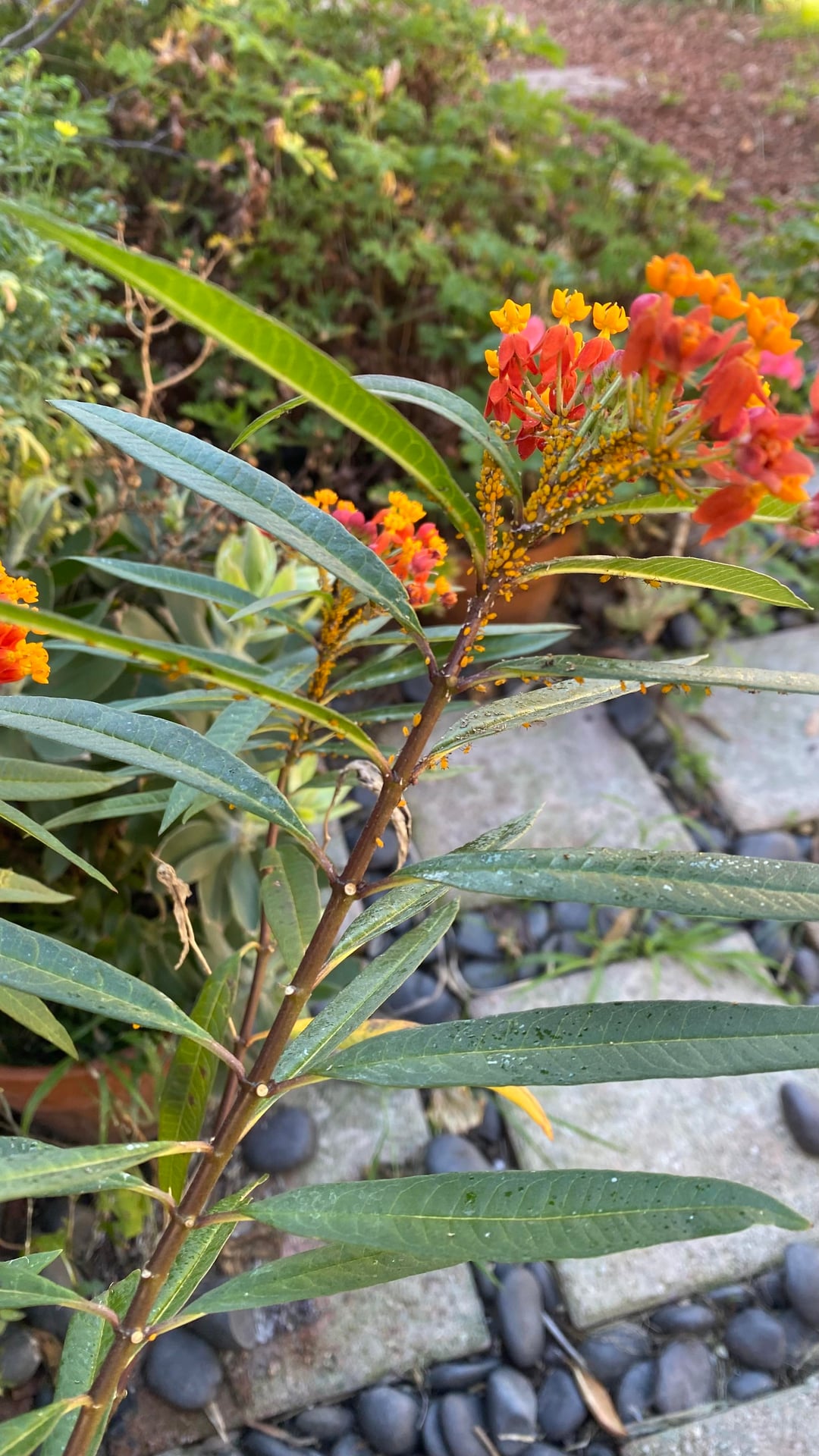
Milkweed aphids
Oleander aphids love milkweed. Do not spray anything on the plant. You will risk killing any caterpillar eggs on there. Ladybugs will show up and start clearing them out.
I think those are orange aphids– *Aphis nerii–*
I read this on Purdue University Landscape Report just now: Milkweed aphids can look alarming but they do little to no damage to plants and have minimal direct impact on pollinators. **In most cases, treatment is not necessary and runs the risk of injuring beneficial insects.** However, in cases where management is required, manually removing the aphids or treating them with horticultural soap is the best option provided it is done carefully and with consideration of the other insects on the plant. –article by Elizabeth Barnes
Oleander aphids, they also attack milkweeds. That’s maybe also a Tropical milkweed, which needs to be deadheaded during the winter for two reasons. First to prevent it from spreading a protozoa which can harm the butterflies. Second to discourage monarchs from staying here when they need to migrate south. Many people grow it because it’s a milkweed but it’s not native so it can cause some issues. I’d cut it all back and plant a native milkweed instead. Yay butterflies!
Beautiful 😍
Looks like aphids. Ladybugs eat aphids by the score.
Oleander aphids. The only real danger they present to the plant is dehydration, so water your milkweed extra. Otherwise the aphids might actually do some good attracting native predators like ladybugs and wheel bugs, which may have a beneficial effect on other garden pests.
What a great photo, too! Great stuff
I just put on gloves and crush them with my hands. Or shoot them off with a hose. They are aphids, if you have milkweed you will get them.
Buy a bunch of lady bugs, from my experience waiting for them to come won’t happen always.
Echoing other comments on not treating with anything that could harm caterpillar eggs since (I think) this is a host plant.
I also get aphids on my butterfly weed and the best method I’ve come up with is using a spray bottle with a “stream” setting and spraying them off with water.
I tried using a hose but the low pressure settings don’t knock them off and the high pressure settings damage the flowers.
A spray bottle with a single stream setting has enough pressure to knock off the aphids and the smaller stream makes it possible to just get the aphids and mostly avoid the flowers.
It’s not ideal, but if you make it a routine to spend a few minutes spraying them off each day then it keeps things under control.
I just tend to squish them, often.
A teaspoon of Ivory soap mixed with a gallon of water and sprayed on will suffocate many aphids and should not harm any unhatched caterpillar eggs. You could add some neem oil, but I suspect it could harm caterpillars. Repeat applications are recommended.
One of the side benefits from milkweed is that they attract aphids. The aphids on the milkweed are not sucking dry everything else in the garden. The milkweed will be fine.
The biggest problem with this species is not that it keeps monarchs beyond their specified stay ( only in some area). It’s that it is an aphid attractor. I would get rid of this species and get another monarch friend.
Mother’s Day idea: surprise her with some milkweed native to your area!
Those are oleander aphids on milkweed – a blast of water from a spray bottle every few days will knock em off without hurting any monarch eggs, wayyy easier than trying to squish them all.
Squishing by hand or using a strong (but not too strong) stream of water can help lower numbers. It isn’t necessary to kill all of them. Oleander Aphids are difficult to eradicate without causing significant ecological harm. Please do not buy ‘beneficial insects’ like Ladybugs or Lacewings to deal with them as they displace native predators as well as 99% of them dispersing without actually taking care of the aphid problem.
Tropical Milkweed has been shown to be detrimental to Monarchs due to their disruptive growing and blooming cycle, so it is best to keep them trimmed under 6 inches during fall and winter, or better yet get rid of them and plant species native to the region.
Once I had these aphids on my milkweed. I tried spraying them off with water but of course they just climbed back up. I read an article about a diluted dish soap and water mixture you could spray on them. So I tried that. Of course it was warm and partly sunny and the mixture sat on the leaves and then the plant defoliated and nearly died. So… the next time this happened to me, I put on a disposable glove and just firmly but gently squished them. They are soft bodied and don’t move quickly. It’s gross but definitely effective. Or you can just ignore them and let them do their thing in the life cycle. Birds or other insects will eat them and their numbers kind of gradually reduce over time.