
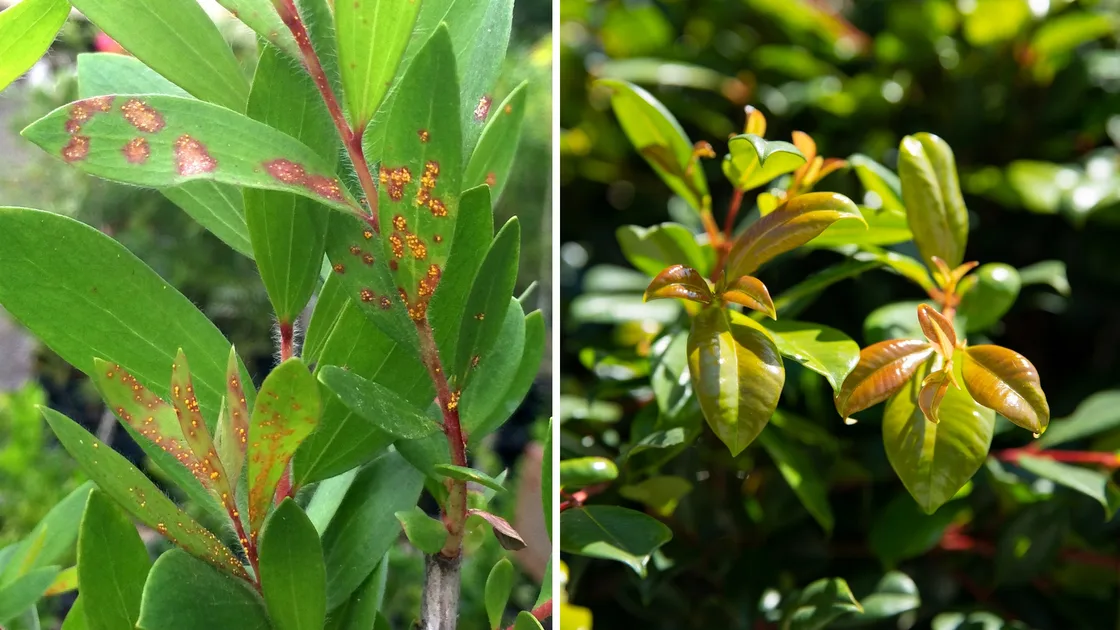
Myrtle rust (Austropuccinia psidii) is an exotic fungal disease that has become a widespread problem for Australian native plants. The Myrtaceae family (lilly pillies, tea tree, myrtle species, gum trees and more) are the most affected by these orange rust spots. If a plant is affected by myrtle rust, it can result in leaf defoliation, stunted growth and even plant death.
If your lilly pilly hedge or tall eucalyptus tree has become inundated with orange spotty leaves, your garden may be infected by myrtle rust. Here’s how to identify this destructive disease and remove it from your garden.
What is myrtle rust?
Myrtle rust is a fungal disease that originated in South and Central America. In Australia, it affects native plants in the Myrtaceae family, including lilly pillies, tea tree, myrtle and eucalyptus species.
Myrtle rust has been found in all states except South Australia and Western Australia. It is widespread in New South Wales, Queensland, the ACT and Victoria, and, if left unchecked, spreads rapidly through native ecosystems.
What does myrtle rust look like?
Myrtle rust can easily be identified by small spores or pustules on the leaves, buds and fruit of a tree. These spores are warm yellow to orange in colour and are sometimes encircled by a ring of purple. The leaves on a tree that is infected may also twist and curl from the disease.
Myrtle rust spores spread by wind, insects, animals and sometimes on humans. It spreads rapidly and takes less than 2 weeks for the disease to settle into a plant. If spotted, your plant will need immediate attention. Once you see pustules, the infection is at its peak.
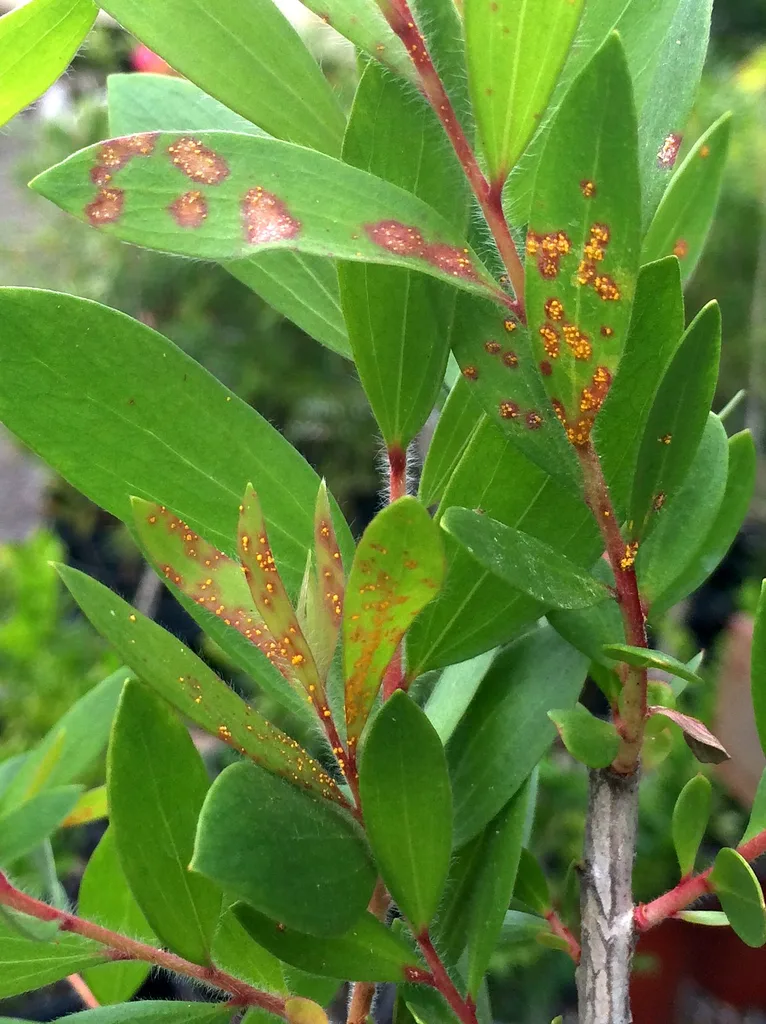 This paperbark tree has become infected with myrtle rust.
Plants that are affected by myrtle rust
Plants that are affected by myrtle rust fungal disease will have yellow spores, stunted growth, defoliation and can end up dead from the infection. The Myrtaceae family in Australia (both native and non-native), is the most affected, including:
Tea trees (Melaleuca spp.)
Lilly pillies (Syzygium spp.)
Bottlebrushes (Callistemon spp.).
Smooth scrub turpentine (Rhodamnia maideniana)
Angle-stemmed myrtle (Gossia gonoclada)
Native guava (Rhodomyrtus psidioides)
Eucalyptus (only E. olida, E. polyanthemos and E. spectatrix are currently known to become infected)
Lemon myrtle (Backhousia citriodora)
According to the Invasive Species Council, the Blackall Range myrtle, smooth scrub turpentine, and native guava are now considered to be critically endangered because of this disease.
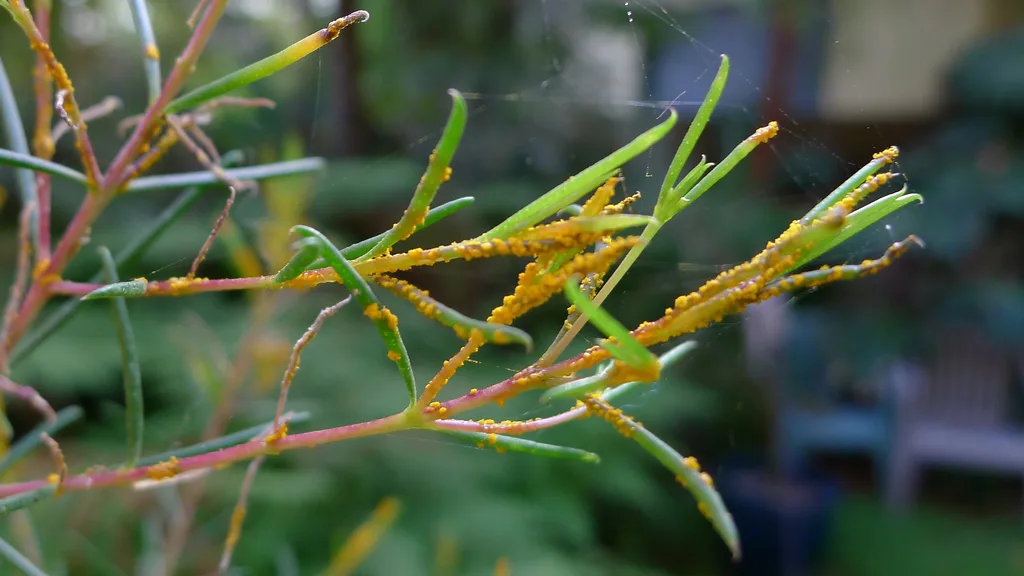 Geraldton wax is also at risk of being infected. (Credit: John Tann)
How to get rid of myrtle rust
The best way to treat myrtle rust is through a combination of treatments. Agriculture Victoria provides an indepth treatment plan for dealing with myrtle rust in the garden, highlighting that the most important step is safe removal of the infected plants. Here are the steps simplified:
Spray all plant in the garden, both infected and not infected, with a fungicide 3-4 days before removal.
Remove infected plants and place them in a sealed plastic bag. This will prevent any spores from shifting and moving onto other plants in the garden.
If possible, leave the bagged plants in the sun for a few weeks to fully kill the disease.
Dispose of the infected plants in the normal red bin or general household waste. Because of the nature of the disease, it cannot go in the green waste bin.
Preventing myrtle rust on native plants
The best way to avoid your beautiful lemon myrtle or your gum tree from being infected by myrtle rust fungal disease is through keeping everything as clean and healthy as possible.
When working in the garden, always ensure you have clean tools that are sanitised frequently.
When purchasing plants, check for signs of the disease, and keep up to date on any species that can be infected.
Frequently check over your plants, especially the underside of leaves, for signs of yellow spores.
Don’t move or collect any infected plant material you encounter. Instead, start immediate treatment.
Related

Writer
Rachel Iorfino
Senior content producer
Sign up for our newsletter
Sign up for the latest news from Better Homes & Gardens including offers and discounts we choose to share with you.
Disclaimer: By joining, you agree to our Privacy Policy & Terms of Use
About your privacy Are Media Pty Limited collects your personal information through this site to process registrations, send out newsletters, communicate offers, discounts, competitions, or surveys, and to provide you with targeted advertising based on your online activities. Our Privacy Policy contains information on how you can access or correct your personal information, which entities we may disclose your personal information to (including overseas recipients), how to opt out of targeted advertising, and how to lodge a complaint.
Related
Comments are closed.