
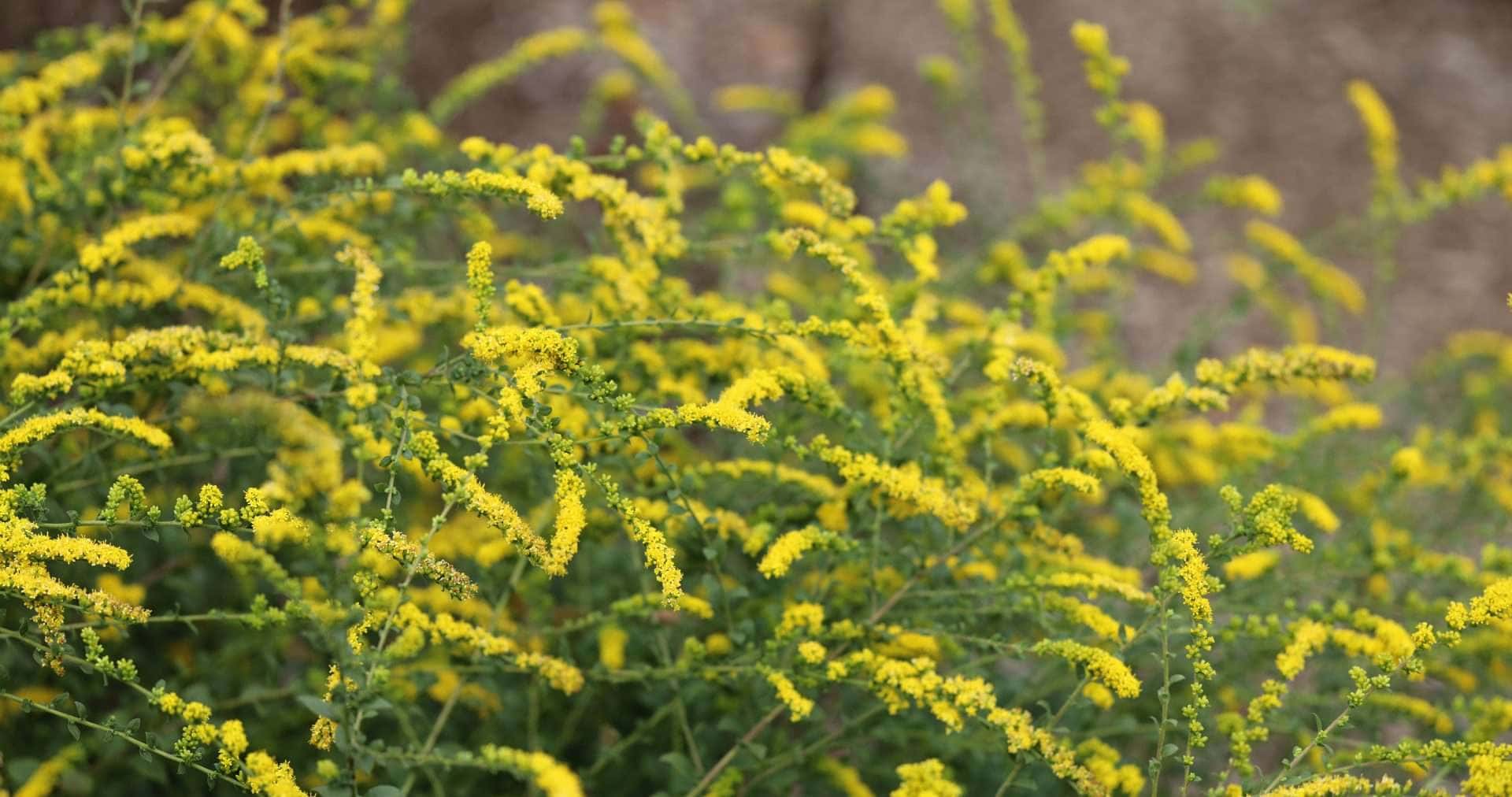
 GOLDENRODS are powerhouses—keystone plants that serve as hosts for more than 100 species of butterflies and moths, and as rich, late-season sources of pollen and nectar for countless beneficial insects. As if that were not enough, they also produce seed that supports various birds.
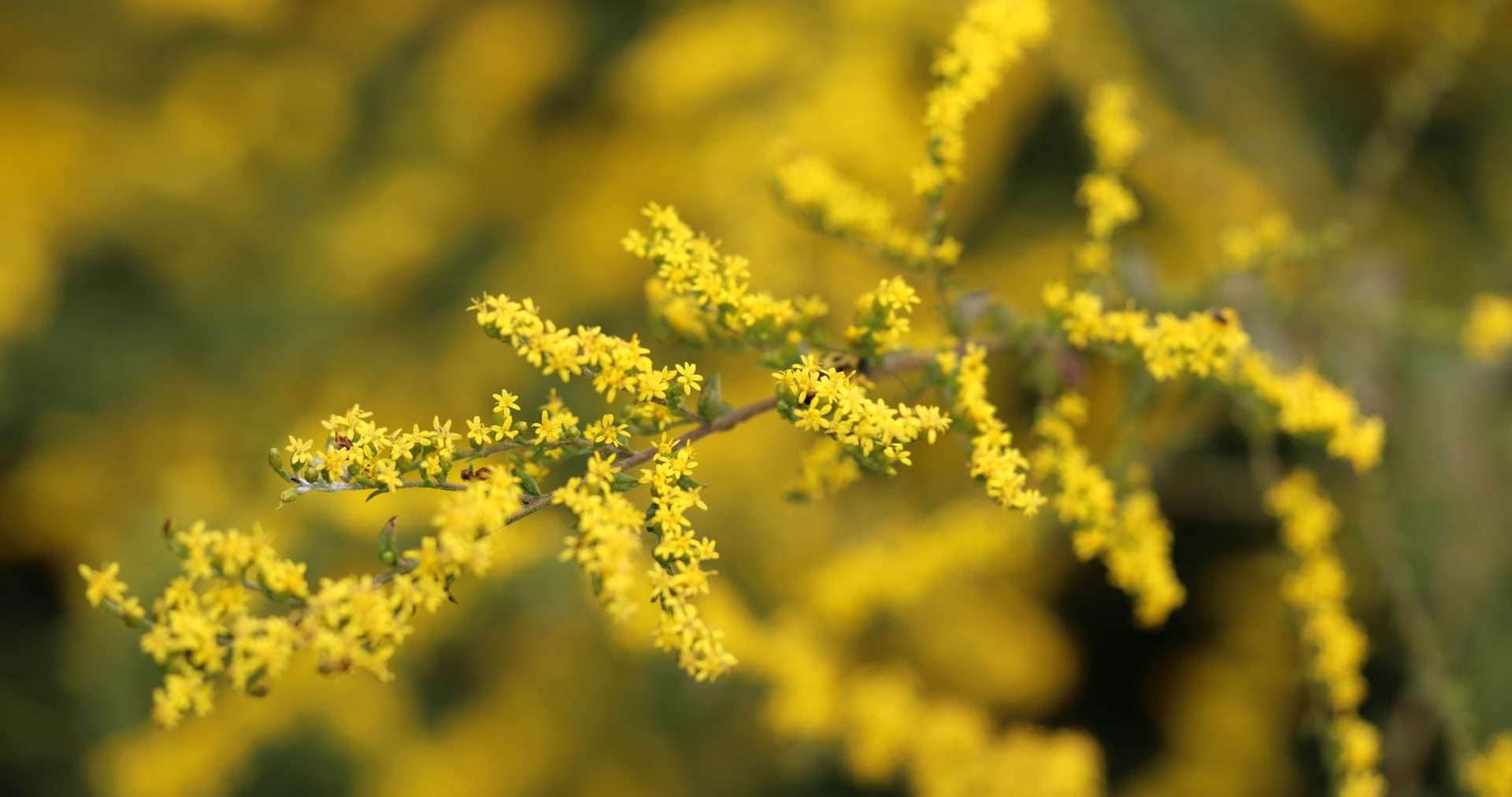
Now Mt. Cuba Center, the native plant garden and research institution in Delaware, has published the results of its three-year trial of 70 different goldenrods—and their manager of horticultural research, Sam Hoadley, detailed for me what they learned about the best goldenrods (like Solidago sphacelata, above) and how to use them in your garden.
Sam is the Manager of Horticultural Research at Mt. Cuba Center, where he evaluates native plant species, old and new cultivars, and hybrids in the famed Mt. Cuba Trial Garden.
I always look forward to our conversations and to getting his first-hand insights into each genus they explore there, and Sam will also be presenting a virtual class on goldenrod Feb. 18 at 6:00-7:30 PM (information on that is here on the Mt. Cuba website).
Read along as you listen to the Feb. 2, 2026 edition of my public-radio show and podcast using the player below. You can subscribe to all future editions on Apple Podcasts (iTunes) or Spotify (and browse my archive of podcasts here).
 goldenrods galore, with sam hoadley
Download file | Play in new window | Duration: 00:27:42 | Recorded on January 30, 2026
Subscribe: Apple Podcasts | Spotify
Margaret Roach: Welcome back to the program, Sam. How are you?
Sam Hoadley: I’m good, Margaret. Thanks so much for having me back.
Margaret: Happy winter.
Sam: Yes, happy winter.
Margaret: No goldenrods right now.
Sam: No, no. We can think about green things while we have this conversation, but everything’s a little white, I would say, at the moment.
Margaret: Yes. Well, I was so glad that this report was out because I mean, as I said in the introduction: powerhouses, and these are keystone plants. I mean, one only has to go stand adjacent to a field or a meadow or whatever in the later part of the season, the fall or whatever, and just look at the life, listen to the life—it’s literally abuzz—and know the power of these plants. So it must have been a really literally lively trial.
Sam: Yes, absolutely. The insect activity was off the charts. It was higher than at least the volume of insects and the diversity of insects that we were seeing coming to visit the goldenrods, and supporting this incredible diverse web of life just in the Trial Garden itself, was incredible. Since then, we’ve also included a Pycnanthemum trial, so we’re seeing lots of insects with that. We’re keeping that theme going. But goldenrods are just… If you’re looking for a group of plants to just help amplify your home garden in terms of the value it can provide wildlife, goldenrods are a really, really great place to start.
Margaret: And yet I think a lot of gardeners are a little cautious, shy, gun-shy, because there are some that have this reputation of, “Oh, they’re so invasive or whatever, they get out of hand,” and so forth. So funny anecdote, I had a workshop here a few years ago with a visiting botanist neighbor. She was doing a lot of the teaching and we’re up in the meadow above my house and the student visitors or whatever, we’re all sitting around. And I’m pontificating [laughter] and I’m saying, well, I’m so worried because I’m very worried that Canada goldenrod is going to come into my little meadow—and it is a small meadow—and then that’s going to take over and blah, blah, blah, blah, blah.
And my friend, the botanist, she sort of walks away and she walks into the meadow and she comes back and she lays down five stalks of goldenrod on the ground by the students, parallel to one another very beautifully like a still life. And she says, she looks at me without being insulting or anything, what she says, “Well, Margaret, you have five species of goldenrod, but you don’t have Canada goldenrod.” [Laughter.] And I didn’t plant anything. My meadow was just a, I unmowed; I stopped mowing. Lovely. What happened? Because I’m in a rural area, so people worry about, “Oh, it’s invasive.” But that’s not the case with all of them by any means, is it?
Sam: No. And that’s something we saw in the trial quite a lot. I think goldenrods are often maligned for a few reasons. One of them being that people, I think many people can recognize a goldenrod when they see it. I think they’re kind of in that category of roses and peonies. People maybe who aren’t even gardeners can see that yellow flower in the fall and think goldenrod. But a lot of times are those initial thoughts about goldenrods in general is that these are aggressive plants or they cause allergies. And of course there’s nuance to the aggressive nature of goldenrod. There is no nuance to the allergies. All goldenrods have that one thing in common is that don’t cause allergies, which is great for us.
Margaret: Right. They’re always confused with ragweed because they sort of happen at the same time. And the pollen from ragweed is the deal. Right?
Sam: Exactly. That’s exactly right. The goldenrod pollen is heavy. It relies on insects to move it around. So that pollen is not airborne. It’s not getting into our lungs and into our sinuses.
But in terms of the aggressive nature of goldenrod, it really does exist on spectrum. And we saw a few plants in the goldenrod trial—we evaluated 70 different kinds—and I would say maybe three or four of those species are plants that I would categorize as aggressive. And the rest were, if you will, fairly well behaved. A lot of them were clump forming. A lot of them were a little bit shorter than I think I might’ve imagined goldenrods being in my mind. And a lot of them are really great candidates for more managed traditional home landscapes.
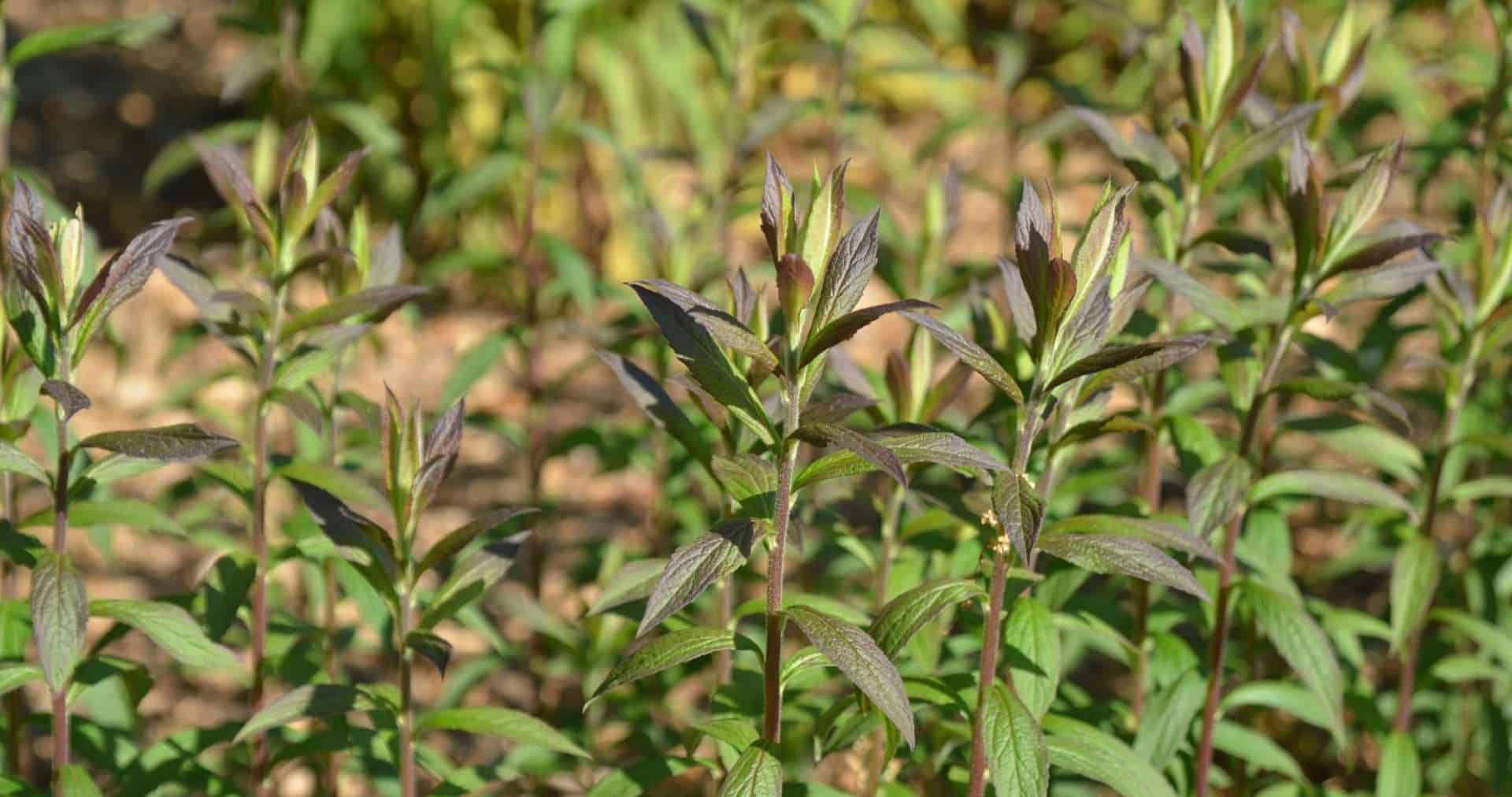
And it’s not to say the aggressive plants don’t belong anywhere, and there’s certainly uses for them. We think of those plants as really great candidates for restoration settings, where you need a plant that has a more competitive edge to it. And in terms of biomass and supporting wildlife, caterpillars, insects, plants like Solidago altissima [below] and Solidago canadensis are phenomenal at supporting a tremendous amount of wildlife. So it’s one of those plants, it’s really just right plant, right place. But the vast majority of goldenrods really are not that aggressive at all.
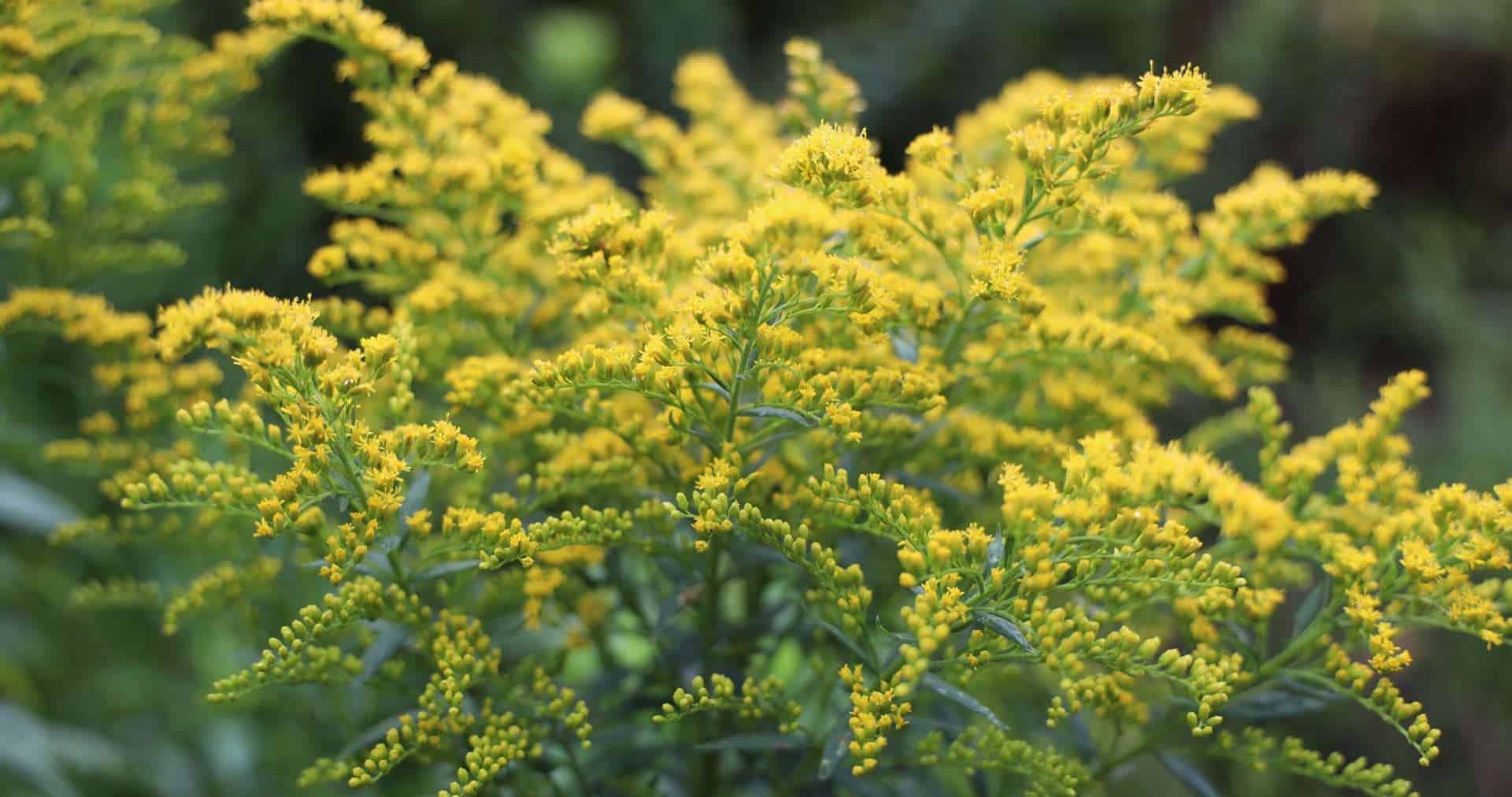 Margaret: So altissima, what’s its common name? Canadensis would be the Canada goldenrod that I mentioned earlier. What’s altissima’s common name?
Sam: Altissima is tall goldenrod.
Margaret: Tall goldenrod. Right. O.K., good. And those two are stronger growers.
Sam: Yes, they are. And canadensis, I think a lot of times a lot of these taller, more aggressive goldenrods get lumped under canadensis. But at least around Mt. Cuba Center, most of the plants that you see on roadsides and in old fields are Solidago altissima. There’s actually relatively few specimens of Solidago canadensis in our natural lands.
Margaret: Well, and that speaks to taking a closer look, because as you pointed out, even from a distance, as you’re driving by and you look from the edge of the road into a field in the distance, you can say, “Oh, it’s goldenrod season,” but which goldenrod. They are hard to tell apart unless you really slow down, aren’t they?
Sam: Yes. But once you do, you start to see diversity in foliage and form and habit, and when those plants are in bloom. And that was the other thing we saw, too, was just this incredible season of flowers with these 70 goldenrods. Of course, you have this peak goldenrod season in September, October, but we had plants starting to bloom in May, June, July, and we had a couple of goldenrods that extended their bloom season all the way into November.
So with just this one genus, you can have flowers supporting wildlife and beautifying your garden for months out of the year. Once you slow down a little bit and you look at your goldenrods, there’s a lot more nuance out there. And as you said in your meadow alone, you had five species. That’s incredible in a relatively small area, as you mentioned.
Margaret: Right. And again, I didn’t do anything. I didn’t plant anything. They were in the seed bank when I stopped mowing that field above my house years ago and let whatever was going to happen happen, they sprung up. They were in there. Do you, around Mt. Cuba, are there a lot of species that you haven’t planted? Are there a lot of literally native species to that area?
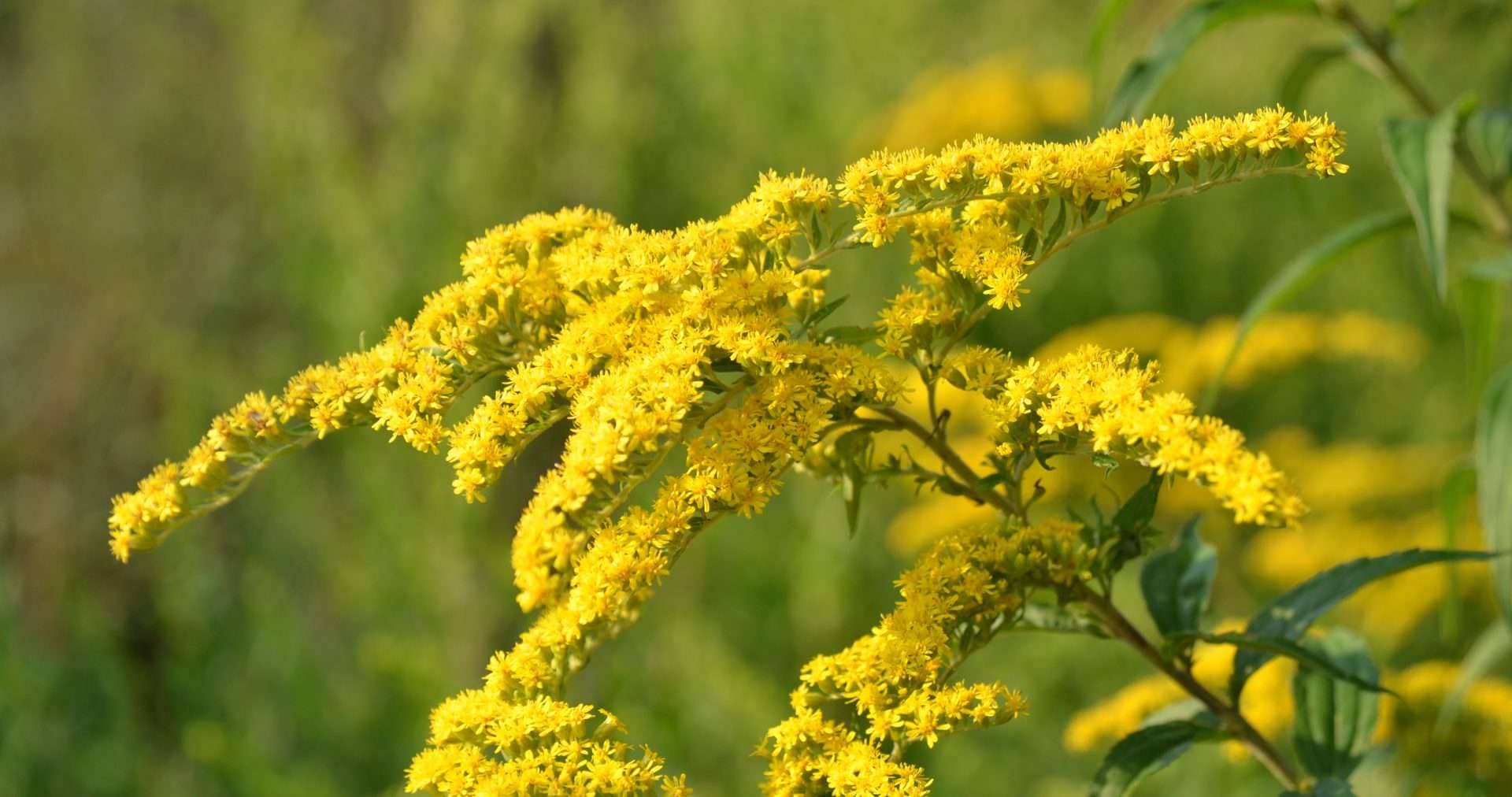 Sam: Yes, there’s some really cool plants. Our natural lands are home to several really cool goldenrods. Some of them would be familiar to gardeners like blue-stemmed goldenrod, zigzag goldenrod. They’re in our woodlands around here, Solidago caesia and flexicaulis, probably pretty familiar to gardeners and a great candidate for shaded gardens. We have Solidago altissima that’s very common in our natural lands, a few Solidago canadensis patches. We also have another species that’s relatively tall and I think sometimes considered to be an aggressive plant called Solidago gigantea [above], which is a beautiful plant that occurs really in kind of wet meadows, kind of seepy areas, and is a perfect companion with New York ironweed. They bloom at the same time. So you have this kind of concert of yellow and purple, really a stunning display.
Margaret: You did a trial of ironweeds, didn’t you?
Sam: We did, and we actually teased a little photo of that wet meadow with the New York and Solidago gigantea together, which is one of my favorite places at Mt. Cuba Center. Just to see these kind of plants in their natural habitat and to see them thriving together and to observe all the insects that are coming in.
And we have a couple other, somewhat more, I would say obscure species as well, including Solidago patula, which really grows in kind of these wet woodlands, these big leafy rosettes that come up in the spring. And these very tall architectural inflorescences—beautiful plants, somewhat uncommon in this area, but another candidate for shaded gardens, early goldenrod, Solidago juncea, is in some of the leaner soils in our meadows and blooms in July, August. But there’s an incredible diversity, and I really do encourage people to go to our natural lands in addition to our gardens, of course.
Margaret: When they visit, right.
Sam: Exactly. And to see these plants in the wild, and it just gives you a lot of insight about where these plants want to grow effective companions to plant them with and to really see how they work in a natural system.
Margaret: Now you mentioned that some can take some shade, I think; that there are different times of bloom, that there’s an extended season of bloom, if you really look at the different species. And you evaluated that in the report, there’s a different height range; they’re not all four or so feet tall. There’s different extremes of height as well.
A lot of people, especially when they’re using them in a looser area of their property, they might have deer in that area. What about deer? Are they deer food or what’s the-
Sam: Yeah, so a lot of them we found are fairly resistant to deer herbivory. Now, resistant doesn’t necessarily mean deer-proof.
Margaret: Of course.
Sam: But I mean, I think we all get an education on what exactly is deer proof every year, depending on how hungry the deer are. But for the first time, we were able to have a little bit of data included in our research report on our website about deer and herbivory resistance, thanks to a study that was done at Temple University at Ambler Arboretum. Their staff, including Kathy Salisbury, their executive director, took large portion of the trial and planted it out in an area that was exposed to a lot of deer traffic, and basically monitored all those plants for two years to try to see which of these plants are being browsed and which weren’t.
A lot of the really healthy, strong plants, a lot of the top performers from our horticultural trials, ended up being quite resistant to herbivory. And so that was a very encouraging finding for me that goldenrods are not just adaptable plants in garden settings, but they’re also fairly adaptable to herbivory or resistant to herbivory, which is a really important consideration for a lot of people in our area that deer pressure’s a very real thing in cultivated areas.
Margaret: So in the trials, you always have a chart of rating the top ones and for different qualities and so forth. And in terms of winners [laughter], there were a few that really stood out, weren’t there? And are these all for garden use, or are these for conservation or restoration use, or I can’t remember with the top ones, whether they were all good garden candidates as well?
Sam: Yeah, a lot of them are. A lot of them are actually kind of go into both worlds there. A lot of them are good for the home garden, but I think also are good candidates for restoration projects, for natural lands managers. This is a really a great trial that applies to a much larger audience, perhaps, than we’ve been targeting before with a lot of these results.
We have some of our plants that are maybe more traditional garden plants that maybe are not necessarily locally native to us. But we have several species that are locally native, are relatively common in natural areas around us, but just have not been grown before either by horticulturists or restoration nurseries. And we found that some of those plants were phenomenal garden performers, and it was a really, really great opportunity for us to promote those plants, to elevate them in the garden and conservation communities, and to just shine a light on some of these species that are, in some cases in our backyards, that make tremendous garden and landscape plants that have incredible ability to support wildlife and cultivation as well.
Margaret: I think the top spot was like a tie, wasn’t it? There was a dead heat for a tie. What were called the winners, so to speak.
 Sam: It was almost a perfect tie between one plant that’s very well established in cultivation, which is Solidago rugosa ‘Fireworks’ [above]. I know I’ve had some of my gardens for years. I know many people have that plant. It’s a great introduction to the world of goldenrods. It has a beautiful habit. It’s actually a selection of a wild-type plant that was collected by North Carolina Botanic Garden staff I think in 1970 and was later introduced to the horticultural world in 1990, I believe. And it’s been very popular ever since and rightly, and it was great to see that being a top performer; it kind of confirmed what we already know, that it’s a great garden plant was actually a top performer in Richard Hawke’s research at Chicago Botanic Garden as well, when they did a goldenrod trial. So it confirmed what we all know.
Margaret: I remember actually when it was Kim Hawks from Niche Gardens, which was one of the really pioneering native plant nurseries. I remember visiting them a million years ago, decades and decades and decades ago, and that she was just so high on this plant that it was just such a great plant. And again, as you pointed out, then a decade later, it was affirmed by Chicago Botanic and so forth. It’s, it’s a winner. So Solidago rugosa ‘Fireworks.’ And is it big, small, early, late? Anything about it?
Sam: It’s kind of a medium-sized plant. It does spread, but it’s not terribly aggressive. I think when you plant it in wetter soils, it will spread a little bit faster, but you can keep it restrained by growing it in more average to dry soils. It blooms kind of in that typical September, early October window. It has these incredible sprays of flowers. Individually the inflorescences are kind of stringy and wiry, but together they kind of create these netted domes of golden flowers. They are stunning, and we use them extensively in our perennial borders and our formal gardens. It’s just a really solid performer. We see lots of insect activity. It is kind of the best of cultivated goldenrods.
Margaret: And rugosa is the wrinkle-leaf goldenrod, the common name. O.K., so this is the selection ‘Fireworks.’
Sam: Exactly. But along with that, the plant that tied with it was a virtual newcomer to the horticultural world, which was very exciting. We have a plant that has not really been in cultivation before, is locally native to us in Delaware. It’s kind of a coastal native plant that prefers kind of these wet back dune areas. And this plant was neck and neck with ‘Fireworks’ for the entire trial.
And it’s so exciting for us to see plants like that that have this untapped potential, because it just shows you that there’s so much out there that hasn’t been evaluated and introduced, and there’s so much diversity out there that’s just kind of ready to be found and ready to be introduced to gardeners, to restorationists. And that’s one of those plants that can really fit into both of those worlds beautifully. It grows, it’s kind of a medium-sized plant, again, maybe gets to 3 to 4 feet tall; really nice, sturdy stems.
Does spread similar to ‘Fireworks,’ but its spread can be slowed by growing it in drier soils. And even then, it’s really not too hard to contain. It’s not a terribly competitive plant. If you plant in a perennial border, it’s not going to overrun your border, either. We’ve loved its sturdy stems. It has kind of this fuzzy pubescence over the stems, the foliage. The flowers are incredibly beautiful. We saw lots of insect activity, really beautiful seed heads, and one of my favorite things about it, so we got really nice fall color out of this species as well. The foliage turned kind of shades of garnet and red and purple, a really, really lovely and special species, and was collected locally in Delaware. And it’s one that we have spent some time distributing seed to commercial nurseries around us, both for the horticultural world and for the restoration world. We’re hoping that it’s going to be much more available in the future. [Below, ‘Fireworks’ in fall color.]
 Margaret: So that’s the pine-barren goldenrod, Solidago fistulosa.
Sam: Right.
Margaret: I don’t know that one. So it’s interesting, I’m inland and closer to New England, so I don’t know that one. So those were two winners, they tied. And then I think what came next was one that Mt. Cuba Center introduced quite a while ago.
Sam: So it’s actually the wild type of that plant we introduced.
Margaret: Oh!
Sam: So this is Solidago sphacelata, I think it’s called autumn goldenrod, which is not a very descriptive name [laughter], but Solidago sphacelata is a wonderful plant. It can apply to a lot of different garden settings. And we introduced Mt. Cuba Center, the “we” is Mt. Cuba Center introduced.
Margaret: Yes. Right [laughter]. And the funny thing is, it might have been even Dick Lighty [the first director of Mt. Cuba Center].
Sam: I think it was.
Margaret: Because I remember coming and visiting him there, and some of his earliest introductions I have in my garden. It’s like, wow, you guys have been pioneers and then you’re just continuing, continuing to make such an important contribution. So hooray.
 Sam: Yeah. And Dr. Lighty introduced a lot of really great plants, especially in the late eighties, early nineties.
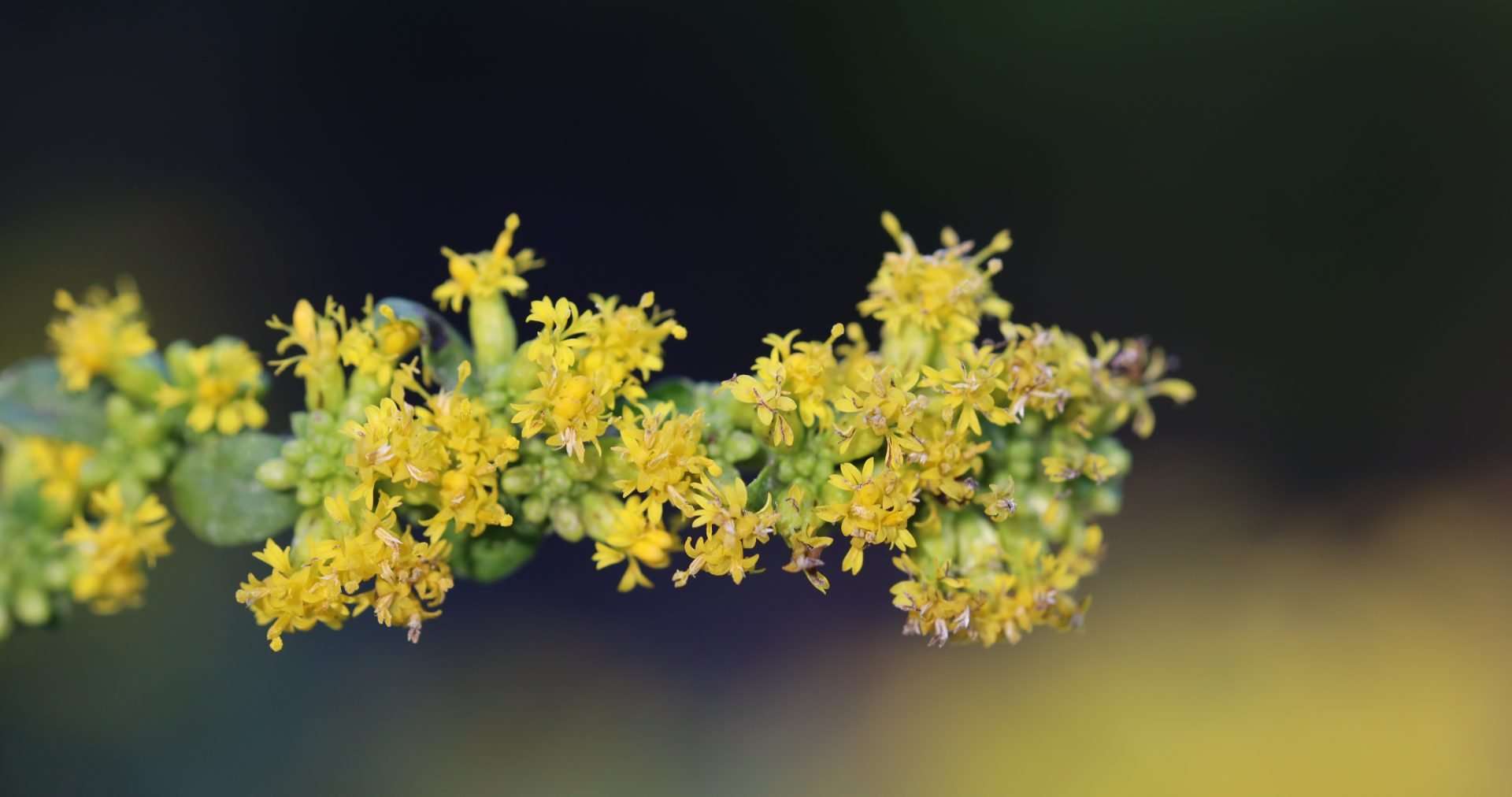
And Solidago sphacelata ‘Golden Fleece’ [detail above], which is another pretty probably familiar name in the goldenrod world to gardeners, was introduced at that time. And this was a really compact form of Solidago sphacelata that was found in North Carolina. It is a really great fit for more formal borders. It’s smaller, well behaved if you will. I think it’s even small and compact enough to be used in container gardens really effectively if you don’t have a lot of space in your garden. And it has a lot of garden merit.
But we actually found that the wild-type plant outperformed ‘Golden Fleece’ in the trials from most perspectives, it was a little bit more robust. It was able to kind of I wouldn’t say compete, but stand up against taller plants. I have some problems in my home garden with golden fleece just because I don’t maintain my garden quite to the level that we do at Mt. Cuba Center.
And ‘Golden Fleece’ often gets overrun and outcompeted where I plant it. But Solidago sphacelata the wild type is just a little bit larger, a little bit more robust, and it’s able to kind of hold its own in a garden setting. And it actually is a really effective groundcover. It has larger, somewhat more silvery leaves. It creates this lovely mat of foliage in the spring that’s followed by these arching sprays of flowers in later fall. I think it could be really beautifully used on hillsides because a lot of those inflorescences will all kind of orient the same way, especially if you’re looking up at it on a hill. I think it would be absolutely spectacular.
Margaret: Interesting.
Sam: Adaptable to dry soils. It’s adaptable to shade. There’s a lot of uses for just the wild types, Solidago sphacelata, and a ton of insect activity as well.
Margaret: I want to talk about growing them. And is there a sort of protocol of when we cut back or do we cut back, or when we do anything to them. Because they are used in all of their moments really by some creature or other, because as I said, the introduction, they’re host plants for so many insects, they are pollen and nectar sources. They then produce seed that many birds use in the offseason. I mean, these are super-powerhouses. They are. And so what’s your instinct then, knowing that, and that there’s always someone wanting to get at the goldenrods [laughter]—what’s your instinct for managing them as a gardener?
Sam: Yeah, I think we did very little to them in the Trial Garden. And I don’t treat them very differently in my home landscape. I really want wildlife to be able to eke every last bit of benefit out of those plants as I possibly can. That really translates to leaving those stems up in the winter. And we do cut back in the spring, but we try to leave at least on some of the taller, more robust species a little bit of stubble, if you will, some taller stems, maybe 8 to 24 inches of stem, instead of cutting them back to the ground. That will provide some habitat for cavity-nesting bees. We want to have all those seeds get eaten.
And really during the growing season, we can be very hands-off with these plants unless you wanted to kind of control its spread a little bit. And a lot of that just requires simply pulling some of those stems that are coming up in places that you don’t want them. But a lot of these plants can be really left alone. Some of them you can do the Chelsea Chop on, you can cut them back, especially some of the plants with kind finer foliage and more numerous stems. They respond well to that if you want to keep them a little bit shorter. But that’s really not required, either.
Goldenrods, if you cite them correctly and if they’re happy where they’re growing, they are a very, very hands-off, low-maintenance plant, which is I think great. Again, for gardeners like myself, who I don’t have the time to really be out in all corners of the garden at all times. They’re really a great plant that I know is going to perform in the garden setting, but it’s also going to provide tons of wildlife value with very limited inputs from me.
Margaret: And those two things are just really sort of in sync, harmonious, the hands-off. And boy, oh boy, everybody’s in there getting what they need from them. So yeah, we didn’t mention that they’re in the Aster family, but their flowers, each little flower is accessible, it’s so accessible. And so asters frequently bloom at the same time and are another great fall resource for a lot of these same creatures.
Sam: Exactly.
Margaret: Yeah. Well, what are you trialing next? What’s going on now?
Sam: Yeah, we’ve got lots going on in the Trial Garden. We have an ongoing trial in oakleaf hydrangeas, an ongoing trial on milkweeds, which I think is going to be our next research report, small trial on Physostegia, small trial on Tiarella, a big trial on Pycnanthemum, which has been incredible in terms, I mean, very similar.
Margaret: The mountain mints. The mountain mints, yeah.
Sam: Oh my gosh. Yeah, the mountain mints. And very similar in terms of insect activity, and just if you’re interested in elevating the wildlife value of your home garden, look at goldenrods, look at mountain mints. We’re also looking at ferns, and we just planted a new trial on what we’re calling bluestems. So these are the little bluestems. There’s some bluestems that are really commonly known, like little bluestem is the very popular landscape plant, but there’s lots of other bluestems out there. And we’ve really tried to demonstrate the biodiversity of what Andropogon and what Schizachyrium can offer in the Mid-Atlantic region and beyond from cultivated specimens to wild-type plants.
Margaret: Well, Sam, I don’t know how you do it all, but I’m so glad you do, and thank you for making time today to talk, and I hope I’ll talk to you soon again.
Sam: Absolutely. And thank you so much for having me.
more from sam hoadley
prefer the podcast version of the show?
 MY WEEKLY public-radio show, rated a “top-5 garden podcast” by “The Guardian” newspaper in the UK, began its 16th year in March 2025. It’s produced at Robin Hood Radio, the smallest NPR station in the nation. Listen locally in the Hudson Valley (NY)-Berkshires (MA)-Litchfield Hills (CT) Mondays at 8:30 AM Eastern, rerun at 8:30 Saturdays. Or play the Feb. 2, 2026 show using the player near the top of this transcript. You can subscribe to all future editions on iTunes/Apple Podcasts or Spotify (and browse my archive of podcasts here).
Comments are closed.