
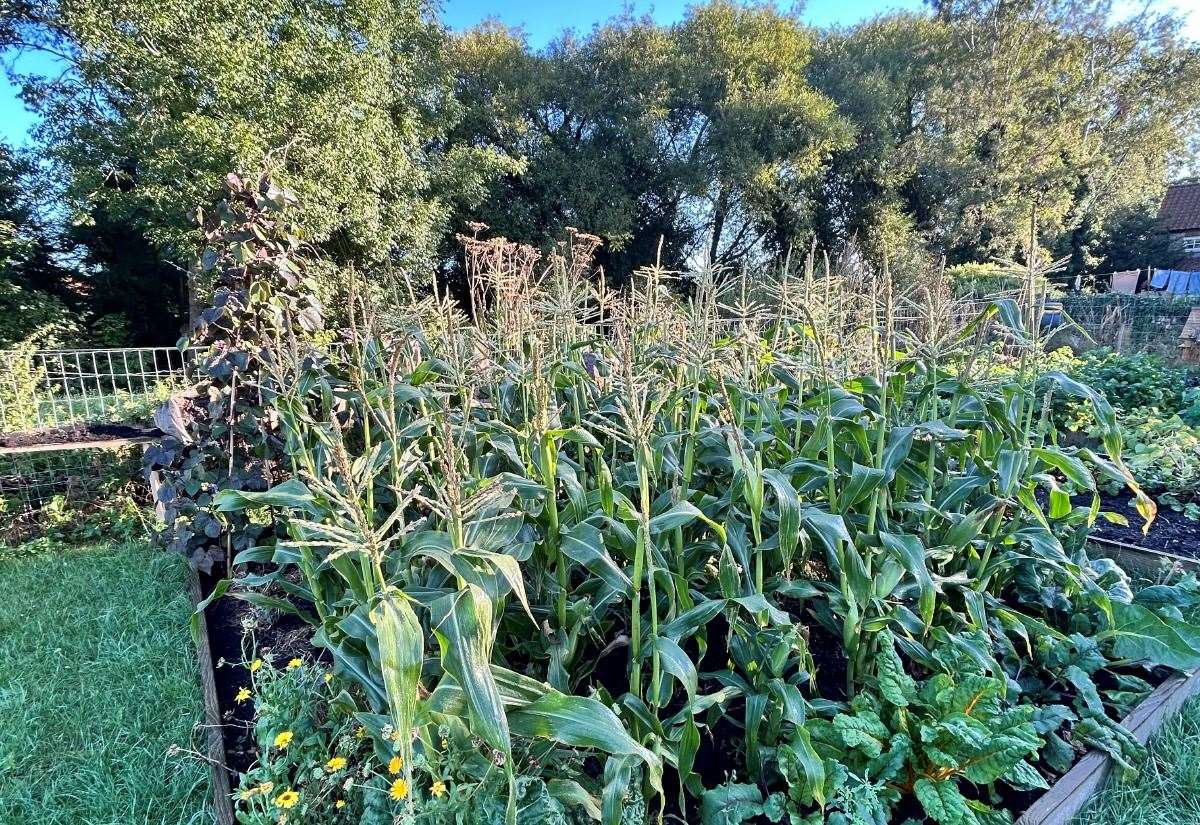
In his weekly gardening column, Jamie’s Little Allotment, Gayton Gardener Jamie Marsh discusses setting up your first growing area…
Why bother? It’s something I’m asked a lot, especially when vegetables can be bought so cheaply in the supermarket. On the face of it, it’s a fair question. A bag of carrots can cost less than a cup of coffee, and once you start adding up compost, seeds and pots, growing your own can look like the expensive option.
But for most people, growing vegetables has never really been about saving money. It’s about flavour, freshness, and knowing exactly where your food has come from. It’s about picking something at the right moment and eating it the same day, rather than days or even weeks after it was harvested. It’s also about having control over how your food is grown. Many shop-bought vegetables are produced using chemical fertilisers and pesticides, and growing your own gives you the choice to avoid those if you want to. And for many of us, myself included, it’s about the simple satisfaction of growing something with your own hands.
 You can’t beat growing your own vegetables
Another question I’m often asked is where to actually begin. Over the next several weeks, I want to break things down and talk you through starting a veg garden from scratch, without making it feel complicated or overwhelming.
This week, I want to start with something really simple but often overlooked, and that’s where you actually put your veg garden. One of the biggest reasons people talk themselves out of growing their own is because they think they don’t have enough space, or that their garden isn’t quite right. In reality, vegetables are far more forgiving than we give them credit for.
You don’t need a huge plot or perfectly straight beds. A sunny corner of the garden, a strip along a fence, or even a small area that you can dedicate to growing food can produce a surprising amount. What matters far more than size is light. Most vegetables will be happiest with as much sun as you can give them, ideally six hours or more a day, but that doesn’t mean you can’t grow anything if your garden isn’t perfect.
Before you rush out and build anything or buy anything, it’s worth simply watching your garden for a few days. Notice where the sun hits first thing in the morning, where it lingers in the afternoon, and which areas stay shaded for most of the day. It’s also worth remembering that the sun sits much lower in the sky at this time of year. Areas that feel gloomy in winter often get far more light once we move into spring and summer, when the sun is higher and the days are longer.
Shelter matters too. A fence, hedge or wall can make a big difference, not just by blocking the wind but by holding on to a bit of warmth. A sunny spot against a wall will often outperform a larger open space that’s exposed and cold. It doesn’t have to be perfect, and it doesn’t have to be textbook. It’s simply about choosing the most sheltered, light-filled spot you’ve got and working with it.
It’s very easy to overthink all of this and convince yourself you need the ideal set-up before you can start. In reality, most veg gardens evolve over time. What looks like the best place now might change once you’ve grown in it for a season or two, and that’s absolutely fine. Starting somewhere sensible and learning as you go is far better than waiting for the perfect conditions that never quite arrive.
Even in smaller or more shaded gardens, there are plenty of crops that will still do well, and over the coming weeks, I’ll touch on what grows best where. For now, it’s simply about looking at the space you already have and making a decision based on light and shelter, rather than feeling you need to change everything before you even begin.
Comments are closed.