
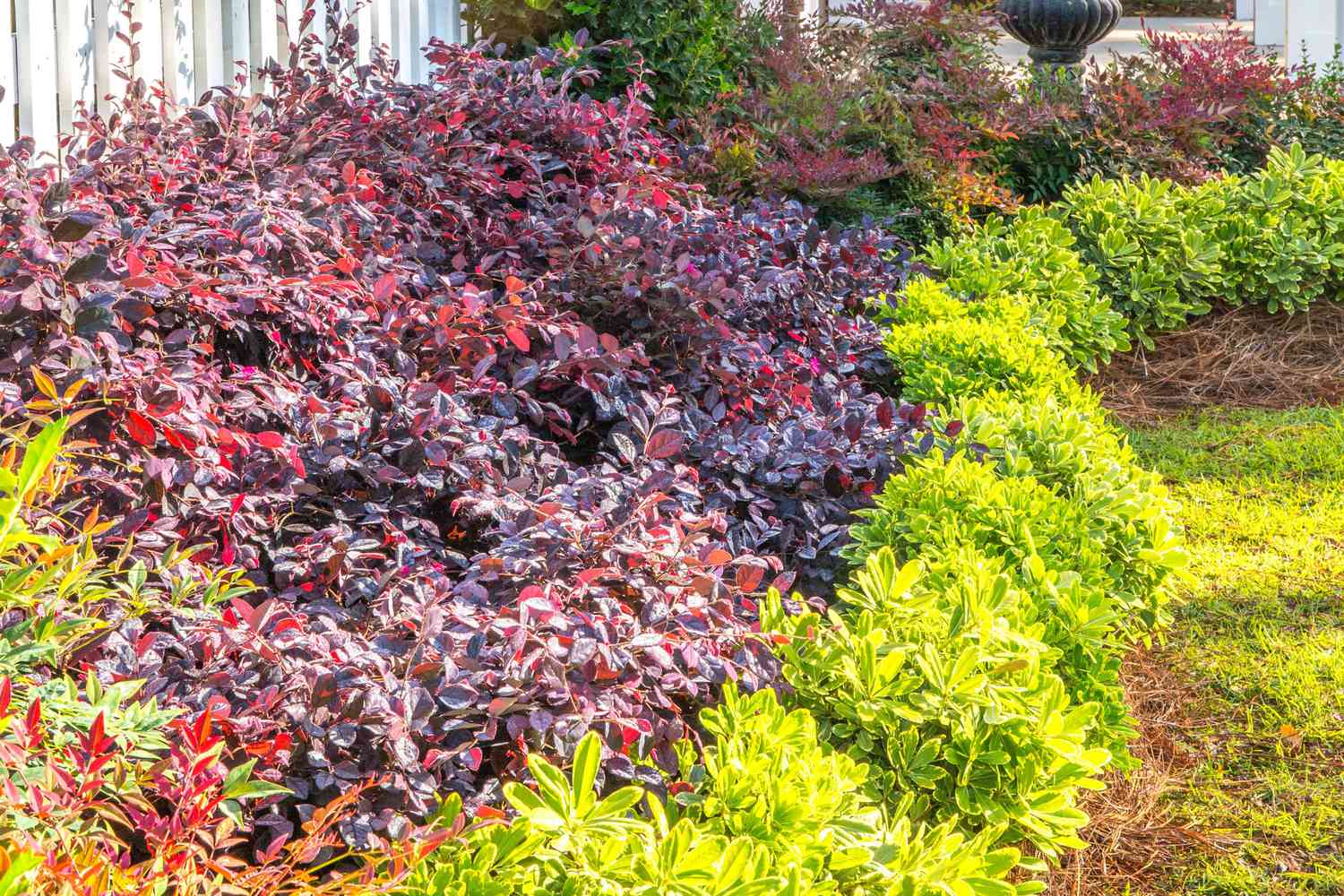
Deer can be a serious challenge to gardening in the South whether you live in the country or city, in the mountains or on the coast, and everywhere in between. While you can build tall fences or employ a variety of scare tactics, the simplest way to protect gardens from deer damage is by planting deer-resistant plant material. No plant is entirely deer-proof, but some plants are more attractive to deer than others. To limit browsing, seek out plants that deer tend to avoid. The shrubs featured here display resistance to deer browsing. Planting these and other resilient plants will help you gain more enjoyment from the garden without worrying about hungry deer.
While these plants demonstrate good resistance to browsing, deer may eat just about anything when they are hungry enough. Deer damage is recognizable by the torn or jagged branches left after browsing. Once deer find a food source, they are likely to return. If you notice deer damage in the landscape, adopt a temporary scare tactic to encourage them to move along.
Burning Love™ Leucothoe
Credit:
Southern Living Plant Collection
Botanical Name: Leucothoe keiskei ‘Opstal 50’Sun Exposure: Part sun to shadeSoil Type: Rich, moist, well-drainingSoil pH: Acidic (4.5-6.5)USDA Plant Hardiness Zone: 6 to 10
The evergreen foliage of this low-growing beauty shifts from season to season, with new spring growth emerging a rich red hue before turning green for the summer. Autumn brings burgundy and purple shades to the foliage which lasts throughout winter. Burning Love™ Leucothoe has a compact, arching habit that makes a graceful accent in beds and containers. Plants can also be massed as a lush groundcover.
Miss Scarlett® Illicium
Credit:
Southern Living Plant Collection
Botanical Name: Illicium floridanum ‘JCJC’Sun Exposure: Part shade to shadeSoil Type: Rich, moist, well-drainingSoil pH: Acidic (5.0-6.5)USDA Hardiness Zones: 7 to 10
Miss Scarlett® Illicium is a compact variety of the southeast native shrub commonly called anise tree. Plants feature showy crimson blooms packed with long petals and olive-green foliage that smells like anise when crushed. Plants naturally grow in moist habitats and can be a real problem solver for wet areas of the landscape. Miss Scarlett® also makes a wonderful accent in containers and planting beds.
Yewtopia® Plum Yew
Credit: Courtesy of the Southern Living Plant Collection
Botanical Name: Cephalotaxus harringtonia ‘Plania’Sun Exposure: Partial to full shade; dappled sunSoil Type: Well-drainingSoil pH: Acidic to alkaline (6.0-8.0)USDA Hardiness Zones: 6 to 9
The deep green needles of Yewtopia® Plum Yew are surprisingly soft to the touch, but deer still leave them alone. More compact than other Japanese plum yews, layers of gently arching branches lend Yewtopia® a graceful, vase-like form. These tough plants thrive in the heat and humidity of Southern gardens and tolerate drought and heavy shade. Mass them in shady borders, foundations, or woodland gardens.
Diamond Spire® Gardenia
Credit:
Southern Living Plant Collection
Botanical Name: Gardenia hybrid ‘Leefive’Sun Exposure: Full sun to part shadeSoil Type: Moist, well-drained, richSoil pH: Acidic (5.0 to 6.5)USDA Hardiness Zones: 7 to 10
This unique gardenia stands apart for its slender and upright columnar habit that fits seamlessly into even the tightest spaces. It makes a gorgeous vertical accent or focal point in beds and containers while perfuming the garden with its heaven-scented blooms from late spring through summer. Diamond Spire® Gardenia also makes a wonderful slender hedge for patios, pool decks, and any where spatial definition is needed.
Viburnum
Viburnum Opulus.
Credit:
Southern Living/Debbie Wolfe
Botanical Name: Viburnum spp. and cltvs.Sun Exposure: Full sun to part shadeSoil Type: Average, medium, well-drainingSoil pH: Acidic to alkaline (6.0-8.0)USDA Hardiness Zone: 2 to 8
Viburnums are stately shrubs that add enduring structure to the garden. This large group of shrubs includes native and non-native species and cultivars, some evergreen and other deciduous, all of which produce gorgeous spring blooms and an abundance of fall fruits. Use these handsome shrubs to nurture butterflies in spring and attract birds to the fall and winter landscape.
Juniper
Credit:
Monrovia.com by Doreen Wynja
Botanical Name: Juniperus spp. and cltvs.Sun Exposure: Full sunSoil Type: Average, medium, well-drainingSoil pH: Acidic to alkaline (5.0- 8.5)USDA Hardiness Zones: 3 to 9
Junipers are an incredibly diverse group of evergreen shrubs that includes everything from low-growing groundcover varieties to upright columnar forms. The evergreen foliage ranges from golden yellow hues to solid greens and soft blues. Junipers tend to be rather tough plants, tolerating heat, drought, and poor soils. With such variety and versatility in the garden, it’s a good thing these shrubs are also deer resistant.
Carolina Allspice
Credit:
Getty Images
Botanical Name: Calycanthus floridusSun Exposure: Dappled sunlight to part shadeSoil Type: Average, medium, well-drainingSoil pH: Acidic to neutral (5.5-7.0)USDA Hardiness Zones: 4 to 9
This Southeast woodland native produces showy burgundy red blooms in spring that attract a variety of pollinators. Also called sweetshrub, the blooms have a fruity fragrance with hints of pineapple, strawberry, and banana that is most prominent on warmer days. The deciduous foliage takes on golden hues before shedding in autumn. Give this shrub plenty of space to spread out.
Dwarf Fothergilla
Credit:
Getty Images
Botanical Name: Fothergilla gardeniiSun Exposure: Full sun to part shadeSoil Type: Rich, moist, well-drainingSoil pH: Acidic (<6.0)USDA Hardiness Zone: 5 to 8
Dwarf fothergilla is a slow-growing native with an abundance of ornamental traits. White, honey-scented spring blooms have a bottlebrush appearance and support native bees and other pollinators. Thick blue-green summer foliage turns fiery shades of red, orange, yellow, and burgundy in autumn. For optimal performance, plant in dappled sunlight or a location with morning sun and afternoon shade.
Glossy Abelia
Credit:
Getty Images
Botanical Name: Abelia x grandifloraSun Exposure: Full sun to partial shadeSoil Type: Average, medium, well-drainingSoil pH: Acidic to alkaline (5.0-8.0)USDA Plant Hardiness Zone: 5 to 10
Few shrubs flower as prolifically as abelia. After a flush of spring blooms, clusters of fragrant white to pink flowers continue to open all summer, with another large flush in autumn. Butterflies, bees, and hummingbirds adore the bell-shaped blossoms. Plants grow in dense, rounded mounds with semi-evergreen foliage available in a wide variety of hues including colorful variegated combinations of green, pink, yellow, orange, cream, or red.
Yaupon Holly
Credit: John Dreyer / Getty Images
Botanical Name: Ilex vomitoriaSun Exposure: Sun to shadeSoil Type: Average, medium to moist, well-drainingSoil pH: Adaptable (<6.0-8.0+)USDA Hardiness Zones: 7 to 9
The small evergreen leaves of Yaupon holly are not prickly like other hollies but smooth and rounded. This native evergreen holly thrives in rain gardens and coastal landscapes, where it tolerates salt spray, wind, drought, and occasional flooding. It is also quite versatile in the landscape, with numerous forms available including dwarfed mounds and tall, weeping specimens.
Podocarpus
Credit:
Southern Living/Vlasova Evgeniya
Botanical Name: Podocarpus macrophyllusSun Exposure: Full Sun to Part ShadeSoil Type: Moist, Well-draining, RichSoil pH: Acidic to Neutral (4.5-7.0)USDA Hardiness Zones: 7 to 9
Commonly grown as a tall hedge or screen, the dark evergreen foliage of podocarpus brings lasting color to gardens and makes a wonderful backdrop to more colorful accents. Plants can also be grown as an accent themselves, adding height and upright structure where needed. This low-maintenance shrub tolerates salt, drought, and heat. It makes a good selection for coastal gardens and patios.
Loropetalum
Credit:
Southern Living Plant Collection
Botanical Name: Loropetalum chinense cltvs.Sun Exposure: Full sun to part shadeSoil Type: Rich, medium, well-drainingSoil pH: Acidic to neutral (4.5-7.0)USDA Hardiness Zones: 7 to 10
Also called fringe flower, this evergreen produces vibrant pink spring blooms with long fringe-like petals. Although green forms are available, colorful varieties of Loropetalum featuring burgundy red to purple foliage are most common. Numerous cultivars are available, many featuring more compact growth than the species and all of which bring lasting color and texture to the garden.
Southern Wax Myrtle
Credit: Image by homeredwardprice under a Flickr Creative Commons Attribution license
Botanical Name: Myrica ceriferaSun Exposure: Full Sun to Part ShadeSoil Type: Average, medium to moist, well-draining,Soil pH: Acidic (5.5-6.5)USDA Hardiness Zones: 7 to 11
This heat-loving native evergreen is incredibly versatile in the landscape but needs plenty of room to spread out. Plants grow naturally in a wide range of habitats, from moist coastal plains, wetlands, and stream banks to drier sand dunes, hillsides, and upland forests. Plants make a wonderful wildlife-friendly screen or hedge, with small, fragrant blooms visited by native bees and butterflies, and late season fruits that attract songbirds.
Camellia
Credit:
Southern Living Plant Collection
Botanical Name: Camellia species and hybridsSun Exposure: Partial to full shadeSoil Type: Rich, moist to average, well-drainingSoil pH: Slightly acidic (5.5-6.5)USDA Hardiness Zones: 7 to 9
In Southern landscapes, the winter garden just isn’t complete without at least one camellia. These beloved evergreens produce rose-like blooms from late fall to early spring, depending on the species and variety. Deep green foliage and an upright structure add to their appeal. Camellias perform best with some shade and protection against drying winter winds.
Blue Mist Shrub
Credit: Photopin
Botanical Name: Caryopteris spp. and hybridsSun Exposure: Full sunSoil Type: Average, medium, well-drainingSoil pH: Acidic to Alkaline (5.0- 8.5)USDA Hardiness Zones: 5 to 9
Blue mist shrub blooms over a long season to the delight of pollinators and gardeners alike. Plants produce clusters of blue flowers from July through September that make lovely cuttings with fragrant foliage. This adaptable plant thrives in a variety of soils but must have good drainage. The roots are hardy through zone 5, but the woody stems die back in regions colder than zone 7. Plants quickly regrow from the roots and flower on new growth.
Comments are closed.