
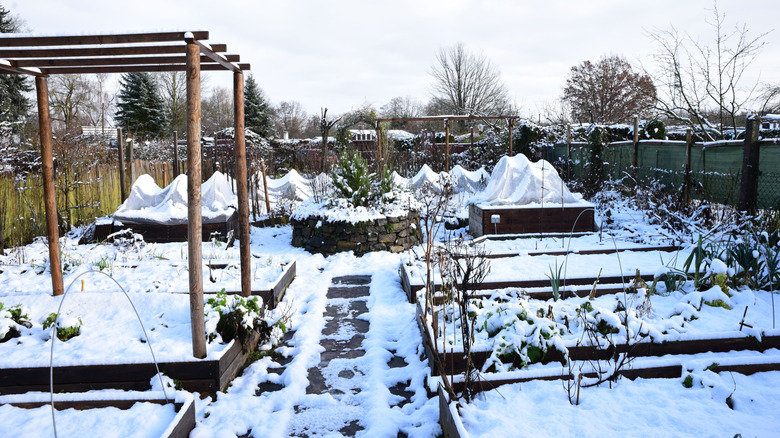
Lake effect snow is the snowfall that results from cold air blowing across the warmer surface of a body of water, specifically a lake. The difference in temperature causes evaporation, sending the warmth and moisture of the lake surface up into the air. Once there, the cold air turns the warm moisture into snow and drops it on the land near the lake. Typically, homes located within about 50 miles of the affected body of water are most likely to experience lake effect snow, a weather phenomenon that is most common in late fall or early winter when ground and water temperatures are still warm, but the air has begun to cool off.
As a gardener, this early-season snowfall can come as an unwelcome shock if your perennials haven’t gone dormant yet or your veggie garden wasn’t quite ready to harvest. But if you’re prepared for it and design a more resilient garden, lake effect snow can actually be beneficial in the long run, and the negative impacts can largely be prevented. To do that, it’s important to know how lake effect snow impacts your garden (both the good and the bad) as well as what you can do to prepare your garden before the surprise snowfall hits.
Read more: 12 Reasons You Should Put A Bar Of Soap In Your Garden
How lake effect snow affects your garden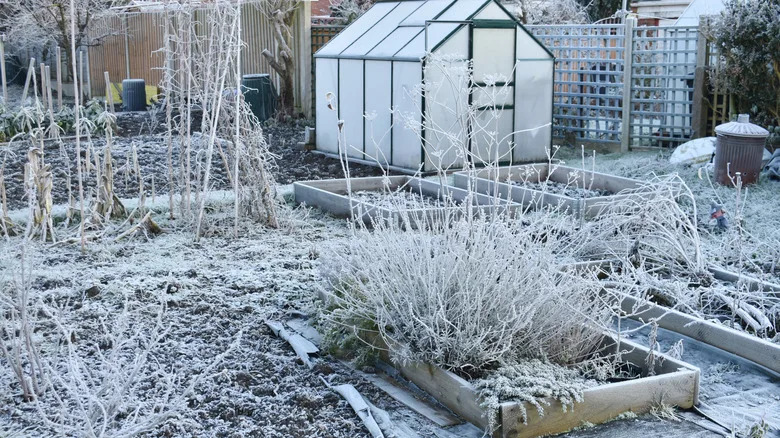
While the first frost in your garden typically signals the end of the growing season, there are some unexpected benefits of winter frost. A blanket of snow on top of your soil can actually provide insulation, similar to mulch, preventing the soil from freezing and holding in moisture. This can protect plant roots from the harshest of winter temperatures. As the snow slowly melts into the soil, it can provide water to thirsty plant roots. While dormant plants don’t need as much water as actively growing ones, they do still need some water to hydrate their still-functioning roots.
As beneficial as snow can be, it can also have some harmful effects on your garden if you’re not prepared for it. Heavy snow accumulation on branches can cause them to break, while the cold air makes those same branches become weaker. Snow can also provide cover for pests, like voles and rabbits, who might resort to feasting on the tender bark of dormant perennials when no better food source is available. The risks are even more likely with lake effect snow, which tends to fall heavily and fast over a short period of time.
How to prepare your garden ahead of lake effect snow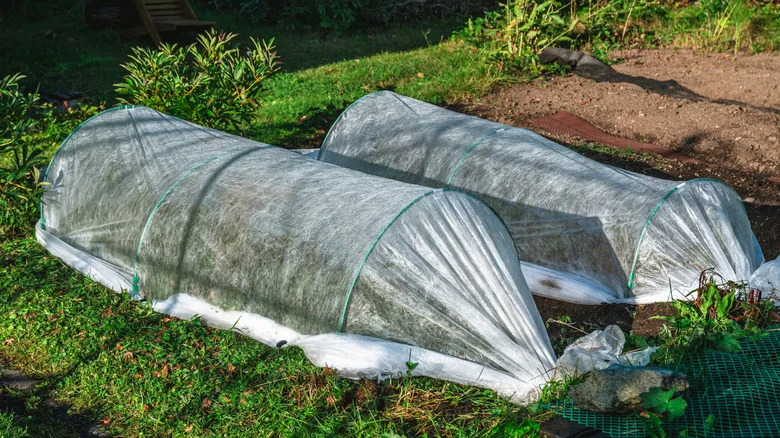
It would be nice if you could just keep tabs on the forecast to watch for incoming lake effect snow. Unfortunately, it’s not as easy for weather agencies to forecast as other types of weather for various reasons. While you may get some advance notice of when the risk is higher, there’s also a chance you could get hit with snow without warning. For gardeners, then, your best bet is to just start preparing for the possibility of lake effect snow in early fall if you live within a few miles of a body of water.
To start, protect outdoor plants from frost by covering garden beds at night. You can build tunnels out of thick landscape fabric and hoops or more permanent structures, like cold frames, if you’re in a colder climate. These tunnels or structures can insulate the beds from the harshest of winds and freezing temperatures. Another clever DIY idea to protect plants from frost is to top off the mulch layer in your perennial beds to insulate the soil ahead of freezing temperatures.
After the storm, go out to your garden and gently brush snow off the branches of trees and shrubs. Avoid hitting shrubs to shake the snow out because the cold branches are especially brittle at this time. If you struggle to get all the snow off with gentle brushing, that’s okay. The goal is just to prevent heavy buildup.
Enjoyed this article? Get expert home tips, DIY guides, and design inspiration by signing up to the House Digest newsletter and adding us as a preferred search source!
Read the original article on House Digest.
Comments are closed.