
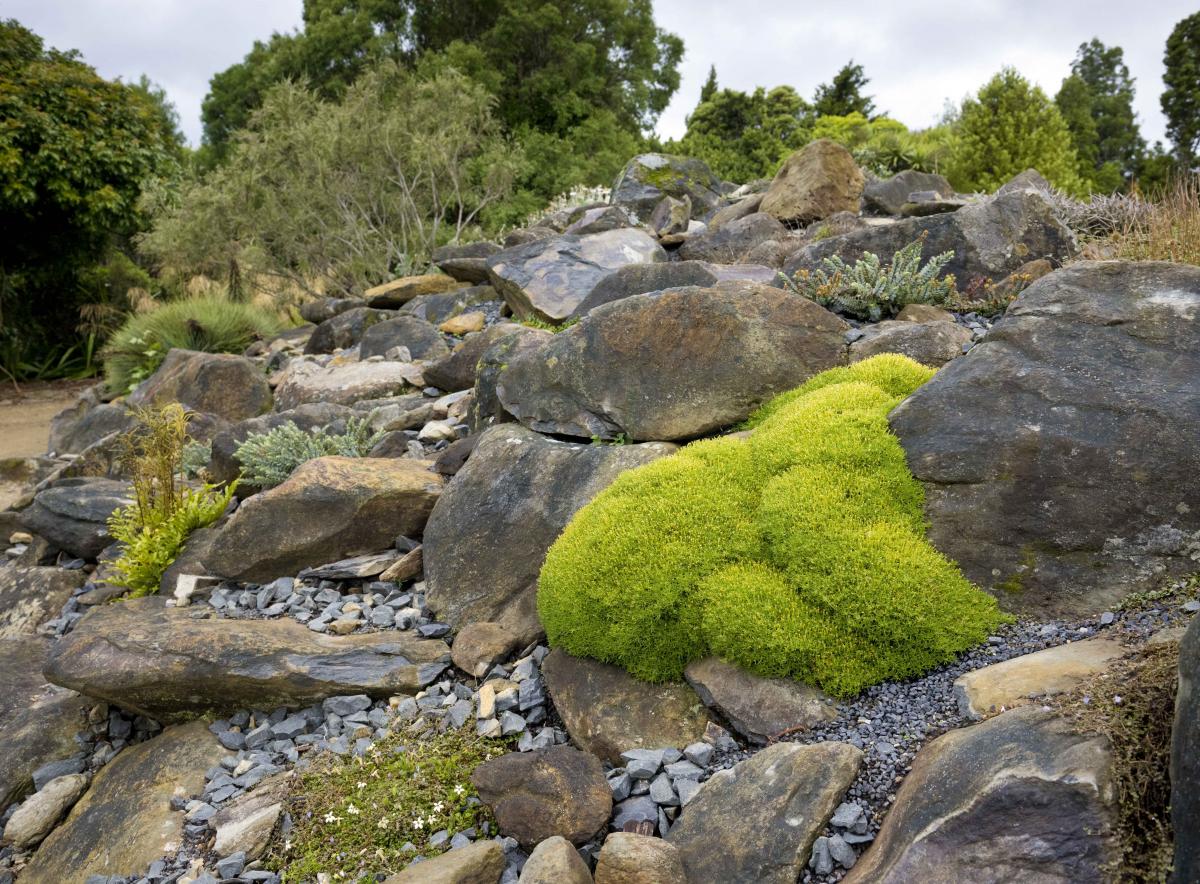
It’s been four years since the Dunedin Botanic Garden developed the “mini mountain” in the upper garden.
An area beside the existing alpine garden was raised to improve conditions for iconic species such as native buttercups (Ranunculus) and mountain daisies (Celmisia).
These plants need excellent drainage and a loose, cool root run.
At the time, the project felt epic. It dramatically disrupted the heart of the native plant collection as diggers carved up lawn and reshaped it into a mountain-like mound.
Tonnes of rock were incorporated into the build. Using shovels and buckets, we filled pockets and crevices with a specially blended, free-draining soil mix, before finishing the surface with hand-picked stone and screened gravel.
Even with amended soils, growing plants from extreme habitats is a test of what our mild, maritime climate will allow. Cultivating alpines is a specialist pursuit.
Shout out to the dedicated growers with their crevice gardens, plunge beds and tufa tubs; to those inventing gritty potting mixes and managing precise watering regimes; and especially to the careful few who turn their containers a few degrees each day to ensure an even display of flowers.
Plants on the mini mountain do not receive that level of attention. However, within the challenge of managing a large collection, it has become a place to focus extra care. Garden staff are passionate about maintaining high horticultural standards and growing the rare and unusual species that make a botanic garden special.
We continue to refine our approach to make the most of available resources. Concentrating high-needs plants in one area allows surrounding spaces to be managed more efficiently. Mass plantings, generous mulching, grouping plants with similar needs, and teamwork on major tasks all help — but it remains a challenge.
Comments are closed.