
Neighbours objected to the over-development of the site in Allesley
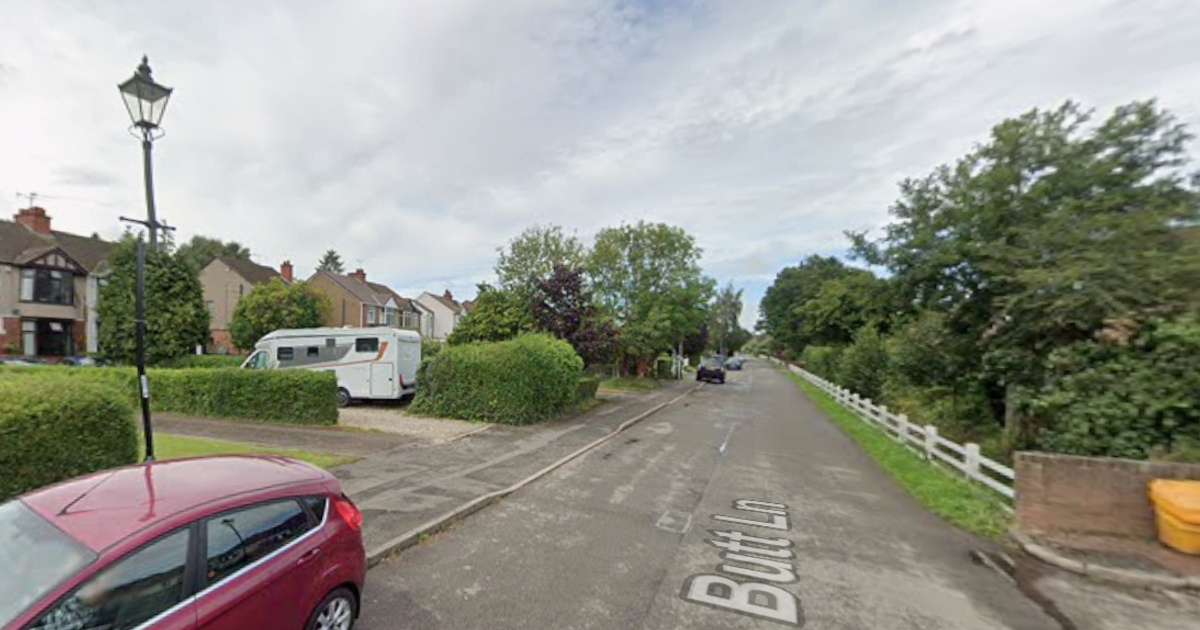
The outbuilding is located in Butt Lane, Allesley(Image: Google Maps)
A family’s plan to have an elderly relative living in an outbuilding at the bottom of their garden has been thrown into doubt after planning permission for the building was turned down. Officers at Coventry City Council refused permission saying the single-storey building in Butts Lane, Allesely – which has already been built – is considered to be a self-contained unit and therefore not suitable in such a location.
A planning statement written by the applicant’s agent explained: “The building is a brick built single-storey residential annexe/outbuilding used for ancillary use in association with the main dwelling. Being located in the rear garden, it contains one bedroom, a small kitchen and a WC/shower room and was intended to provide additional living accommodation for the applicant’s elderly parent and, in the future, possibly other family members who would share the garden.
“Access is via the existing house or via the existing entryway which is shared with the main dwelling. There is no intention of sub-dividing the site and there is no separation in terms of services, utilities, external landscaping, postal address or physical boundaries, such as fences or walls.”
Read More: Coventry Costco plan unveiled to tackle jams ‘ruining family time’
There were objections to the plans from neighbours who raised concerns over overlooking and loss of privacy, noise, the over-development of the site and its potential use as an Airbnb. These were included in a planning officer’s report which also stated that plans for the outbuilding had already been approved for purposes incidental to the residential use of the dwelling.
But the report went on: “The accommodation does not rely on the host dwelling for any essential domestic function, including cooking, living or washing facilities. The building is therefore capable of being occupied wholly independently of the main dwelling.
“The proposal is further characterised by the provision of clearly defined areas of private external amenity space associated exclusively with the outbuilding. This includes an enclosed rear patio and a separate raised patio area to the front of the building. The presence of these exclusive patio areas reinforces the accommodation’s functional independence and materially distinguishes it from ancillary accommodation that typically relies on shared spaces.
“The applicant has described the building as an annexe intended for occupation by an elderly family member and potentially other relatives in the future. Notwithstanding the intention, planning permission runs with the land rather than the applicant. There would be no practical means of preventing the outbuilding from being occupied independently by a separate household, particularly given its self-contained nature and independent access arrangements.
The report concluded: “While the outbuilding itself would be acceptable in terms of its scale, design and relationship to neighbouring properties if it were genuinely ancillary to the host dwelling, it has been clearly established that the building is physically and functionally capable of operating as a self-contained residential unit. The provision of independent access, full living facilities, exclusive amenity space and a separate identity demonstrates that the development does not serve a purpose incidental to the property and the proposal is therefore recommended for refusal.”
Comments are closed.