
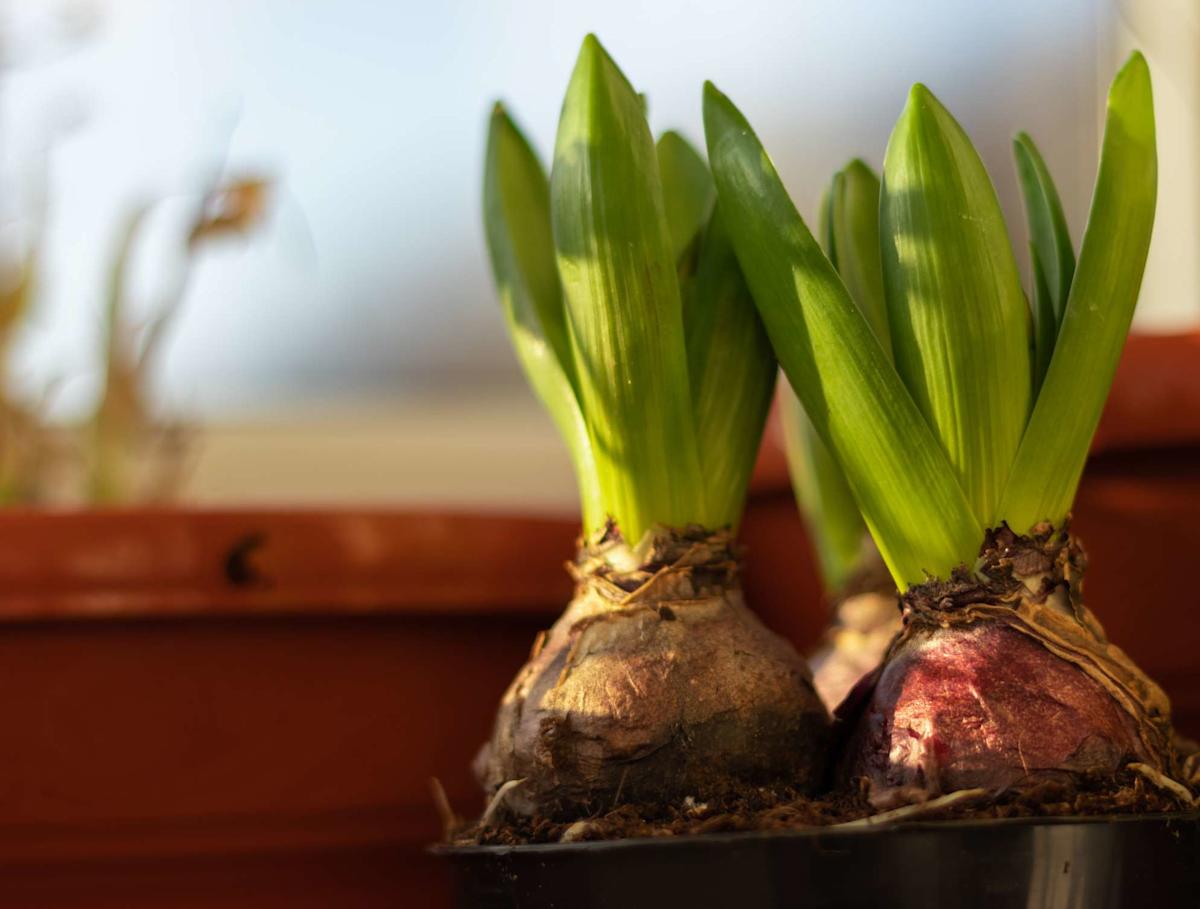
It may be the dead of winter, but gardeners know that spring is just around the corner. For those eager to get their hands back in the dirt, it’s not too early to start prepping for your spring garden—especially if you are hoping to grow spring bulbs.
While spring-blooming bulbs are traditionally planted in the fall and overwintered underground, they can also be manually started in the winter in preparation for the season, which is called forcing.
Whether you missed out on fall planting, are hoping to grow spring bulbs in containers, or simply want to get a head start on your spring gardening, these are the top 8 spring-blooming bulbs you can start right now, according to a gardening pro.
Meet the Expert
Peggy Anne Montgomery is a certified horticulturist representing Flowerbulb.eu, an online knowledge base about gardening with flower bulbs based in the Netherlands.
Want more gardening tips? Sign up for our free gardening newsletter for our best growing tips, troubleshooting hacks, and more!
01 of 08
The Spruce / Evgeniya Vlasova
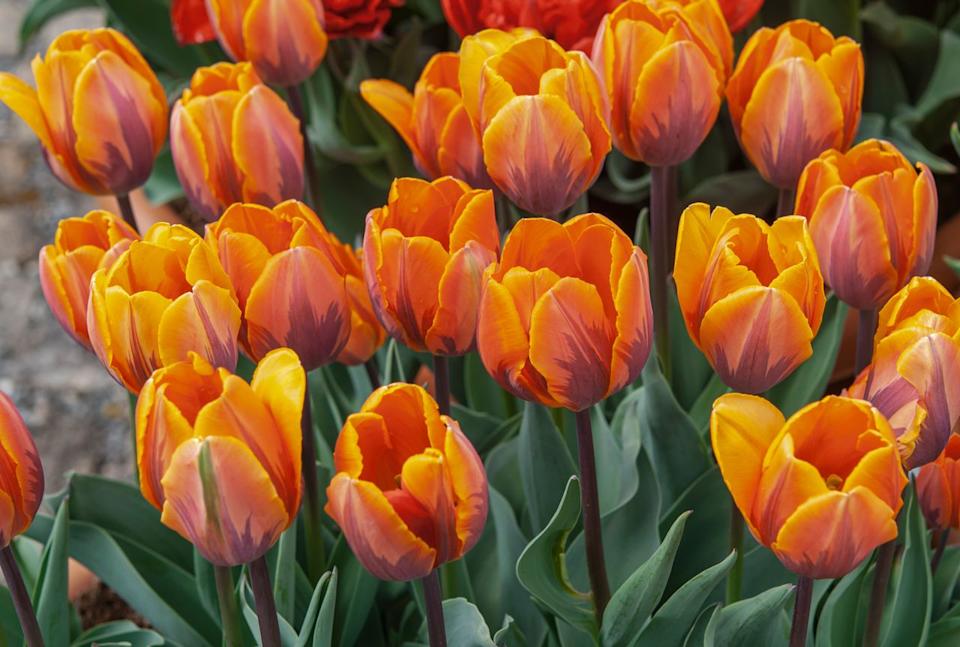
Tulips are among some of the most instantly recognizable spring blooms, and for good reason. Not only are they available in an astonishing range of colors, shapes, and sizes, but they’re versatile and easy to grow, too.
Peggy Anne Montgomery, a horticulturist representing Flowerbulb.eu, notes that tulips require about 14 to 16 weeks of cool temperatures prior to blooming. So, if you’re planning on forcing tulip bulbs indoors, it’s important to get on it stat!
Forcing time: 14-16 weeks
Bloom period: Early, mid, or late spring
02 of 08
The Spruce / Evgeniya Vlasova
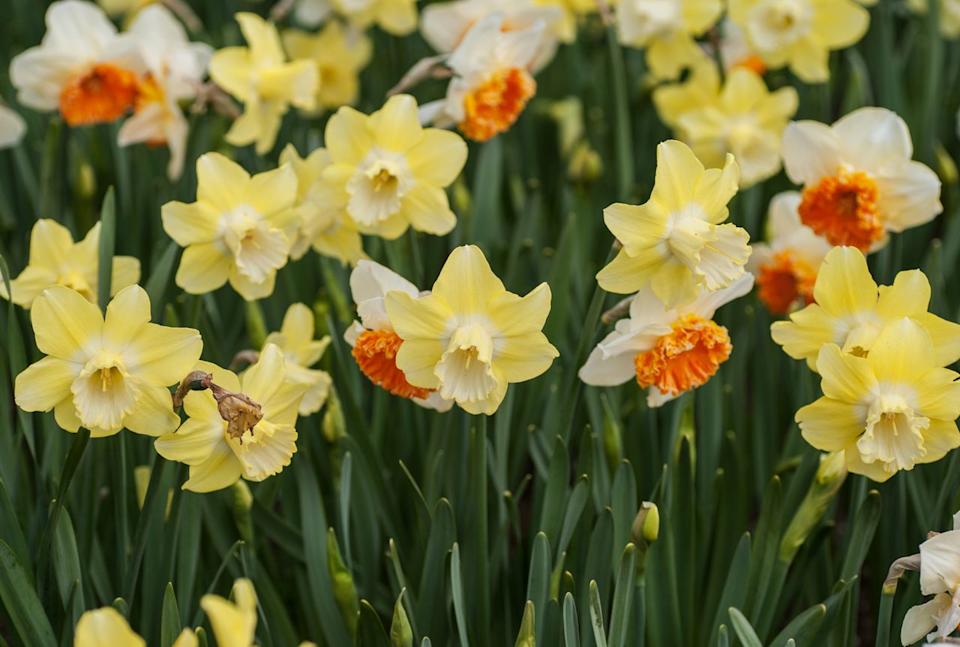
Daffodils are another iconic spring bulb that comes in a range of sizes, shades, and shapes. From petite varieties perfect for container planting (like ‘New Baby,’ ‘Baby Boomer,’ and ‘Tête-à-tête’) to ruffled and double-petaled daffodils (like ‘Petit Four,’ ‘Tahiti,’ and ‘Valdrome’), your options are truly endless.
According to Montgomery, ensure your daffodil bulbs are chilled for 14 to 16 weeks before blooming.
Forcing time: 14-16 weeks
Bloom period: Early, mid, or late spring
03 of 08
Tatiana Sviridova / Getty Images
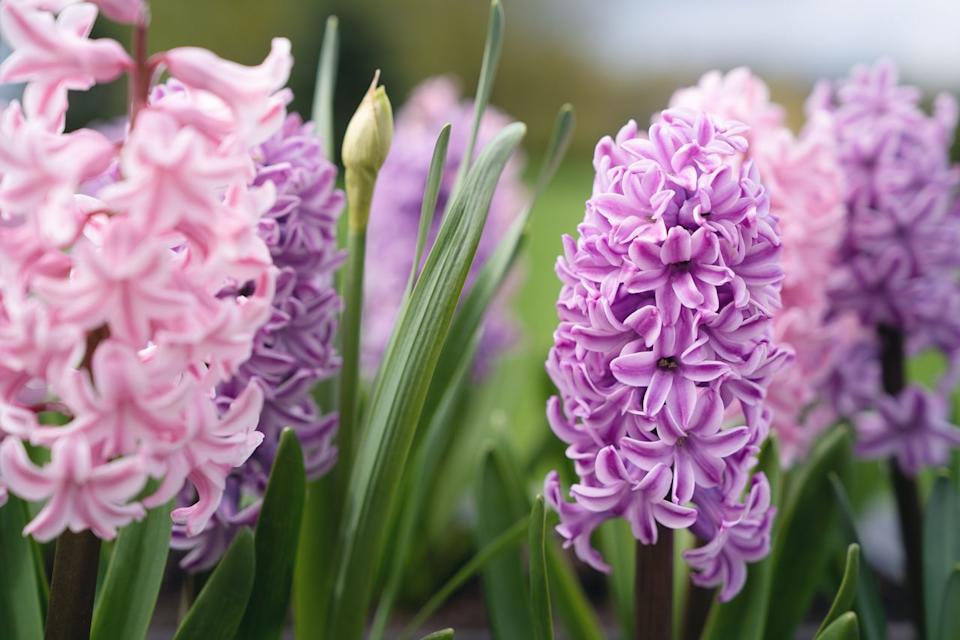
When it comes to the spring garden, no spring bulb is quite as fragrant as the hyacinth.
These gorgeous, multi-flowered blooms come in shades of pink, purple, white, and blue, and are popular in containers and garden beds thanks to their sweet aroma. Hyacinth bulbs should be chilled for 12 to 14 weeks prior to blooming, according to Montgomery.
Forcing time: 12-14 weeks
Bloom period: Early to mid spring
04 of 08
The Spruce / Evgeniya Vlasova
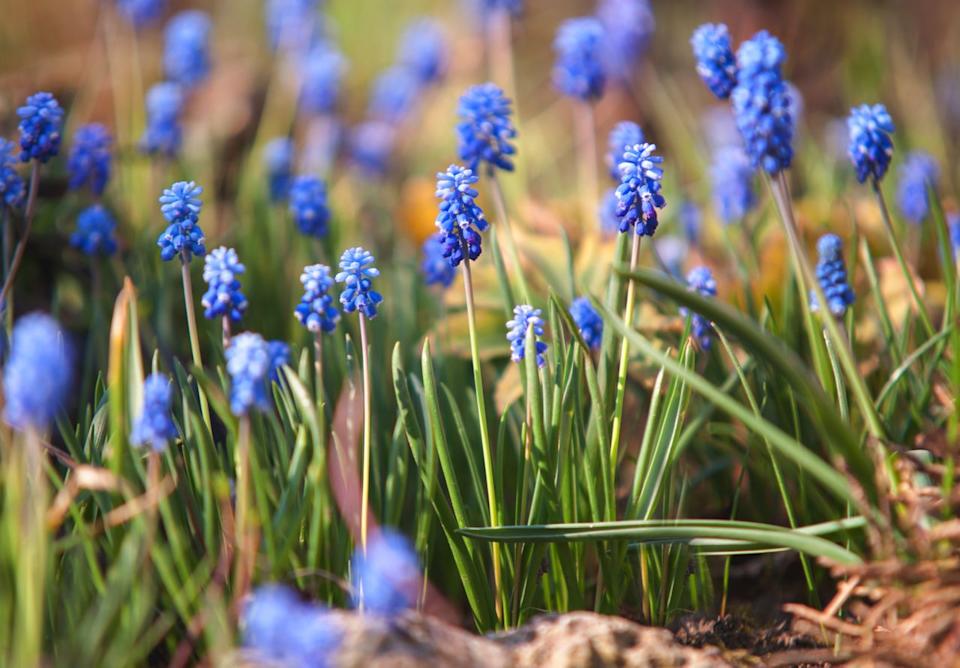
Muscari, also commonly known as grape hyacinth, thanks to their close resemblance to plants in the Hyacinthus genus, are miniature spring flowers admired for their petite form and tight clusters of delicate blue flowers.
They are widely used in spring containers thanks to their size, which also makes them ideal for indoor forcing. Chill these bulbs for 12 to 14 weeks before blooming for best results.
Forcing time: 12-14 weeks
Bloom period: Early to mid spring
05 of 08
The Spruce / Candace Madonna
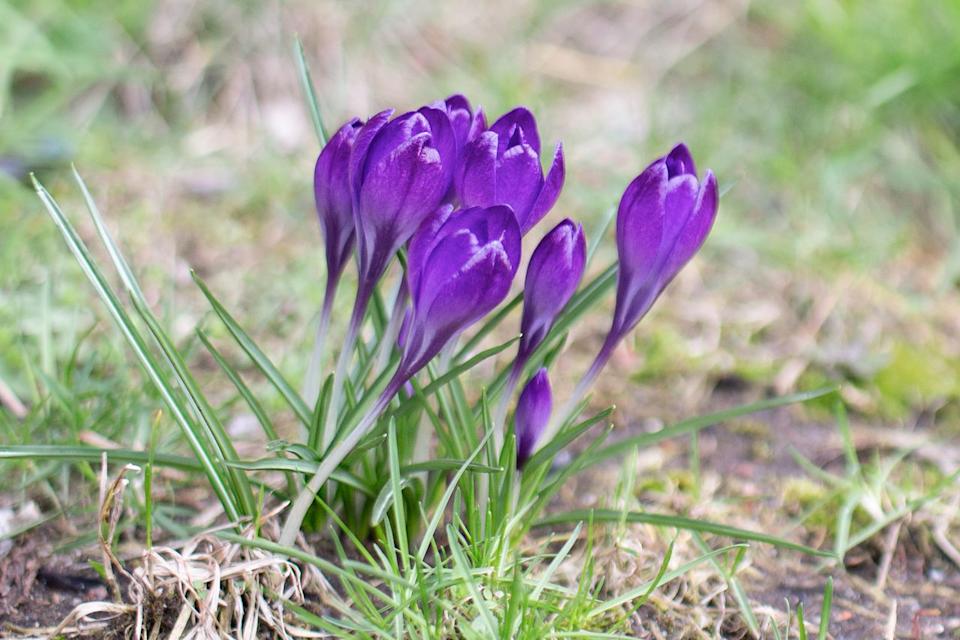
Crocuses are some of the earliest spring bulbs, often making their appearance while snow still coats the ground.
Montgomery notes they only require about 10 to 12 weeks of chilling prior to blooming, so if you start them now, you’ll still be on track to enjoy their blooms well before the snow melts.
Forcing time: 10-12 weeks
Bloom period: Late winter to early spring
06 of 08
Dwarf Iris (Iris reticulata)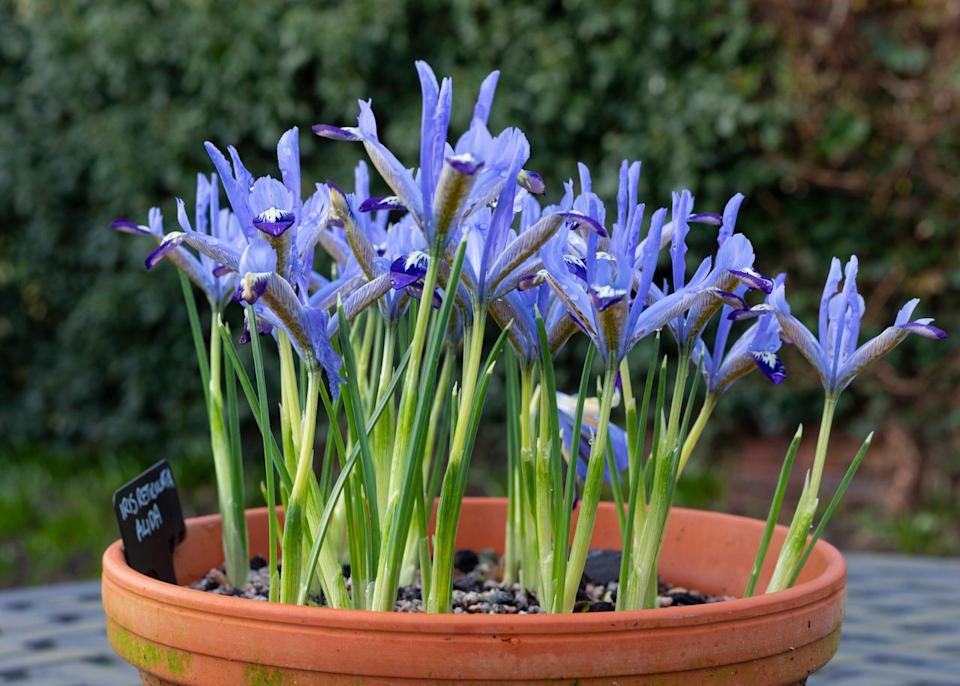
Andrew Linscott / Getty Images
Dwarf iris (Iris reticulata), also commonly known as netted iris and reticulated iris, is a small iris variety that is often one of the earliest spring flowers to make its appearance.
Unlike its larger relatives, dwarf iris is ideal for indoor forcing thanks to its size, which makes it well-suited to container growing. Montgomery advises that this spring bulb requires about 10 to 12 weeks of cool temperatures to initiate blooms.
Forcing time: 10-12 weeks
Bloom period: Early spring
07 of 08
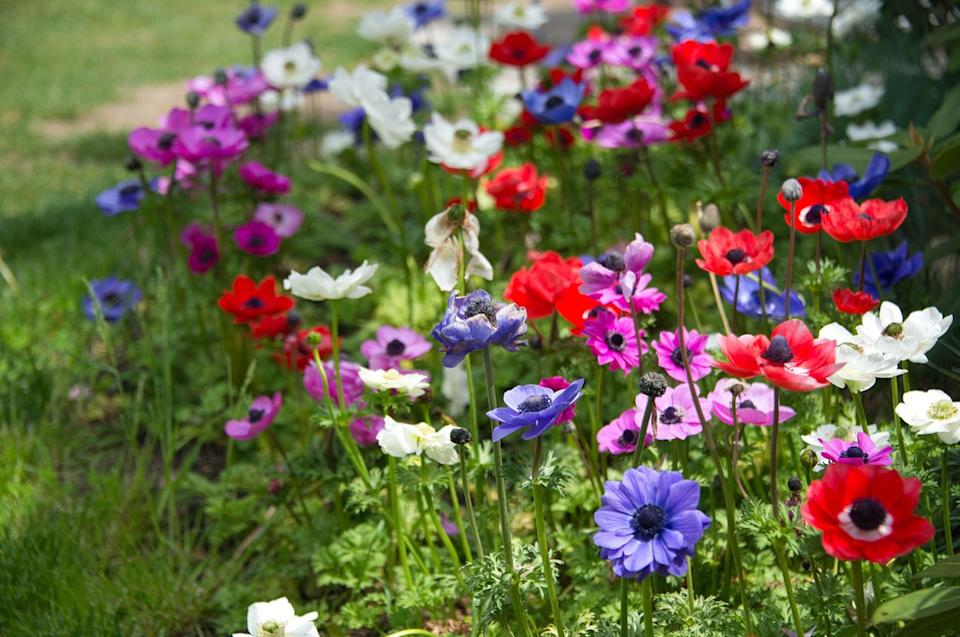
There are many types of anemones, which vary in blooming period, hardiness, and growing requirements. Spring-blooming anemones such as poppy anemone (Anemone coronaria) and Grecian windflowers (Anemone blanda) are favorites among gardeners and florists alike.
Some anemones, like the popular poppy anemones, are only winter hardy to zone 7, making indoor forcing a popular method for gardeners in cold regions who wish to enjoy their blooms. Ensure the bulbs are exposed to cool temperatures for around 8 to 10 weeks prior to planting.
Bloom period: Early, mid, or late spring
08 of 08
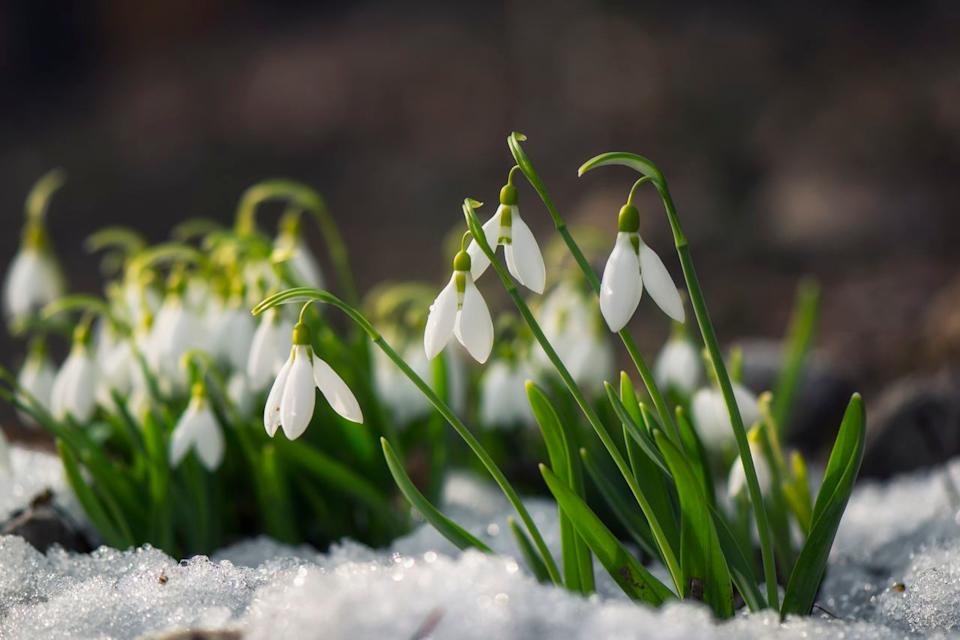
Often heralded as the first sign of spring, snowdrops are known for pushing their way through layers of snow to make their appearance.
Their delicate blooms make them a stunning addition to formal beds or woodland-inspired gardens, and they were recently chosen as Flowerbulb.eu’s 2025 fall bulb of the year! Montgomery says snowdrop bulbs should be chilled for 10-12 weeks to help force blooming.
Forcing time: 10-12 weeks
Bloom period: Late winter to early spring
Read the original article on The Spruce
Comments are closed.