
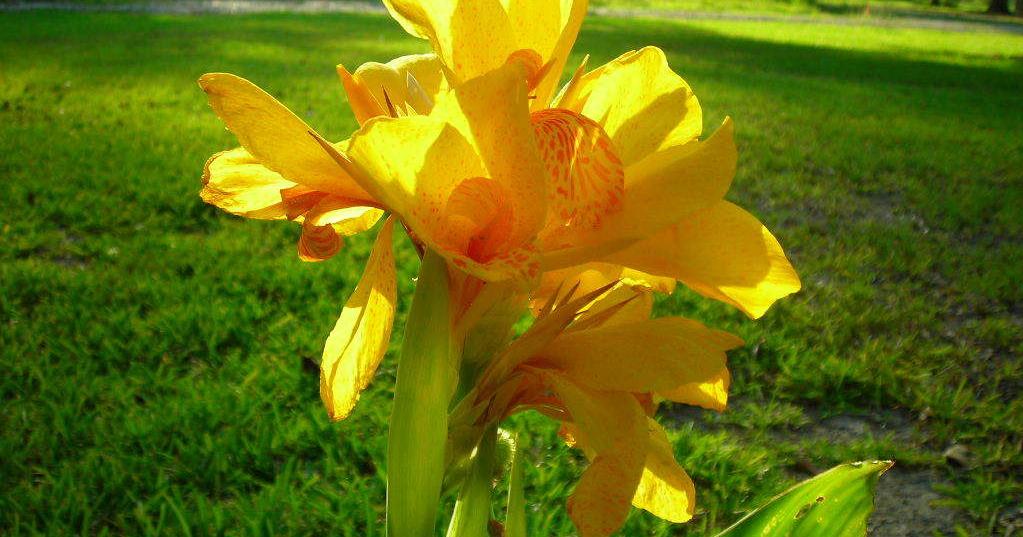
I was digging up my canna bulbs for winter storage and noticed a white substance around the roots of some of them. I was wondering if this is mold or fungus of some sort. If so, do I need to get rid of the affected bulbs or just wash them off well? Do I need to treat the area where they were planted and, if so, with what? — Glen
The white substance you are seeing is likely just harmless saprophytic fungi decaying organic matter in the bed. Cannas grow well in soggy, even saturated soil, so fungal root rots and soil fungus problems are not generally an issue for them. So, there is no need for concern. I’d just wash it off and leave it at that.
However, we do not need to dig and store canna rhizomes over the winter down here, so this is needless work. Up North, winters are cold enough to freeze the soil. This would kill the canna rhizomes. So, Northern gardeners dig cannas in fall or early winter before the ground freezes and store them in frost-free locations until spring.
Our winters are mild, and soil does not freeze here the way it does in Northern climates. We can just leave the cannas in the ground and save the trouble of digging and storing the rhizomes. Cannas are healthier and happier left in the ground over the winter. If you need to, you can dig, divide or transplant them in the spring, around March.
I imagine you saw information on the need to dig and store canna rhizomes over the winter on the internet. But now you know that this advice is the wrong information for south Louisiana. When seeking gardening advice on the internet, we all need to make sure the gardening information we follow is written for Louisiana, the Coastal South or Deep South in hardiness zones 8 and 9.
I have a couple of 75-year-old live oaks. I was recently told that they need to be cleaned out of dead wood and crossed branches. These trees are healthy and beautiful, and to my knowledge, have never had this type of maintenance. In your opinion, is this expensive maintenance necessary? Thanks. — Judy
To put things into perspective, pruning dead wood and crossed branches is certainly not a matter of life and death. You should not feel pressured.
Pruning out dead wood is always recommended. This helps protect the health of the tree. Dead branches may begin to decay, and that rot can move into major branches or the trunk (however, live oaks are fairly resistant to rot, a major reason they live so long).
Removing dead branches, particularly larger ones, also prevents them from falling out of the tree, possibly causing damage if they fall on a structure, car, etc. So, if you see significant amounts of dead wood in the tree (especially branches several inches in diameter), removing the dead wood is a good idea.
Removing crossed branches is more optional. If an arborist convinces you of the benefits it would provide to your particular tree (pointing out examples of crossed branches and explaining what issues they may create for your tree), then it’s fine to have the work done. There is no hurry to decide to deal with the crossed branches. But do consider having the dead growth removed.
Is it too late to plant radish and carrot seeds in pots? — Alan
It’s not too late to plant radish and carrot seeds. Choose carrot varieties that produce short roots for container growing. To keep you on track on when to plant vegetables, look up the LSU AgCenter Louisiana Vegetable Planting Guide online for a great reference.

Prune repeat-flowering roses from the end of January through mid-February.
Bryan Tuck
Garden tips
PRUNE ROSES: Plan to prune your repeat-flowering roses at the end of January through mid-February. Pruning roses encourages vigorous new growth that will produce lots of flowers. Pruning is also done to shape the shrubs, remove dead wood and to control their size. Pruning roses at this time gets them ready for the blooming season that occurs in the mild weather of April to early June. Roses are pruned again in late August or early September to get them in good shape for the fall blooming season from October to December.
WON’T MIND THE COLD: The foliage of spring-flowering bulbs has been up and growing for a number of weeks now. The foliage is cold-hardy and will not be bothered by freezes. The flowers are more susceptible to freeze damage, and open flowers should be cut if temperatures below the upper 20s are predicted. Place the cut flowers in vases and enjoy them indoors.
SEED CARE: Seeds of tomatoes, peppers and eggplants should be started now through early February under lights or in a greenhouse for transplanting into the garden in March and early April. Many gardeners do not have the facilities to properly grow transplants from seed. Providing enough light is the most common limiting factor. A greenhouse or indoor plant lights can provide enough light. Windowsills generally don’t.
SPRING FLOWERS: Foxglove, delphinium and hollyhock are large, tall-growing, cool-season bedding plants that need to be planted early to put on a great display in spring. Plant transplants this month or by February at the latest for bloom in March through May.
Comments are closed.