
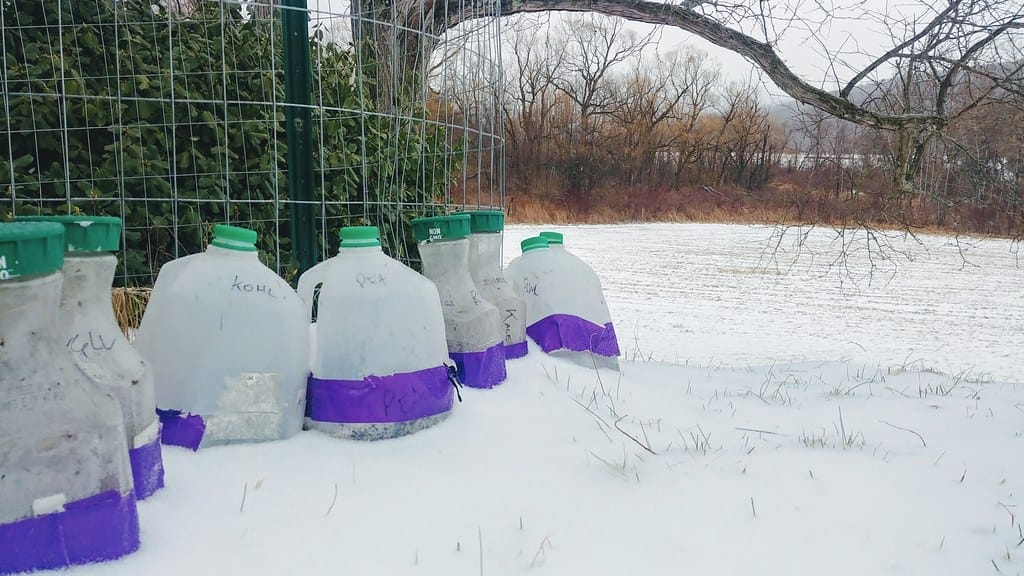
Sowing seeds in the depth of winter to get a head start is not a new concept, but a particular method of winter sowing is gaining in popularity.
The term ‘winter sowing’ is attributed to a woman called Trudi Davidoff of New York. Faced with little indoor space for seed starting, she started sowing seeds in soil in plastic containers and leaving them outside to fend for themselves over the winter. She gained great success, and her technique spread, even being recognized by the USDA.
Certain seeds do very well being left outside in the cold soil over the winter, while others outright demand it in order to germinate. Many wildflowers, including ‘pesky weeds‘, self-seed, meaning their seeds fall to the ground and lie in the soil over winter. But, as a gardener, you can intentionally help some chosen seeds along by partaking in some winter sowing.
What is Cold Stratification?
Source: MIgardener/YouTube
Some seeds require a period of dormancy in outdoor soil over the winter months. This is called cold stratification. For some seeds, the freeze/thaw process actually softens their shells, giving them much better germination success. Other seeds are affected by the temperatures and are triggered into germination as the soil warms up in the spring.
Though this is a process that happens naturally, it is also possible to force this indoors. There are ways of cold-stratifying certain seeds in your freezer with a baggie and a damp paper towel, and this works well. However, you can give your seeds a little bit of a more natural (though controlled) cold stratification outdoors.
Check out this guide to winter sowing.
How To Make a Mini Greenhouse
Source: Garden Answer/YouTube
To get started, you will need some gallon-sized plastic jugs. If these aren’t something you use, ask friends or neighbors to hold on to some for you before they send them to recycling. You could also use soda bottles or even those plastic boxes with lids that soft fruits and salads come in.
Whatever you get, the idea is that they act as little greenhouses. Make sure that the plastic is transparent or at least translucent, as you want sunlight to be able to penetrate through.
These instructions are for using gallon jugs. First, wash them out thoroughly and remove the lids to allow any precipitation in through the hole.
Next, with a sharp pair of scissors or craft knife, carefully make some drainage holes in the bottom of the jugs.
Then, make an incision in the plastic about halfway up the jug and cut a horizontal line all the way around leaving a small section to act as a hinge. You want the top part of the jug to be able to flip open and closed.
Fill Your Greenhouses with Soil and Seeds
Once you have your greenhouses prepared, fill the bottom reservoir with an organic seed-starting/potting mix. Having sterile soil will mean that your seeds won’t have to compete with other dormant seeds that may be lurking in your compost. Then, moisten the soil thoroughly, making sure it is well drained before sowing.
Now, you can start sowing your seeds. Check the seed packets for seed depth. Some wildflowers require light to germinate, so won’t need to be covered with soil. You can be fairly generous with your seeds, as not all of them will germinate. If you find they are too crowded later on, you can thin them out accordingly.
When you are happy with the contents of your greenhouses, give one last sprinkling of water and then seal the jugs shut with some tape. Don’t forget to label the jugs with the name of the seeds you have sown.
Lastly, position your greenhouses in a place in your garden that gets full sun. Along a wall or fence would be ideal for a bit of protection from wind or from being knocked over.
Wait Until Spring
The next thing to do is just forget about them until the spring! When the warmer weather does finally show up, keep checking to see if germination has occurred.
Once the last frost date has well and truly passed, and your seedlings have at least two sets of adult leaves, you can carefully separate them out and plant them in your garden.
Related Content:
Comments are closed.