
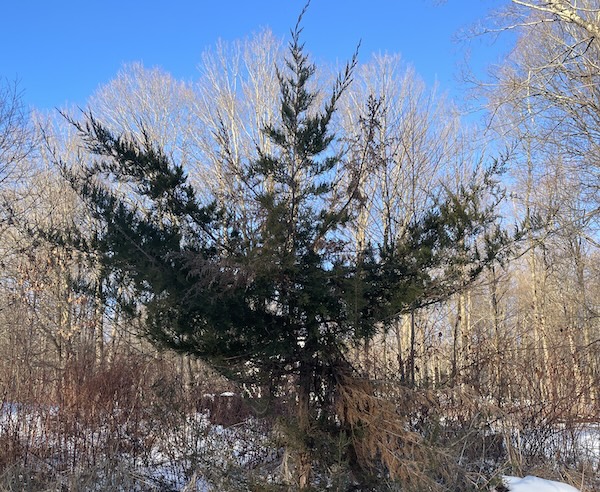
Sometimes mistakes have good results. There’s a northern red cedar in my yard that grew to 6 feet until heavy snow broke the top, and it has leaned ever since. I was planning to cut it down; one side was brown and dead. But over the past two weeks, I’ve noticed that the deer have treated the rest of it like a buffet.
Now I’m glad I didn’t touch it. Providing food for wildlife seems more important than being misshapen. It’s a reminder that any change in the yard has an impact. Studies have shown, for instance, what happens when you “leave the leaves” in your yard, rather than raking or blowing them away in the fall. It has positive effects on moths, butterflies, bees and other arthropods; a pile of untouched leaves supports a cycle of life. The insects pollinate our plants and trees and become food for birds.
The snow is mushy this week, and I can see the tracks of deer, fox and a possum. I’m surprised at how much activity there is in my yard and the nearby woods. I notice more birds, too, their songs and calls marking events that have nothing to do with me. The chickens have started laying again, one egg each day. There are eight hens. Are they taking turns?
I want to fill the bird feeder. It is cold enough, I’m sure, and I haven’t seen any bear tracks, but there are warmer days ahead, and then it’s a bad idea. Winter isn’t predictable anymore. The first few years after we moved to Philipstown in 2010 were the wintriest winters I have experienced. Storms dropped 2 feet of snow regularly. The snowpack was so deep that we had to take our dog to the village to walk him. We bought a roof rake and chopped icicles off the chimney with an axe. We tried snowshoes, but sank too far in the powder. The snow stayed for weeks.
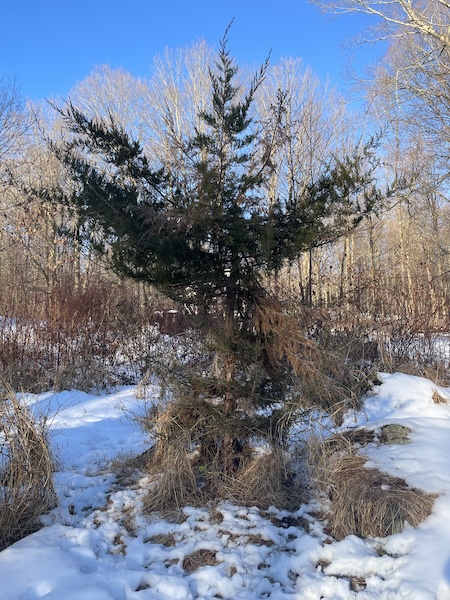 This cedar in my yard broke under heavy snow but became food for the deer. (Photo by P. Doan)
Now the snow melts. This winter feels more like the early days on East Mountain, except for the sudden thaw and rain. In the past 10 years, January headlines declared that the previous year was the hottest ever recorded globally, and the trend continued in 2025, which topped 2024 as the single hottest year. Winter temperatures in New York are warming more quickly than in other seasons.
By 2030 — four years from now — we were supposed to have reduced carbon emissions by 40 percent in New York, but the federal attacks on those efforts are affecting progress. The predicted climate for the lower Hudson Valley will be more like Virginia. I try to appreciate the cold days, even when I’m slipping on ice and can’t feel my fingers while walking the dog, although I usually am annoyed. Will I remember all this when it’s 60 degrees on New Year’s Day in 2036?
When I look ahead to the garden this year, it feels like I’m waiting in line for a roller coaster. Prepare! Add more rain barrels. Plant more trees. Be more vigilant in controlling barberry, bittersweet, ailanthus and other invasive species. Expand the vegetables. Diversify the perennials. Collect seeds. Switch to all-electric lawn equipment.
I will always have a list. When you’re trying to support an ecosystem, you’re never sure what will happen. Plants do things. Enjoy and learn.
I recently wrote down a line by writer Rebecca Solnit: “The fact that we cannot save everything does not mean that we cannot save anything, and everything we can save is worth saving.” While acknowledging the pain and despair of natural losses, Solnit is hopeful and hits the right note for me.
Last summer, I wrote about gardening as an act of resistance. After a year of devastating attacks on environmental protection and conservation, that still rings true. Gardeners unite! We won’t give up.
Have you seen these stories?
Roots and Shoots: Winter Reading
Roots and Shoots: Gifts for Gardener Friends
Type: Opinion
Opinion: Advocates for ideas and draws conclusions based on the author/producer’s interpretation of facts and data.
Comments are closed.