
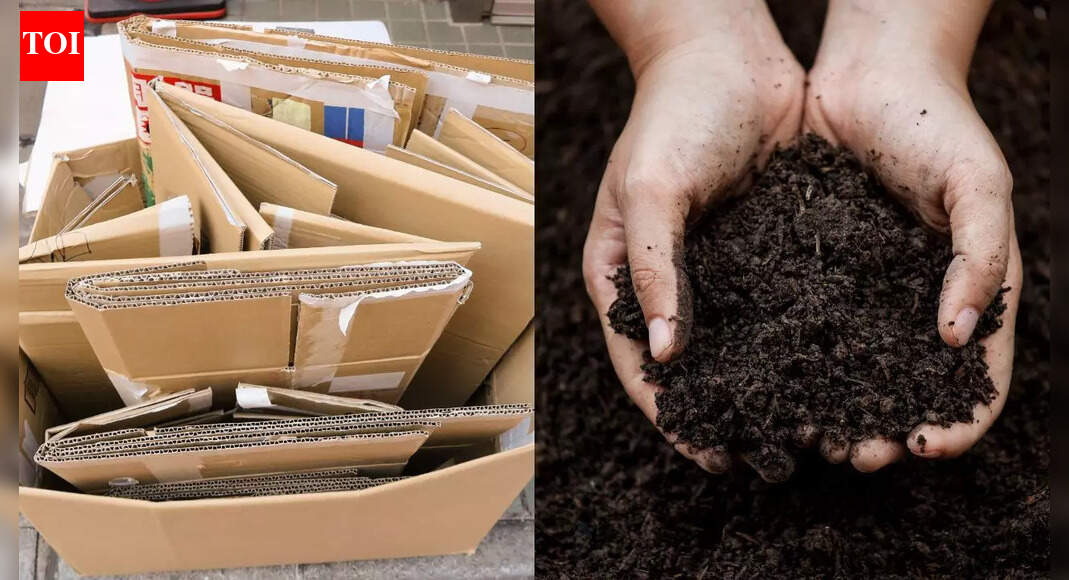
 Cardboard usually leaves the house folded and flattened, bound for a recycling bin. In winter gardens, it has taken on a quieter role as a surface cover laid directly onto soil once crops are cleared. The approach appears most often in vegetable plots and informal beds left bare through the colder months. It intersects with concerns about soil exposure, seasonal rainfall, and the accumulation of household packaging waste. Lasagna composting refers to this practice of layering cardboard with plant material and leaving it in place over winter. Its presence is noticed less by appearance than by the condition of the soil beneath it when spring arrives, through changes in texture, moisture, and biological traces.
Where lasagna composting comes from and what it uses
Lasagna composting is a descriptive term for sheet mulching carried out with successive layers of organic matter. The method was developed from earlier mulching practices that aimed to keep soil covered rather than worked during periods of low plant growth. Cardboard forms the lowest layer, placed directly onto the soil surface to block light while remaining permeable to rainwater. Above it sit leaves, straw, garden waste, and composted material, arranged in rough layers rather than mixed.The cardboard used is most commonly corrugated packaging made from pressed wood pulp. Its internal channels are able to hold moisture and air, thus giving it more structural persistence than paper. When laid onto damp soil, the fibres begin to soften as fungi and bacteria colonise the surface. Over time, the material loses strength and breaks apart into fragments that remain close to the surface. This process and its intended use in gardens are described in extension material produced by Oregon State University Extension, where sheet mulching is presented as a soil covering technique rather than a composting system in the conventional sense.
How cardboard layers benefit soil conditions
Once in place through winter, layered cardboard and organic matter alter the immediate soil environment. The soil is no longer directly exposed to rainfall, frost, and wind. Decomposition is slow, supported by the moisture that is trapped within the layers.Commonly observed effects include:Exclusion of light at the soil surface, thus limiting the germination of annual weeds during winter.Retention of surface moisture after rainfall, thus reducing the drying process that follows again.Smaller temperature swings in the upper soil layer occur during cold nights and mild days.Concentrations of earthworms and insects are found beneath the cardboard, where conditions remain damp.Gradual incorporation of decomposed fibres into the top layer of soil.Reduced surface sealing on fine soils subject to prolonged winter rain.These changes take time, months rather than immediate visible results. Differences between sites are determined by rainfall, soil texture, and the thickness of the materials used.
How cardboard layers are added to soil
Lasagna composting is carried out without digging and relies on placement rather than disturbance. The materials are added at the end of the growing season and left through winter.Commonly reported steps include:Cutting down tall weeds or crop stems that could potentially lift the cardboard off the soil.Spreading cardboard sheets flat and overlapping edges so that light gaps are limited.Wetting the cardboard in order to help it settle and conform to the soil surface.Covering it with leaves, straw, or garden waste to keep it in place.Adding enough organic matter to prevent exposure during heavy rain or wind.Leaving the layers undisturbed until planting resumes.No turning or aeration is involved during winter. Rainfall supplies moisture, and gravity compacts the layers gradually.
What to consider before using cardboard for soil
The presence of cardboard and organic layers changes the small-scale habitat at the soil surface. This brings practical considerations alongside the intended soil effects.Points noted in garden observations include:Wet conditions under cardboard can be a safe place for slugs and woodlice.Perennial weeds with strong root systems may emerge through gaps.In heavy clay soils, water can accumulate above intact cardboard sheets.Overlapping layers sometimes break down unevenly, leaving firm patches.Printed inks and coatings may vary between different sources and ages of cardboard.Cardboard from gardens is a good example of reuse rather than recycling from the perspective of waste. The volume of packaging from households usually goes up during winter, which is the time when the soil is most likely to be covered. Cardboard in the soil disintegrates into coarse pieces of organic matter rather than finely ground compost. Breakdown is happening at the local moisture and temperature conditions and is affected by the organisms in the soil that are already there. The practice connects the domestic waste that is going to the soil processes at the scale of individual plots, which are determined as much by the material as by the winter weather.Also Read | Have you ever wondered why safety pins have a hole
Comments are closed.