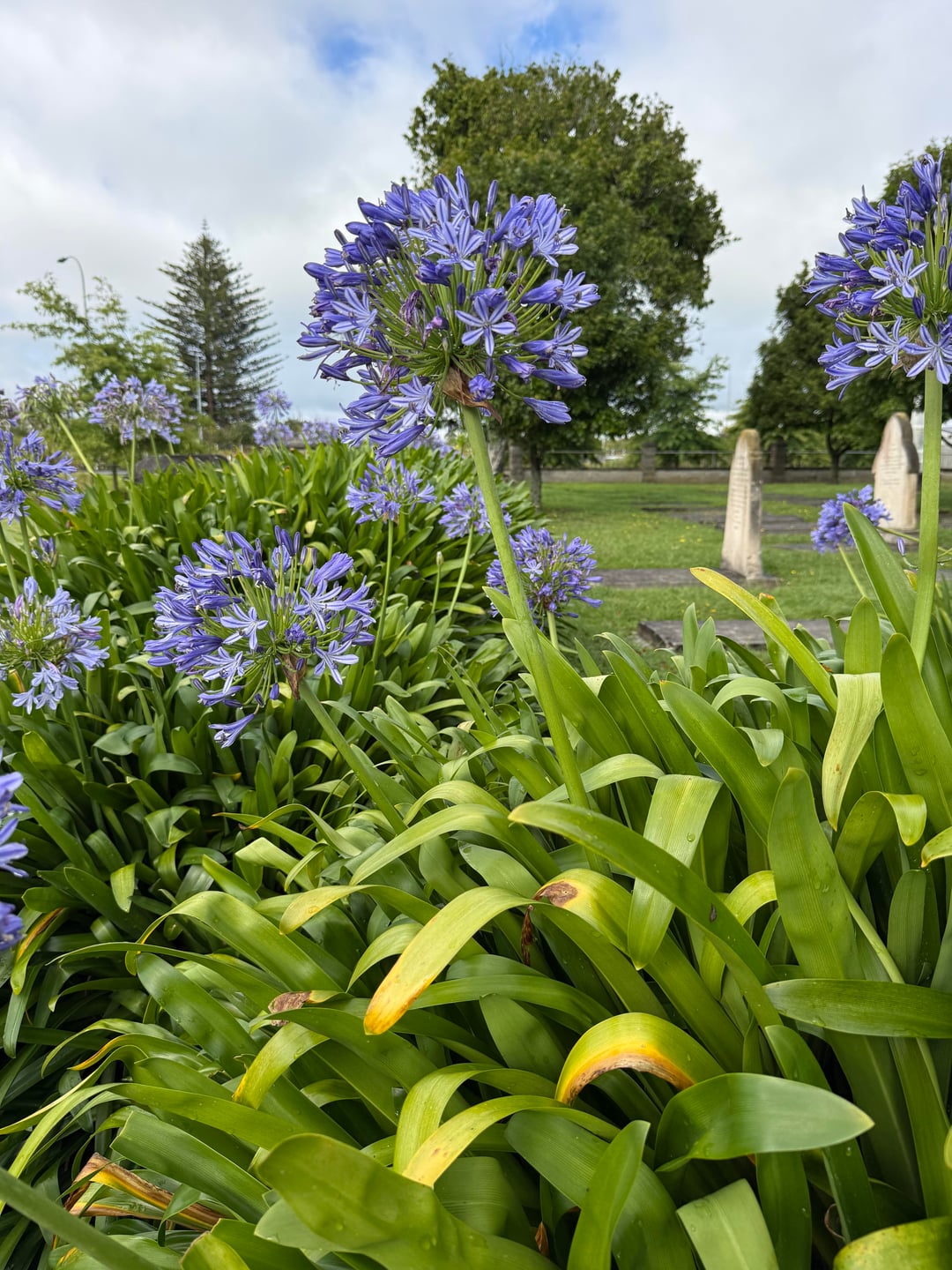
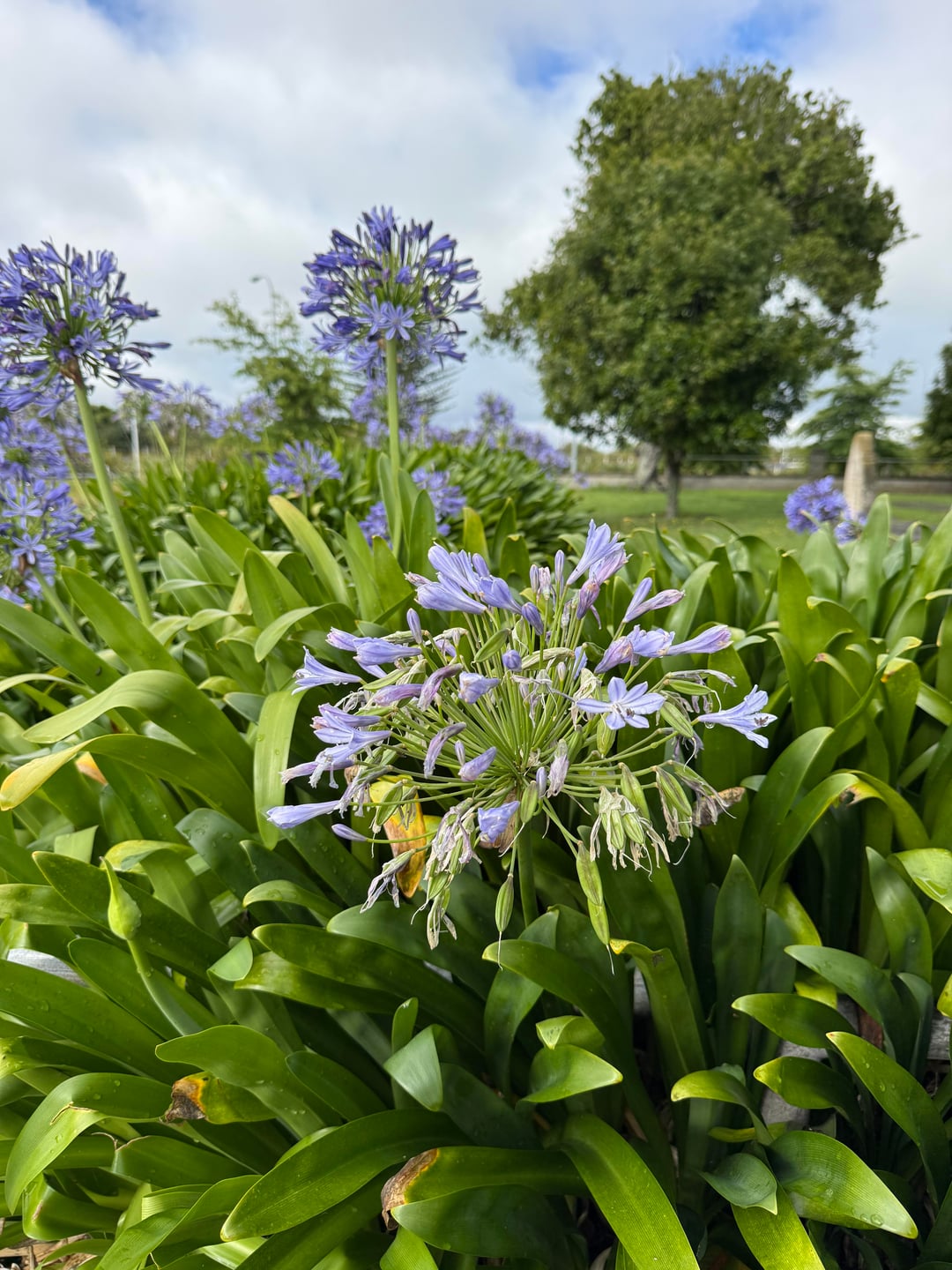
Agapanthus! That’s funny I was just thinking about them. They do well in coastal Southern California and are very hearty. You can divide and transplant them easily. I’ve done that when they are flowering and the flowers have survived transplant.
Pondside-Hamster
Lilly of the Nile!
cerephic
Agapanthus.
The leaf shape and position couldn’t be more different from hydrangeas, too.
ManikShamanik
[Agapanthus praecox](https://en.wikipedia.org/wiki/Agapanthus_in_New_Zealand) – regarded as an invasive species in NZ; attempts have been made to add it to the National Pest Plant Accord, but this has been met by strong opposition from gardeners and attempts haven’t been successful.
It originates from South Africa and was brought to NZ by soldiers returning from the Boer War, who liked it and wanted it in their gardens. It’s become something of a nuisance because it’s extremely hardy, can tolerate salt and you can basically leave it to its own devices. It propagates by explosion (its seeds are in pods which explode when ripe). It has extremely tough roots which can break through concrete.

9 Comments
Agapanthus/Lily of the Nile.
Agapanthus
*Agapahthus praecox*.
Agapanthus! That’s funny I was just thinking about them. They do well in coastal Southern California and are very hearty. You can divide and transplant them easily. I’ve done that when they are flowering and the flowers have survived transplant.
Lilly of the Nile!
Agapanthus.
The leaf shape and position couldn’t be more different from hydrangeas, too.
[Agapanthus praecox](https://en.wikipedia.org/wiki/Agapanthus_in_New_Zealand) – regarded as an invasive species in NZ; attempts have been made to add it to the National Pest Plant Accord, but this has been met by strong opposition from gardeners and attempts haven’t been successful.
It originates from South Africa and was brought to NZ by soldiers returning from the Boer War, who liked it and wanted it in their gardens. It’s become something of a nuisance because it’s extremely hardy, can tolerate salt and you can basically leave it to its own devices. It propagates by explosion (its seeds are in pods which explode when ripe). It has extremely tough roots which can break through concrete.
Agapanthus praecox, indigenous to South Africa.
Agapanthus