
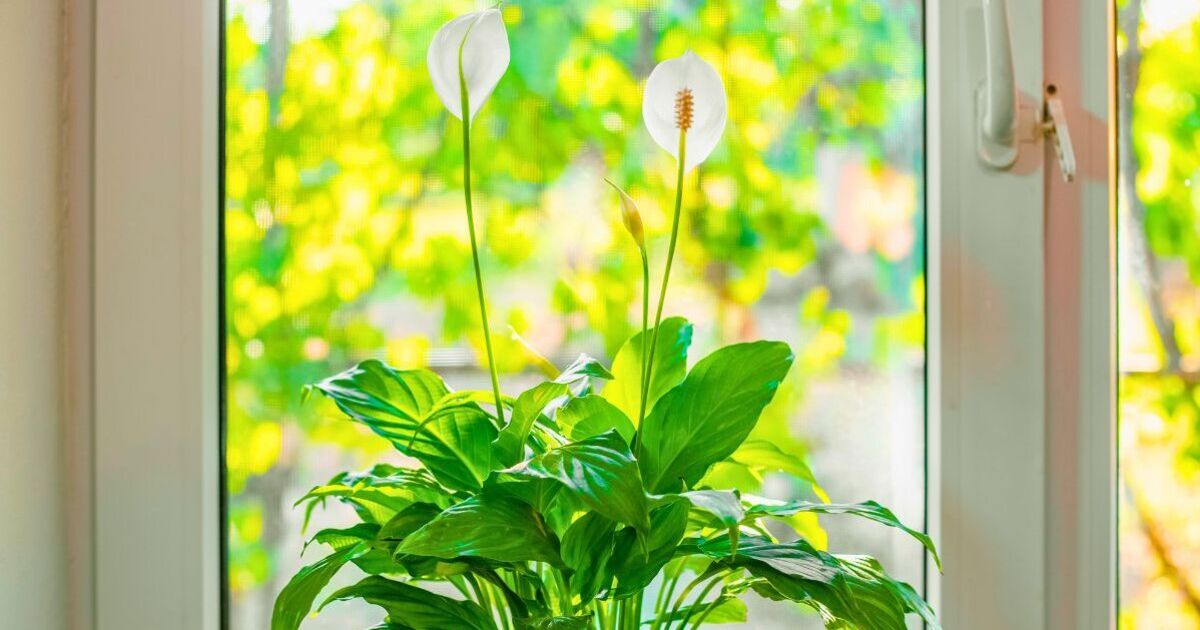
Peace lilies are fantastic winter plants because their white flowers look even more beautiful in snowy weather, and are quite hardy so can be left without much care during the holiday season. However, like all houseplants, peace lilies need to be watered regularly, but many people do not realise they are actually watering them wrong at this time of year and slowly killing their plant.
During winter, many people just put a peace lily under a tap, but the water is often too cold at this time of year and can shock the roots. Cold damage will cause peace lilies to begin to develop crispy brown edges around the leaves and can badly damage the plant so it is less likely to produce flowers next year. Using the tap can cause also cause the plant to become overwatered which means soil cannot drain properly, which can lead to the roots sitting in stagnant water and begin rotting away.
What is the best way to water peace lilies in winter?
Angela McQueen, a gardener and founder of Small Space Gardens, has revealed that is there is a more effective way to water peace lilies if they start to look “droopingly sad.”
She said: “When it’s time to water, Mr Peace Lily gets taken for a walk outside, placed in a shallow basin and drenched with rain water from our tanks using my watering can, and I mean drenched. Even the foliage gets ‘rained on’ as these lilies like a shower.”
Drenching a plant in a basin is the most natural way to water a peace lily, as in the wild they grow on forest floors where rainwater washes over the leaves.
This allows water to flow freely through the soil so the roots are evenly saturated, while excess water drains away completely to help prevent root rot.
Watering peace lilies this way hydrates them thoroughly and removes dust from the leaves, allowing the plant to photosynthesise more effectively.
It will help the plant soak up more energy and once spring arrives you have a better chance of the peace lily growing bigger and healthier flower spikes during its growing season.
How should you drench a peace lily?
To begin, you will need a shallow basin or a mason jar and to also make sure your peace lily plant pot has plenty of drainage holes.
You can place the basin outside if you wish, but it is also absolutely fine to place it in a bathtub, shower, large sink, or somewhere where the water can drain away.
Slowly pour the basin water over the peace lily soil until it becomes to flow out of the bottom of the plant pot. Do not rush this at the soil needs time to absorb the water properly.
Keep watering until you use up all the water and the soil is completely drenched and there are no dry areas.
Then, place the peace lily down, let it sit for a few minutes until no more water is dripping from the pot. Make sure all the water drains away completely, as you cannot leave a peace lily sitting in stagnant water.
Place the peace lily back in its usual location in your home, and it should begin to look a lot healthier and perkier over the next few days.
It is highly recommended to water houseplants outside with rainwater where possible, as it will not contain the chlorine that is usually found in tap water.
However, not everyone has the time to water houseplants this way, so you can fill a shallow basin with tap water and leave it to stand for twenty-four hours before watering your plants. This allows much of the chlorine to evaporate, making the water gentler for plant use.
Comments are closed.