
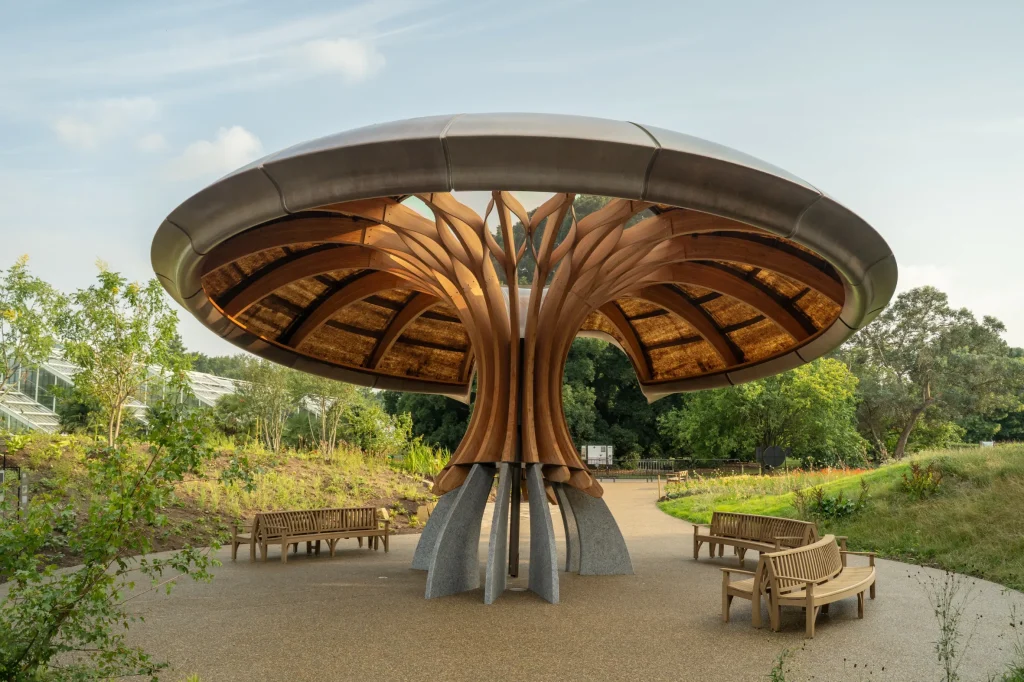
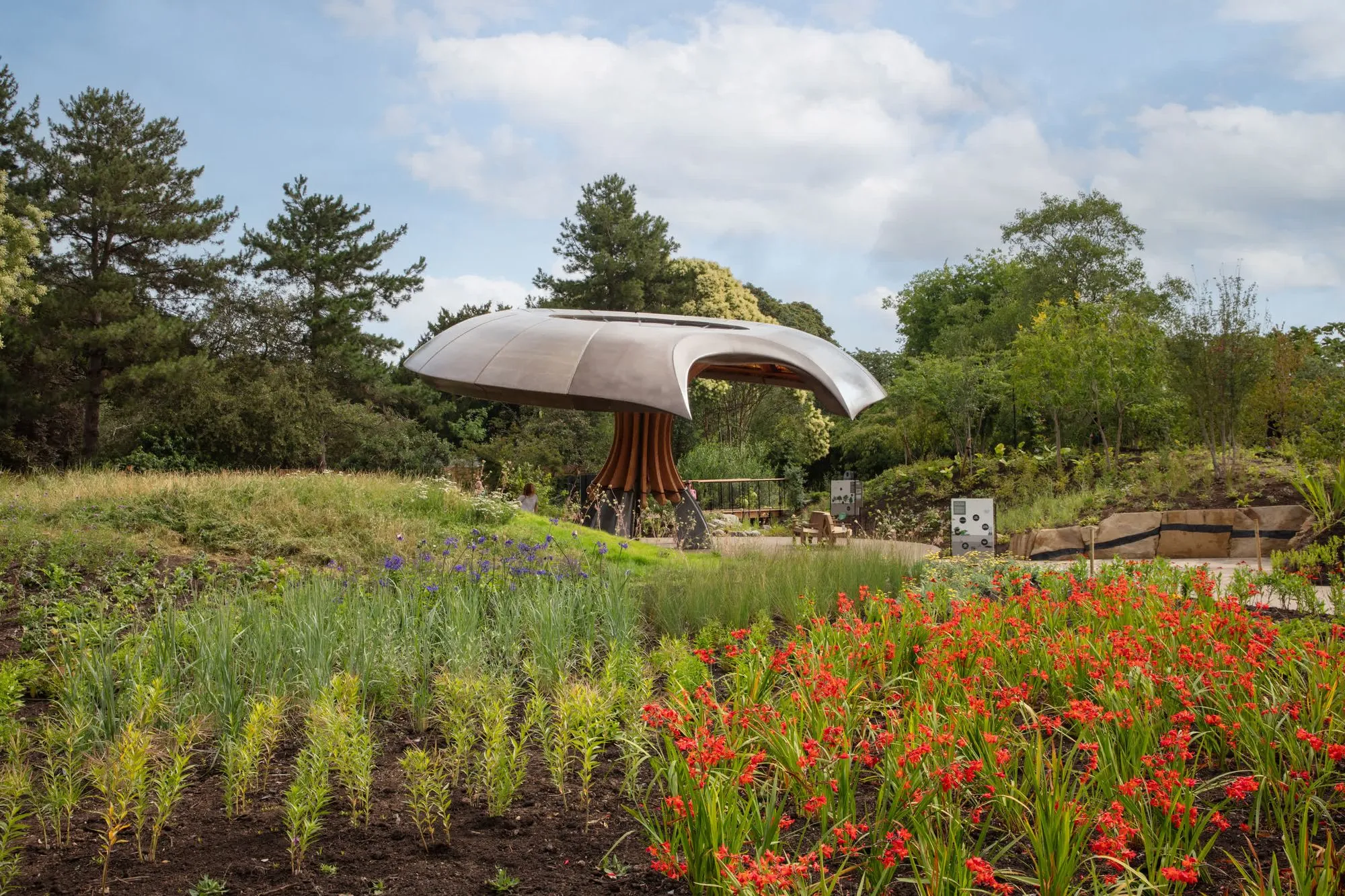
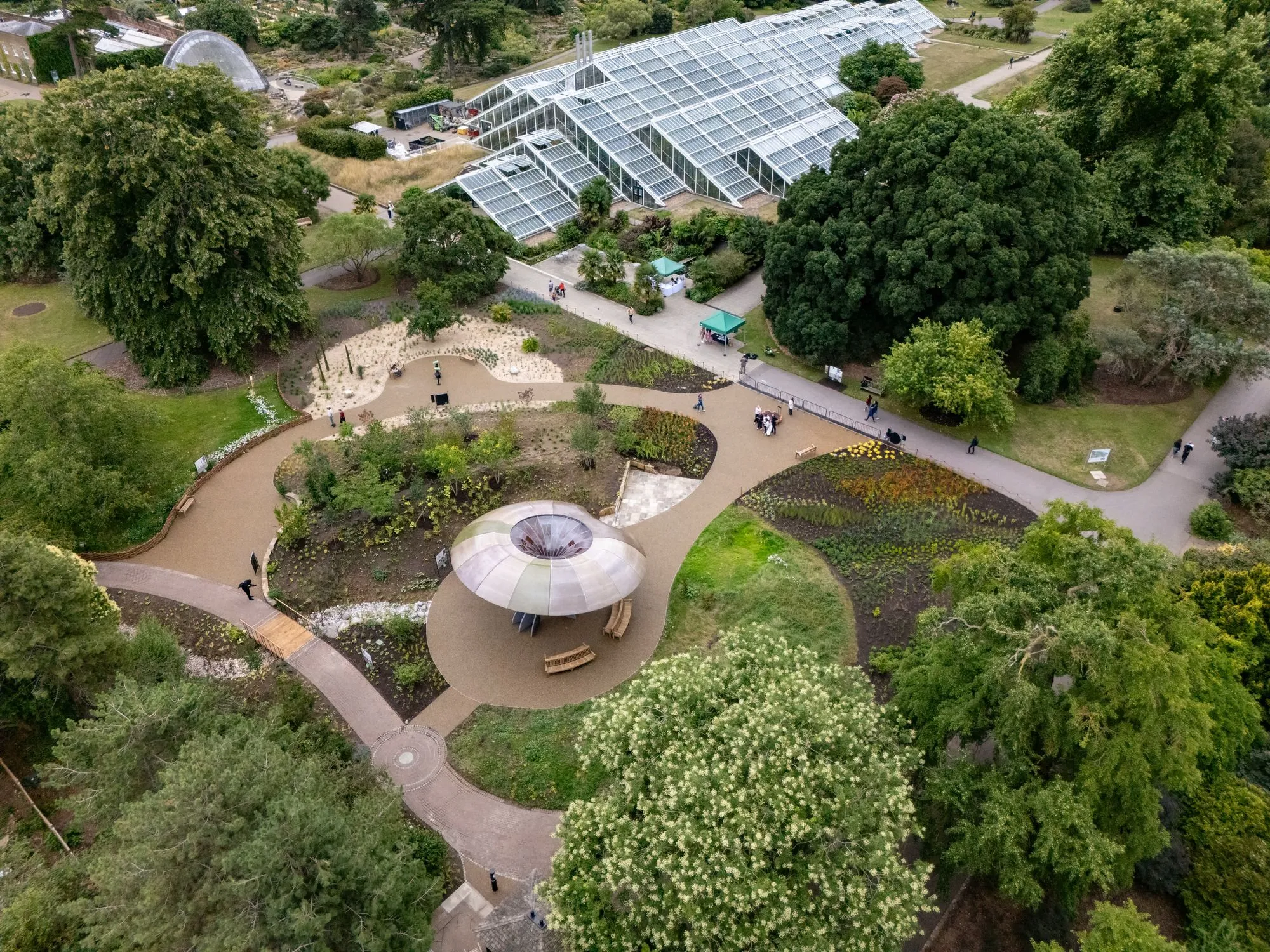
This summer, Kew Gardens in London unveils one of its most ambitious landscapes, the Carbon Garden Pavilion, designed by Mizzi Studio. Defined by its mushroom-like form, the pavilion features a translucent roof made from flax fibers resting on an intricately crafted timber structure that feels rooted in both nature and innovation; the design gently blurs the line between architecture and ecology. Mizzi Studio mentions, ‘The Carbon Garden Pavilion is designed as a physical extension of this landscape and to emulate a living organism.’
Designed by Mizzi Studio © Luke Hayes, Eden Rice / Mizzi Studio
Envisioned as the focal point of the Carbon Garden, the pavilion softly blurs the line between architecture and landscape, inviting reflection on carbon’s fundamental role in sustaining life. Constructed from natural materials such as wood and stone, the structure reflects Mizzi Studio’s dedication to regenerative thinking and environmental responsibility. Carefully placed within the garden and aligned with the sun’s movement, it allows light, shadow, and time to shape a quiet, immersive experience for visitors.
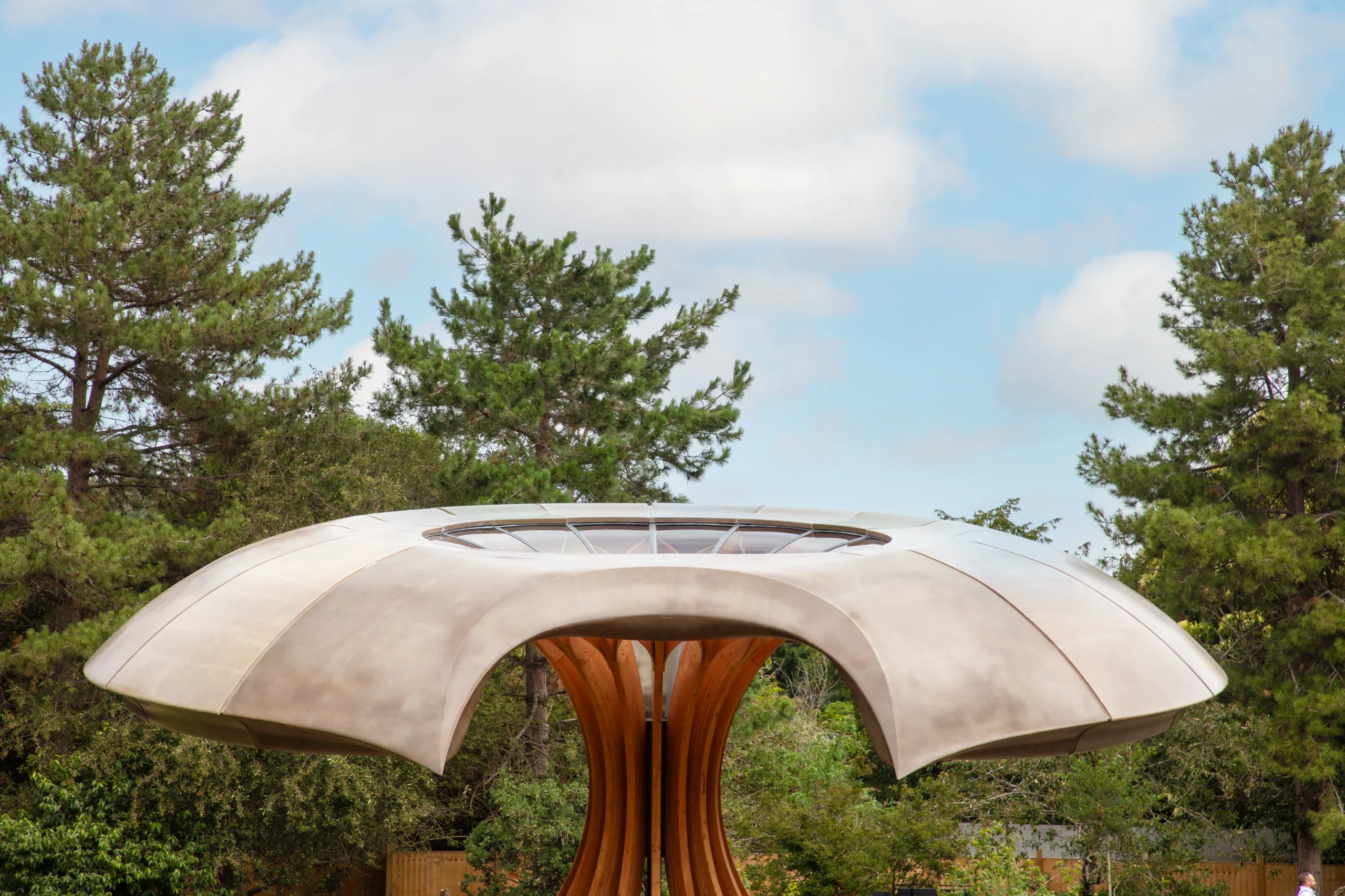
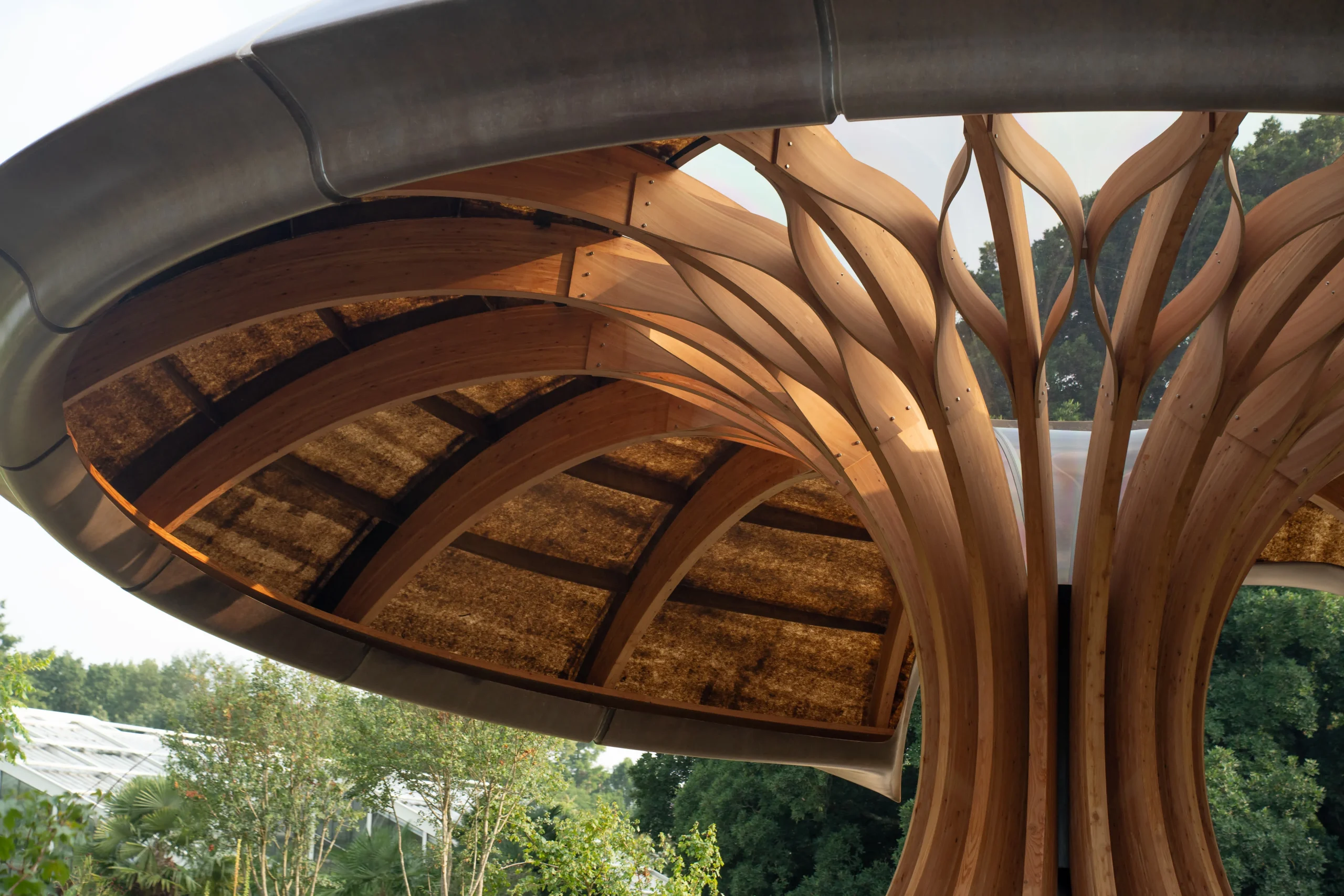
The main structure is composed of a larvikite foundation, a coarse-grained igneous stone without concrete addition, and crafted from ornate glued laminated timber in larch. The wooden framework opens to support the overhanging canopy composed of translucent flax fiber and a resin roof that balances strength and lightness. A key feature of the pavilion is a recycled polycarbonate funnel that forms part of the canopy, designed to harvest rainwater down through the pavilion’s center for use in the garden. The central timber trunk supports the entire form above ground with a delicate, vein-like structural system.
The pavilion is conceived as a warm, inviting space that feels intimate while encouraging community engagement through hosting school groups and community learning events. Through an approachable design, the pavilion inspires visitors to act, empowering them with simple, everyday ways to care for the planet and become advocates for nature.
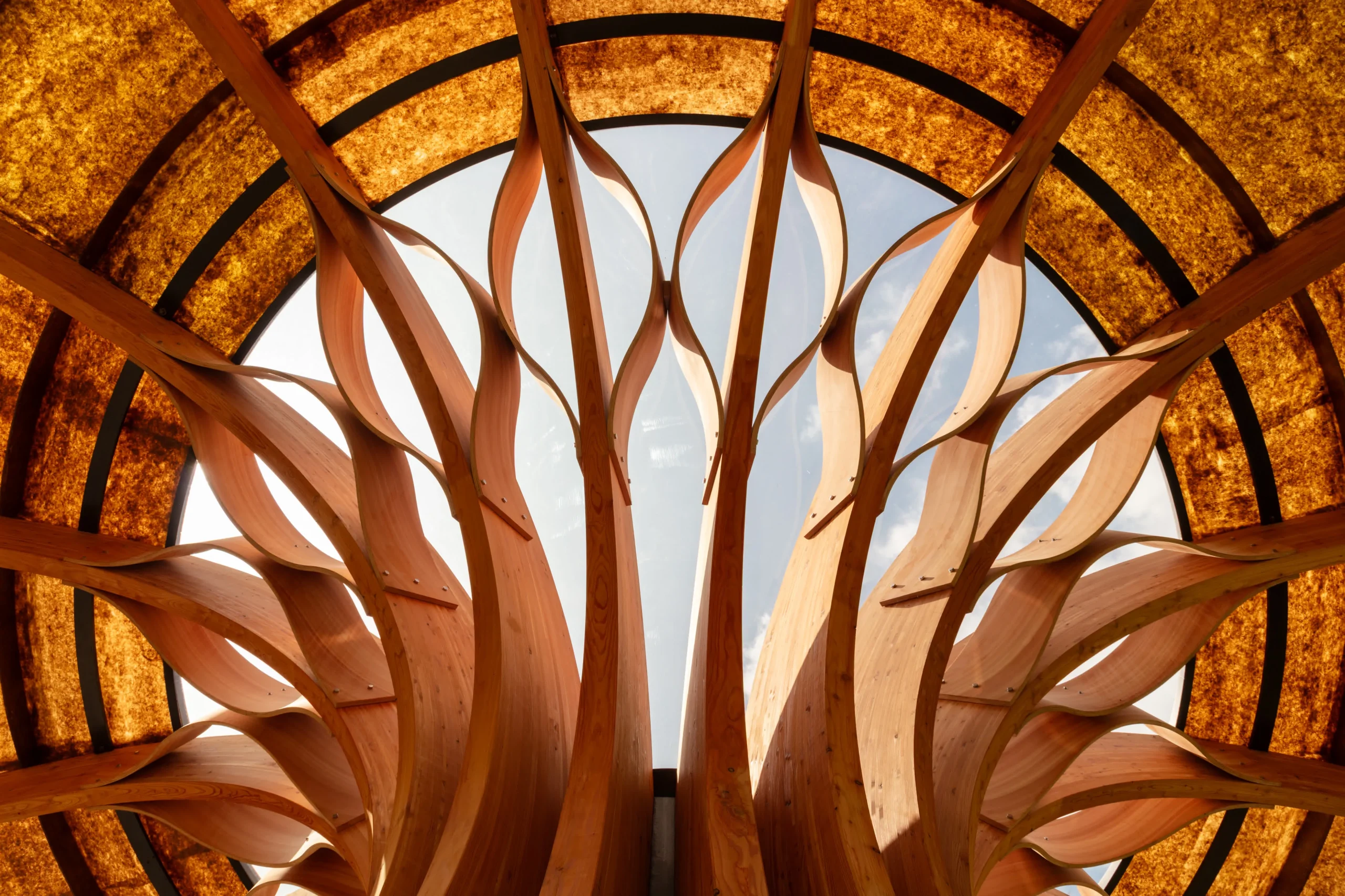
Sustainability is woven into the pavilion’s design through thoughtful and responsibly sourced materials, from low-carbon stone foundations to innovative natural fibers. One of its most distinctive features is a recycled polycarbonate funnel integrated into the canopy, transforming the roof into an active environmental system. This sculptural element gently channels rainwater through the heart of the pavilion, nourishing the surrounding garden landscape below.

The architecture was brought to life through close collaboration with structural engineers Atelier One and specialist makers Xylotek and 2D3D, crafted as a fusion of design and engineering. The structure radiates a quiet warmth, creating the gentle sensation of standing beneath a sunlit leaf. Light filters softly through its woven form, blurring the boundary between shelter and landscape.
The Carbon Garden Pavilion Project Details
Project name: The Carbon Garden & Pavilion
Location: Royal Botanic Gardens of Kew, London, UK
Architect: Mizzi Studio
Year: 2025
Photography: Luke Hayes, Eden Rice / Mizzi Studio
Comments are closed.