
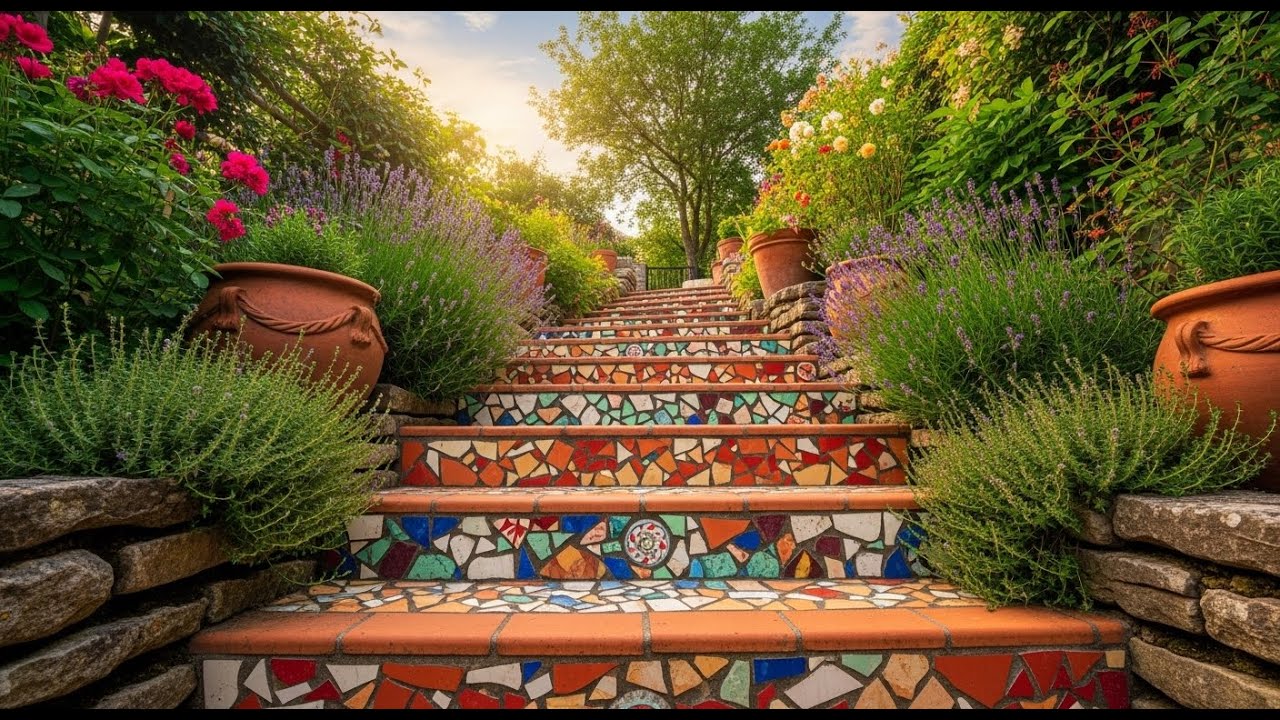
Transform your small urban yard into a storybook patio using materials everyone else throws away. In this video, we explore realistic, safe, and truly DIY-friendly patio edging ideas made from broken tiles, leftover bricks, recycled glass bottles, scrap wood, pallet boards, concrete rubble, and reclaimed stones.
Every idea is designed for tiny spaces, narrow patios, and compact gardens—perfect for anyone who wants a European-inspired escape without spending a fortune.
Instead of buying expensive edging, learn how to reuse what you already have: mosaic borders from broken ceramics, raised patio beds made from pallets and brick rubble, shimmering bottle edges sealed safely, rustic timber borders from scrap beams, and fairy-tale pathways built from reclaimed stones.
These projects are affordable, beginner-friendly, and powerful ways to reduce waste while making your outdoor space look designer-approved.
All images and footage in this video are created or enhanced with AI tools. You may notice a few small imperfections if you zoom in closely, but every idea is crafted to be realistic and doable in the real world. Our goal is to provide inspiration that anyone anywhere can build—regardless of climate, budget, or garden size.
If you enjoy upcycled garden ideas and small urban transformations, don’t forget to like, subscribe, and tell us where you are watching from!
Topik :
upcycled patio edging, diy garden edging, small garden makeover, recycled garden ideas, broken tile mosaic border, glass bottle garden edging, pallet raised patio, brick rubble garden ideas, reclaimed stone pathway, fairy garden diy, cheap patio ideas, backyard fortune, urban yard makeover, recycled wood edging, diy mosaic steps, eco friendly garden, budget patio edging, small space gardening, patio borders diy, upcycle garden projects
Hashtags
#UpcycledGarden #DIYPatioEdging #SmallYardIdeas #BackyardFortune #RecycledGardenDesign #UrbanGardenDIY #GardenBorders #EcoFriendlyDIY
Imagine stepping outside to a tiny patio that suddenly feels twice as big. Imagine borders made from broken tiles you almost threw away, glowing bottles catching the morning light, and reclaimed stones guiding you like a gentle storybook path. Imagine transforming the smallest corner of your yard into a space that feels handcrafted, personal, and beautifully your own without buying anything new. If you can imagine that, then today’s ideas might change the way you see your patio forever. Welcome to Backyard Fortune, a place where simple homes become magical gardens using things everyone else throws away. If you love upcycled ideas, small space makeovers, and practical beauty you can build yourself. Make sure to subscribe. And if any idea here inspires you, share this video on WhatsApp or Facebook to help more garden lovers discover it. [music] To everyone who shares and watches our videos, may your days be long, healthy, [music] and filled with peace. [music] One broken tile and bottle mosaic border. There is a quiet kind of magic [music] in things we once considered broken. When you look closely at scattered tile pieces and empty glass bottles, [music] you begin to notice how sunlight lingers on them. How colors shimmer at the edges. [music] How each fragment keeps a memory of the place it once belonged. Imagine kneeling in a small garden and arranging those pieces into [music] a border that curves gently along the soil like a ribbon of stories leading the eye toward pockets of lavender and soft ground cover. [music] The ceramic shards introduce texture, each one catching the light differently, while the half- buried bottles glow as if holding drops of morning sun inside them. Together they form a boundary that doesn’t try to dominate the garden, but rather celebrate it, [music] turning discarded things into a mosaic of gentle reflections. A border like this feels alive, responding to every shift of daylight, every small breeze that passes over the leaves. In a world that often urges us to buy [music] new, this quiet transformation reminds us that beauty can emerge from what remains. It encourages the garden to feel personal. handcrafted [music] and deeply human. And as the path turns softly toward the next corner, another idea waits patiently, ready to reveal how everyday materials can become something extraordinary. [music] Two fairy glass bottle edging. >> [music] >> There is something quietly enchanting about a row of glass bottles resting along the soil, their edges catching [music] the morning light as if holding fragments of dawn inside them. Imagine leaning down to trace the curve of a garden bed where these bottles rise [music] gently from the earth, half hidden, half revealed, like tiny lanterns forgotten by fairies [music] who once wandered through the night. Each bottle carries its own hue and character, [music] softened by sunlight, grounded by soil, and given new purpose after a life once considered ordinary. [music] The border they create is not loud or demanding, it whispers. It frames the garden with a delicate glow, guiding the eye from one cluster of lavender to another, letting shadows dance lightly across the glass. Moss gathers around the bases, [music] weaving nature’s quiet signature into the design while creeping time spills gently over the edges, softening the structure and blending it into the earth. This kind of edging doesn’t try to impress through perfection. Its beauty lies in how effortlessly it becomes part of the landscape. How it reflects the sky, the leaves, and the rhythm of the day. As sunlight shifts, the border transforms, offering a new sparkle with every hour. [music] When the path bends and you move toward the next idea, the bottles remain behind, glowing softly as though lighting the way for [music] what comes next. Three [music] raised pallet plus brick hybrid patio bed. [music] Some creations feel like they were born from the quiet meeting of two worlds. [music] One shaped by time, the other by simplicity. Imagine stepping into a small corner of your garden where weathered pallet wood rises gently from the soil, held in place by a border of old bricks that once supported another story. Together, they form a raised bed that feels [music] grounded, warm, and effortlessly charming, as if it has always belonged to the landscape. [music] The grain of the pallet boards carries the softness of age, its texture [music] deepened by seasons past. The bricks stacked in gentle irregularities, lend [music] a rustic rhythm to the space. Inside, rich soil darkens beneath morning dew, [music] welcoming stems of herbs and bright flowers that lean toward the sun with quiet confidence. Creeping time spills over the edges, softening every line, while terra cotta pots rest nearby like familiar companions. What makes this hybrid bed beautiful is not only the way it looks, but the story it tells of materials rediscovered of past lives woven gently into new purpose. [music] It feels honest, approachable, and deeply human. A reminder that gardens don’t need perfection to feel extraordinary. As the path curves and sunlight shifts, the raised bed becomes a bridge to the next idea, inviting you deeper into a world shaped by hands, heart, and imagination. [music] [music] Four reclaimed stone cottage path. Sometimes [music] the most beautiful paths are the ones shaped not by perfect stones, but by remnants of something [music] once forgotten. Picture a quiet morning in your small garden as you follow a trail of reclaimed [music] concrete pieces laid gently into the earth. Each fragment carries [music] a softened edge, weathered by sun and rain, transformed from rubble into stepping stones with their own quiet dignity. [music] They form a path that bends like a soft whisper, guiding you between lavender borders and the cool green of creeping [music] time. Moss gathers in the shallow crevices, turning every gap into a patch of gentle green, as if nature herself [music] is stitching the stones together. The surface of each concrete piece holds a subtle texture, warming under the daylight, casting delicate shadows that shift with every passing cloud. Walking along the path feels like moving through a [music] small story, one about renewal, patience, and the unexpected beauty that comes from giving old materials a second chance. There is nothing extravagant [music] here. No perfect symmetry, no polished surfaces. Instead, there is honesty and [music] warmth and the comforting sense that everything has a place, even the things once discarded. As you near the end of the path, another idea waits just [music] beyond the curve, ready to reveal how reclaimed materials can build not just a garden, but a [music] feeling. Five. Chunky recycled timber edging. There is a quiet strength in reclaimed timber. [music] The kind that has weathered storms, carried weight, and lived a life long before it meets the soil of a garden. [music] Imagine running your hand along a thick wooden beam, its grain carrying whispers of time, [music] its surface softened by years of sunlight and rain. Now picture these beams standing shoulderto-shoulder, forming a border that frames a small garden bed with warmth and honest character. Lavender sways gently behind the timber, [music] releasing a faint, soothing scent each time the wind stirs. Ferns unfurl their delicate fronds at the base [music] while creeping time drifts over the edges, softening the structure with touches of green. The wood lies heavy and grounded, yet [music] feels alive, as though breathing in harmony with the plants it protects. This edging does not try to impress with polish or precision. [music] Its beauty comes from presence, solid, earthy, and deeply rooted. Every knot in the grain, every subtle crack etched by time adds to the [music] story. Together, wood and plant create a rhythm that feels comforting, like a familiar song played on gentle mornings. And as you take a few steps forward, leaving the warmth of the timber behind, the garden opens into another idea. [music] Each one shaping the space in a different meaningful way. Six brick and bottle mixed curve border. [music] There is a certain charm in borders that bend [music] gently with the shape of the earth, honoring the rhythm of the garden rather than forcing [music] it into rigid lines. Picture a soft curve made from old bricks. [music] Each one carrying a warm, familiar tone, paired with glass bottles rising like quiet companions from the soil. Together, they form a border that feels both rustic and unexpectedly graceful. The bricks bring weight and warmth, their surfaces textured by years of weather and use. Meanwhile, the bottles introduce glimmers of reflected [music] light, catching the sun in small, shimmering flashes that shift as the day drifts forward. Creeping time calmly weaves itself between the edges, softening the structure, allowing greenery to spill gently over the border with natural ease. This mixed edging feels like a meeting of opposites, earth and light, solid and [music] delicate, old and renewed. It transforms a simple garden bed into a place where stories gather, where tones and textures merge into something quietly beautiful. [music] Each curve guides the eye slowly, encouraging a peaceful pace, a gentle inspection of every detail. [music] And just beyond the final turn of brick and bottle, another idea waits, [music] ready to show how ordinary materials continue to shape extraordinary corners of the garden. Seven [music] mosaic steps from broken pottery and terra cotta. Sometimes [music] beauty emerges from the most unexpected fragments. Tiny pieces [music] of pottery, once broken and forgotten, now gathered gently to form a path that leads [music] upward. Imagine standing at the base of a small staircase where warm terracotta shards catch the sunlight, glowing softly like sunlit [music] tablets from an old story. Each step carries its own mosaic [music] shaped not by perfect patterns, but by the humble rhythm of scattered pieces [music] finding a new place to belong. The steps feel warm under the morning sun. Their surfaces textured and rich with earthy tones. Lavender brushes against the edges, releasing its calm fragrance with every [music] breeze, while creeping time threads itself through the cracks, softening the structure and making the steps feel at home among the plants. Nearby, terra cotta pots echo the colors of the mosaic, tying the scene together with gentle harmony. There is a quiet poetry in these steps, a reminder that things once broken can become the most meaningful parts of a garden. As you move upward, each mosaic piece seems to guide your eyes forward, inviting you to appreciate every subtle detail. And when you reach the top, [music] the garden opens into another invitation. Another way castoff materials can shape spaces filled with warmth and wonder. Eight. [music] Gravel and wood drainage buffer. There is a quiet beauty in the simple things that hold a garden together. paths, borders, and the narrow lines where soil meets stone. Imagine a clean band of gravel running gently along the edge of a bed made not from polished stones bought in haste, but from old aquarium gravel once forgotten in a storage corner. [music] Each piece carries its own soft color, its own memory of water and light, now reposed into something both useful and unexpectedly graceful. The gravel settles easily into its new place, forming a subtle transition between garden and pathway. Thin wooden strips guide its edges, their grain warm in the afternoon sun. Tiny ferns lean toward the border, brushing the stones with feathery green shadows, while creeping time drifts over the wooden edge in quiet, unhurried waves. The contrast [music] between wood, stone, and soil feels honest, an understated rhythm that ties [music] the space together with natural ease. What makes this buffer special is not its complexity, but its presence. It grounds the garden, helps it [music] breathe, and frames each cluster of plants with clarity. There is poetry in its simplicity, a reminder that beauty often lives in the spaces [music] between things. And just as the gravel guides water gently away, it also guides your eyes toward the next [music] idea. Another way to transform the most ordinary materials into something meaningful. Nine brick and wood fusion raised bed. Some garden features feel like they hold two voices at once, one warm and wooden, the other cool and earthn. Imagine approaching a raised bed where reclaimed bricks rise from the soil with a quiet strength, while smooth wooden panels rest above them like calm, [music] steady breaths. The blend feels timeless, as though the garden has gathered materials from different stories and brought them together in harmony. The bricks carry a history in their edges, softened by years of weather and gentle wear. Their tones shift from deep [music] rust to soft clay, forming a foundation that feels grounded and familiar. Above them, the wooden panels glow with warmth, sunlight brushing over the grain [music] like fingers tracing old memories. Lavender leans against the corners, releasing its fragrance into the air, while time flows around the base in gentle creeping waves. Inside the raised bed, soil sits rich and dark, ready to cradle [music] whatever life it is given. The whole structure seems to breathe, solid yet welcoming, [music] rustic yet graceful. It stands not as a decoration, but as a quiet promise of growth, a space shaped with intention and care. And as you step away from the fusion of brick and wood, the garden leads you naturally onward toward another idea waiting to share its own quiet magic. 10 concrete rubble cottage stones. There is a gentle kind of transformation [music] that happens when something rough is given patience, attention, and a softer shape. Imagine a collection of discarded concrete [music] pieces, jagged, uneven, forgotten, slowly becoming stones that feel almost natural as they settle into the garden. Their edges, once sharp, are now softened, [music] carrying a warm matte sheen that catches the sunlight like the quiet glow of weathered river rock. Laid gently along a pathway, these stones create a rhythm that feels familiar and comforting. Moss gathers at their edges, turning each gap into a small patch of green cushion, while creeping time wanders freely, blurring the lines between the stones and soil. The colors of the sealed concrete, subtle grays, warm taes, and gentle browns blend beautifully with the earth around them, making the stones look as though they grew there slowly over time. What makes this feature special is its honesty. It doesn’t pretend to be something it’s not. Instead, it celebrates the truth that beauty often emerges from what we choose to reshape rather than discard. These stones become anchors in the garden, grounding the space with quiet character and a sense of timelessness. As you follow their curve into the next corner, [music] you feel the calm they create. Another reminder of how even broken things can hold a place of grace. If you enjoyed this collection of upcycled patio borders, tell us which idea you try first. Subscribe for more weekly DIY inspirations, and leave a comment telling us where you’re watching from. We love reading your stories. Thank you for spending your time with Backyard Fortune. Until the next video, [music] may your garden always feel like
Comments are closed.