
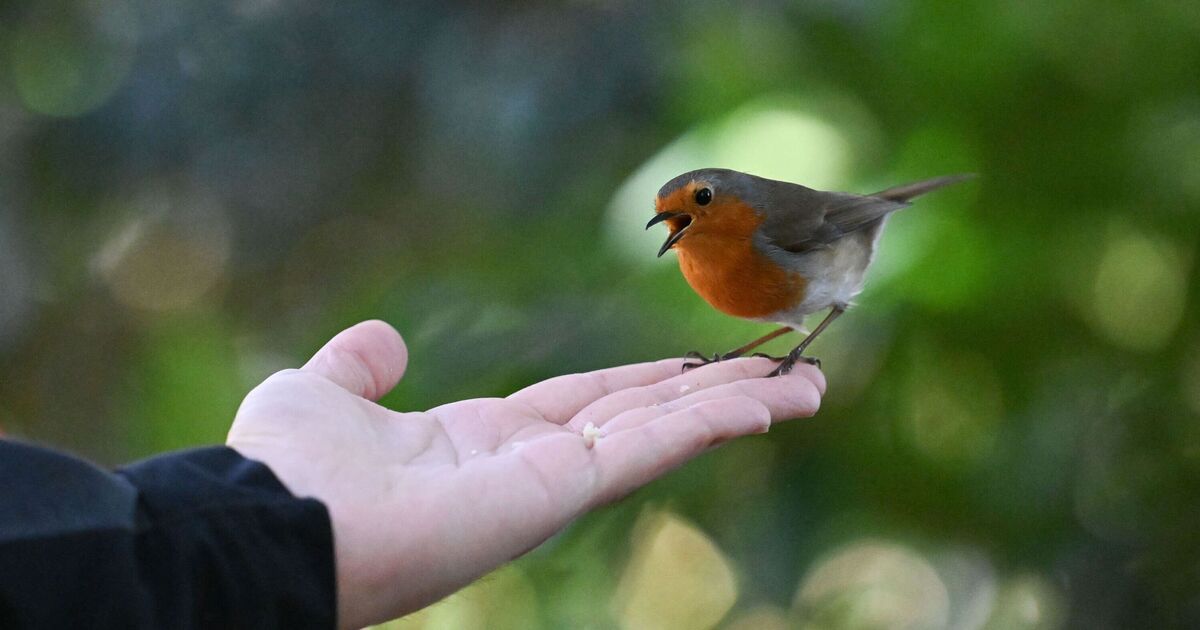
They are Britain’s favourite bird and a classic Christmas character in their own right. But robins, despite their tiny size, are actually one of the friendliest visitors to your garden and if you approach them in the right way, you can get them eating from the palm of your hand – literally.
According to garden experts at bird feed website Ivel Valley, robins can be trained to land on your hands and eat food directly from you if you use the right food, and gain their trust little by little each day.
The trick is to spend time out in the garden, digging up worms, and offering robins food, and they will slowly come to associate you with providing food, much like a domesticated pet would.
It says: “Robins are considered to be the most confident and friendly of all garden birds and will often follow you around in your outdoor space, especially if you’re digging up soil and exposing worms.
“The more time you spend with them, the more your Robins will become familiar with you and grow trust.
“In time they will be confident enough to eat from your hand. To gain their trust, place their favourite food 2 – 3 meters away from you and let them get used to eating near you. Over time, reduce the space until they are eating food from your hand.”
But what food should you use for this training? According to Ivel Valley, robins love insect and mealworm suet pellets, which are a mix of protein packed meat, fat and insects which robins will devour all year round.
Alternatively, you can use sunflower hearts, which contain high energy content and healthy oils, and are easy to find in any supermarket.
Or, the site also sells live mealworms and dried mealworms, if you’re a bit too squeamish for the live ones, or a general all-rounder mix if not. To attract more robins to your garden, you can also use a nest box.
It adds: “Just like with the type of box you use, Robins also have a preference for the positioning of their nest box. Robins like their nest boxes to be low down, no higher than 2 meters. They also like their privacy, so it’s preferred for the nest boxes to be submerged and well hidden in bushes or shrubs. If possible, position the box so the entrance hole is facing north-east and is sheltered from the prevailing wind and rain.”
Comments are closed.