
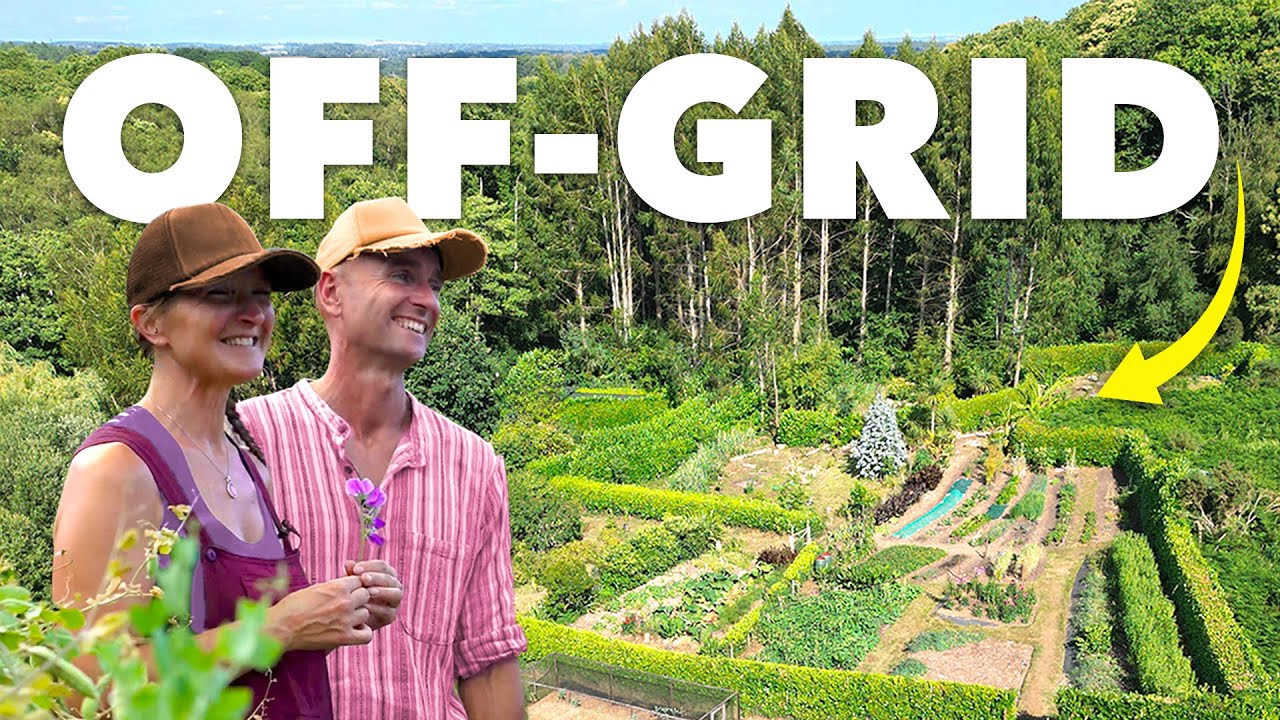
For more about Dan and Laurie’s garden adventures, you can follow their YouTube channel here: @freedomforestlife
How much land would it take to feed ourselves almost entirely to the point of being virtually self-sufficient? And what would that look like? Which plants would we need to grow and just HOW HEALTHY would we look if we ate 80% of our food directly from the land we grow it on? Well, Dan and Laurie at Freedom Forest Life can answer all these questions in this jaw-dropping garden tour of their incredible off-grid plot. They transformed an abandoned, overgrown tangle of weeds to an abundant garden of Eden. Ben takes a visit to see for himself in this week’s episode.
Self-sufficiency is something we all aspire to, and today’s couple, Dan and Lori,
grow up to 80% of their own food. They’ve got an astonishing
variety of produce here, including some really rather unusual gems
you just won’t find in your average garden. Come on. I can’t believe how much this feels like a jungle. We’re in the south of England and this
might as well be summer in the Amazon. What is the thinking here, Dan? Well Ben, I’ve always been mystified by the
rainforest ever since I was a young boy, seeing tribes on TV and living
self-sufficiently in the jungle. I just wanted to bring a bit of that
to the UK create a tropical paradise. And you used to live with tribes or
spent some time with them at least? So for a number of years yes, I
wanted to really discover what it was to be with people still living
an indigenous way of life, completely disconnected from the outside
world, just to see how they grew food, how they interacted with each
other and lived in community and interacted with the forest
and the landscape around them. And these are eucalypts, how old are these guys? These guys here are around seven years
old and I grew those from seed as well. So, I’m sorry, but my mind is totally blown here, seven years old and they are, I mean, they’re big. They’re pretty fast growing
yeah, believe it or not, they actually grow faster
here than they do in Australia because of the moisture and the good soil we have. And do you use it for anything? Yeah, so we’ve started growing small
little patches of these as firewood as our own sustainable source of firewood. We grow these because they grow much
faster than the native trees for wood. So, as well as being a beautiful place, the jungle
also provides a hell of a lot of materials for us. Take for example, there’s two crops
right next to each other here, we have our own bamboo and we have
loads of different varieties of this, so we no longer have to buy bamboo canes
for when we’re doing supports for plants and we also have here some cannas and this is
a really beautiful, tropical looking plant, but also has loads of different uses, for example,
traditionally you can wrap foods in these. Some of the native people of
South America would do that. I’ve heard you can eat the inside of
the stem here and in times of famine they would even boil up and eat the tubers
under the ground as well, the rhizomes. It’s got that look of banana leaf again like
when you wrap up fish and other things in them and steam it so it’s that
kind of feel. Yeah, so cool, but we actually use them most of all
just as sustainable dinner plates. So we have a barbecue then you
can just chuck it on the ground. A great idea, no plastic plates just
chuck out the leaf, nice, I like it. This is our food forest Ben and
it is such a valuable space to us, particularly at this time of year,
we are blessed with so many fruits. And a food forest is kind of a hybrid orchard, so instead of just having well spaced
trees with lots of grass in between, you utilize all the grassy areas
for things like fruiting bushes and shrubs and other perennial
vegetables and herbs. This gooseberrry bush that we’ve got
here, thank you for helping me pick these. Thank you for letting me help with this. We have been meaning to get to
this job for quite some time and these gooseberries are more than ripe. The red ones are just so pretty, aren’t they, they’re kind of like little
jewels hanging down, aren’t they? Yeah, this is hinnonmaki red,
this is one of our favorites, the flavor is just, it’s almost
a little bit more like a grape and they just look so
beautiful on the bush as well. So, I’m going to make some gooseberry
compote with these later on, so, yeah, they will go to good use. Dan, there you are! Now there’s a lot of beans
here isn’t there? Is this all for you guys? This is just for us actually, yeah. We tend to grow quite a bit more
than what we might actually need due to losses and some crops
might do better than others. So we kind of take into account
for that by growing quite a lot. So these particular beans, we dry most
of those and store them in glass jars, that gives us a really good source of plant-based
protein over the winter. Lovely stuff. I love the way you’ve got these little
alleyways of like tucking in corn here, there’s no dead space here, is there? That’s it, we find with corn some
places they get absolutely decimated by mice and rats and squirrels. So, by
dotting them in a few different places, hese have been untouched, but others
have been completely wiped out. You’re like spreading your bets
as it were. That’s it. I like it. Now I see you’ve got loads of potatoes down
there, can we go and have a look at those? Of course, yeah. These potatoes are looking
pretty vibrant, aren’t they? What are you growing? So here Ben, we’re growing quite
a large area of Sarpo potatoes, they’re virus and blight resistant. Yeah. That’s something we used to
have quite a big problem with, these have been an absolute game
changer. And do they store okay? They do, we keep these and we’ve
got potatoes all the way through even to the end of spring sometimes.
Really? Well, that’s good going. Now, this is something that we have to
address here now, bananas in England? Bananas, here they are, you’ve got
to bring a taste of the tropics. Yeah, well it feels tropical
on a day like this, doesn’t it? And do you have to bundle them up in winter?
How do you protect them from getting frosted? Well, this particular variety is called Musa
basjoo, and it’s root hardy to almost -18° celsius What? So, you can wrap these if your
temperature goes below -2 for the stems, but actually we find once the stems get
big after the first couple of years, we no longer even wrap these. Right, so they get a bit clobbered
cosmetically, but then they spring back. They often look a bit rough over
winter. If you live in a very cold area, they’ll die right down and grow back up,
but here, they just survive over winter. I have seen bananas before in
England but this is probably the most magnificent specimen I’ve ever
seen, so fair play. Absolutely beautiful. Now this isn’t nasturtium is
it? But it looks very similar. No this is actually called mashua,
it’s basically a perennial nasturtium, but it is even better than nasturtium
because all parts of the plant is edible. It’s got the classic sort of spicy leaf that
nasturtium has got, but it’s a little bit thicker. It is isn’t it? Yeah. The flower,
when they come out later in the year, they’re a little bit different
to normal nasturtium as well, beautiful orange trumpet
flowers, you can eat those, but the selling point of this
plant is it creates an edible tuber under the ground that you harvest in
winter, it looks like a great big grub. You can eat it raw, grate it, use it in
salads, it’s spicy a bit like wasabi, or you can cook it and it gets
really creamy and much more mild. Nice. I love plants like that where
absolutely every bit can be put to use, that gives you more bang for your buck,
doesn’t it? Yeah, absolutely brilliant. one of our favorites, it’s from the Andes
and yeah, we really, really value it. Dan, hello, now this is,
is it oca? This is oca, yes and this is a tuber crop in the
oxalis family which we really value. There’s many ways to use it, but we’re
using it this year as a ground cover in amongst some of our other plantings. And that really must be helping with this
sort of baking hot season we’re having so far. It definitely is, especially
when things were getting started, it just provided that bit of shade as well. Yeah. And the corn’s got a lovely kind of
purple tinge to it, so I’m guessing that’s not your common or garden sweet
corn, is it? What have we got here? This is a variety called
Painted Mountain. Oh yeah. And viewers in America might
know of this type of corn more, which is often known as like a
flour corn or a flint corn. Yeah. Which isn’t one that you eat fresh which
is really sweet, but you dry it out. What would you use that for,
like making tortillas or? So it can be used in a number of
ways, you can grind it into a flour or down into kind of like a grit and you can
make porridge or tortillas or cornbread even. Gosh, it’s quite versatile, isn’t it? And you’ve got two of the three
sisters here with these squashes they’re looking really quite abundant,
they’re clearly liking the sunshine. What are your favorite
squashes, what’s growing here? Well, we love to grow a variety
called spaghetti squash, which is one that literally does come out like
spaghetti, you can pull your fork through it. And we also grow one called jumbo pink
banana as well, which is a massive beast. Appropriately named by the sounds of it. And what makes these crops beautiful is they’re
all ones that we can store over winter as well. In that time when it’s leaner, we have good
bulk of nutrients for us. Yeah, fantastic. So Ben, this whole area used to
be thick with bramble and gorse and slowly over the years we have
brought it back to what you see today. Bramble and gorse, how did you get on top of that? Because I imagine that must
have been an absolute nightmare. Oh yeah, Dan has worked incredibly hard over the
years and he still is, yeah, he still is now. And we do have to really keep on top of
particularly like the gorse will seed still and if you pull it out while it’s small,
it’s really easy to keep on top of. But yeah, and actually the gorse had created
quite a good mulch on top of the soil here, but we have used a lot of compost
and then we wood chip the paths to really add in as much fertility as we can and the wood chip also helps to lock moisture
in which continues to drain into the beds. It’s just a constant job, but it’s one we love. Where do you get your wood chip from,
is that from a local tree surgeon or? Yeah, we’re actually really lucky, we
have a green waste site very nearby. We would eventually like to get to the stage
where we are 100% self-sufficient in compost. We do talk about getting a wood chipper,
but it’s really easy for us to go and get. Well, if it’s a resource
on your doorstep, why not? And it is, it’s all local, so it does still kind
of fit with all of our ethics here as well. Yeah. And I was noticing this, you were telling me
earlier that this is your nemesis at the moment, this sheep sorrel. Sheep sorrel, this is another
thing that this land has been thick with, it seems to love it here. Our
soil is actually slightly acidic so I’m assuming that this plant particularly
likes acidic soil and it just runs, it’s got running roots a bit like bindweed, it’s another thing that we have
to constantly stay on top of. But it is actually edible as well so it does
have some uses then. Not all bad then. No. The leaves have a really nice,
sort of slightly lemony flavor. It’s got an electrical zing to it almost,
very pleasant. They’re lovely in salads and they are, I’ve heard, very medicinal as
well, yeah, tribes of the past have used them in many ways before. I think
anti-cancerous I’ve heard. Amazing. Allen heads? And the chickens love alien heads. They are pampered chucks getting all
this lovely fresh organic produce. Do you manage to grow anything for them or is
it just like scraps and so on that they get? We are working on growing as much
of their food as we possibly can and that will hopefully build up over time. As you can see, we’ve got
sunflowers growing in here and that will be snack food for them
when the sunflower heads seed up. We’re also growing other things like
amaranth and we give them a lot of kale. We will still always make sure they
have chicken layer pellets as well to make sure they get the
nutrition that they need, but we’re hoping to over time learn
about lots of different foods. Having the chickens just adds another
layer to our self-sufficiency and yeah, hopefully over time we can make
them more self-sufficient as well with the food that we grow. Amazing. So, this is another amazing plant
Ben that we use as a material. This is called the Harakeke I believe
by the Maori people of New Zealand, often called the phormium. Yeah,
that’s how I recognize it. Yeah. And this is a plant that they would
use to weave baskets and mats with and it has a really amazing high strength
fibre to it. Just comes away in little strands. Feel that, how strong it is, you
can’t even break it. Oh my goodness! That is proper. Yeah. That’s incredible. So
we use this as a replacement of garden twine. Yeah. And you can make it a bit more
nimble literally by running your secateurs. Oh, you get it kind of bit more supple like
lwhen you’re tying a ribbon or something. And it’s ready to go, you can tie bits together
to make longer lengths as well. I love it. Steaming up here Dan, I reckon it must be over
100 Fahrenheit or like 40 or something in here. I think well over 40 I’d say today.
Yeah. But obviously someone’s enjoying it like the eggplant or aubergine and
this guy here, is that a tromboncino, is that how you pronounce it? Yeah, this is
actually we call them trombone courgettes. Trombone, yeah. I think they may be Italian
and they grow literally well over a foot, sometimes over a meter and the
really cool thing about those is you can use them as normal
courgettes this time of year. Okay. But you can also leave them on the plant to
mature and they store right the way through. So you’re getting like a summer and a
winter squash all in one plant. Yeah. That’s really impressive. Yeah, again
it’s like the bananas we saw earlier, it’s sort of full of surprises,
you know, something you associate with sort of Mediterranean climates, but
I guess today is proving the point nicely. Yeah, I mean we love to push the
limits of stuff and try everything. So, we’ve got all sorts in here Ben, but a
couple of things that I find really interesting is the kale, this kale plant over here, this is it going into its third
season, it’s done two winters. And then we’ve also got the New Zealand
spinach which we grow both inside and outside and you can see now how heat tolerant
New Zealand spinach really is. Yeah, it’s incredible, I’ve heard
it’s quite drought tolerant as well. It’s loving life in here and you know,
you can feel how hot it is today. Another favorite thing that we grow in the
tunnels every year are these Cape Gooseberries. We’ve got two different varieties that we’re
trying this year and they are just amazing, they give us such a beautiful harvest when
all of the other fruits from the food forest are just about finishing at the
end of summer, early autumn. Absolutely love Cape gooseberries. Oh, gorgeous. Try this one Ben, this is Korean mint, it’s the first year I’ve grown it
and we are absolutely loving it. Oh, that’s lovely, it’s got a real
aniseed note actually, hasn’t it? Yeah, it’s amazing in teas. I’ve read that
it’s the flowers that most people harvest for drying for tea, but I’ve actually been
using the leaves and I think it’s fabulous. Oh, it is fabulous. So, I guess you’re saving the seeds here,
do you manage to save much of your own seed and keep it going from year to year? We
do try and save seed where it’s feasible, because again, that’s another
layer of self-sufficiency, but we don’t save seed if
it’s a really tricky one. You can see we’ve got the parsnips to the side of
you there, they’re pretty easy to save seed on, these leeks here, but yeah, anywhere we can
add another layer to our self-sufficiency and reduce costs and close the loop and
keep everything in house, then we do try. And I can see all the insects are loving it
too, there’s like soldier beetles, wasps, flies, hoverflies, it’s a buggy paradise
here. Yeah and that is another reason why I just love leaving these leeks to flower because they just offer so much
diversity for the wildlife as well. So here’s some more seed that we do save Ben. So we’ve got pea and bean seeds here and they
are, of course, really easy seeds to save. So we just put them in these drying
racks and finish them off in the shed. Really tactile and pleasingly kind of like
you hear them rattling, that’s so satisfying. Yeah, you just want to keep running
through them. You do don’t you! You guys are such sweet peas,
you really are. Thank you Ben! This is a lovely part of the
garden with all these cut flowers. Are you selling them or is it
just for your own vases at home? A bit of both actually. So yeah,
we’ve been really enjoying learning and trying to grow more cut flowers this year,
some of them is for us and for the insects. And yeah, we have been doing a few
markets where we sell our surplus produce and also some of the beautiful cut flowers. I think it sums up this area,
you guys, you’re beautiful people and you’ve got a beautiful thing going on here. Thank you so much for having us today. Thank
you, Ben. It’s been an absolute pleasure. You are a true English gentleman,
thank you. Oh, cheers guys. Cheers.
21 Comments
Seeing the bees and bugs buzz around in front of the camera in most of the shots told much about the site…! 🎉
We thought you’d gone to Hawaii!
Awesome video, what a collab!
Beautiful
What an amazing garden! I would love to test their way of life as it seems to rewarding, but I'm sure it's really hard work!
Thank you so much for working extra hard during the growing season to provide us with inspiration during our cold, dark winters here in the mountains of Virginia USA. You are amazing! Love your work!
Wow, have to try the bananas!
They seem like an amazing team in the garden!
Yeah well, how much does a 3 acre garden cost in the south of the UK? lol
Beautiful garden you guys. As big as my garden is, I recognize the amount of work that was and now still is! Please be honest now with the audience, how much of that do you eat vs sell? Do you survive eating corn and beans and squash and salads? Or do you have enough extra of those things to sell to buy your meat and dairy and coffee and lentils and parchment paper , etc etc all the other things that I am assuming are in your kitchen. We should all be trying to help people plan for realistic success. what is working? What isn’t working? Thanks.
What lovely people, with such a beautiful garden! Thank you for introducing us, Ben!
Hi Ben, well done finding these lovely people.
Farming as it should be, with the most wonderful people passionate about the plants
It would be great to see how they live 80% sufficiently during winter and spring months, to help us aspiring growers.
What lovely people, with such a beautiful garden! Thank you for introducing us, Ben
As a fellow gardener from Northern Spain, with
I assumea very similar climate to the South of England, every time I see such a dense planting scheme, I always wonder how well it does when the weather is not as sunny as the one they've chosen for the video. The drainage must be incredible, and for the same reason they must have some kind of watering system…the oca should have antacid properties given its a wood sorrel
Murphy❤
Lovely to see you together. All of you are a force of nature. Keep it up team🙌
The chickens add another layer badum tsss 😂😂
Great to see people living what they preach. Fascinating and inspiring