

Japanese maple (Acer palmatum ‘Bloodgood’). This maple cultivar shows lobed or dissected
foliage and leaf coloration dominated by anthocyanins. It retains its exquisite color throughout the season; a deep shade of burgundy appears in the spring and lasts through the summer, and
bright red takes over in the autumn. This native of Japan is a member of the soapberry plant
family (sapindaceae). (Courtesy Tom Karwin)
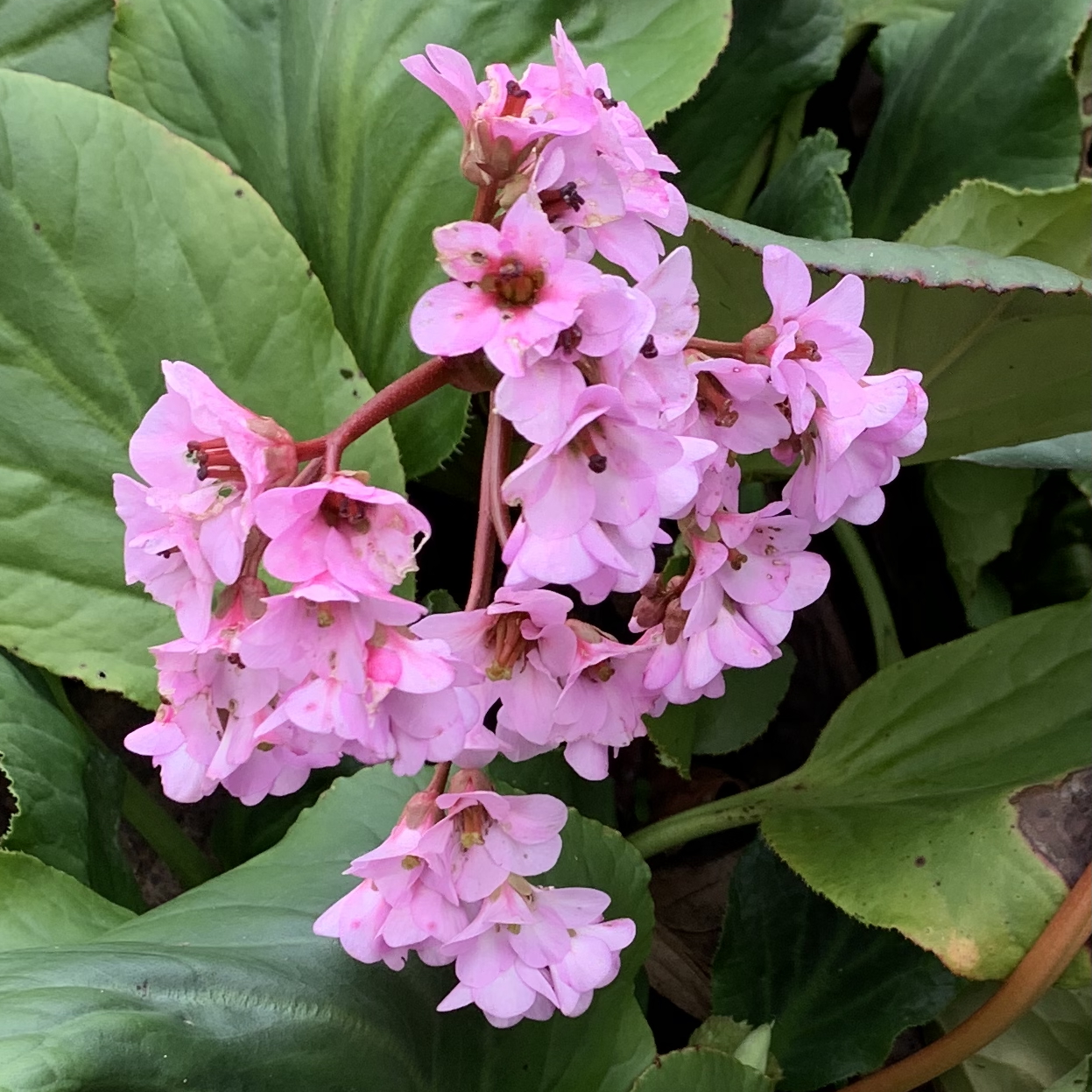
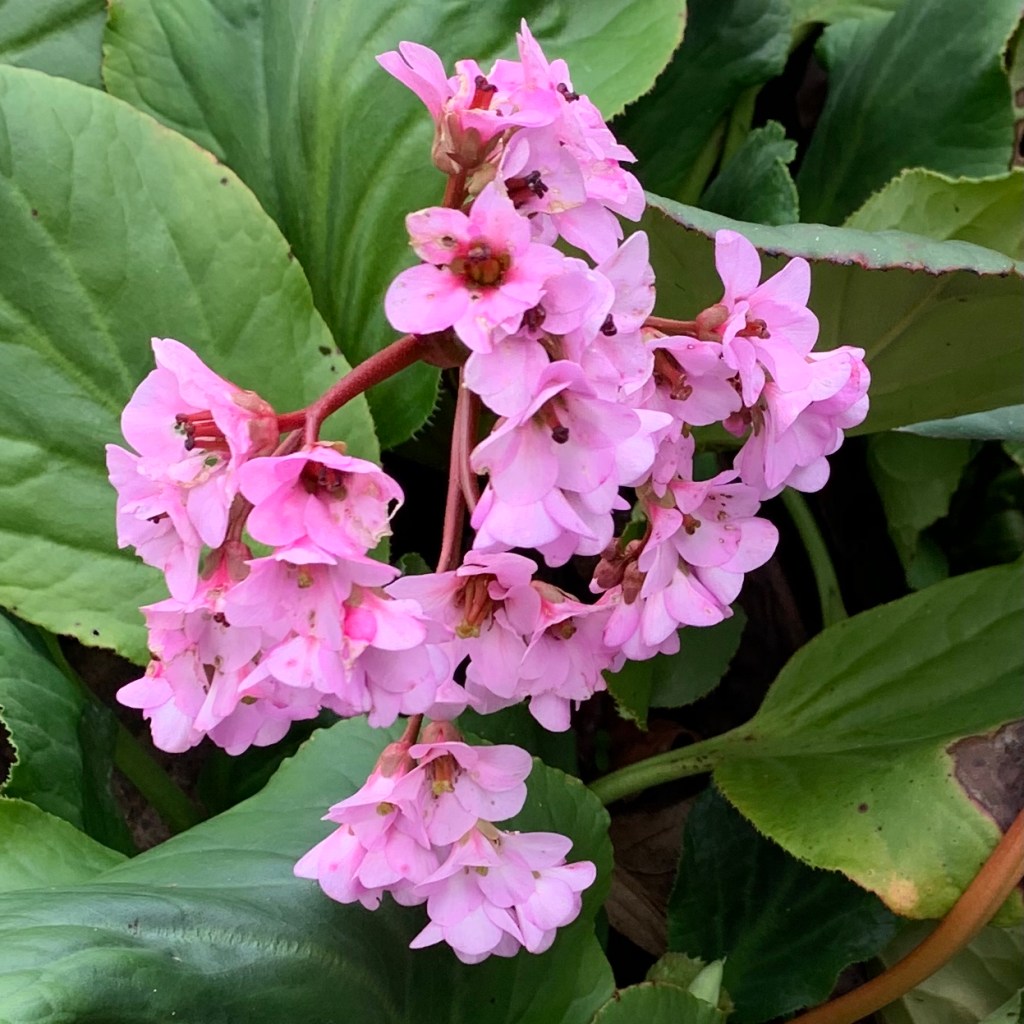
Pigsqueak (Bergenia cordifolia or B. crassifolia). This perennial blooms from late winter to spring and exemplifies large, rounded, leathery, evergreen leaves. Gardeners can appreciate the plant’s common name by rubbing the leaves between their fingers. The plant is native to Russia and a member of the saxifragaceae family. (Courtesy Tom Karwin)

Variegated, pink-fleshed Eureka lemon (Citrus × limon). This sport of the Eureka lemon displays a rind that is striped green and cream. When fully ripe, the stripes fade and the rind turns yellow. The plant originates from India and is a member of the citrus plant family
(rutaceae). (Courtesy Tom Karwin)

Paperwhite (Narcissus papyraceus ‘Ziva’). This perennial plant has linear leaves, as do several
other bulbous plants and grasses. The paperwhite, known for its blossom form, is native to the
Eastern Mediterranean region and a member of the amaryllis family (amaryllidaceae). (Courtesy Tom Karwin)
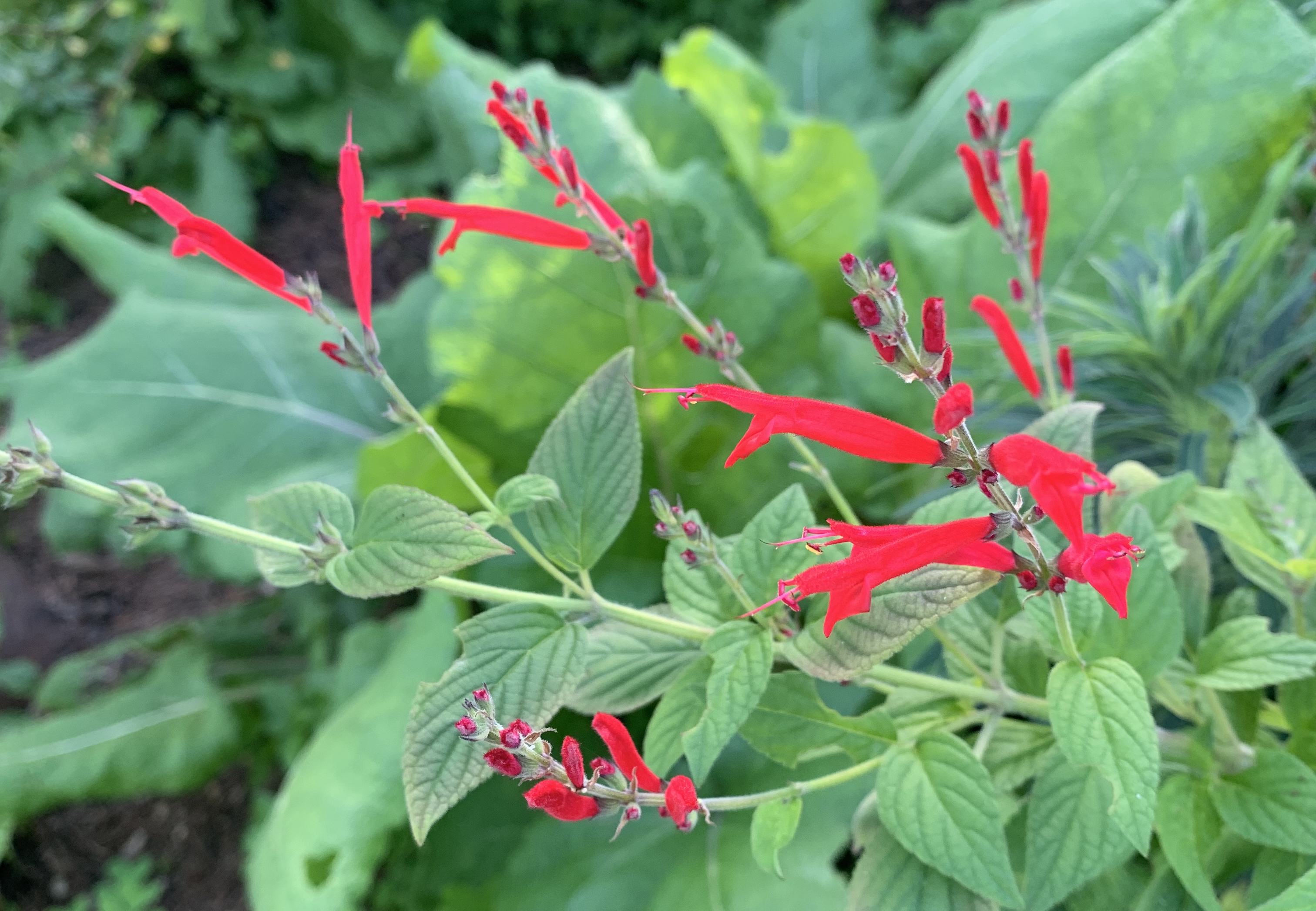
Pineapple sage (Salvia elegans ‘Elk Sonoran Red’). This compact plant has small, light, pale yellow-green leaves that are veined and covered with fine hairs. The plant is native to high-elevation forests in Sonora, Mexico, and is a member of the mint, deadnettle or sage plant
family (lamiaceae). (Courtesy Tom Karwin)
Show Caption
1 of 5
Japanese maple (Acer palmatum ‘Bloodgood’). This maple cultivar shows lobed or dissected
foliage and leaf coloration dominated by anthocyanins. It retains its exquisite color throughout the season; a deep shade of burgundy appears in the spring and lasts through the summer, and
bright red takes over in the autumn. This native of Japan is a member of the soapberry plant
family (sapindaceae). (Courtesy Tom Karwin)
Expand
Many flowering plants are currently dormant, so the current season presents an ideal time to “dive” into the garden’s foliage.
Gardeners greatly appreciate the garden’s blossoms, but the leaves and branches of plants comprise a large majority of the garden’s scenery. While our blossoms are mostly at rest, we have a timely opportunity to review the diversity of plant leaf forms, size and colors.
In this column, we explore foliage variations, the genetic blueprint of leaves and the environmental conditions that shape the leaves.
Today’s image gallery
To suggest the diversity of garden leaves, this column’s image gallery from my garden includes small samples of characteristic plant forms and colors.
The genetics of plant leaves
Every plant species has a genetic template that determines the shape, thickness, texture, pores, pigment, vein structure and position relative to the plant’s other leaves. The environment can also modify the template, sometimes significantly.
The environment shapes leaves
During the evolution of a plant’s leaves, several environmental factors affect the leaves’ characteristics. Short-term environmental issues can cause leaves to shrivel or die more quickly than normal, but basic features have lasting value.
The strongest shaper of leaf form is sunlight. When leaves evolve under strong, all-day sunlight, they become relatively small, thick and leathery. A California native plant showing these characteristics is the coastal manzanita.
When leaves evolve under shady conditions, the leaves become large and thin to capture much of the sunlight. They often produce more chlorophyll with the goal to capture more light, and develop a deep green color.
A second important contributor to leaf form is the availability of water. Leaves developing with access to abundant moisture grow to their full size and gain a lush appearance. In comparison, leaves that develop under limited moisture or drought conditions become relatively small in area to reduce the rate of transpiration to minimize water loss. Some plants develop succulent leaves to store water internally. Deciduous plants drop mature leaves as another strategy to conserve resources. In the short term, leaves can curl slightly to minimize water loss.
Environmental temperatures influence leaf shape and texture. When evolved under high temperatures, leaves develop protective waxy surfaces, relatively small sizes or dense surfaces, all to reduce transpiration, or water evaporating from a plant. Cooler environments favor thin leaves with high-density chlorophyll and tough, leathery, slow-growing leaves.
Another significant environmental factor that shapes leaves is the soil’s nutrients and drainage. High nitrogen levels lead to large, soft, lush leaves, while low nitrogen levels result in small, firm, lean foliage. In the short term, iron-poor or alkaline soil can reduce chlorophyll production, causing chlorosis that results in leaves turning yellow.
Other factors that can cause short-term changes in the shape of leaves include damage from herbivores and competition from adjacent plants.
Shape variations
Plant genera develop their leaves in particular shapes and sizes as adaptations to complex factors: genetic programming, developmental patterning, physiological constraints and environmental selection. For the following list of shapes, we focus on the primary factors.
• Broad leaves develop under conditions of filtered light or shade and abundant moisture. Examples: Bergenia, hosta.
• Linear leaves form under high sunlight levels and windy conditions. Examples: Irises, grasses.
• Lobed or dissected leaves have adapted to reduce wind resistance and allow sunlight to penetrate lower levels of foliage. Leaves might also develop these shapes to look less palatable to herbivores (which presumably prefer larger leaves). Examples: Maples, ferns.
• Rosettes form a shield around the plant’s growing point, protecting it from external hazards (such as grazing and frost), channeling moisture toward the root crown and reducing the plant’s exposure on windy, dry sites. Examples: Agaves, aloes.
• Needle forms have adapted to reduce freezing in cold climates, reduce transpiration during dry periods and maintain foliage under nutrient-poor soils. Examples: Rosemary, conifers.
The palette of leaf colors
A combination of essential pigment compounds determines leaf colors. These compounds include chlorophyll, carotenoids and anthocyanins. The primary pigment, chlorophyll, provides the leaves’ basic green color and supports photosynthesis by absorbing sunlight and converting it into energy. In the autumn, plants decrease chlorophyll production, allowing other pigments to become more visible.
The carotenoids shield plants from excessive sunlight and dominate in some plants’ leaves, giving them an orange or yellow color. An example from my garden is golden sedum (Sedum adolphii ‘Golden Glow’). The carotenoids become more visible in autumn, bringing yellow hues to green leaves.
Anthocyanin protects leaves from ultraviolet radiation and herbivores, and contribute to the vibrant red and purple hues seen in some trees during autumn.
Many leaves are primarily green, and some have varying shades, including deep green, blue-green and yellow-green. Some plant leaves have a gray appearance caused by soft, velvety textures of fine hairs that help the plant reflect sunlight, tolerate drought and provide a silvery elegance. An example from my garden is lamb’s ear (Stachys byzantina).
Bronze, red or purple occurs in some plant fruits (e.g., apples) or leaves. Examples include a Japanese maple cultivar (Acer palmatum ‘Bloodgood’) and black rose (Aeonium arboreum ‘Zwartkop’).
Varying levels of chlorophyll and other pigments provide variegation in some leaves. This effect occurs naturally in some plants, and genetic mutations or mosaic virus infections can cause variegation in many other plants. Many succulent plants, such agave americana var. medio-picta ‘Alba,’ display strikingly variegated white and green leaves.
Advance your gardening knowledge
The size, shape and texture of the leaves indicate the growing conditions under which the plant has evolved over time and provide the gardener with essential guidance for its cultivation. When a plant grows unsuccessfully, the gardener’s first therapeutic response should be to create the sunlight, temperature, wind and soil conditions that the plant favors.
Before selecting and installing a new plant, the gardener should ensure that their garden provides all the conditions the plant needs to succeed. This process includes knowing your garden’s hardiness zone (visit planthardiness.ars.usda.gov), analyzing soil quality (visit bestreviews.com and search for “soil test kits”) and observing sunlight, temperature and wind conditions during each day and each season of the year.
California’s Central Coast region has moderate conditions that support a wide diversity of plants. Gardeners can build on these conditions and enjoy gardening with ease relative to harsher environments, while still achieving continued success and generally healthy plants by following the classic rule: “The right plant in the right place.”
In a future column, we’ll explore ideas for incorporating different leaf forms, sizes and textures aesthetically into the garden landscape.
This week in the garden
Enjoy a weed-free garden!
Tom Karwin is a past president of Friends of the UC Santa Cruz Arboretum and the Monterey Bay Iris Society, a past president and Lifetime Member of the Monterey Bay Area Cactus & Succulent Society, a Lifetime UC Master Gardener (certified 1999-2009), past board member of the Santa Cruz Hostel Society and a current member of the Pacific Horticultural Society and other garden-related societies. To review the archive of recent On Gardening columns, visit santacruzsentinel.com and search “Karwin.” Visit ongardening.com to review columns from 2012-2020 (and eventually) from the following years. Please send comments or questions to gardening@karwin.com via email.
Comments are closed.