
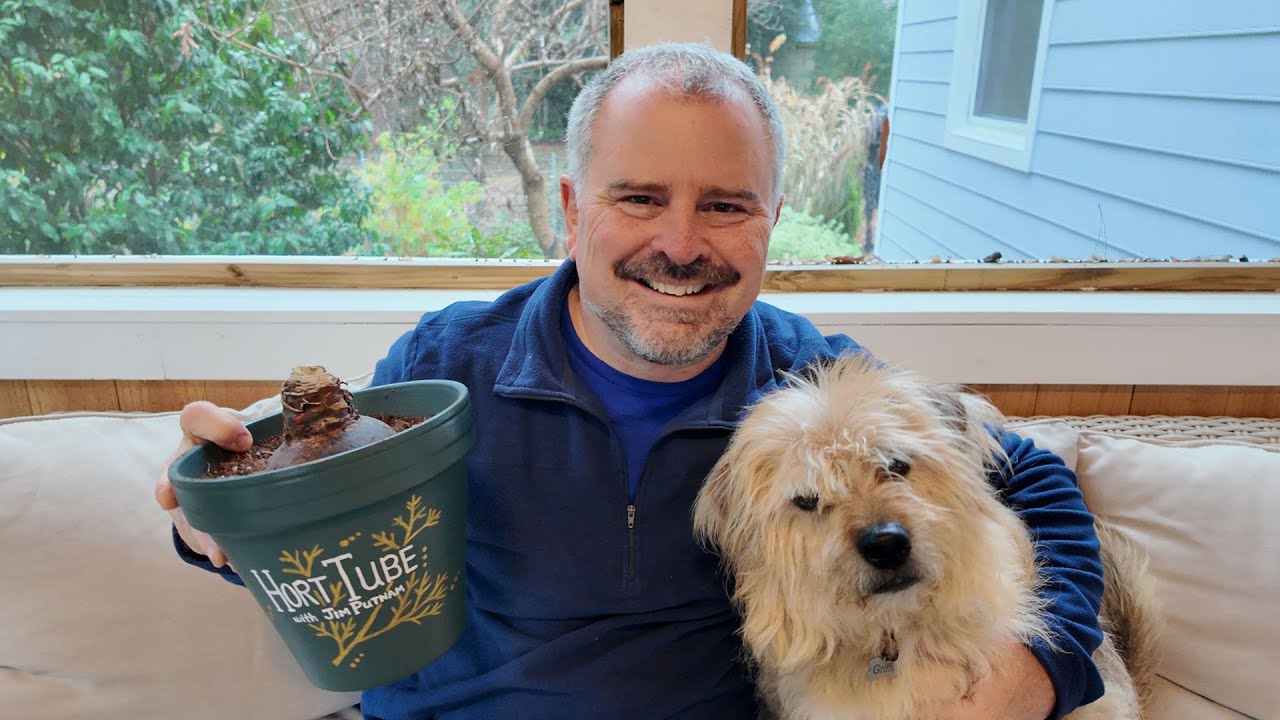
Kickstarting Next Year’s Garden: Seed Starting Plans & Amaryllis Bulbs – In this video I go over the seeds we will be starting this winter for next summers garden.
Weekly Garden Planner – $20.00 OFF – Code PLANNER – https://www.horttube.com/weekly-garden-plan
Learn To Garden Video Series – $25.00 OFF – Code HORTTUBE25 – https://www.horttube.com/the-basics-of-gardening
Consultations Available – https://www.horttube.com/consultation
Garden Plants with Jim Putnam – https://bit.ly/3SMpvn7
Products I Use – https://www.amazon.com/shop/horttubewithjimputnam – Purchases help the channel
Join this channel to get access to perks:
https://www.youtube.com/channel/UCXXKLYf_tz_1cssixclHgnw/join
Southern Living Plants – https://bit.ly/3R4iYDA
Encore Azlaeas – https://bit.ly/3dNzlWN
Plants by Mail – https://bit.ly/3TglJ6P
Endless Summer Hydrangeas – https://bit.ly/3pHPuQ9
Soil3 Compost – https://bit.ly/3e1iznx
HortTube Playlist – https://bit.ly/3gYx1Iv
For More Information Visit – www.horttube.com
Facebook Page – https://www.facebook.com/HortTube/
Instagram https://www.instagram.com/horttube/?hl=en
really doesn’t feel like gardening season this morning. We’re December 4th or something, fourth or fifth this morning as I’m filming this. And there’s snow happening in Virginia and uh we’re 34 degrees or 35 degrees and a little bit of rain uh out here. The um winter has kicked in a little bit earlier than normal. I think our our kind of peak winter temperatures here in peak low temperatures here in Raleigh usually occur around the second week of January. And I think we have like a 30°ree average fair 30° Fahrenheit low and 50 below 49 degrees for a high or something. And we’ve got like a run of 10 days that are below that in early December. So interesting start to the winter. But I’m glad because it shut the garden down. It hasn’t shut it down by just slamming it um down. It has shut it down by just kind of gradually going down. And once things are asleep, you know, um everything is uh good to go. But there are some things that we can do uh here in the garden um or gardening wise. Uh we’re preparing for seeding and I’ll go over I’m going to have a list on the screen a little further in the video of all the seeds that we’ve ordered and the various places we’ve ordered them from. Um we’ll go through that in a minute. We’re going to be doing more seed than we’ve ever done before. Um just trying to really um do as much as possible here at the house from beginning to end. I think it’s number one, it’s super satisfying, and number two, it’s definitely less expensive than buying the plants uh in the spring. So, we’ll go through that in just a minute. We did get quite a few amorillis from uh color blends bulbs. We normally have I’ve planted these already and they’re already growing some. Uh but we had we were out of town for a while and I had color blends, tulips, daffodils, all kinds of bulbs are going in. We have our half of our refrigerator is bulbs right this minute. Uh the they all got shipped to us a little bit later because they did some chilling on them before we got them because we just weren’t going to be here uh to receive them. So I asked them to chill them, which is a nice feature, but in the process, you know, then I didn’t get the amorillis bulbs that I normally have earlier in the season uh until later as well. So they’re not going to be quite as big as they are. But these we give these out as gifts during Christmas. Um, you never know if you might get invited somewhere sometimes, um, you know, during the Christmas season and you need you need to have a present on hand, but typically we’ll start with nine. I I I get nine of these bulbs every year. Three of three different varieties. They have several different varieties on the Color Blends uh website. Nice big amorillis bulbs. This bulb has everything it needs. Doesn’t need anything else from us really other than a little bit of water once the foliage gets going on. It doesn’t really need anything. And it needs to be rotated in the light because it’ll be in indoors uh growing. So, we’ll have it in a a window that has a lot of light and we’ll rotate it as it to keep the foliage from bending over one direction uh as they come up. Outside of that, doesn’t need anything from us. Um and we can plant them in the ground uh later. But we’ll start with like nine of these and over the course of the Christmas season, we’ll give away a few here or there just because you just run into some, you know, something you forgot or or whatever. or we’ll do them on purpose. Whatever we have left from that, which is usually three, four amarillis bulbs, we actually put them into the ground. They’re hardy in the ground in zone 8 to 10. And we’re here right on the edge of zone uh 8A. As long as the crown of this bulb is sticking up out of the ground and they’re in a sunny, well- drained location, we find that they come back every year. They should in the ground return to their kind of spring flowering. um uh pattern, you know, where they, you know, where they you have the foliage during the winter time out here. Ours are up right now, and then they’ll they should bloom in the spring before the foliage comes out on them. Here in zone 8A, they’re all over the place. We have them bloom in the fall, we’ll have them bloom in the summer, we’ll have them bloom in the early spring. It’s just there’s completely unpredictable here. I think as you get further south, they probably would go into a more predictable pattern, but our ups and downs on soil temperature and air temperature seems to have them confused a bit. But you’ll get your amorillis bulb like this. Got it roots hanging down at the bottom. We just center it uh in a container. Get those roots down into the soil just a bit. And I want to leave that bulb exposed up on the top. Any kind of potting soil is fine just because uh again the bulb has everything it needs. But I just pack the the potting soil around these uh roots. Just tamp it in. Most of the time I use a smaller container, but someone gave us this beautiful container at the o was this at the open garden where we got this. Thank you so much. Uh haven’t used it yet. It’s been a decorative pot up until now, but now it will be uh we’ll definitely not be giving this one away. This one is not on the the Christmas giveaway plan. Uh this will be one that we uh definitely keep and reuse for various things um over the years. But uh again, that’s these are really super straightforward. There really nothing else that’s this straightforward. Normally I’d have them I’d like to have them at Christmas time in bud, you know, where they’re about to open as you’re giving somebody something so they have something to look forward to. I think they’re going to be more like the foliage is going to be this tie. No big deal. uh just again getting started some you know later on something but I do love these Amorillis bulbs and especially if we’re in the south we can just put them in the ground afterwards. It’s kind of funny we had clustered them over here and I said this earlier this year we’ve been clustering them every time we put them in the same spot and then we went to um um Dr. Armatage’s garden and he just had them randomly plugged in here and there and I was like why wouldn’t we sometimes you just overthinking you don’t think about something and then you see it and go why the texture on that strappy foliage is so nice that it just contrasts with so many things. So now we’re just dispersing them uh through the garden uh as time as time goes on. But anyway, amorillis bulbs uh pretty straightforward, easiest job. I’ll water this in to settle this in. I’ve got about half the bulb there sticking out. And then it really doesn’t need any water after that until you start to get some foliage on it and it dries down a little bit. This would be one of those things that you could easily just oh it’s I got to water it. I got to water it. I got to water it and overdo it. So let it let it become slightly dry. Not dry but slightly dry before you rewater it. But I’ll get that watered after this. So, real point of this video is we do um we do tons and tons of things from seed every year. We’ve shown that on the channel. I have a light rack in the house. It’s in transition right now because we’re remodeling the office inside the house, building some closets and doing all kinds of projects inside the house right this minute. Um and I’m expanding the light rack just a little bit at the same exact time. Uh and so that we can do more seeds. Uh the we do them all of our stuff in these 50 cell trays. They’re completely reusable. This one may at this point, you know, we’ll make sure there’s no leak in the bottom of these solid trays down at the bottom. You know, put put a little water in them. Check to make sure that water’s not going to run out of them onto our electric shelf, you know, lights in there. Uh and then, you know, this 50 cell tray goes in that. And we buy ones that are good enough that we can reuse them year over year. Eventually, they wear out. Um, but man, we I had a case of a hundred left over from my nursery and we still have a ton of them uh in the uh in in the years and years and years later. You know, hundred of these 50 cell trays might last for uh you know, for for the rest of the lifetime. Okay, we just got back from a very long trip and on that trip we actually visited Pine Tree Seeds. Uh that was part of our visit. If you haven’t seen that video, uh that one’s a it was a pretty fun video. We went through all of their triing and photography and packaging and how they send out everything. It was a um it was it was a fun video. We had not visited a seed uh a seed company before and we had ordered from Pine Tree a few times and um you know, not really super nice people, small business, you know, in Maine. kind of nice to do business with, you know, folks that you that that that you know and and you just overall genuinely nice people. Um so that that was a fun visit. But we are equal oper I’ve said in the past we’re equal opportunity seed purchasers. So we’ve got seeds this year from Johnny Seed. We have seeds from Baker Creek. That’s the one of the catalog. The Baker Creek catalog is one of the funner things in gardening. If you haven’t um if you don’t get the Baker Creek catalog, it’s it’s kind of it’s it’s just kind of fun to look through. You’ll see so many things you’ve never seen before. A lot of heirloom seeds. Um then a lot of newer interesting things as well. Just a really fun a fun overall catalog. Uh so Baker Creek and then uh Pine Tree obviously. Uh who else have we ordered from this year’s stuff? A lot of Swallow Tale. Swallowtail. A lot of we we order quite a bit from Swallowale as well. Uh am I missing if I’m missing somebody? Nope. I think that’s I think that’s maybe it for this year in this stack. So, this stack is actually organized uh in a logical way. Uh, and I think this is kind of important when you’re doing um whatever seating you’re doing. We’re doing more perennials this next year, especially native perennials because we have the native garden over there. A lot of times, not always, but a lot of the perennials take longer um from seed. And so you’ll kind you’ll notice again not everything you you can’t you can’t uh paint anything in horiculture with a broad with a with a broad brush but for the most part a lot of our perennial plants take a little bit longer to germinate. Sometimes they have special requirements for refrigeration you know for co for cold chilling them and that kind of thing. So, if you’re doing perennial plants, uh, nonveable annuals and nonflowering annuals, you might want to look up and see if there’s any special instructions around those. Uh, because again, a lot of times they do, uh, take a little bit longer. And again, we’re doing more of them this year. We have this stack. Um, Steph went through and and this is been my strategy for a long time is I want to know the order of the of the of when we’re going to start these seeds. I have a limited amount of room. I’ve got four shelves on a light rack in there and we do so many seeds that I I can’t put them all in there at one time. So, they got to be done in some sort of order. The other thing is I don’t want something that’s you’ll get something and I’m gonna I’ll say it I’ll tell you in a minute, but that takes three months from seed uh to get it into a transplantable size where it can come from the inside on the light rack to to transition outside and then into the ground can take I’ve got things in this stack that take 12 to 14 weeks. And I got things in this stack that can be direct seated in the ground or started inside and be done super super fast. So things that have like basil that are four to six weeks. So it wouldn’t make sense for me to put this basil in that takes four to 6 weeks 3 months before we can put something uh in the ground. Right. Hey buddy. Griffy’s Griffy’s like why are we outside? It’s 34 degrees. Um, well, so the logical way to to start them on the rack is I want our average last frost dates April 15th and I want the plant ready at that time to transition into the ground. Okay, I want it at that sense. I may not be able to at that time. It may still be cold outside, so I might not be able to put it in the ground, but I kind of want it there. So, if I go to April 15th and I back up whatever amount of weeks the plant takes, the seed takes to germinate and be a transplantable size uh on here’s one uh a um what was this? This is from uh this is from swallowtail. Uh this is a beonia. Okay. That is 12 to 14 weeks. So, I can I need to back up 12 to 14 weeks to start this seed. Uh unfortunately uh some of the packets tell you how long it is from seed to transplantable size and some of the companies don’t have that on their packets and it might be something you want to uh want to look up. So Steph looked up, you know, on this particular one about how long this one takes from seed, this particular beonia takes from seed to transplantable size and wrote it on the package and then put it in that order. So those will be the first very first things. We also have direct stuff too. So there’s some things that you don’t start inside. You can just direct seed them outside and a lot of things you can direct seed outside. Um but then they’re in the order that they’re in is the longest it takes to the shortest it takes cuz we know that within it’s a from April 15th 12 weeks back is what? January 15thish somewhere in there. The 12 to 14 stuff. So literally we’re December whatever right now. Um, and I’ve got some work to do on my light rack in there, uh, between now and then, but we’ll have seeds starting as early as January 15th. Uh, that’s only small portion of them. And then we’ll have 8 to 10 week things that’ll start around February 15th. The four to six week things will start around March 15th or March 1st. Um, some somewhere in there. That’s the order that we can do it. That way we can take the earliest things after they germinate, we can take them off the light rack and hopefully, you know, we’ll get warm days. See, this is the thing about our weather here in Raleigh and a lot of places. March can be really warm outside. So, they’ll probably spend the vast majority of their time outside once they’ve germinated uh and be finishing off in the direct sun. I’d rather finish them off in the direct sun if I can. And then we’ll have to move them in or out based on, you know, cold temperature, you know, frost and that kind of thing. But that’s our strategy is we this is it’s a lot of different seeds. It doesn’t mean we’re planting all these seeds. There’s way more seeds in these packets. And typically, except for a few hybrid tomatoes that we buy that there’s like five seeds in the packet or 10 seeds in the packet, but for the most part, this is way more seed. So, what we’ll do is assign a certain number of rows in the tray, you know, for each of the things. So, it might be two rows. That would be 10 seeds. Um, that we would be that we would be doing a few of the things. A few of the seeds, a couple other notes, you might want to look up whether the seed needs to be covered, how deep it needs to be. Hopefully, it says that on the packet. Some things, especially some of these uh Come on, buddy. Come on. Up up up. Come on. Um, especially some of these uh coated seeds, uh, they just go directly on top of the soil and you don’t cover them. So, you might want to look that up. uh as well. We’ve got a lot of seed planting, seed starting videos that we’ve done on the channel over the years, but that’s what we’re in the process of doing has been gathering all this stuff up. Um preparing for the spring. Uh coming up with some native perennials that hopefully, you know, we’re trying to do this native garden in a way that will be some things that are slight, you know, slightly unusual or different native plants that people haven’t seen before. uh that we can all, you know, that we can uh show we can show off as well. What was that noise? What was that noise? Uh so there you go. That’s what we’re doing. Uh let us know down below. Do you have winter plans in the garden? Next thing we have to do, just letting you know, is get out here and do some cleanup. Uh which I’ve talked about. I think the seeds are generally kind of picked over by now on a lot of the a lot of the plants out here. I’m seeing less birds than I was a week and a half ago or so. Week and a half ago, this place was just solid birds. um out here picking seed out of things, but I’ve seen less and less as as days have gone on. So, I think we’re going to go ahead and pull the annuals that have been killed to the ground. We’ll probably go ahead and um it’s time to go ahead and plant tulips, daffodils, other things we’re going to get into the ground uh and just generally clean up the garden. So, that’s what you guys will see over the next couple of weeks. We’re getting steady rain and super super cold temperatures. So, it might be a week or so before we get out there and work because one thing, and this is in the weekly garden planner, one thing I mention probably in the learn to garden video series as well, be careful working, you know, it’s we’re finally getting some steady rain here, which we desperately need here in Raleigh. But I don’t want to go stomping through these beds while they’re this wet. Uh because you will compact the soil. uh you don’t know you’re doing it, but if you’re running wheelbarls into wet soil all winter long, walking through them, trampling through these beds, you’re potentially doing some damage and some compaction that all of your hard work, your plant roots and your microisal fungi and beneficial bacteria and all your mulch and all these things that you’ve been doing to improve your soil, you could be deleting some of that by stomping through the bed. So, I’ll probably wait until they’re slightly uh slightly drained a bit more than they are uh currently. So, thank you guys so much for following along with the
33 Comments
Ooh what a great idea! I'm going to get my seeds in Planting order now 🏃♀️
Don’t clean up your garden until spring because a lot of bugs lay eggs in the stalks and leaves of dead plants and the birds eat those in the early spring/late winter and feed them to their young. Seeds are usually gone by now but the stalks are full of good food for baby birds in a few months.
I live in Central Oklahoma, and I have always planted my amaryllis bulbs in my flower beds (after they have finished blooming), and once the weather warms up in the spring. It was recommended to me by the Master gardeners many years ago to plant them 8 inches deep. 🤷♀️That has worked like a charm! They come up every spring and send up a bloom usually in May or June every year! (Zone 7 ?)
I found a polyphemus moth cocoon on my dicliptera suberecta last week. Trying to attract more moths and butterflies this year. Makes for interesting gardening for sure!
I need to go through my seed packets and reorganize! Have you considered some sort of window covering for your covered patio to use it as a spring greenhouse? I struggle with having space for growing seedlings. One of our cats loves any growing green thing. 😂
Who's a good boy? Griffin's a good boy.
I've loved the large variety of plants from Swallowtail and purchased most of my seeds from them this year. Their business model seems to be a lower overhead so lower cost to the consumer type model model. Simple website, less photos, less info, no catalogue(?), etc. But with that comes cheaper prices and a very extensive # of seeds. I just wish they gave more info on either the seed page or packet, because I had to spend hours looking up transplant times and other info. I throw it all into a spreadsheet so I have it going forward, but what a chore!
EXC🪴TING‼️
Was so excited to see the seed video this morning! I hope we get updates on your perennials from seed. I would like to venture into more of them. But sshhh, let’s not talk too much about Swallowtail because I still need to order my seeds for next year. 😂 Don’t want them to be sold out by the time I get there.
Thank you Jim, Stephany and Griffin . 🎄 💚 🙃
What kind of screen do you have on your porch? You have such good visibility and it looks sturdy. I enjoy watching your garden videos. Thanks.
Where can we look up information about how to grow plants from seed – like time to transplant – if it is not sold at a place like Johnnys? Is that info in one of the Armitage books?
Btw I am not a big fan of celosia. But I must say that Shimmer is amazing – particularly paired with their Agave zinnias. Great for Zone 6 New England – tough and resilient
No Summer Jewel Red Salvia this upcoming year? We grew it for the first time here in Central Texas this year, and they have been fantastic (still blooming with small pollinators).
Edit: I have been trying to find Summer Jewel Salvia in White from a reliable source, and your list at the end of the video indicates you and Steph purchased them from Swallowtail Garden Seeds. Thank you!
Thanks for the list
Is the summer 2026 garden tour on your website for your house garden?
Griffin is such a cute fuzz ball.
Thanks for the hints. I'd never thought of giving bulbs for hostess gifts. I should have. My great-aunt bought herself an amaryllis bulb every Christmas. She was born and raised in Zone 5b so no carry-over from one year to the next possible. Your demonstration made me wonder why it was such a firm tradition with her. BTW, my mother, born and raised in SC, always bought a single hyacinth bulb for my sister and one for me.
My last frost average is mid-May so I have a little more time. Except that a lot of native perennials fall in the 60 day cold stratification range. This pushes my start date back to January if a plant needs 8 weeks before settling out. Also, one good thing about starting seeds on the long side of the specified date range is that it gives a chance to react to germination fails.
Thank you! Have a wonderful weekend Jim, Stephanie, and Griffin! 😊Jen Z9b Texas Gulf Coast
I love Swallowtail seeds! I still need to order my seeds for next year. I added a ton of new plants to the garden this year that I still need to get into my spreadsheet to keep track of. And Griffin is so adorable!
Zone 9-Just planted 3 different kinds of snow peas this morning. Working on my bulb lasagna this afternoon.
Jim, we can see your breath! Brrr…Why's it so cold in your house? I'm still working outside between showers. We have not had a hard frost yet. I'm still planting bulbs and tackling blackberries and defining all the beds with cement block borders so I can keep mulch from spilling into the walkways. All the 'back ache' stuff. I'm waiting for my seed order to come and have already ordered my summer perennials for the new raised bed. Keeps my mind on the growing season! Love to you and yours!
Where is the list? Did I miss it?
Could you touch on what you use to clean your grow racks and your used trays? I know that when I have not sterilized the potting mix with boiling water, I get lots and lots of gnats. But I’m concerned that my racks have been out in my high tunnel with a fit and other insects that I don’t want bringing them back in the house. So, what can we use to realize the racks and maybe also the lights?
Here in zone 4, southern Quebec, Canada, just seed shopping and dreaming about next year’s garden is all that’s going on here! Love seeing your plans
🍃 🍂 ☘️ 🍁 🌻 🌻 💛 🌻. 🍃.
I have a few Sassafras seeds in my fridge right now, will be making them into bonsai trees indoors once their ready
I have a wide pottery bowl on my desk to display my treats of flower seed purchases during winter
I'm in Cary and have some native nodding onion seeds you can have, and some native lyreleaf sage seedlings as well. Just let me know!
This seed video is exciting! Please tell us what seeds you’re planting and when so I can possibly follow along and plant some here as well!
Seed starting is quite an enterprise. It works for some but not for others for me right now. So any information is useful. The amaryllis are great gifts and so gorgeous are the blossoms even if they are later, you can enjoy them in January and February.
Where did you order your 9 amaryllis bulbs?