
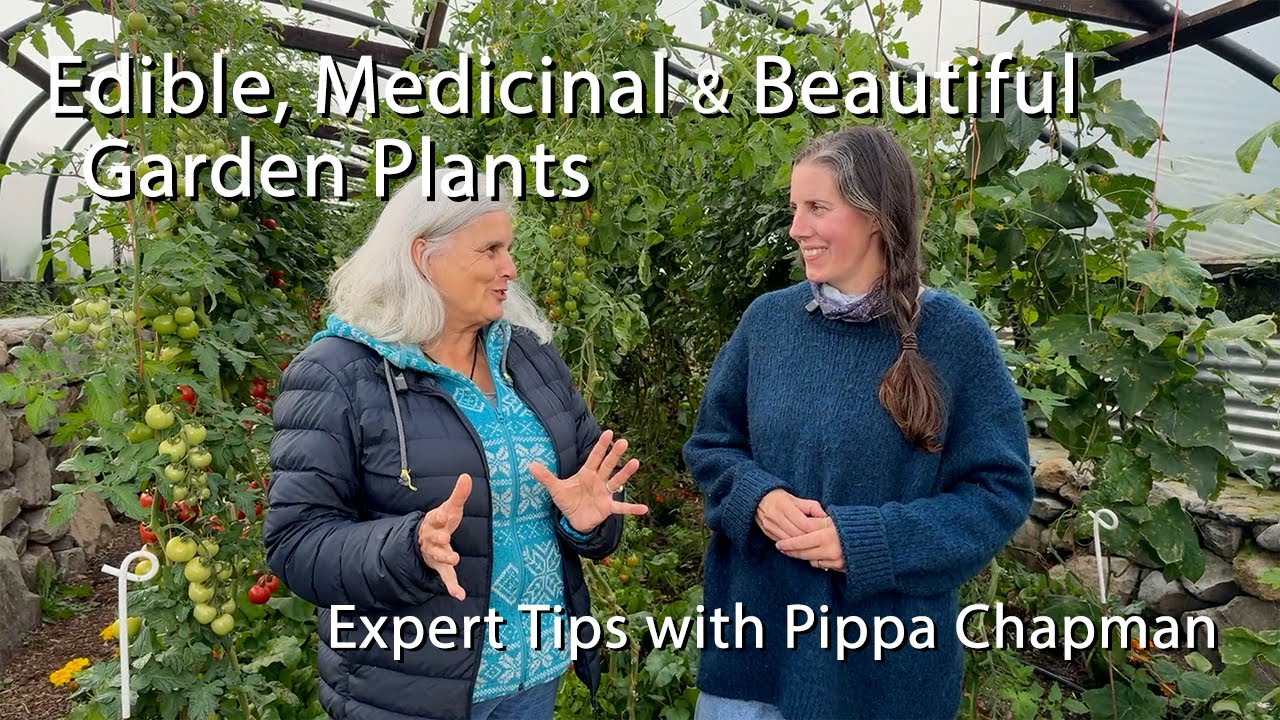
Discover how to grow a garden that’s not only stunning to look at, but also packed with edible and medicinal benefits! In this episode, author and gardening expert Pippa Chapman shares her top tips for choosing, growing, and using multi-purpose garden plants that nourish both body and soul.
From vibrant edible flowers to powerful healing herbs and useful perennials, you’ll learn about productive and beautiful plants for the forest garden and permaculture plot. Whether you’re a beginner gardener or an experienced grower, this video is full of practical advice you can start using today.
✨ In this video, you’ll learn about:
Unusual edible and medicinal plants for your garden
Easy-to-grow healing herbs for home use
Growing your own herbal teas
How to grow a resilient, low-maintenance garden
🌱 Perfect for: home gardeners, herbalists, permaculture lovers, and anyone interested in natural health and sustainable living.
👉 Don’t miss ‘Permaculture Planting Designs’ by Pippa here: https://shop.permaculture.co.uk/products/permaculture-planting-designs
#GardeningTips #EdiblePlants #MedicinalPlants #HerbalGardening #Permaculture #SustainableLiving #GardenDesign #PippaChapman
[Music] I want [Music] your Hello there. I’m Maddie Harm from Permaculture Magazine and I also um run Permanent Publications which is a book publishing company. I’m with Pipper Chapman at the Welsh Perm Culture Festival and I’m really excited because we have just completed your second book. Yes, we have. We’re really pleased. So, tell us a bit about it, Pippa. Um, so when I wrote my first book, I was really excited to um teach everybody about smallcale forest gardening and how they can do it themselves. Um, and and some people said, “Oh, you know, we really love that, but we we’d really like some like examples of of what they actually look like. what what can we actually do, what plants can we use? So, um I put together this book which is full of examples of different themed um both forest gardens and just permaculture garden design all about um guilds and um how to combine plants together. So, let’s dive straight into some of the content and share some of your kind of top tips with anyone who’s watching this YouTube. Um I think the biggest that I wanted to get across was for people just to not be scared to to design with plants. It’s meant to be fun, right? So, I’ve tried to make um the whole book just about saying, you know, try this, experiment, relax, enjoy it. Um you don’t need to get it right the first time. Um but if you’re feeling really nervous, here’s a whole load of examples that you can use for inspiration. So what what what kind of examples would you particularly to say a novice gardener who just wants something that looks pretty and is also really healthy and productive. Um well I think um things like edible flowers mixed in with your um perennial salad crops. You know it just means that your garden is productive but it also looks absolutely beautiful. So you could mix in um some like pablitzia which is a climbing spinach that comes back every year is absolutely delicious and but you could plant around the base of that something like colundula so that in the same space you’ve got this you know really tall um salad plant which can grow upwards so it’s not taking up much of your garden at all but if you just pair it with something like chenula you can put the petals in the salad as well. So, what what else are you suggesting that people try out? Well, I I’ve been um also learning about um sort of using plants for medicine as well. So, I’ve been learning about things that um are good for herbal tea. And actually, herbal teas are one of the easiest ways that we can use herbs as medicine for ourselves. It’s not just about having a tasty cup of water. It’s also about how we take the um powerful healing qualities from plants and be able to use them like in the simplest way where we just pick a few leaves, put them in a cup, add some water and drink it, you know, and it’s amazing um how, you know, we can we can help keep ourselves healthy or we can even cure chronic conditions as well just from a few leaves in a cup from our garden. So, how about something for chesty winter cough? What would you use? Well, I I’ve been using um particularly for sore throats, I find really effective is actually honeysuckle flowers mixed with thyme and um even my kids love it as well. So, I I’ve just been um harvesting some honeysuckle now and I’ve been drying it um very gently um so that I can then store that in jars because right now, you know, I’ve had many sore throats, but in a few months time when I’ve got a terrible sore throat, I’m not necessarily going to have any honeysuckle flowering in my garden. So, I’ve been harvesting it now. And then I just put a teaspoon of those um flowers into a cup with um a few sprigs of thyme. Add some water and then yeah, it’s just really quickly I get relief from a sore throat and head I mean I’ve got some real favorites. I love winter savory. Oh yeah. Which is such a gorgeous little spreading plant but really aromatic and that has um medicinal properties. I grow lemon forina. Oh yeah. One of my favorites. Absolute favorite. Just simple mint. Yes. Yeah. And it’s really really good for that digestion. And I think as well knowing that it doesn’t always have to be leaves as well. So things like fennel, you have the seeds in tea or marshmallow, you use the roots. Well, you can use the flowers, leaves, and the roots of marshmallow. So it’s a really great And it’s pretty. Yes. Yeah. Yeah. So it’s a great plant. So yeah, we call it garden tea in our in our house. But yeah, have a cup of garden tea and it basically it’s whatever’s around. Yeah. Yeah. And it’s the same with salads. Yeah. I love to have all sorts of things in the garden and I’ve been teaching the kids. So my youngest moss will go out and they just love to like go around and gather, you know, a bit of Swiss chard here, a bit of habitia, some malo leaves, you know, um bit of oregano, a few viola flowers, a sprinkle of chundula petals, you know, and they come in with just this beautiful salad that they’ve picked, you know, from all over the garden. And now that they’ve learned which plants that they can eat and which they can’t, you know, it’s something they really enjoy to do. And then you get all your colors as well because you’ve got the greens but the reds and the oranges. Yeah. And and then you know if you’re growing white borage, you’ve got the white borage flowers. So it’s like you make the rainbow salad. Yes. And and you can make it all year, can’t you? And and every time you go into the garden, it comes back different. It always, you know, there’s always different things that you’re picking and enjoying. So you So just to summarize, you’ve got you’ve got medicinals, you’ve got year round salads. Yearround salads. Yeah. Even craft garden. So, craft things like willows and things to weave and make twine out of and dye plants, all those sort of things. And also the edible ones as a family forest garden. So, it’s all that was all about, you know, when you’ve got really small children and you want to just allow them to play in the garden and enjoy it and not be constantly going, “Oh, don’t put that in your mouth or don’t put that in your mouth.” actually everything, every leaf and seed and bit of the plants in that garden um you know you could eat and not poison yourself. Yeah. And then and um all different plants for gems and um yeah. So I think it’s trying to like meet as many needs as you can from your permaculture garden, whether that’s creative craft things, medicinal, human herb or or food. And I think the key to this book is that it’s actually quite simple in the sense that you’re not picking off a chapter that’s like that long. No. You know, you’ve summarized it and you’ve made it very visual this book, haven’t you? Deliberately. Yes. So that it’s not a a scholarly work that’s long. No. You know, you’ve made it accessible. I think I wanted it to be I I love the design process. I find it really creative and I love to experiment and I really wanted to get across that feeling of designing should be fun. It doesn’t need to be technical. You don’t need to have expert knowledge like anyone can do it. Um, experiment and have fun. So, I’ve tried to get that across in the pictures and I’ve tried to show the whole process. So, I haven’t just gone, oh, look, I’m so amazing. Here’s my finished design. I’ve gone, oh, here’s the scribbly bit where it all looked really messy and I had didn’t really know what I was doing and here’s all the stages until I got to this, you know, nice design at the end where it’s finished so that people can see that it, you know, it doesn’t have to all look neat and beautiful. There’s lots of messy scribbling. But your gardens always look beautiful, don’t they? Yes. But beautiful in their wildness and relaxed, you know, way. Relaxed beauty. Yes. And I, you know, and I chop and change things all the time. So I always want people to think that actually when you’ve done a design and you put your plants in the ground, that’s kind of the beginning. Yeah. It’s the beginning of the process. You don’t need to. If something that you’ve designed doesn’t work and a plant or two dies, that doesn’t mean you fail. It just means you’ve learned what will grow well in your garden and you can try something else, you know, so just to yeah, make it fun and be relaxed. So, what’s the name of the book? Uh, the book’s called Permaculture Planting Designs because it is a whole book um full of different designs. Yeah. But that people can adapt. They’re not written in stone because everyone’s going to have their own individual microclimate. Absolutely. But it’s like a template that we take and change. Yeah. It’s so they’re there for inspiration and the book tells you all about how to um adapt those designs to suit your garden and your needs, which is important because we’re we’re all unique, aren’t we? We are. Yeah. And when’s it coming out? It’s coming out in February. Brilliant. So, February 26. Look out for it. Pre-order it. It’s going to be fab. I’m very excited. Great. Yeah. Thank you very much. So I can grow [Music] on your
4 Comments
Pippa is a permaculture guru , wish you all the best with your book.
Good video thanks. When it comes to planting up the garden, do you grow all your plants from seeds/cuttings etc, or are you buying more established plants?
Really liked your breakdown — you kept things simple but effective.
But your description’s first line could be stronger by placing the primary keyword earlier. It helps YouTube identify the topic faster.
If you want, I can rewrite the first line naturally for better SEO.
Hi! Your video is really informative and well-presented. I noticed the title could be a bit more effective, so I made a new SEO-optimized option for you that you can use:
“Grow Edible and Medicinal Garden Plants with Expert Tips from Pippa Chapman”
I crafted it by keeping the main keyword “Edible and Medicinal Garden Plants” within the first 50 characters, wrote it in a natural and click-friendly way without any clickbait, and added a curiosity-driven ending so viewers feel encouraged to watch.