
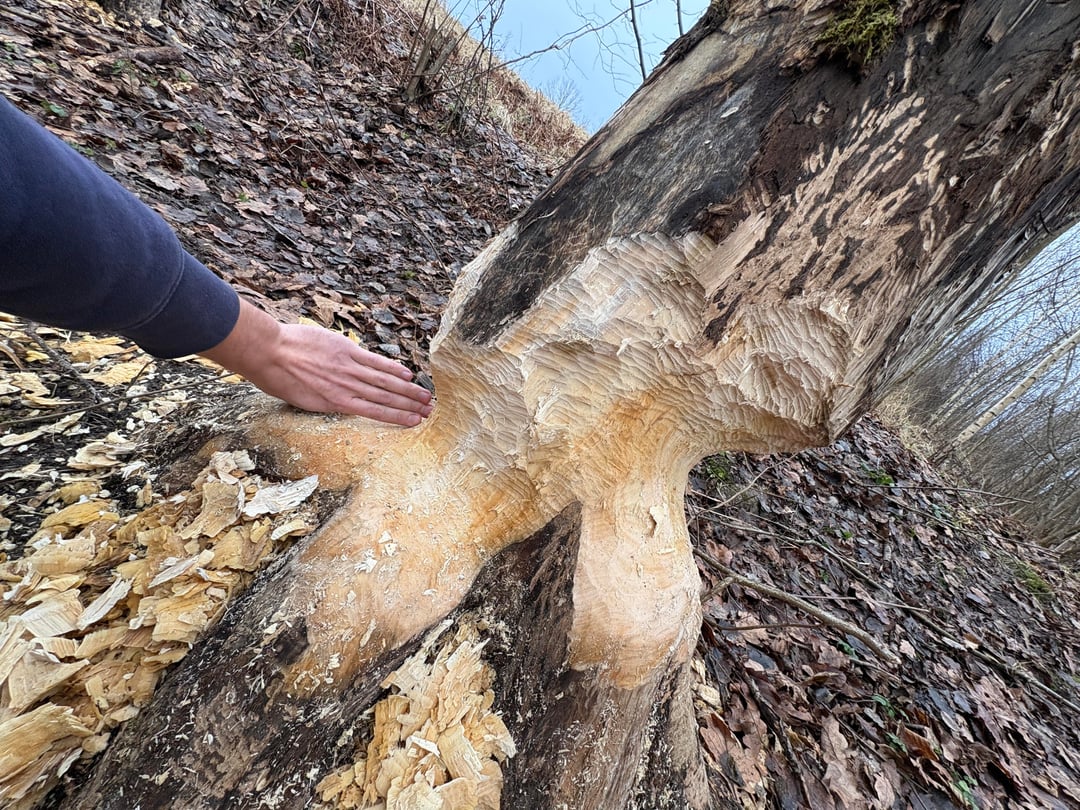
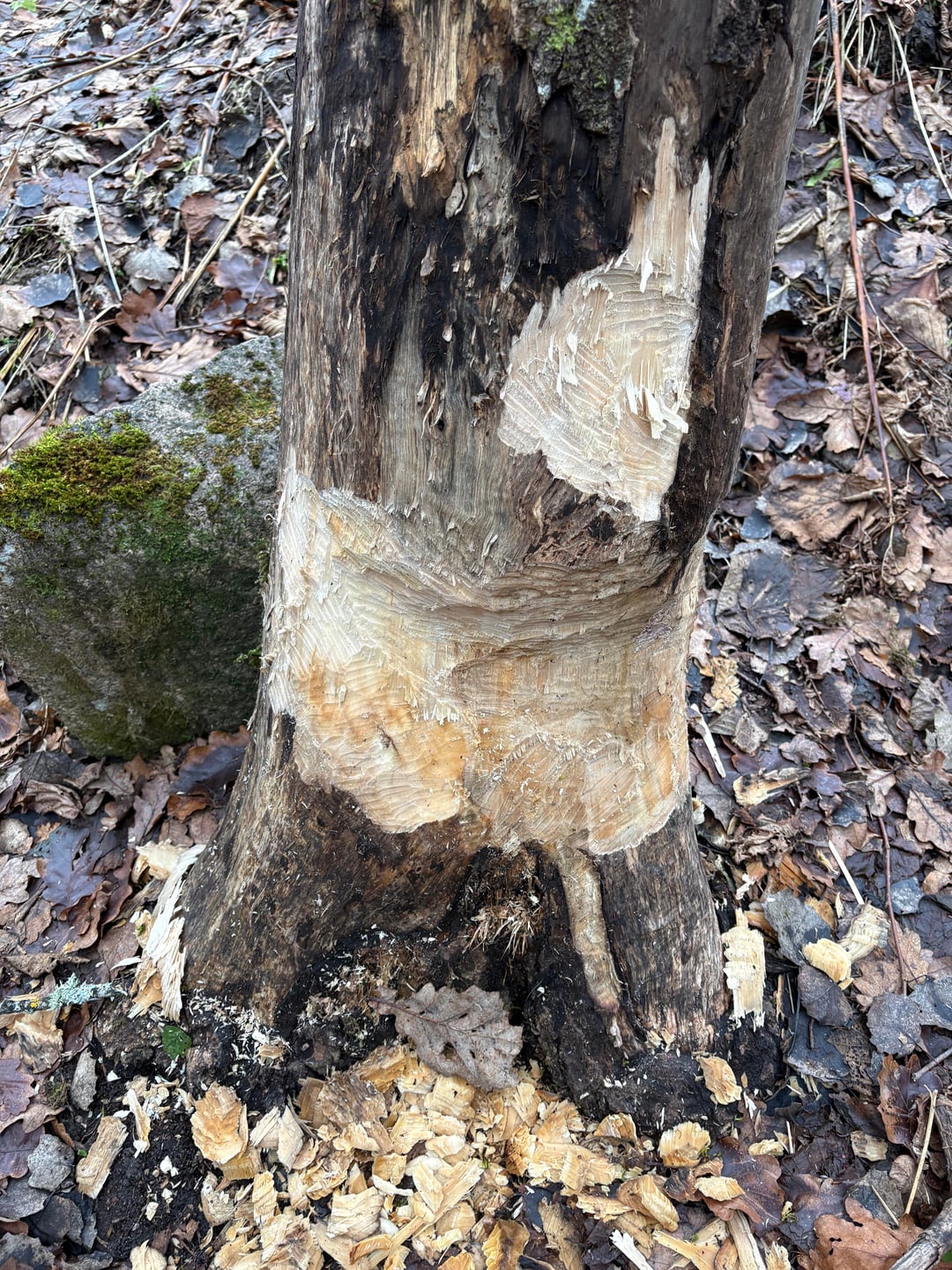
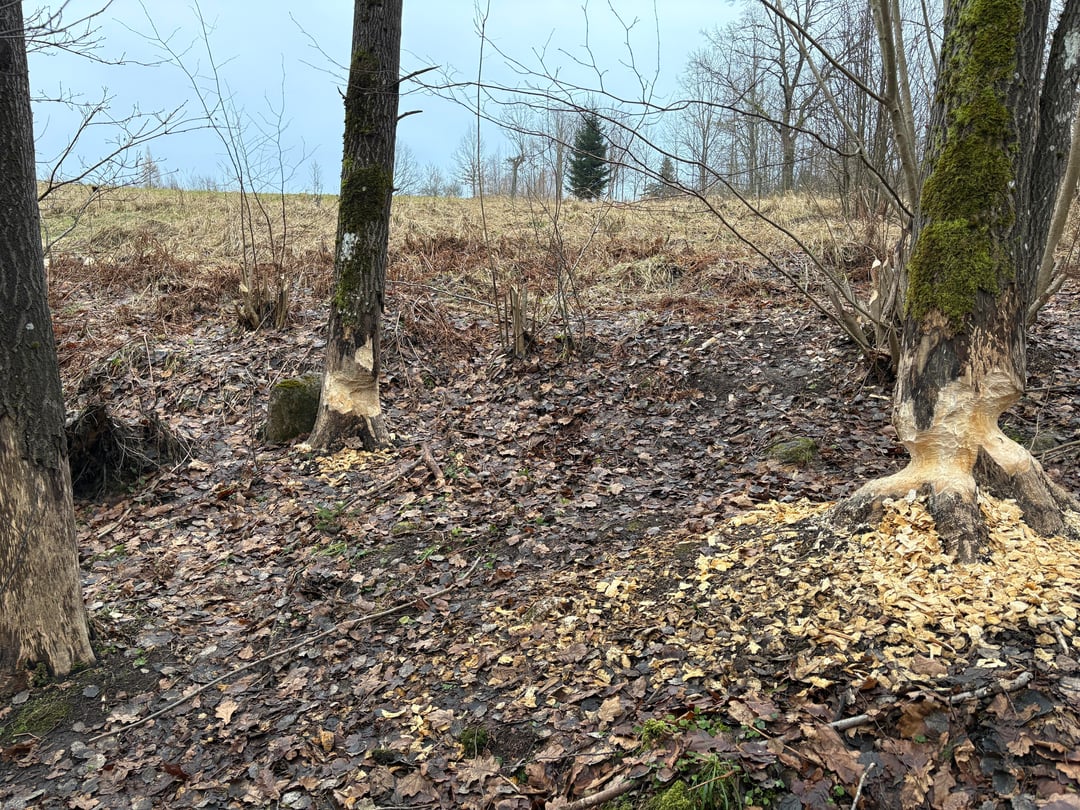
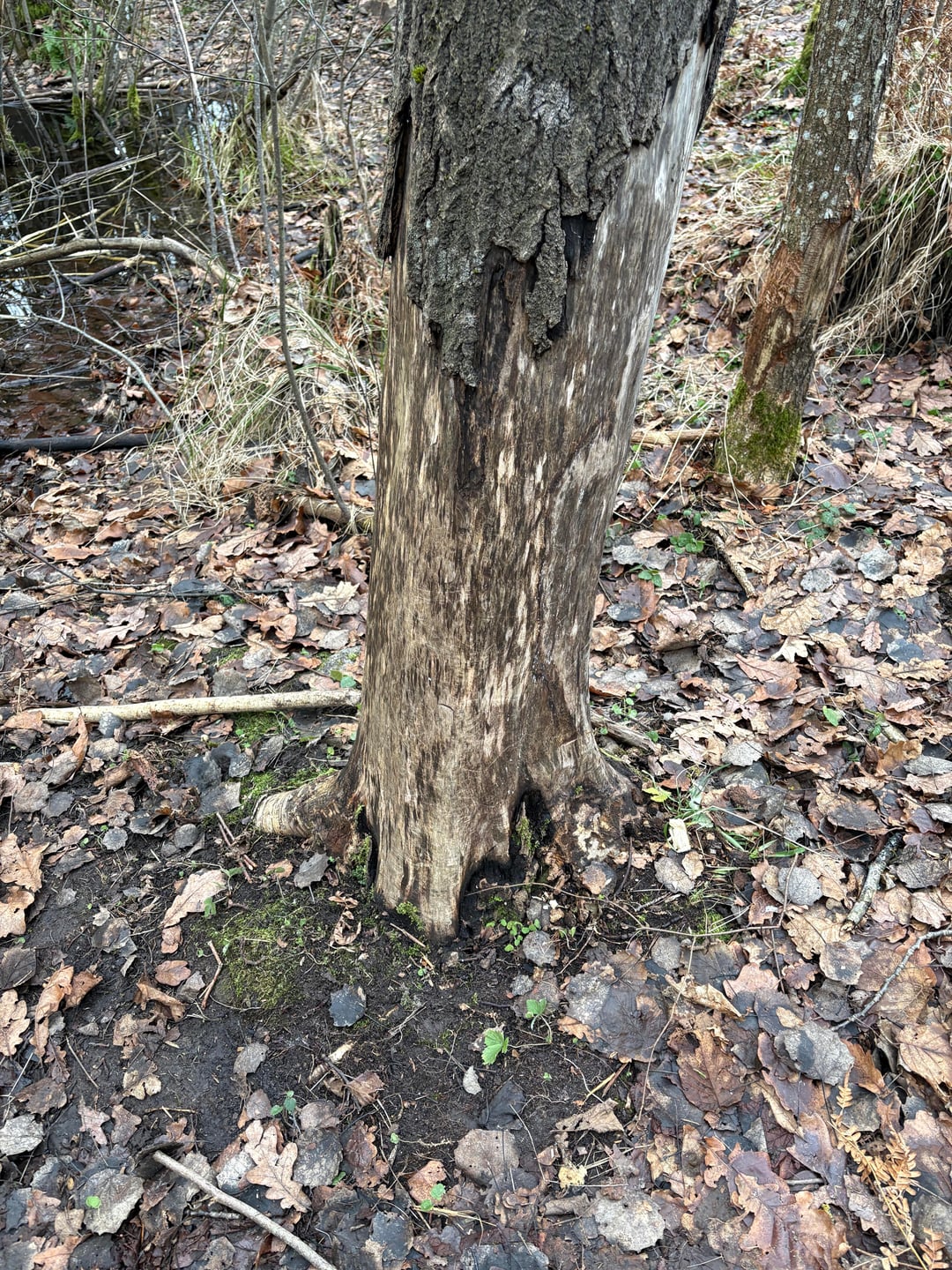
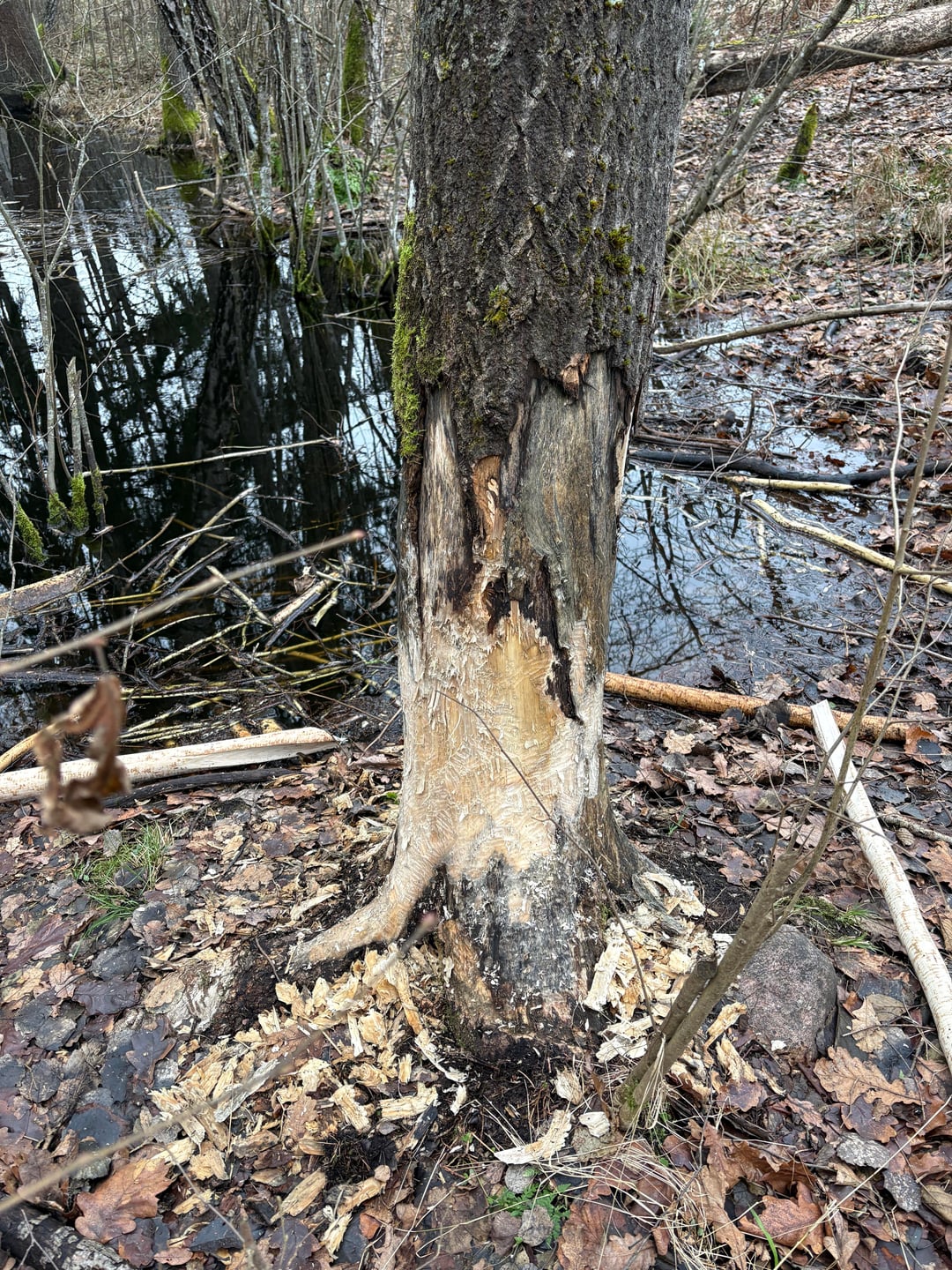
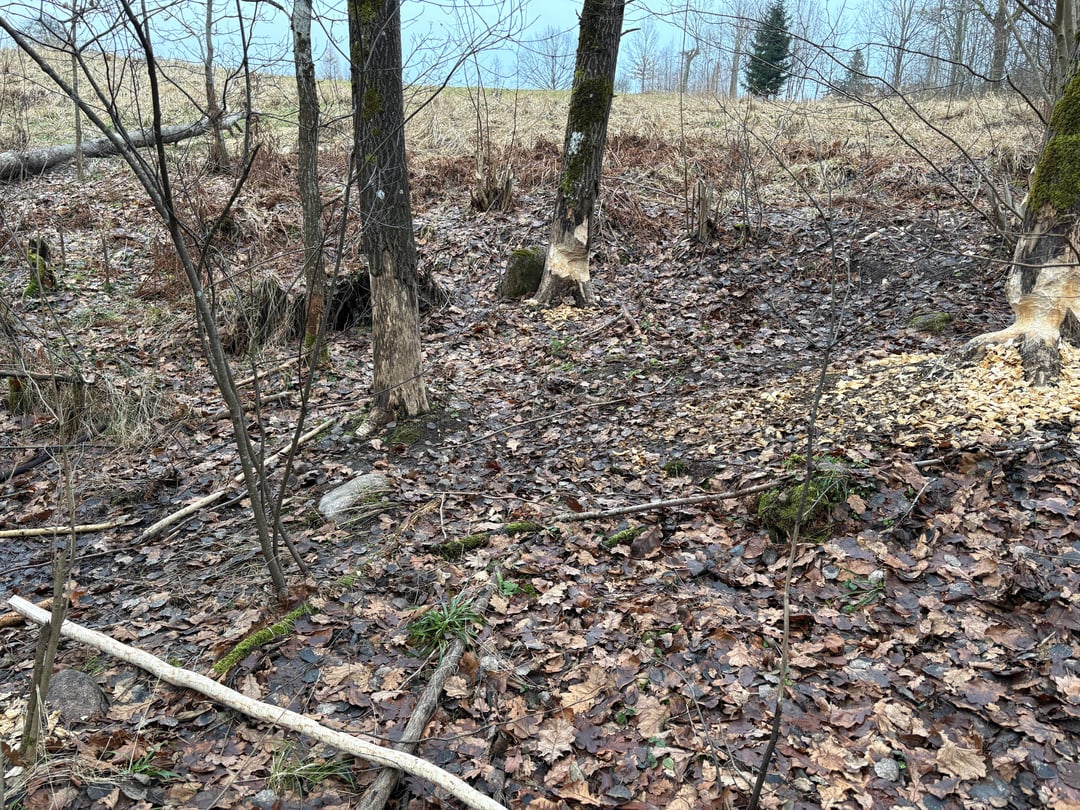
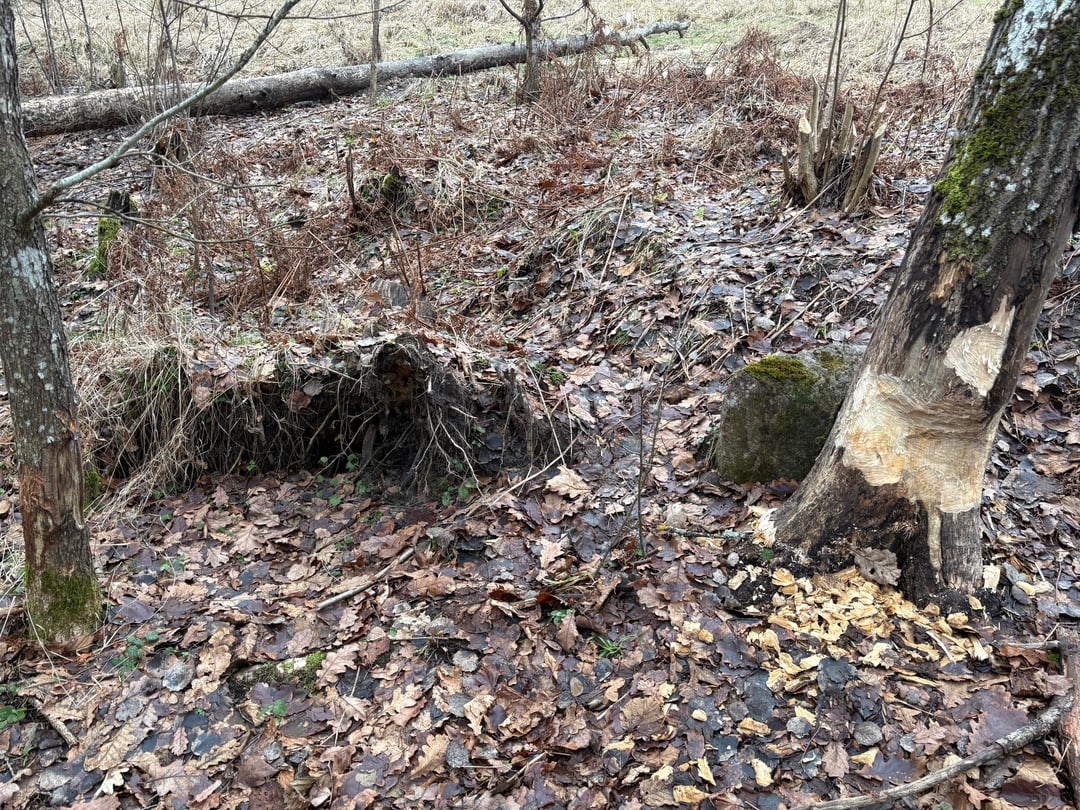
Recently found a tree (fraxinus) felt by a beaver.
I returned now, one week later and found all of the 4 mighty (roughly 60-100 year old) fraxinus trees chomped on.
Can any of these trees survive?
Anything i can put on the trees or spray to deter the beavers from other surrounding trees?
I have a bit of garden beeswax made, maybe it would help if the tree in photo #5 if i spread it over the affected area and enclose it with a fence?
Their habitat (home) is around 1km from here.
by nerodiskburner
7 Comments
The trees are gone. A metal fence around the trunks would help. I doubt the effectiveness of other things. Unless it’s beaver traps or hunting.
Yeah. You juuust might
Metal wire fence around the trunk on the remaining trees.
The trees that only have marks on the surface or not too deep into the wood, making the whole tree instable, can survive. Put some wire mesh around the bottom of the tree reachign up to a meter above ground. Can also be lower but then you’re on the safe side of things. Except the tree in the first picture, the other marks/wounds looks survivable. I’ve seen deeper cuts on old trees that they survived and grew thick bulges of tree bark around those “blank” spots.
Also wouldn’t call it a “problem”. The problem the beaver has is most likely not enough other food sources. As i can see some birchs in the background of picture one, they might be his likely next source if you protect the other trees. If there are enough smaller, bushlike birchs he might only get them. Because as far as i’ve experienced with many beaver territories, if there is a large amount of very small trees (only up to 10cm in diameter) or bushes (with one to three finger wide trunks) he will most likely end up getting them rather than putting all the effort into taking down a massive sized tree. On those small plants, the harvesting is much quicker and easier for him, they also tend to re-grow very quickly. While at the end of winter almost everything being cut off at the end of summer a thick green vegetation has developed again.
But yes, those observations depend on the individual preferences of the beavers occupating those territories. Some almsot never go into thicker trees, when there is enough bush-like vegetation around, some still do and then it also varies how much they cut down and especially it also depends on their success rate to get the tree down to the ground and not being stuck in some surrounding trees, so the beaver can’t reach what he was looking for.
That’s also why i pull down smaller sized trees, those i can handle with my arms/strength, if i see them being stuck in some other trees. Gives the beaver what he wanted and saves another small trees life (at least for this season).
Also if a tree has fallen due to wind/storm, just let it there, at least until next summer, to see if it develops new sprouts. If so, let it be and the beaver has some food in reach and doesn’t need to go into other trees.
P.S. Might add, all those marks look not very recent (1-4 weeks old). the brighter marks obviously from this year, more precisely late summer/fall period. The one with the brownish marks looks like at least from last years or the first 1-3 months of this year.
Also their preferred time to bring down bigger trees is through september and october, when most of them haven’t lost all the green leafs. Those will often end up in their “storages” for winter time, when they stuck them into the ground of the water or build food rafts. They will also bring them down later of course, but my observations were that this is their most active period for those activities and it goes often until late december, but then in january and february there’s almost none of such activity. Is a correlation to the activity radius of beavers depending on temperatures and ice shield on the water. In winter they’re less active and spend most of the time in their lodge or den, chilling and wasting as less energy as possible.

Braggart.
Their habitat is where ever they choose to go, and there is nothing problematic about it. Let them be.