
If you are like me, you may have postponed a few garden tasks because of our mild November weather. Some of the tasks I have neglected are included in the following list along with a couple of items you may not have considered yet.
For the most part, December is a great month to enjoy the holidays rather than worry about yard work, but a few tasks are essential if they have not been completed yet.
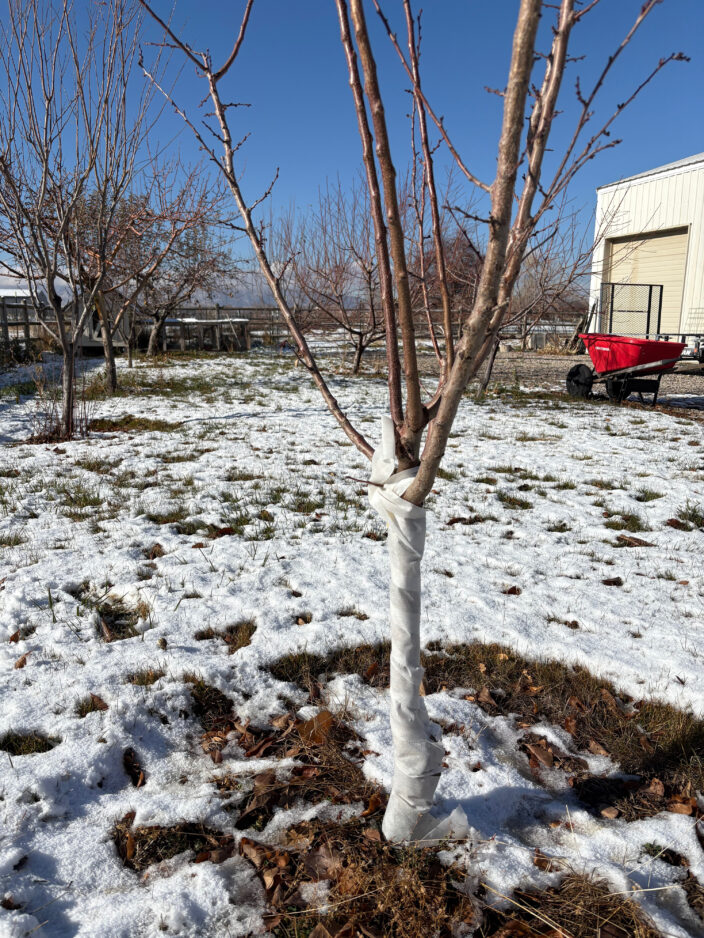
Protect susceptible trees from sunscald injury. This type of injury can occur when the south- and west-facing sides of tree trunks are exposed to warm winter sun during the day and then freeze again during cold nights. This freeze/thaw cycle can lead to tissue damage, which then can cause the bark to discolor and crack and become a haven for disease.
Trees with thin bark are most susceptible to sunscald injury. This includes most young trees and even some mature trees such as peaches, plums and cherries.
To protect your trees, wrap the trunk and lower branches with white tree wrap, which is readily available at nurseries and gardening centers. Keep them wrapped until mid-March.
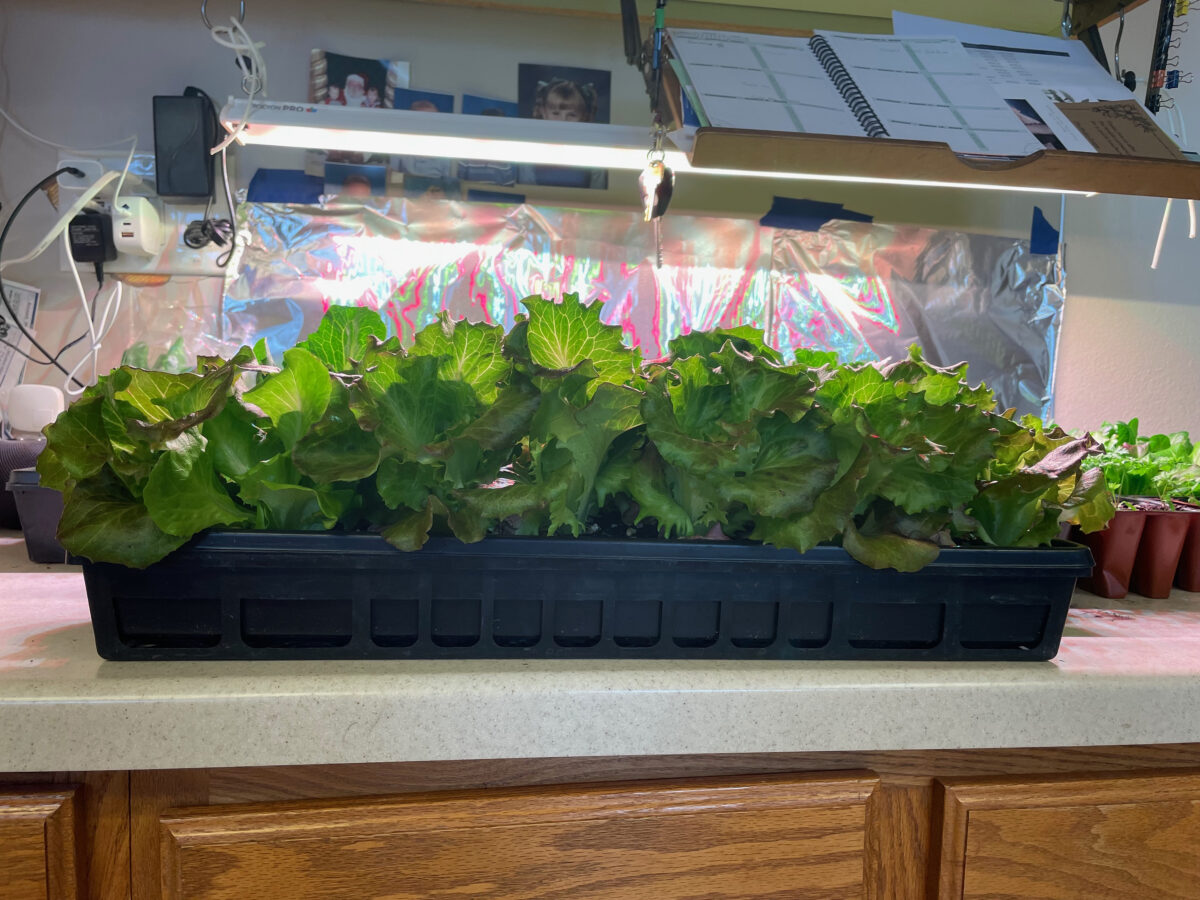
Photo by Meredith Seaver
Smaller plants like radishes, spinach, lettuce and other greens can do well in a variety of indoor settings if they’re given the right conditions – bright light, adequate moisture and good nutrition.
Keep your evergreen shrubs and trees watered through dry weather. Evergreens do not go dormant over the winter and need water. Remember to water deeply and infrequently; once or twice a month may be sufficient in cold winter weather. Discontinue watering once the ground freezes.
Limit the use of deicers on icy paths and driveways. It is important to keep driveways and walkways clear of snow and ice for public safety. Use shovels to remove as much ice and snow as possible. Use deicers sparingly to protect surrounding plants.
De-icers are made of various salts. These salts can physically burn the leaves of surrounding lawn and plants. De-icers can also build up in the soil, inhibiting a plant’s ability to uptake water and nutrients; plants in salty soil can wilt even when the soil is moist. If you have noticed that the lawn next to your sidewalk looks brown and dead in the spring, it may be due to salt damage from deicers.
Indoor gardening can help combat winter blues. Consider bringing the outdoors in by growing plants indoors. You could force some flowering bulbs such as amaryllis or paper white narcissus. Perhaps you would like to start an indoor herb garden. This year I even bought a countertop hydroponic system to grow microgreens and lettuce. Some gardeners have even mastered the art of growing dwarf tomatoes and peas indoors! I have found that having a plant to care for over the winter helps me to avoid some of the stir-crazy feelings I get when it is too cold to garden outside.
Just like growing outdoors, indoor plants have needs that must be met. Most indoor crops will prefer a sunny south or west-facing window. Grow lights or fluorescent lights can also be used when natural light is insufficient. An optimal room temperature for most indoor plants is 70 degrees. Avoid using soil from the landscape; potting soil is best. Fertilize regularly with a balanced water-soluble fertilizer or use a slow-release granular fertilizer such as Osmocote. Do not forget to monitor for pests and treat accordingly. Isolate any plants with disease and dispose of any that are heavily infested.
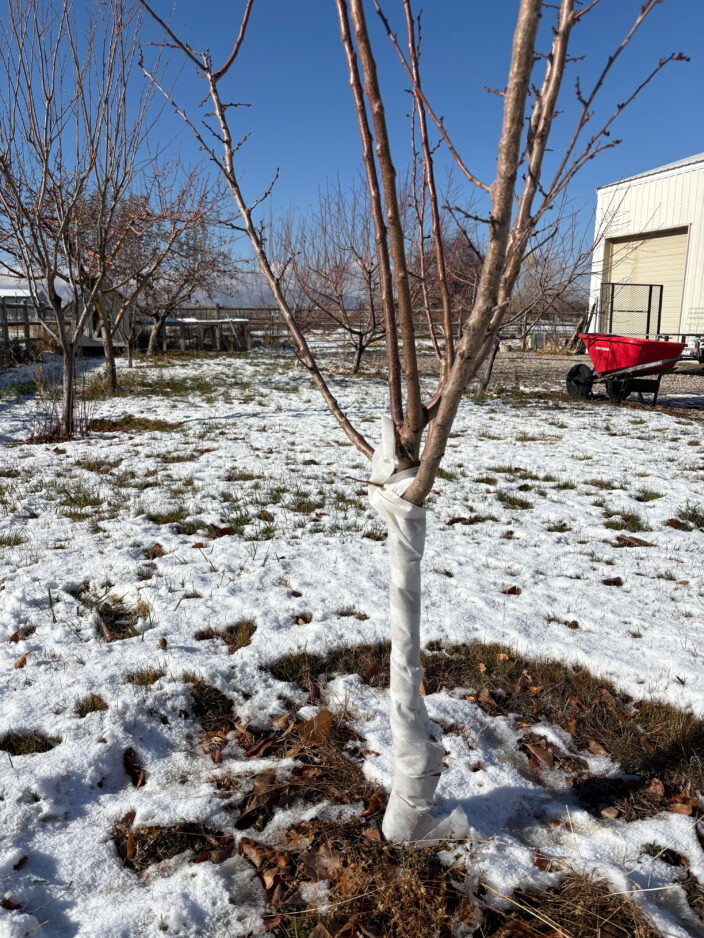
Photo by Elizabeth Binks
Young trees and trees with thin or dark-colored bark should be protected from winter bark damage with light-colored tree wrap from November to March.
Growing plants indoors this season is not necessarily on any to-do list. It is just a fun way to while away the winter hours as you plan your spring garden.
Upcoming Master Gardener Course
There are still seats available for 2026 Master Gardener Course!
Are you looking for a gift for your favorite gardener? Would you like to grow your gardening skills with other gardening enthusiasts? Are you looking to learn more about how plants and soils work together, find better ways to manage pests in your landscape, and make your good garden even better? You’ll learn all of that and more in the Utah County Master Gardener Course.
Classes will meet each Tuesday and Thursday beginning Jan. 20 and continue through March 17, 2026, with an afternoon section from 1 to 3:30 p.m. and an evening section from 6 to 8:30 p.m. The same class content is covered in both sections on the same day, so attend the section that best fits your schedule each day. Due to the relocation of the Orem USU Extension office, all 2026 classes will be taught virtually via Zoom.
Registration is open to anyone who would like to participate in the course. Use this link to learn more or register.

Photo by Meredith Seaver
The leaves and needles on evergreen trees and shrubs can suffer from winter desiccation (drying out) due to dry and windy winter conditions. Watering evergreens deeply in late November or early December and conserving soil moisture with a 3-inch layer of bark nuggets or wood chips can help to prevent this problem. Don’t water when soils are frozen.
Elizabeth Binks and Meredith Seaver are USU Extension horticulture assistants.
Copyright © 2025 Ogden Newspapers of Utah, LLC | www.heraldextra.com | 1200 Towne Centre Blvd. STE 1058, Provo, UT 84601
Comments are closed.